
Legal Specialties Explained Understand Lawyer Types and Practice Areas

In 2026, the world of law feels bigger than ever. There are so many kinds of legal help available. Sometimes it can be confusing to know exactly what kind of lawyer you need. It’s not always clear what different job titles mean or what an attorney does in a certain area.

This can make it tricky if you’re trying to hire legal help, buy legal services for your business, or even work with legal teams from different places.
Think about it. If you’re looking for an entertainment lawyer for a new music deal, you wouldn’t hire someone who only works on real estate cases. Or if you need civil court lawyers for a dispute, you wouldn’t call a criminal defense attorney. The legal world has many special areas, like family law, business law, or environmental law, to name just a few of the many fields of law you can study 29 Areas of Law To Consider in Your Legal Career. Each type of lawyer focuses on very specific rules and problems.
The way we talk about legal professionals also matters. Terms like "lawyer" and "attorney" are often used to mean the same thing, but there can be subtle differences depending on where you are or what they are doing. This can create confusion for clients and even for legal teams trying to work together across different states or countries. For instance, understanding What is an attorney? Roles, licensing, and key legal distinctions can be important. When we use phrases like "attorneys at law plural," we are usually talking about a group of legal professionals who are officially allowed to practice law. To dive deeper into these specific roles, check out our guide on Decoding Attorneys at Law roles, licensing, and legal tech in 2026. But even this term can have different meanings in different contexts.
This guide is here to make things clearer. We will help you understand the common kinds of legal work lawyers do. We will also explain how important titles and terms, like "attorneys at law," are used. We will also look at how all this information helps legal teams and people making choices about legal technology today.
Since we’re talking about making smart choices for legal teams and using technology, you might want to keep up with the latest advancements. Get clear daily AI updates that are worth reading from The AI Newsletter Worth Reading.
What are legal specialties (practice areas)? A structured overview
When we talk about legal specialties, we are simply talking about the different kinds of law that lawyers focus on. Think of it like doctors who specialize in hearts or brains. Lawyers also pick a special area to become really good at. These special areas are called "practice areas." Firms and legal groups often organize themselves around these areas to best serve their clients.
For example, some lawyers become criminal lawyer salary 2026 experts, while others might become family law attorneys who help with divorce or child custody. There are many, many types of law. Some popular fields include business law, environmental law, and even things like copyright law or real estate law Types of Law Degrees and Specializations.
These different practice areas help lawyers meet very specific needs their clients have.
For instance:
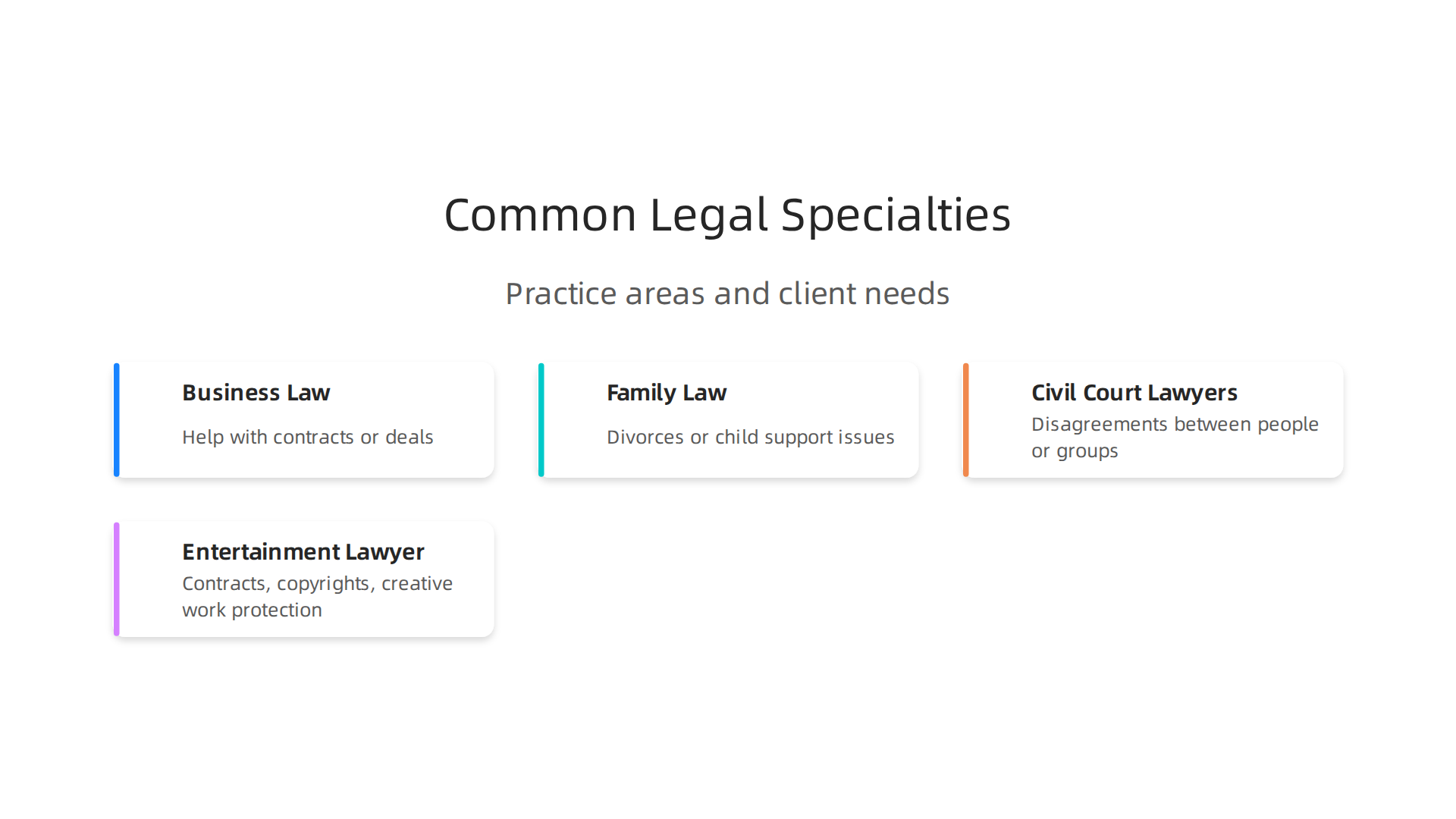
- Business Law: If you own a company, you might need a business lawyer to help with contracts or deals. This person helps make sure your business follows all the rules. For more on this, consider reading about the business corporate lawyer in 2026.
- Family Law: As mentioned, these lawyers help families through tough times like divorces or child support issues.
- Civil Court Lawyers: These attorneys handle disagreements between people or groups, like when someone gets hurt in an accident or has a problem with a contract. They work in civil courts, not criminal ones.
- Entertainment Lawyer: If you’re a musician, actor, or writer, an entertainment lawyer can help you with your contracts, copyrights, and making sure your creative work is protected.
Each of these specialties needs a different set of skills. An employment attorney 2026 needs to know all about workplace rules, while someone handling property disputes needs to understand real estate laws. This specialization also affects how lawyers charge for their services and what kind of training they need. Law schools even offer many specializations so students can focus on a particular field from early on Fields of Law to Study. So, whether you are seeking legal advice or are a group of attorneys at law plural looking to expand your team, understanding these practice areas is key to finding the right fit.
After learning about the different types of law, it’s also important to understand the different names given to legal professionals. You might hear words like "lawyer," "attorney," "solicitor," or "barrister." These names often mean slightly different things depending on where you are in the world.
What’s the Difference Between a Lawyer and an Attorney?
In the United States, the words "lawyer" and "attorney" are often used to mean the same thing. A lawyer is a general term for anyone who has studied law and can give legal advice. An attorney, or "attorney at law," is a lawyer who is licensed to practice law in court and represents clients Lawyer, Advocate, Attorney, Solicitor, Barrister. So, all attorneys are lawyers, but not all lawyers actively represent clients in court. They are mostly interchangeable in everyday American talk. For more details, you can learn about what is an attorney roles licensing and key legal distinctions.
When you talk about more than one "attorney at law," the correct way to say it is attorneys at law plural. This is helpful to know when looking at legal firm names or official documents.
Solicitors and Barristers: A Different System
In some other countries, like the United Kingdom, Australia, and New Zealand, there’s a clearer difference between legal roles Barristers and Solicitors in Different Jurisdictions.
- Solicitor: This is the legal professional you usually go to first. Solicitors give legal advice, prepare cases, draft contracts, and handle most legal paperwork outside of court. They are often the first point of contact for clients.
- Barrister: Barristers are lawyers who specialize in representing clients in court. They are expert advocates and primarily focus on arguing cases before a judge and jury Key differences (summary). Often, a solicitor will prepare a case and then bring in a barrister to handle the court appearances.
So, while the US has a "fused" system where one person can do both, many other countries have a "split" system, with clear roles for solicitors and barristers. It is important to know this difference, especially if you are dealing with international legal matters.
Where You See These Terms
You’ll see these terms in different places:
- Client materials: Law firms in the US will often say "attorneys at law" on their websites or business cards. Firms in the UK will list "solicitors" as their primary contact.
- Contracts: Official documents and contracts will use the specific legal designation that applies to the person handling the case.
- Legal directories: When looking for a lawyer in 2026, online directories often list professionals by their specific title. You might search for an attorney or a solicitor depending on what you need and where you are located.
Understanding these terms helps you know who you are dealing with and what kind of legal help they provide. If you are a legal professional, staying updated on these distinctions and how technology impacts the field is key.
Stay informed about the newest legal technologies, including AI, with our expert analysis.
The AI Newsletter Worth Reading
Knowing the different types of legal professionals is just the start. How these experts come together in a team depends a lot on what kind of law they focus on. This is true for big law firms and for legal teams inside a company. Their special areas of law affect how they hire people, what skills they look for, and how they set up their teams.

Organizing by Specialty
Law firms often choose to be experts in certain areas. For example, some firms might be known for their civil court lawyers, who handle disagreements between people or companies. Other firms might focus on helping creative individuals and businesses, with specialists like an entertainment lawyer. This focus means they will hire people with experience and training in those exact areas.
For in-house legal teams within a company, the same idea applies. If a company makes video games, its legal team will need lawyers who understand intellectual property and contract law related to games. These teams might have many attorneys at law plural who work on very specific tasks tied to the company’s business.
Hiring and Skills Mapping
When hiring, law firms and legal teams look for a good fit. They use something called "skills mapping." This means figuring out all the different legal tasks that need doing and what skills are needed for each. Then, they look for people who have those skills.
- Specialists: These are lawyers who know a lot about one small part of the law. For example, an expert in environmental law for mining companies.
- Generalists: These lawyers know a bit about many different areas. They are good at handling a wider range of common legal problems.
A firm might decide it needs a team of specialists to tackle complex cases, or it might need generalists for everyday legal advice. This choice impacts who they hire and how they train their staff. For instance, understanding the Barrister or solicitor – What’s the difference? helps when thinking about whether a role needs a court expert or someone for paperwork.
Training is also important. As legal fields change, especially with new technologies in 2026, lawyers need to keep learning. Firms often invest in legal education trends 2026 to make sure their teams have the most current skills. Whether someone’s career path is to become the business corporate lawyer in 2026 or something else, ongoing skill development is key to success.
Different legal specialties greatly influence the kinds of technology law firms and in-house teams choose to use. The tools a team needs depend on what they do every day. This applies whether you’re talking about a group of attorneys at law plural in a big firm or a small legal department within a company. The right technology helps legal professionals work smarter and faster.
Matching Tech to Legal Needs
When picking legal software, firms look for tools that fit their specific type of law. Here are some common tech tools and how they help different legal areas:
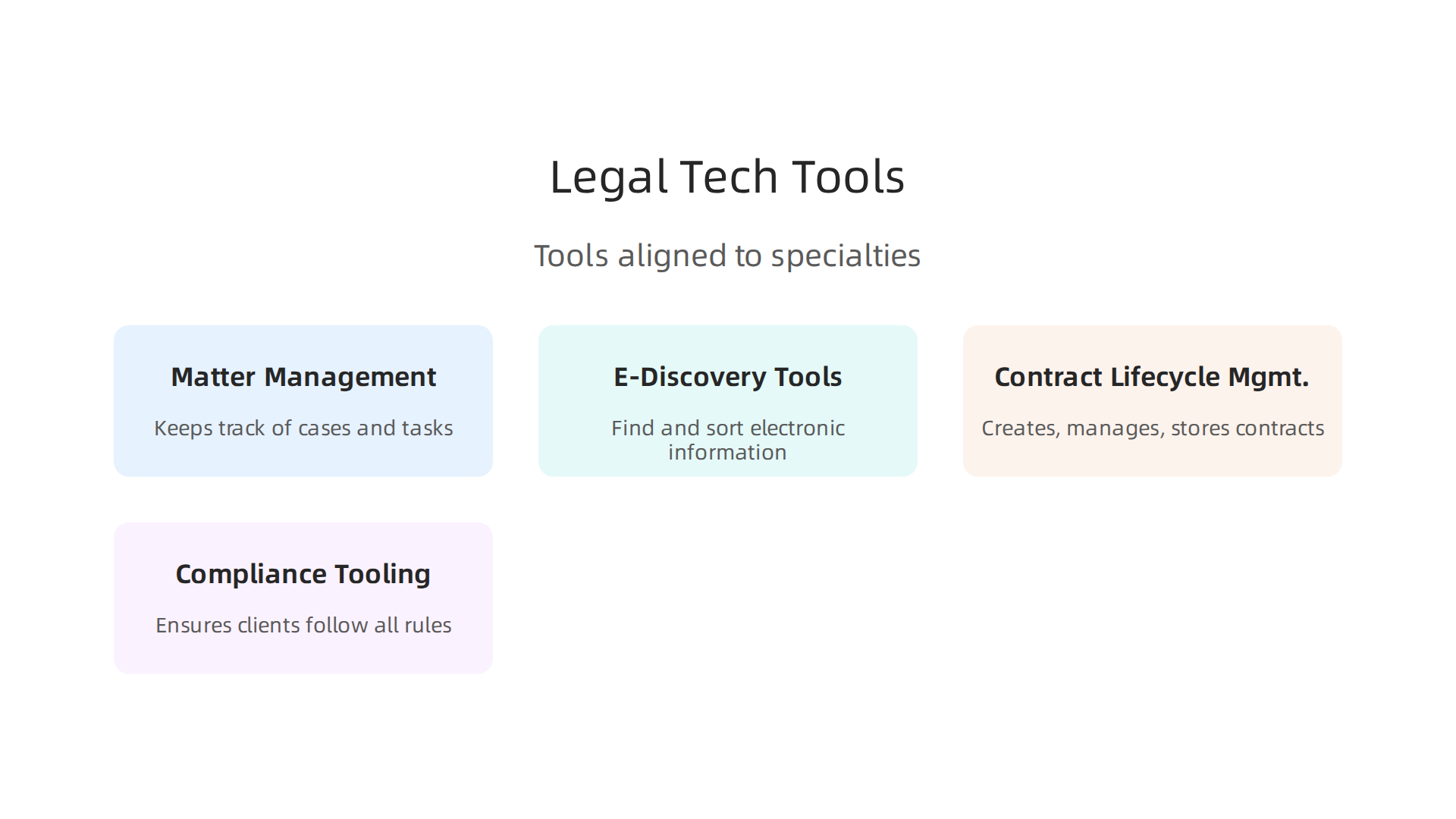
- Matter Management Software: This kind of tool helps lawyers keep track of all their cases and tasks. For example, a lawyer who handles many family law cases might need software that helps them manage client details and court dates. A firm with many different practice areas would need a flexible system. Knowing how to evaluate law firms often includes looking at their tech setup, too. Good matter management is like having a super organized assistant for every case. For a deeper look, check out a law firm guide to CaseRoom Online in 2026.
- E-Discovery Tools: These tools help lawyers find and sort through huge amounts of electronic information, like emails, documents, and social media posts, for a case. If a firm often deals with big lawsuits, like those civil court lawyers handle, e-discovery is super important. It helps them find key evidence fast. Modern attorneys can master legal research databases in 2026 with AI tools.
- Contract Lifecycle Management (CLM): This software helps create, manage, and store contracts from start to finish. For companies that sign many deals, like entertainment lawyers helping artists, a CLM system is a must. It makes sure contracts are correct and followed. For advanced contract analysis, especially with AI, tools like IRIS Law 2026 are changing the game for legal teams.
- Compliance Tooling: These tools help legal teams make sure their clients follow all the rules and laws. This is very important in areas like finance, healthcare, or for specific regulations like those that come under bc law (business compliance law). Good compliance software can help avoid big problems and fines.
Choosing the Right Vendor and Setup
The specialty of a legal team also changes how they pick the company that provides their software. They look for vendors who understand their specific legal needs. For instance, a firm focusing on protecting creative works will need an "entertainment lawyer" specific module within their software.
When selecting technology, law firms consider their "competency models." These models outline the skills and knowledge needed for success in different legal roles within the firm. The technology must support and enhance these key skills, as explained in a job competency model guide. For example, if a firm wants its lawyers to be great at legal writing, they might choose software with advanced document review features.
Also, the new tech needs to work well with older systems the firm already uses. This is called integration. A smooth integration means less headaches for the legal team and better service for clients.
Staying up-to-date with legal technology is a big task. If you’re interested in how AI and other tech continue to change the legal world, you might like to know more.
The legal field is always changing, and new tech comes out all the time. To stay ahead, many legal professionals seek out fresh insights. Get clear daily AI updates by subscribing to The AI Newsletter Worth Reading.
The legal field is always changing, and new tech comes out all the time. To stay ahead, many legal professionals seek out fresh insights. Get clear daily AI updates by subscribing to The AI Newsletter Worth Reading. While staying updated with tech is key, it’s also important that people can easily find you and understand what you do. This means how you describe your legal specialties in job postings, bios, and online directory listings really matters.
How to describe specialties in job postings, bios, and directory listings (SEO and discoverability)
When you want clients to find you or new talent to join your team, how you talk about what you do is super important.

You need to use words that people are actually searching for. This helps with something called SEO, which means making it easy for search engines like Google to find you.
Think about it this way: someone looking for help might type "civil court lawyers" into a search bar, not "litigation specialists." So, your descriptions should use plain, common language where possible. For example, if you focus on helping musicians, clearly say you are an "entertainment lawyer."
Using the Right Words for the Right People
It’s helpful to describe what you do using words that both clients and other legal pros understand. For instance, when you write about several legal experts, the correct plural form is attorneys at law plural. This kind of formal language is fine for legal documents or talking to other lawyers. But for potential clients, you might want simpler terms.
Many firms find it useful to balance formal titles with simple explanations. For instance, you could explain the attorney vs lawyer difference in your "About Us" section. In your online profiles, make sure your practice areas are clear. If you handle specific rules, like those related to bc law, say so directly.
Making Your Expertise Easy to Find Online
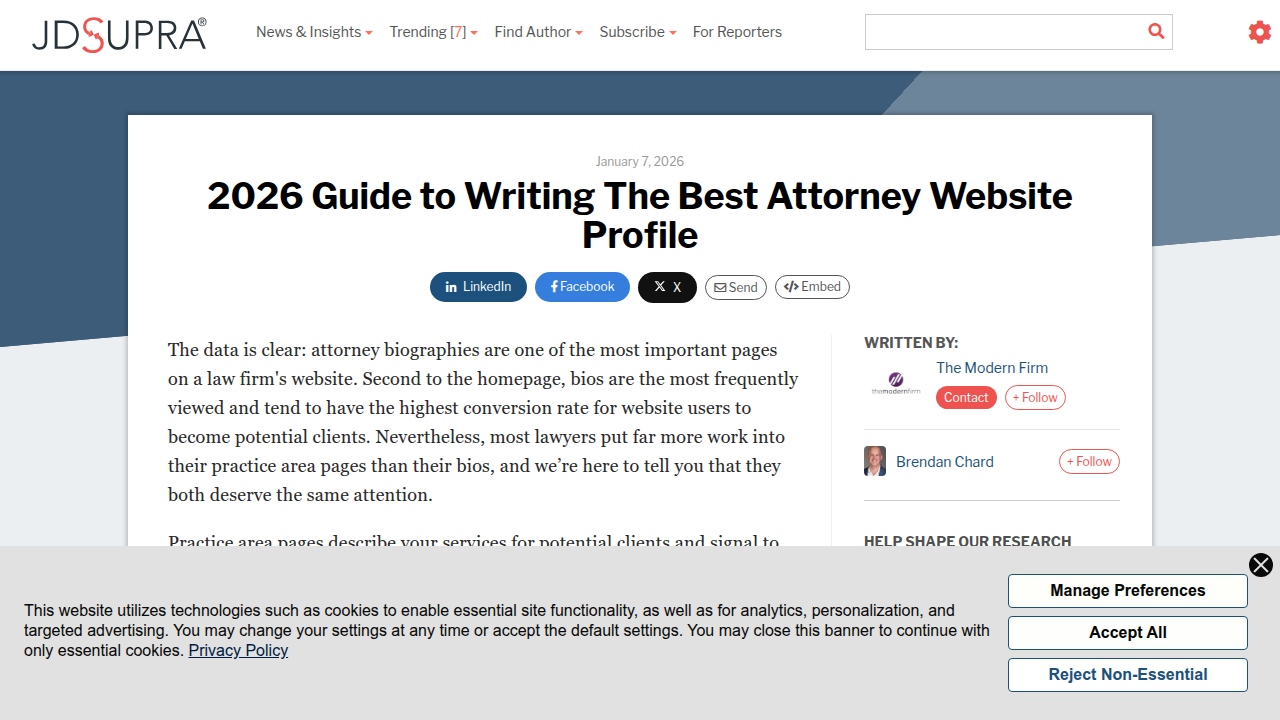
For any legal professional, a strong online presence is a must in 2026. This means having good descriptions in online directories and on your website. When writing an attorney’s profile for their website, it should be clear and helpful, not too long. A good 2026 guide to writing the best attorney website profile suggests keeping it concise and client-focused.
Many legal directories exist where clients search for lawyers. Your listing in these directories should have precise information about your specialties. This helps search engines match you with people who need your specific skills. To really shine online, law firms need a smart plan, as discussed in a law firm directory SEO guide for 2026.
Making sure your specialties are correctly spelled and consistently described everywhere online is a smart move. This consistency helps search engines know exactly what you offer. Think of it like a marketing strategist for law firms helping to spread the word about your unique services.
When you clearly describe what you do, it helps clients find you. But just as important is making sure your legal work follows all the rules. This means understanding the many laws and regulations that come with different legal specialties.

In 2026, this is more important than ever.
Understanding Rules for Different Legal Jobs
Every area of law has its own set of rules. For example, lawyers who work with money and stocks have to follow special rules about securities compliance. Those who help hospitals or doctors must know specific healthcare laws. And if you deal with people’s personal information, like an entertainment lawyer, data privacy rules are a big deal.
When legal teams or individual attorneys say what they specialize in, they are also telling everyone about the rules they promise to follow. This helps clients trust them. Ignoring these rules can lead to big problems. For instance, in the UK, regulators are getting stricter about rules to stop illegal money activities, as seen in the SRA tightens its grip on compliance.
Many experts agree that Law Firms Face 5 Key Compliance Challenges in 2026. These challenges often include new laws around how AI is used and how data is kept private. It’s a lot for any law firm to keep up with.
Rules for Working Across Borders
Today, legal work often crosses state lines or even countries. This means legal teams and attorneys at law plural need to be careful. If you offer legal services in different places, like working with clients under specific bc law or other local rules, you must know what applies where.
Using technology across borders also adds more layers of rules. For example, data privacy laws can be very different from one country to the next. What’s okay in one place might not be in another. This is a big challenge for law firms in 2026, as discussed in Navigating 2026 Compliance Priorities. Legal professionals have to constantly check and update their ways of working to make sure they are always compliant, no matter where their clients or their technology are located. Staying on top of these changes is a never-ending job for lawyers and legal staff alike.
Since staying compliant is an ongoing task, it helps to have a clear way to check how well your legal group is doing. This practical checklist helps your organization make sure everything lines up, from what you tell clients to the technology you use.
Practical Checklist: Auditing Your Org’s Specialties, Designations, and Content
Here’s how to make sure your legal practice is clear, correct, and compliant in 2026:
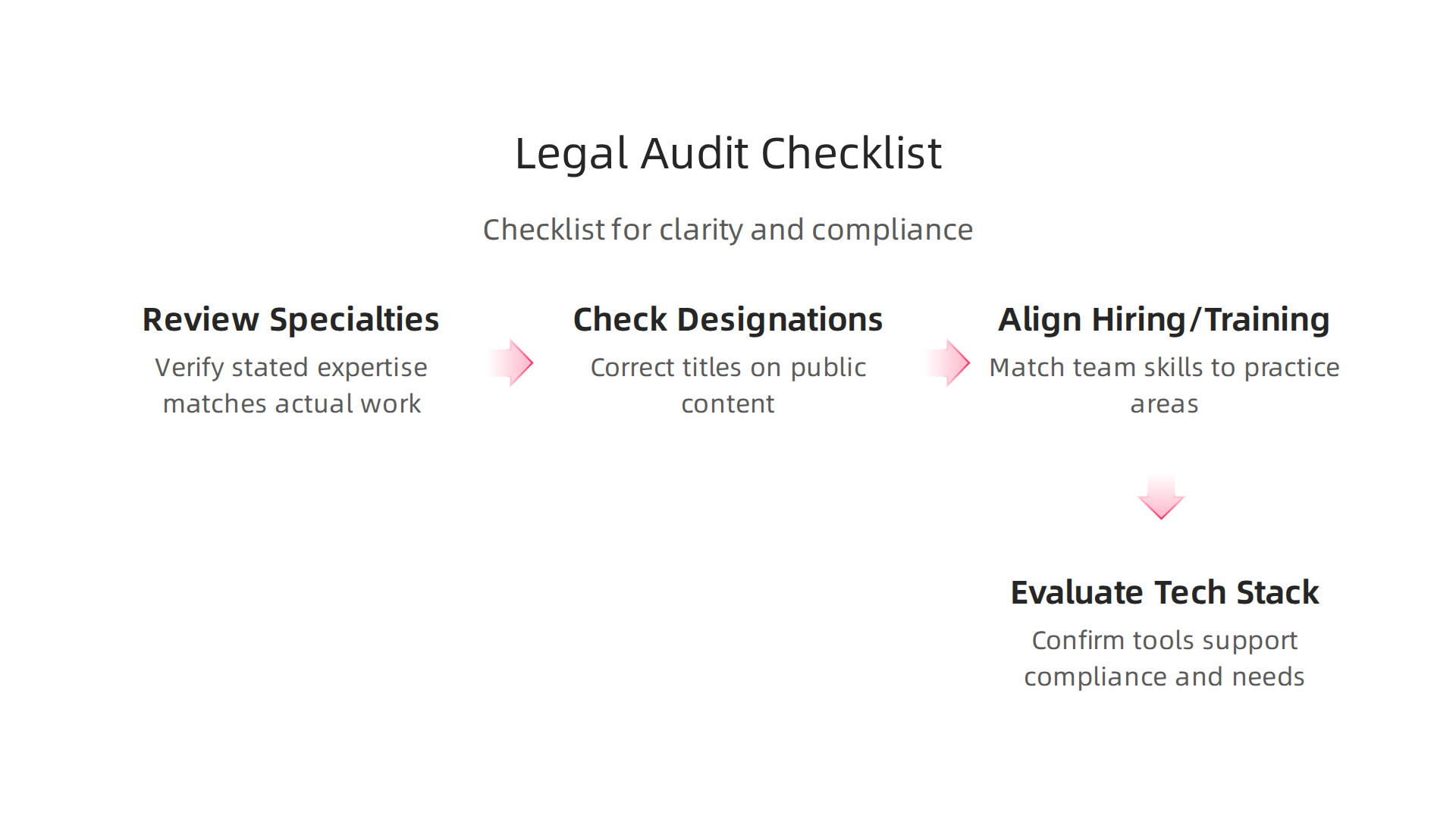
1. Review Your Legal Specialties
First, look at the legal areas your firm or team says it specializes in.
- What you say you do: Is this truly what your lawyers are experts in? For example, if you claim to handle
civil court lawyerscases, do you have the right experience? - What clients see: Does your website and marketing clearly show these specialties?
- Check definitions: Use official practice area definitions to make sure everything lines up, like those found in us-practice-area-definitions-2026.pdf.
2. Check Your Lawyer Designations and Public Content
How do you refer to the people who work for you?
- Attorney titles: Make sure you correctly use titles like
attorneys at law plural. Understand the What Is An Attorney Roles Licensing And Key Legal Distinctions. This also helps clients understand the Esquire And Attorney Explained Crucial Distinctions For Legal Professionals. - Website and bios: Are all attorney bios and firm content up-to-date and accurate? This is important for search engines and for building client trust.
3. Align Hiring and Training
Your team needs to match your stated goals.
- Hiring: Are you hiring lawyers who have skills in the areas you want to grow?
- Training: Are all new and current team members regularly trained on the specific rules for their roles? This includes new laws, especially in fast-changing areas.
4. Evaluate Your Technology Stack
The tools you use are key to staying compliant.
- Data and AI: Do your technology tools help you manage data privacy and follow new rules for using AI? Many Law Firms Unprepared for 2026 Compliance Landscape in this regard.
- Risk management: Are you using technology that helps find and reduce risks, as advised in the Top 10 Risk & Compliance Trends for 2026?
- AI benefits: Think about how an How An AI Law Firm Drives Growth With Interactive Legal Tools can improve your firm’s compliance and services.
Quick Wins and Longer-Term Actions
Quick Wins (do these soon):
- Update your website’s "About Us" and "Services" pages to be very clear about what you offer.
- Make sure all lawyer profiles and bios are correct and up-to-date.
- Do a quick check of how you store client data to ensure basic privacy.
Longer-Term Actions (plan these out):
- Create a detailed plan for how your firm will handle rules and risks. This is called a governance plan.
- Invest in new legal software that is specifically designed to help with compliance tasks.
- Set up regular training for your team so they always know the newest rules and best ways of working.
- When choosing new technology, especially tools that use AI, carefully check that the company providing them also follows strict rules. Staying informed about AI’s fast changes is crucial. To keep up, consider subscribing to The AI Newsletter Worth Reading.
Summary
This guide explains how the many legal specialties and professional titles work in 2026 and why those distinctions matter for clients, hiring managers, and legal teams. It covers common practice areas, the practical difference between terms like lawyer, attorney, solicitor, and barrister, and how specialization affects team structure, hiring, and training. The article also shows how to choose technology that fits each practice area—matter management, e‑discovery, CLM, and compliance tooling—and how to evaluate vendors against your competency models. You’ll learn concrete steps to make your firm or in‑house team more discoverable online, keep attorney bios and listings accurate for SEO, and stay compliant across jurisdictions. Finally, there’s a hands‑on audit checklist with quick wins and longer‑term actions to align specialties, content, hires, and tech for safer, smarter legal operations.