
Lawyer Defined 2026 How Technology Reshapes the Attorney Role

Introduction
Think about what comes to mind when you hear the word "lawyer." Maybe you picture someone in a suit arguing inside a courtroom. Or maybe you imagine a person buried in paperwork at a big desk. Here is the truth. That old picture does not tell the full story anymore.
The term lawyer defined today covers much more ground. Yes, some lawyers still go to court every day. But many others work in corporate offices, tech companies, and even inside startups. A criminal lawyer nyc might spend their morning in court and their afternoon reviewing digital evidence. A merger and acquisition lawyer might never see a courtroom at all. Instead, they spend their days negotiating billion dollar deals from a conference room.
The American Bar Association sets the ethical rules that all lawyers must follow. According to the ABA Model Rules of Professional Conduct, a lawyer must act with reasonable diligence and competence when representing a client. That Rule 1.3 standard about acting with promptness still applies whether you work in a law firm or inside a company. These rules have not changed, but the way lawyers apply them has.
In 2026, the modern lawyer also needs technology skills. Legal research, contract review, and even client communication now depend on digital tools. A lawyer who ignores this shift falls behind fast.
This article gives you a complete, data driven look at what being a lawyer really means today. We cover emerging specializations, tech driven responsibilities, and the core duties that never go away. Whether you are a law student choosing your path or a seasoned professional rethinking your career, you need this updated view.

If you want to stay ahead of the changes reshaping the legal world, consider subscribing to The Deep View Newsletter. It delivers clear daily updates on AI and legal tech so you never miss what matters.
The Traditional Legal Framework: Defining the Lawyer Role
So what does the term lawyer defined really mean at its core? To answer that, we have to go back to the basics. The role of a lawyer has deep roots. Think of three classic hats every lawyer has worn for centuries.
First, the counselor. This is the person who listens to your problem and gives you honest advice. A lawyer must understand the facts, know the law, and tell you where you stand. This duty never changes.
Second, the advocate. When you need someone to fight for you in court, that is the advocate. A criminal lawyer nyc arguing a case before a judge shows this side clearly. The client needs a voice, and the lawyer provides it.
Third, the officer of the court. This one sounds formal, but it matters a lot. It means the lawyer has a duty to the legal system itself. They cannot lie, hide evidence, or play games with the rules.
These three roles all rest on a strong foundation. Every lawyer must pass strict requirements set by state bar associations. You need a law degree, you must pass the bar exam, and you have to follow ethical rules. The American Bar Association’s Model Rules of Professional Conduct lay out the core standards. For example, Rule 1.3 says a lawyer must act with reasonable diligence and promptness when representing a client. That means no delays, no excuses.
And here is the thing. These rules are not optional. They apply to every type of lawyer, whether you are a merger and acquisition lawyer negotiating contracts or a public defender. If you want to check a lawyer’s background or see if they have ever faced discipline, you can use the PA Attorney Lookup tool to verify their license and history.
The three core functions of a lawyer stay the same too. You advise clients on their rights and options. You represent them in legal proceedings, whether that means court, arbitration, or a negotiation table. And you draft legal documents, which can be anything from a simple will to a complex merger agreement.
This traditional framework still holds firm in 2026. But remember what we said earlier. The job has grown beyond these basics. If you want to stay current on how the legal profession is changing, the The Deep View Newsletter delivers daily updates on AI and legal tech that matter to every lawyer.
The Evolution of the Legal Profession in the Digital Age
The traditional lawyer role we just covered? It is still the foundation. But what does the term lawyer defined actually mean for the professionals working in 2026? The definition has stretched. It now includes new skills, new tools, and new ways of working that did not exist just a few years ago.
Technology has changed the game completely.
Gone are the days of digging through dusty law books for hours. Now, e-discovery tools find evidence in seconds. Document automation writes routine contracts with a few clicks. And artificial intelligence is everywhere you look. AI adoption in the legal industry reached 78%, according to a recent Litify report. Most lawyers now use tools like ChatGPT and specialized legal AI every single day. A criminal lawyer nyc might use AI to analyze police reports and discovery materials. A merger and acquisition lawyer relies on it to review thousands of contract pages for a single deal. Tools for AI contract analysis for legal teams have moved from a nice-to-have to an absolute must-have.
The legal team has grown bigger than just lawyers.
Here is the thing. Lawyers no longer work alone in their offices. Legal operations professionals now manage the technology and the budgets. Alternative legal service providers take on document review and other routine tasks. Even a well-known marcia lawyer needs a strong support team behind the scenes.

This means the lawyer defined for today also includes roles like manager, tech buyer, and team leader. To see the full picture of legal help available now, you should read this breakdown on why you need more than a lawyer for business contracts.
Virtual work has redefined the law office.
Location is no longer a limit. Many lawyers now work remotely or in hybrid setups. Virtual law firms are becoming common. A lawyer can serve a client on the other side of the country without leaving their home. This opens up access to legal help for many people. It also changes the daily rhythm of practicing law.
Stay ahead of the fast changes.
The lawyer defined for 2026 is someone who never stops learning. The tools and the rules shift quickly. That is why staying informed matters so much. A simple way to do that is by subscribing to The Deep View Newsletter. It delivers clear daily updates on AI and legal tech straight to your inbox. It helps you adapt and thrive in this new digital age of law.
Core Responsibilities of a Modern Attorney
So what does the lawyer defined for 2026 actually do all day? The core duties have not disappeared. Client counseling still matters. Litigation and transactional work are still the bread and butter. A criminal lawyer nyc still argues motions. A merger and acquisition lawyer still drafts contracts. These traditions hold strong.
But the job has grown a lot wider.
New responsibilities are piling on fast.
Data privacy compliance is now a huge part of legal work. Every company handles personal data, and lawyers make sure they do it legally. Cybersecurity risk management is another big one. Firms spend serious money to prevent data breaches. And AI governance? That is brand new. Lawyers now help companies set rules for how artificial intelligence can be used. These are not niche topics. According to Clio, cybersecurity, AI law, and data privacy are among the fastest-growing practice areas in 2026. The National Jurist agrees and points to AI and data privacy as top growth fields.
Even traditional roles have changed.
Think about a criminal lawyer nyc. They still go to court. But they also review police body camera footage, analyze digital evidence, and advise on AI-based surveillance tools. A merger and acquisition lawyer still negotiates deals. But now they also run automated contract reviews and check for compliance with new ESG rules. A Marcia lawyer who handles high-profile cases must understand social media evidence and data privacy laws too.
This is the modern lawyer defined in action.
Project management skills are no longer optional.
Legal work is complex. It involves many people, tight deadlines, and huge document sets. Lawyers who just write legal arguments are no longer enough. Firms now hire legal operations professionals to handle the logistics. But even practicing attorneys need to manage budgets, supervise tech tools, and coordinate teams. That is a huge shift. If you want to see how technology is reshaping these workflows, check out our guide on why you need more than a lawyer for business contracts.
The job has layers now. The core stays. But the skills keep growing.
Specializations and Practice Areas: Beyond the General Practitioner
Not every lawyer fits the same mold. The lawyer defined by 2026 often picks a focus area. Some stick with the classics. Others jump into fields that barely existed a decade ago.
Traditional specializations still matter.
Corporate law, litigation, intellectual property, real estate, and tax law remain the backbone of the profession. A merger and acquisition lawyer still handles complex deals. A criminal lawyer nyc still defends clients in court. These paths are well established and still pay well. They are not going anywhere.
But newer specializations are growing fast.
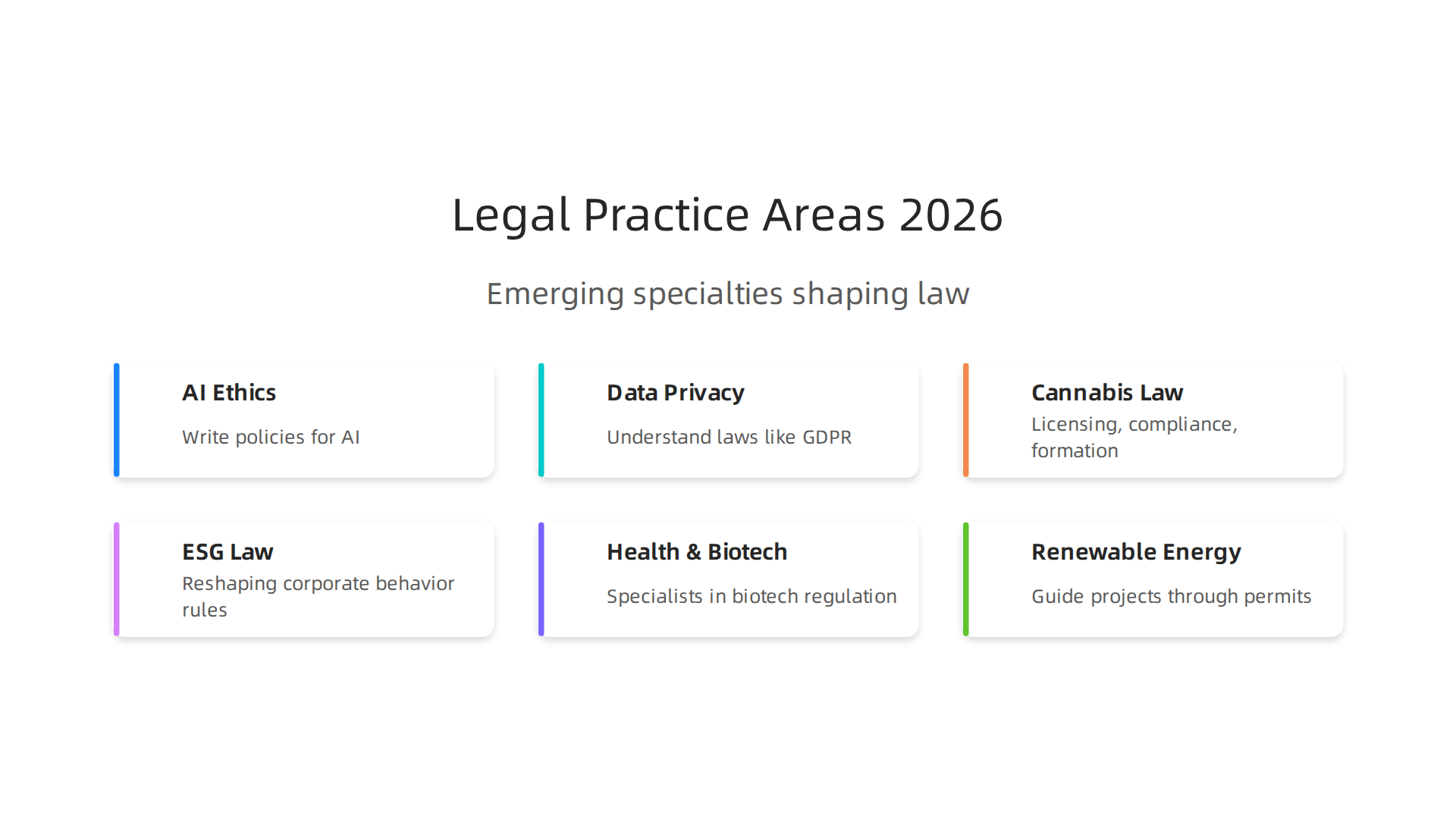
Technology and regulation are creating entirely new practice areas. Here are some of the hottest fields in 2026:
-
AI Ethics and Machine Learning Law. Companies need lawyers who can write policies for artificial intelligence. This is one of the fastest-growing areas. The BCG Search report lists AI and Machine Learning Law as the top growth area for attorneys.
-
Data Privacy and Cybersecurity. Every business handles personal data. Lawyers who understand privacy laws like GDPR and CCPA are in huge demand. Clio reports that cybersecurity and data privacy are among the fastest-growing practice areas.
-
Cannabis Law. As more states legalize marijuana, lawyers are needed for licensing, compliance, and business formation. Both LawCrossing and Clio list cannabis law as a top growth field.
-
ESG Law. Environmental, social, and governance rules are reshaping corporate behavior. The National Jurist notes that climate law is a major growth area. BCG Search also ranks ESG Law in the top five.
-
Health Law and Biotech. The pandemic accelerated demand for health law experts. The legal market now needs specialists in biotech regulation and healthcare compliance.
-
Renewable Energy Law. As the world shifts to clean energy, lawyers guide projects through permits, contracts, and regulatory hurdles.
Where do most lawyers work?
The U.S. legal market is huge. According to HazenTech, it is worth around $426 billion and keeps growing. State bar reports show that corporate law and litigation still employ the most attorneys. But new fields are catching up quickly. The top growth industries include high-tech, health care, and clean energy, as Attorney at Work points out.
If you are curious about how these trends affect specific roles, check out our guide on the employment lawyer career in 2026. It breaks down how employment law is changing with remote work and new regulations.
The choice of specialization matters more than ever. Whether you go traditional or cutting-edge, the lawyer defined today has options.
The Role of Legal Technology in Reshaping ‘Lawyer’
You might think that picking a specialization is the biggest choice a lawyer makes. But in 2026, how a lawyer works is just as important as what they work on. Technology is changing the job itself. And the lawyer defined by this era is someone who uses tech, not just someone who knows the law.
AI tools are everywhere now.
Legal research used to mean hours in a library or scrolling through case law databases. Today, AI tools do much of that work in seconds. A Litify survey found that AI adoption in the legal industry reached 78%. Lawyers now rely on tools like ChatGPT and Microsoft Copilot to find relevant cases, analyze contracts, and even predict case outcomes.
The numbers keep climbing. According to U.S. Legal Support, 42% of law firms now use AI technologies. That is up from 26% in 2024. And 42% of firms expect their AI use to increase in 2026. A separate survey from Best Law Firms reports that 60% of lawyers now say AI is a must for their practice. 95% believe AI will be a central component of their work soon.
Automation handles the boring stuff.
Think about the tasks that used to eat up a lawyer’s time. E-discovery, document review, and billing are all being automated now. Tools that can scan thousands of documents in minutes are replacing junior associates who used to do it manually. The Wolters Kluwer analysis shows that AI tools save lawyers 6% to 20% of their time each week. That time goes back to higher value work: strategy, client counseling, and complex legal analysis.
But here is the thing. Not every firm is moving at the same speed. The Juris Digital guide notes that while 28% of firms use AI, only 15% have fully implemented it. The gap between adoption and full integration is still wide.
For a closer look at how AI handles contract review specifically, check out our deep dive on IRIS Law 2026 AI contract analysis for legal teams.
Does tech replace lawyers or make them stronger?
This is the big question. And the answer so far is clear: tech augments, it does not replace. A machine can find cases faster. It can scan contracts for red flags. It can predict outcomes based on data. But a machine cannot argue in court. It cannot counsel a worried client. It cannot negotiate a complex merger deal.
The lawyer defined by 2026 is a hybrid professional. You still need legal knowledge. But you also need to know which tools to use and when. The lawyers who thrive are the ones who treat technology as a partner, not a threat.

Want to stay ahead of these changes? The landscape shifts fast. A daily update on AI and legal tech can make all the difference. Consider subscribing to The Deep View Newsletter for clear, daily updates on AI developments that matter to legal professionals.
Education, Licensing, and Ethical Standards
So how does someone even become a lawyer? And what keeps them honest once they get the title? The path is more demanding than most people realize. And in 2026, it includes a few new twists.
Here is the traditional route. You get a bachelor’s degree. Then you earn a Juris Doctor (JD) from an accredited law school. Then you pass the bar exam in the state where you want to practice. And finally, you go through a character and fitness review. That last step is where many potential lawyers get tripped up. The bar wants to know if you have a history of dishonesty, financial irresponsibility, or serious misconduct. It is a real gatekeeper.
The educational requirements are not just about the degree anymore. Many law schools now emphasize practical skills and technology competence. The revised ABA Standards 303(b) and (c) now require schools to teach professional identity formation and cross-cultural competence. The NALP analysis of these revised standards explains that the Model Rules of Professional Conduct demand competence, diligence, and fairness from every lawyer.
The learning never stops.
Once you are licensed, Continuing Legal Education (CLE) keeps you sharp. Every state has its own requirements. In North Carolina, for example, lawyers need 12 CLE hours each year. That includes 2 hours of ethics and 1 hour focused on technology, according to the North Carolina CLE requirements guide. Many states are now requiring technology training as part of CLE. The message is clear. You cannot be a competent lawyer in 2026 if you do not understand the digital tools your clients expect you to use.
The American Bar Association Model Rules of Professional Conduct serve as the baseline for ethical behavior across all 50 states. They cover everything from client confidentiality to advertising rules.
Regulatory changes are changing the definition.
Here is where things get interesting. Some states are experimenting with alternative business structures (ABS). This means non-lawyers can own part of a law firm. It also means that a lawyer defined by traditional rules might soon share a firm with a tech entrepreneur or a marketing executive. Unauthorized practice of law (UPL) rules are also shifting as AI tools take over tasks that used to require a human lawyer.
The bottom line is this. The legal profession is opening up. The barriers to entry still exist, but the definition of who can provide legal services is expanding. Want to quickly check if a lawyer you are working with is properly licensed? Our guide on how to use the PA attorney lookup to check a lawyer’s license and disciplinary history walks you through the process step by step.
The Future of the Legal Profession: A Dynamic Definition
The traditional picture of a lawyer sitting in a wood-paneled office, drafting documents by hand, is fading fast. In 2026, what it means to be a lawyer defined by old job descriptions is being completely rewritten. The biggest driver? Artificial intelligence.
AI adoption in the legal industry has exploded. A recent survey found that 78% of legal professionals now use AI tools, from ChatGPT to specialized contract reviewers. That number has more than doubled in the past year alone, according to a 2026 report on AI adoption among lawyers. This is not a future trend. It is happening right now.
Generative AI is taking over tasks that used to require hours of human effort. It drafts simple wills, reviews discovery documents for e-discovery, and even suggests language for complex contracts. That means a criminal lawyer nyc can now use AI to scan police reports for inconsistencies in minutes. A merger and acquisition lawyer can let AI flag risky clauses in a 200-page deal document. The work is still supervised by a human, but the speed and scale have changed completely.
What will 2030 look like?
Here are three predictions for the next few years:
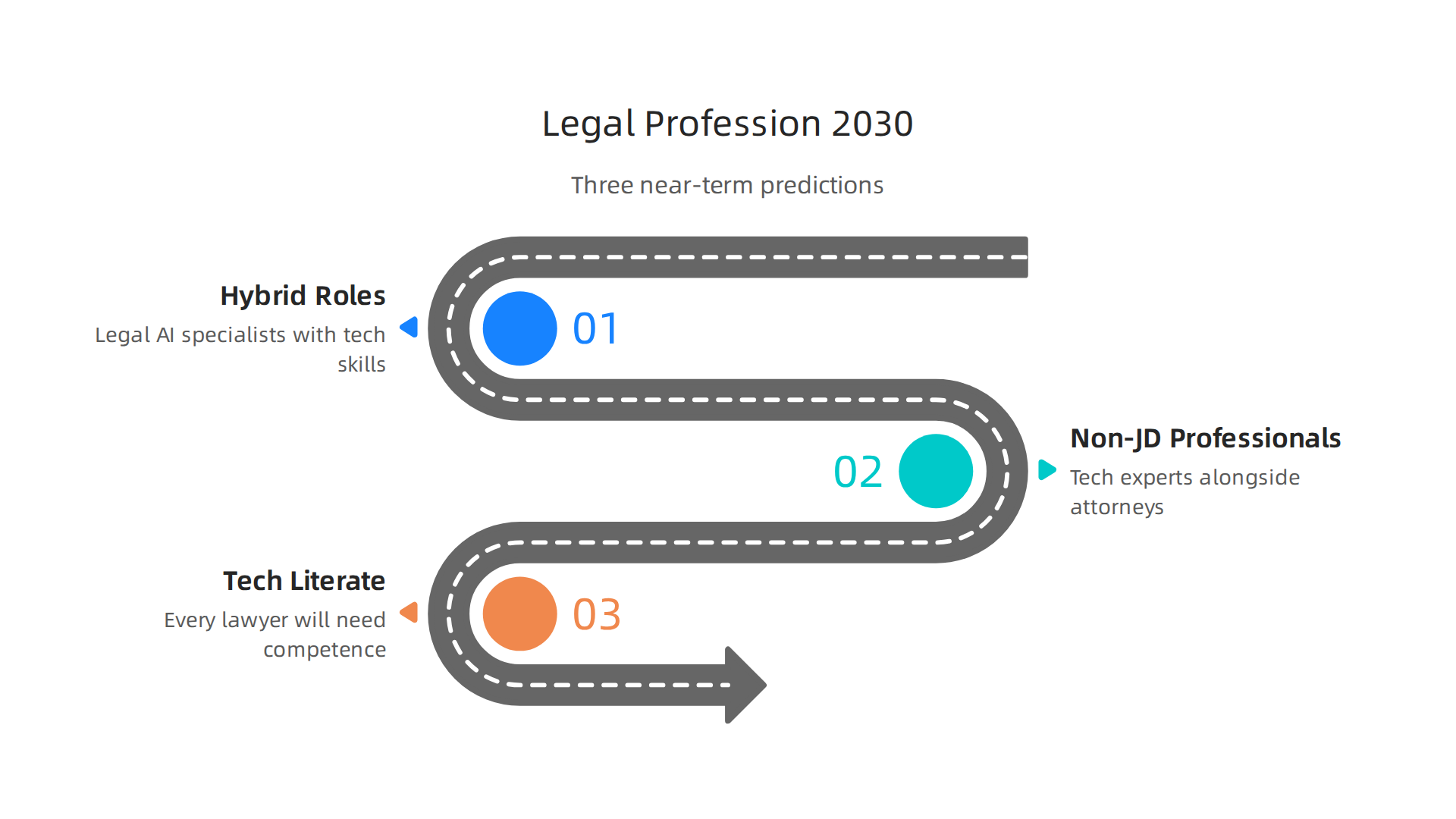
- Hybrid roles will appear. We will see legal AI specialists who combine law knowledge with deep tech skills. Some of these professionals may not even have a JD. The definition of who can provide legal services is expanding.
- Non-JD professionals will enter legal services. Alternative business structures (ABS) allow non-lawyers to own parts of law firms. Tech experts, data scientists, and marketing leaders will sit alongside attorneys.
- Every lawyer will need to be tech literate. It will no longer be optional. Clients already expect quick, digital-first service. Firms that lag behind will lose business.
How can lawyers stay relevant today?
You do not need to become a programmer. But you do need to understand what AI can and cannot do. Start by testing a few tools. For example, many firms are already using platforms like Iris Law for AI contract analysis to review agreements faster and more accurately. That is a practical first step.
The most important thing is to keep learning. The legal tech landscape changes every month. One of the easiest ways to stay informed is by subscribing to a trusted daily newsletter. We recommend The Deep View Newsletter. It delivers clear, practical AI updates straight to your inbox. No fluff. Just the news that matters for your practice. Subscribe to The Deep View Newsletter and stay ahead of the curve.
The lawyer defined by the past is not the lawyer of tomorrow. The profession is dynamic, and those who embrace change will thrive. The choice is yours.
Summary
This article redefines what being a lawyer actually means in 2026, showing how the traditional roles of counselor, advocate, and officer of the court remain essential while new skills and technologies expand the job. It explains how AI, automation, and legal operations change day‑to‑day tasks, what new practice areas (like AI law, data privacy, ESG, and cannabis) are growing, and which responsibilities—cybersecurity, privacy, and AI governance—now fall on attorneys. The piece also walks through the path to practice (education, bar admission, and CLE), evolving ethics and regulatory shifts such as alternative business structures, and practical steps lawyers can take to adopt technology. Readers will come away knowing which specializations are in demand, how tech augments rather than replaces lawyers, and where to find resources to check licenses, select tools, and stay current in a fast‑moving profession.