
How to Use the PA Attorney Lookup to Check a Lawyer’s License and Disciplinary History

Introduction
Are you trying to find a trustworthy lawyer in Pennsylvania but don’t know where to start? Maybe you need a power of attorney lawyer for an elderly parent, or you’re looking for someone with a background from Suffolk Law or Combined Law. Here’s the thing: simply googling a name or relying on a friend’s recommendation isn’t enough. You need a way to verify that the lawyer you’re considering is actually licensed, in good standing, and has no serious disciplinary history.
That’s where the official PA attorney lookup tool comes in. The most authoritative source is the Disciplinary Board of the Supreme Court of Pennsylvania. This free search lets you check any attorney’s status, contact info, and any public disciplinary actions. Using it gives you peace of mind before you hand over your case, your money, or your personal information.

As of 2026, the system is updated regularly, so you can trust what you see.
In this guide, I’ll walk you through exactly how to use the official lookup, what each status means, and common mistakes to avoid. You’ll also learn how to spot red flags and choose a lawyer who fits your needs. If you’re thinking about hiring legal help, it’s worth learning more about what to consider when hiring legal help beyond just a license check.
Let’s start with the quickest way to run a pa attorney lookup and get the info you need.
Understanding the Pennsylvania Attorney Lookup System
Now that you know the quickest way to run a pa attorney lookup, let’s dig into the system itself. The official tool is run by the Disciplinary Board of the Supreme Court of Pennsylvania. This is the same body that handles complaints against lawyers, so the data is authoritative.
The system is part of the Unified Judicial System of Pennsylvania’s public access portal. That means it’s directly connected to the state courts. When you search, you see the most current information. The board updates the system regularly, so as of 2026, you can rely on what you find. You can search by last name, first name, ID number, city, or county (source: Jenkins Law Library Legal Ethics Guide). The board also maintains clear rules about how disciplinary matters are handled, as outlined by the Philadelphia Bar Association.
Here’s the thing: third-party directories like Avvo or FindLaw can be helpful, but they often have outdated info. They pull from public records, but updates can take weeks. The official pa attorney lookup is always the most current. If a lawyer gets suspended, this system shows it immediately. A third-party site might still list them as active. The Disciplinary Board’s for the public page explains that you can find an attorney’s status, contact information, and public disciplinary history all in one spot.
What can you see in the lookup? You can check an attorney’s status (active, inactive, suspended, or retired), their contact details, and any disciplinary actions. This is crucial whether you need a power of attorney lawyer for an elderly parent or someone who studied at Suffolk Law or Combined Law. Verifying their standing first gives you peace of mind before you share personal details.
Once you’ve confirmed their license is valid, it’s wise to consider other factors too. You can learn more about what to consider when hiring legal help beyond just a status check.
The system is free and open to everyone. No account needed, no fees. Just go to the Disciplinary Board website and start your search. It’s the best first step before you make any decision.
Step-by-Step Guide to Using the Official PA Attorney Lookup Tool
Alright, you’re ready to run a real pa attorney lookup. The tool is simple, but knowing exactly what to do and how to read the results saves you time. Here is a clear walkthrough.
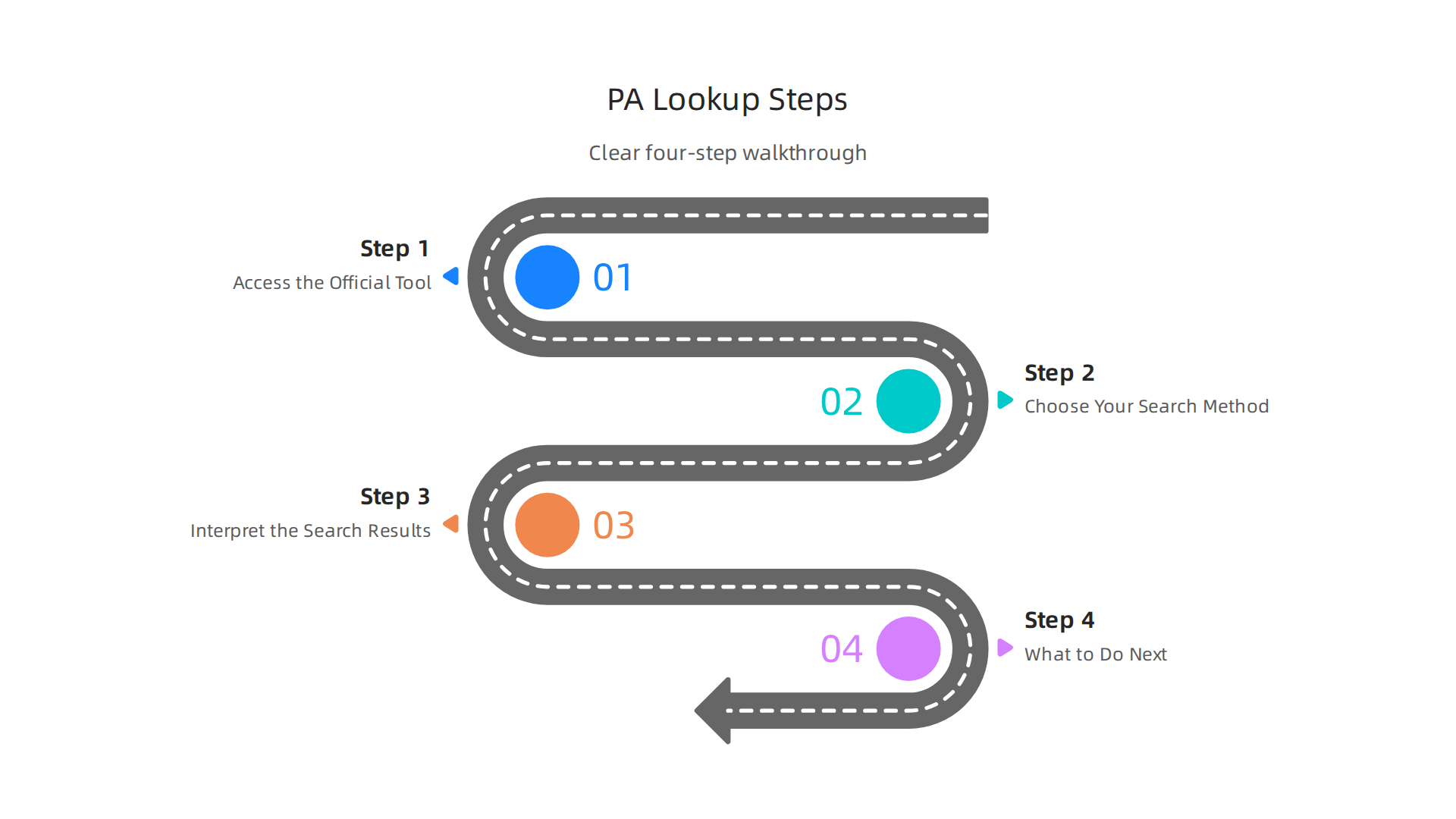
Step 1: Access the Official Tool
Go straight to the source. Open your browser and visit the Look Up Attorney page on the PA Disciplinary Board website. This is the only official tool for checking an attorney’s license status. There is no login or fee required. It is free and open to everyone.
Step 2: Choose Your Search Method
The search box is straightforward. You can look up an attorney by:
- Last name (required) and first name
- PA Bar ID number (if you have it)
- City or county
According to the Jenkins Law Library Legal Ethics Guide, these are the standard fields. The system is part of the Unified Judicial System of Pennsylvania’s public access portal, so the data comes directly from the state courts. This means your results will be current.
For most people, searching by last name and first name works perfectly. If you have a common name, adding a city or county helps narrow things down.
Step 3: Interpret the Search Results
Once you hit search, you will see a list of matching attorneys. Click the name of the person you are checking. The detail page shows three critical things:
- Status indicator: The attorney’s current standing is listed clearly. You will see "Active," "Inactive," "Suspended," "Retired," or "Disbarred." This is your most important check.
- Contact information: You will see the attorney’s registered office address and phone number.
- Public disciplinary history: If the attorney has ever been disciplined by the Board, a summary of the action appears here. You can learn more about how these matters are handled by reading the Philadelphia Bar Association’s FAQ on the disciplinary process.
The Disciplinary Board’s "For the Public" page confirms that this data is always the most authoritative version. Third-party directories might show a lawyer as active when they are actually suspended. You want the real story.
Step 4: What to Do Next
If the attorney’s status is "Active," you can proceed with confidence. If you see "Suspended" or "Disbarred," keep looking. No matter what you find, the lookup is just the first step. You should also consider factors like experience, communication style, and fees.
Once you confirm an attorney is in good standing, you can learn more about what to consider when hiring legal help beyond just a status check.
For example, maybe you need a power of attorney lawyer for an aging parent. Or perhaps you are looking for someone who studied at Suffolk Law or Combined Law because you trust that school’s training. The lookup won’t show their education, but it will tell you for sure whether they are allowed to practice in Pennsylvania right now.
That peace of mind is priceless before you share any personal details or pay a retainer.
Verifying Attorney Credentials and Disciplinary History
You have the search results in front of you. Now you need to know what each status really means and how to dig deeper. This is where the pa attorney lookup becomes truly useful.
What Those Status Labels Mean
The Pennsylvania Disciplinary Board uses specific status definitions.
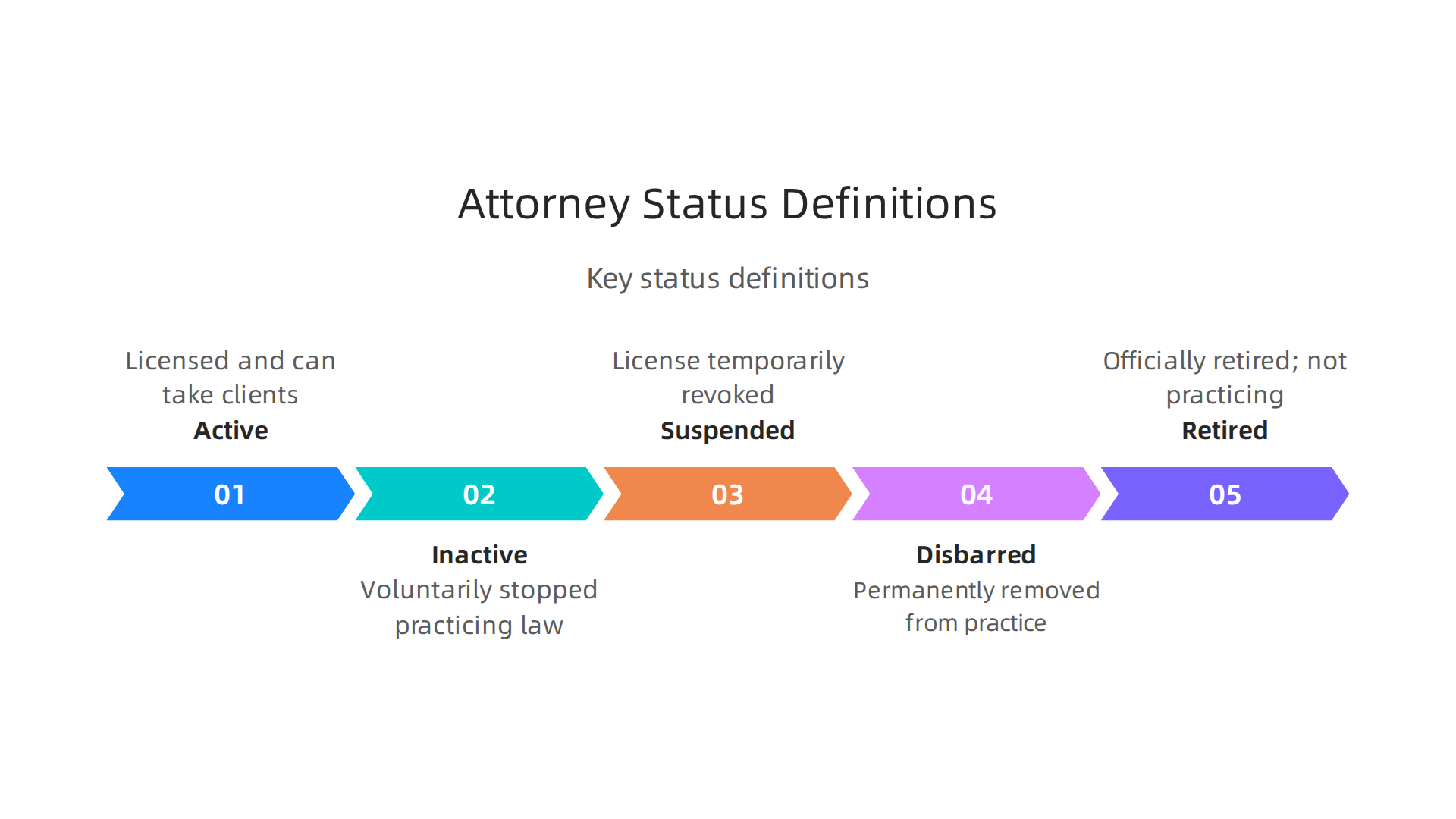
Each one tells you something important about the attorney’s ability to practice law.
-
Active: The attorney is licensed and can take on clients. This is what you want to see.
-
Inactive: The attorney has voluntarily stopped practicing law. According to the official Pennsylvania Code definitions, an attorney on inactive status cannot practice law in Pennsylvania. An inactive attorney may not represent you.
-
Suspended: The attorney’s license has been temporarily revoked. The Disciplinary Board’s status definitions clarify that a suspended attorney is prohibited from practicing law for a specific period. They cannot take new cases.
-
Disbarred: This is the most serious outcome. The attorney has been permanently removed from the practice of law by a Supreme Court order. A disbarred attorney cannot represent anyone.
-
Retired: The attorney has officially retired and does not practice. They may request to return to active status later, but while retired they cannot take cases.
If you see anything other than "Active," keep looking. The Pennsylvania Board of Law Examiners reinforces that the integrity of the legal system depends on licensed, ethical representation.
Reading the Disciplinary History
When you click on an attorney’s name, you may see a section labeled "Public Disciplinary History." This shows actions taken by the Disciplinary Board. Common actions include:
- Disbarment (permanent removal)
- Suspension (temporary loss of license)
- Public Censure (formal public criticism without license loss)
- Private Discipline (like an informal admonition, not shown publicly but recorded internally)
The Philadelphia Bar Association’s FAQ explains that the disciplinary process is designed to protect the public. Even a past suspension that has been lifted may be a red flag. You can learn more about how attorneys can return from suspension or inactive status through resources like reinstatement proceedings guidance, but as a client, you want someone with a clean record.
Cross-Referencing with Other Sources
The official lookup is the gold standard. But you can also check other sites for additional context.
-
Avvo and Martindale-Hubbell: These platforms show client reviews, peer ratings, and sometimes verify whether a lawyer is in good standing. However, they may not update as quickly as the Disciplinary Board. Always treat the official lookup as the final word.
-
Pennsylvania Bar Association Lawyer Referral Service: The PBA Find a Lawyer page can help you find qualified attorneys by practice area and location. It is not a disciplinary tool, but it connects you with lawyers who have agreed to certain standards.
-
Federal Court Verification: If the attorney practices in federal court, you can use the Eastern District of Pennsylvania Bar Attorney Status Lookup to check their federal admission.
Cross-referencing helps fill in the picture.

For example, if you need a power of attorney lawyer, you want someone with experience and good reviews. The official lookup tells you they are active. Avvo tells you if past clients were happy. Both matter.
Now, the lookup does not show law school history. You might care if an attorney studied at Suffolk Law or Combined Law, but that information comes from the attorney’s bio or directory profiles. The status lookup tells you the essential thing: whether they are allowed to practice.
Once you confirm an attorney’s credentials, the next step is finding the right fit. As you compare candidates, understanding the evolving landscape of legal careers can help. Our guide on the evolving role of employment lawyers offers insight into what modern legal professionals are expected to bring to the table.
Take your time with this step. A few minutes of checking now can save you from major problems later.
Advanced Search Techniques for Legal Professionals
Once you are comfortable with the basic pa attorney lookup, you can go much deeper. Legal professionals, compliance teams, and in house counsel often need more than a single name search.

They need to find the right lawyer fast, especially when dealing with a specific power of attorney lawyer or a specialist in a niche field.
The good news is that the same tools offer advanced filters that save hours of work.
Using Advanced Filters: Practice Area, Language, and Location
The standard lookup search by name works fine if you know who you are looking for. But what if you need a lawyer who speaks Spanish and handles contract disputes in Pittsburgh?
The official PACDL directory offers filters for firm name, individual name, geographic area, and practice area. The Wisconsin Bar advanced search shows what is possible with nine search filters. Pennsylvania’s version may not have nine filters yet, but platforms like the Pennsylvania Bar Association Find a Lawyer tool let you narrow by location and practice type.
You can also use directories like Justia’s Pennsylvania lawyer directory to filter by ratings, client reviews, and case results. This is helpful when you want to check an attorney’s background beyond the bare status. If you see excellent peer reviews paired with an Active status from the PA Disciplinary Board lookup, that is a strong sign.
Some platforms even let you filter by law school. If you specifically want a graduate from Suffolk Law or a joint degree program like Combined Law, you may need to look at attorney bios or directory profiles for that detail.
Integrating Lookup Data with CRM or Vendor Management Systems
If your firm or legal department works with many outside counsel, manual lookups become a bottleneck. You can integrate public data from the pa attorney lookup into your CRM or vendor management system.
For example, you can build a workflow that checks an attorney’s status every time a new vendor is added to your system. This automates compliance and ensures no one slips through the cracks. The Eastern District of Pennsylvania Bar Attorney Status Lookup tool provides federal admission data that you can also pull into your tracking.
But know your limits. The Pennsylvania Board of Law Examiners data is public, but harvesting it for commercial use may have restrictions. Always check the terms of service before building an automated system.
Batch Searching and API Access Considerations
Do you need to vet 50 lawyers at once? Some advanced users look for batch search or API access. Unfortunately, the official Disciplinary Board lookup does not offer a public API as of 2026. You have to run searches individually through the Look Up an Attorney page.
For larger projects, you can use third party aggregators like Lawyer Legion which compile status data along with ratings, board certifications, and practice areas. The PA 211 Lawyer Referral Services directory can also point to local referral programs that pre-screen attorneys.
The bottom line is that the official lookup gives you the truth, and the third party tools give you speed. Use both.
As legal technology evolves, so do the tools for finding and vetting attorneys. For a broader look at how law firms are adapting in 2026, read our guide on how leading law firms embrace technology.
Common Pitfalls When Using a PA Attorney Lookup
Now that you know how to use the advanced tools, let’s talk about the mistakes that trip people up. Even experienced legal professionals fall into these traps when running a pa attorney lookup.
Avoid them, and your vetting process will be much more reliable.
1. Relying on Outdated Third‑Party Directories
It’s tempting to use a big directory site that shows ratings, reviews, and bios all in one place. But those sites don’t always update their data daily. An attorney might show up as “active” on a third‑party site even after they have been suspended or disbarred.
The only source you should trust for official status is the Pennsylvania Disciplinary Board Look Up Attorney page. That database is the court’s official record. Always cross‑check third‑party results there.
If the directory says a lawyer graduated from Suffolk Law or earned a Combined Law degree, that may be correct. But the license status? That is the part that can be stale. Verify it yourself.
2. Name Variations and Misspellings
Have you ever searched for a power of attorney lawyer but typed the name slightly wrong and got no results? Or the attorney uses a middle name instead of their first name? The lookup tool is exact. If you misspell “Smith” as “Smyth,” you won’t find the record.
Here’s the fix: try multiple variations. Use first initial, full middle name, maiden name, or nickname. If the attorney’s bio says they go by “Mike” but their bar registration says “Michael,” search for “Michael.” You can also search by city or county if you are sure of the location. The PA Licensing System (PALS) can help you search by license number if you have that handy.
3. Assuming Active Status Means No Complaints
This is the biggest trap of all. “Active” status simply means the attorney is allowed to practice law in Pennsylvania. It does not mean the attorney has a spotless record. The Status Definitions page clearly lists what each status means: Active, Inactive, Suspended, Disbarred, and so on. But even an Active attorney can have pending disciplinary matters that are not yet made public.
The disciplinary process can take months. An attorney might have a complaint filed against them but still show “Active” until a formal hearing. The Pennsylvania Rules of Disciplinary Enforcement outline when suspensions become public. Usually only serious or final actions show up in a standard lookup right away.
So what should you do? Don’t stop at the status check. Look at public court records, read client reviews on multiple platforms, and if possible, ask for references. For business deals, you may need to go beyond a simple verification. That is why we wrote a guide on why you need more than a lawyer for business contracts. It covers how to evaluate a lawyer’s actual track record.
The Bottom Line
A pa attorney lookup is a powerful starting point, but it is not the final word. Use the official Disciplinary Board tool as your bedrock. Then layer in other checks to get the full picture. Avoid these three pitfalls, and you will make smarter, safer hiring decisions every time.
Beyond the Lookup: Building a Reliable Attorney Database
You have learned to avoid the pitfalls of a single pa attorney lookup. But what if you need to manage a list of dozens or even hundreds of lawyers? Legal operations professionals, compliance teams, and large firms face this challenge all the time. You cannot run one search at a time. You need a system.
The goal is to build a reliable attorney database.

Here is how to do it the right way.
Aggregate Data from Multiple Official Sources
Start with the official state bar database. For Pennsylvania, that is the PA Disciplinary Board Look Up Attorney tool. This gives you license status, discipline history, and bar ID numbers.
But do not stop there. You also need data from other bar authorities. For example, if an attorney is admitted to federal court in the Eastern District of Pennsylvania, you can use their Bar Attorney Status Lookup tool to verify that status. For occupational license verification, the Pennsylvania Licensing System (PALS) can confirm license numbers.
You can also supplement with public directories like the PACDL lawyer directory or Justia Pennsylvania lawyer directory. These provide practice areas and client reviews. But remember the warning from earlier: always cross-check status with the official board.
For a broader view, look at how other states handle advanced searches. The State Bar of Wisconsin now offers nine filters for their lawyer search. That kind of granularity helps you narrow down by firm, practice area, or location.
Use Automation to Periodically Verify Attorney Status
Manual lookups are fine for a one-time check. But if you manage a database that changes over time, you need automation. Lawyers get suspended, disbarred, or move to inactive status. Their contact info changes. You want your database to reflect reality.
The solution is to write a script or use a legal tech tool that calls the PA Disciplinary Board lookup API on a schedule. Every month, or every quarter, the tool re-checks each attorney’s status. If a status changes from "Active" to "Suspended," you get an alert.
This automation saves time and reduces risk. It is the same principle behind why firms are adopting AI tools for contract analysis and compliance monitoring. If you are curious about how technology is reshaping legal work, our article on leading law firms embracing technology in 2026 shows real examples.
Ethical Considerations of Scraping Public Data
Here is the tricky part. Public data is free to access, but you cannot scrape it without limits. The Pennsylvania Board of Law Examiners emphasizes that the integrity of the legal system depends on ethical behavior from everyone. That includes how you collect data.
Before you build a scraper, check the terms of service for each website. Many government databases allow reasonable use but prohibit aggressive scraping that slows down their servers. If an official site offers an API or a data download option, use that instead of scraping.
Also, respect privacy. While license status is public, you should not combine it with private data in ways that violate laws like the Pennsylvania Unfair Trade Practices and Consumer Protection Law. Keep your database focused on professional qualifications.
And remember, even public data can be wrong. Always have a process to verify and update records with human review when a discrepancy appears.
Putting It All Together
Building a reliable attorney database takes planning. Start with the official board. Layer in other public sources. Automate re-checks to stay current. And always follow ethical data collection practices.
When you do this right, you save time and make smarter hiring decisions. That is the real value of going beyond a simple pa attorney lookup. And for a deeper look at how to evaluate a lawyer’s actual track record, read our guide on why you need more than a lawyer for business contracts.
Summary
This article is a practical guide to using the official Pennsylvania attorney lookup so you can verify a lawyer’s license, standing, and disciplinary history before hiring them. It explains where to find the authoritative tool (the Disciplinary Board’s lookup), how to run searches by name, bar number, city, or county, and how to read status labels like Active, Suspended, Inactive, Retired, and Disbarred. The guide covers what the lookup shows—and what it does not—offers advanced search techniques and automation ideas for firms, and warns about common pitfalls such as relying on third‑party directories or misspellings. You’ll learn when to dig deeper, how to cross‑check federal admissions and directories, and practical next steps for building a reliable attorney database while staying within ethical limits. After reading, you’ll be able to run a confident PA attorney check, spot red flags, and set up processes to keep your records current.