
Identify and Hire Top Lawyers for Business Disputes in 2026

Dealing with disagreements is a part of running any business.

But when these disagreements turn into big problems, known as business disputes, they can cause a lot of trouble. In 2026, finding the right lawyers for business disputes is more important than ever. Badly handled disputes can cost a company a lot of money, hurt its good name, and even lead to fines or legal issues with the government.
Think about it: if a business dispute isn’t handled well, it might mean big legal bills. It could also make customers or other businesses lose trust in your company, which is hard to get back. Even worse, with new rules about data and privacy in 2026, like those for handling personal information across different countries, businesses face many new legal risks. For example, laws about cross-border transfers of American personal information mean companies must be very careful. This is why having a smart business attorney by your side is key.
For legal teams and even a lawyer for small business, choosing a lawyer for disputes needs a good plan. You can’t just pick anyone. The best legal help comes from understanding what kind of dispute it is and how new technology can help. This guide will help you understand how to pick the best business lawyers in ny or anywhere else.
We will walk you through clear steps to find and hire the right legal talent. We will cover important decision points and look at how technology, like special software and tools, can make a big difference in solving disputes faster and better. Staying informed about technology is crucial for modern legal teams. For more in-depth knowledge, consider getting daily updates.
Get clear daily AI updates from The AI Newsletter Worth Reading.
When you are looking for lawyers for business disputes, it is super important to know that not all business problems are the same. Just like you would not call a plumber to fix your roof, you need a specific type of lawyer for a specific type of business fight. Understanding the different kinds of disputes helps you pick the right legal help and know what to expect.

Here are the main types of business disputes:
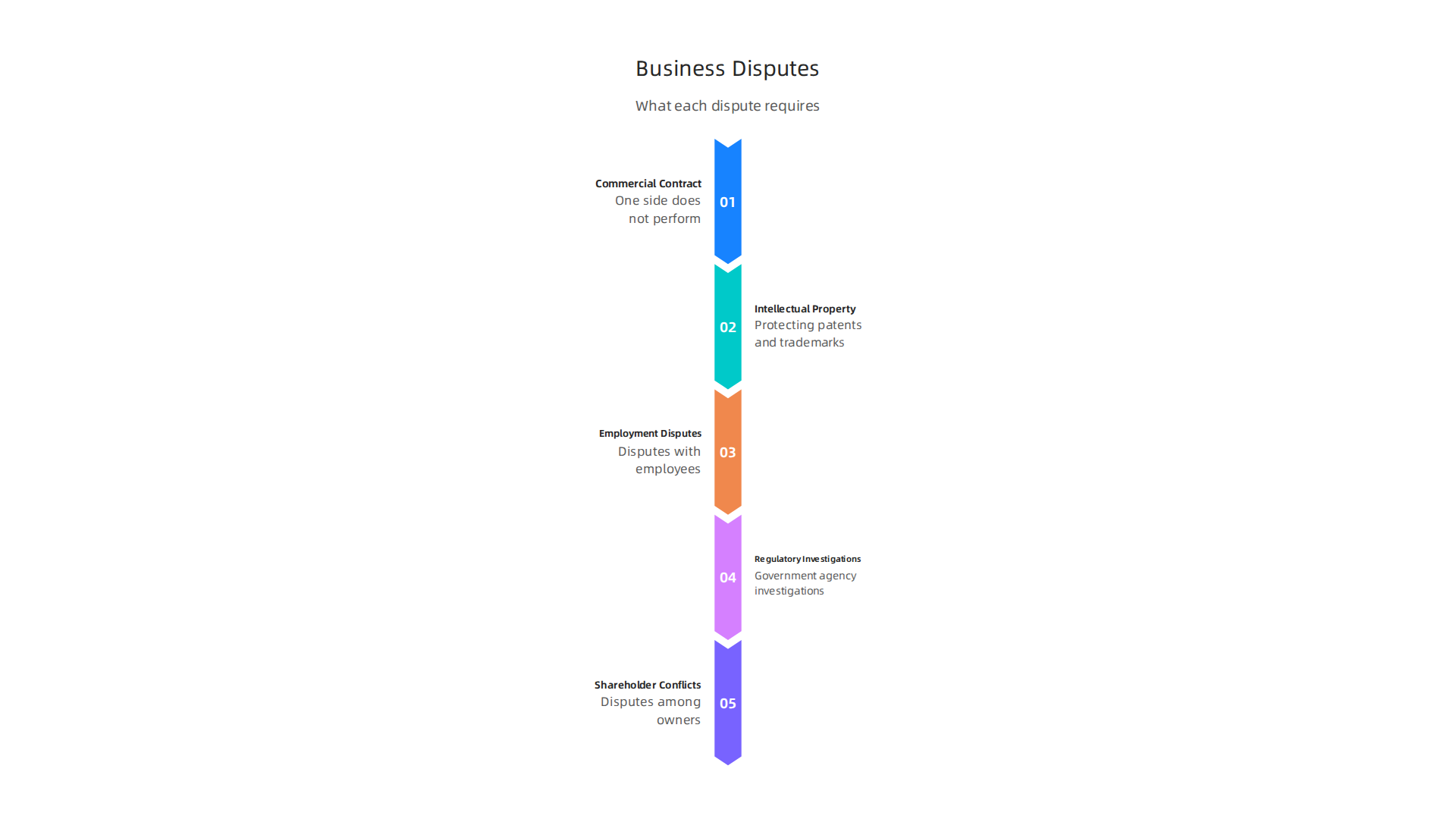
- Commercial Contract Disputes: This happens when two businesses (or a business and a person) have an agreement, like a contract for services or sales, and one side does not do what they promised. It could be about not paying, not delivering goods, or not finishing a job on time.
- Intellectual Property (IP) Disputes: These fights are about protecting a company’s unique ideas. This includes things like patents (for inventions), trademarks (for brand names and logos), and copyrights (for creative works like books or software). If someone copies your invention or uses your logo without permission, that is an IP dispute. A skilled trademark lawyer can help protect your brand.
- Employment Disputes: These are problems between a business and its employees. They can be about unfair firing, not getting paid enough, or issues in the workplace. In 2026, rules around employee rights are clearer than ever, so a good employment attorney 2026 is key.
- Regulatory Investigations: Sometimes, the government or a special agency looks into how a business is running. This could be about following environmental rules, financial laws, or safety standards. These can be very serious and need lawyers who know all about government rules.
- Shareholder and Partnership Conflicts: These disputes happen among the owners of a business. It could be partners disagreeing on how to run the company, or shareholders fighting over money or power.
Each of these dispute types needs a lawyer with special knowledge. For example, a lawyer who is great at contract law might not be the best choice for a fight over a patent. The type of dispute also shapes how it will be solved. Some might go to court (this is called litigation), while others can be fixed with talks outside of court. This is known as Alternative Dispute Resolution (ADR), and it includes things like mediation and arbitration. ADR is often faster and less costly than going to court. Actually, many cases using ADR get settled, with about 65% of federal government cases settling when ADR is used, according to one study Dispute Resolution and the Vanishing Trial: Comparing Federal Government Litigation and ADR Outcomes. Many experts also believe demand for ADR will increase in 2026 as businesses seek faster and more private ways to solve issues

Alternative Dispute Services Market Size & Share 2026-2032.
Beyond the type of dispute, other things change what kind of legal help you need:
- Your Industry: A tech company faces different problems than a restaurant. Your chosen lawyer should understand your specific business world.
- Where Your Business Is: Laws are different in New York than in California, for instance. So, a business attorney should know the laws of the place where the dispute happened.
- How Much Risk You Can Take: Some business owners want to fight hard no matter what. Others prefer to find a quick, quiet way out to save time and money. Your lawyer needs to match your style and goals.
It is true that your lawyer should fit your specific needs and goals. But before you even pick a lawyer, many businesses first ask: Can we handle this problem ourselves, or do we need to hire outside help? This is a big question for any company, whether you are a small business or a large one. Knowing when to keep legal matters in-house versus when to call in external counsel can save you a lot of trouble and money.

Decision Time: When to Hire Outside Lawyers
Deciding if you need external lawyers for business disputes depends on a few important things. Think of it like this: your business might have its own legal team, or maybe you are a small business owner who handles things yourself. But sometimes, the problem is just too big or too special for your internal resources.
Here are the main things to think about:
- How Complex Is the Problem? Some problems are simple, like reviewing a basic contract. Others are really tough, like a big lawsuit that involves many different laws and countries. If a legal issue is very risky or complicated, especially if it is a major court case, it is usually better to get outside help. Experts suggest giving legal matters a risk score and a complexity score.
Those with high scores are often best handled by outside lawyers who are experts in that exact kind of problem Outside Counsel Management: Best Practices and How to Manage External Legal Teams.
- What About the Money and Time? Hiring an outside business attorney can cost more up front, but it might save you a lot of money and time in the long run if they solve the problem quickly and correctly. Your own team might be busy with other tasks or not have the time to learn all the details of a new, complex issue.
- Are There Any Conflicts? Sometimes, a problem involves people or other businesses that your internal legal team cannot help with because of a conflict of interest. This means they cannot be fair to both sides. Outside lawyers do not have these problems with your company and can give honest advice.
- Does Your Team Know Enough? Does your regular team have the special knowledge needed for this specific kind of business dispute? For example, a lawyer who is great at contracts might not know much about tricky laws for a tech patent. If your in-house team does not have the "knowledge and manpower" for a task, it is a sign to look outside Establishing the In-House Law Department: A Guide for an Evolving Company. You want someone who knows the ins and outs, especially if you are dealing with very specific state laws, like if you need business lawyers in NY who know New York LLC law. You might also want to learn about mastering practical law for modern legal teams to better understand your options.
- Is There Enough Time? Big legal problems often have strict deadlines. If your internal team cannot meet these deadlines because they are too busy or do not have enough people, then hiring external lawyers is a smart move.
When to Call for Help Early
It is helpful to have clear rules for when to bring in outside lawyers. These are sometimes called "gating questions" or "triage." It means deciding early if a problem is too big for your internal team. For example:
- If the potential money involved (loss or gain) is very high.
- If the dispute could hurt your company’s good name a lot.
- If the case needs a lawyer with a very rare skill set.
- If the issue crosses many different states or even countries.
Thinking about these questions early helps you get the right help at the right time.
How to Work Well with Outside Lawyers
Once you decide to hire lawyers for business disputes from outside your company, it is important to work with them in a smart way. This helps make sure you get good service and do not spend too much money.
Here is a practical checklist for telling your outside lawyers what you need:
- Be Clear About the Job: Tell them exactly what the problem is and what you want to achieve. What is the goal of hiring them?
- Set a Clear Budget: Talk about how much you expect to spend and agree on it. Ask for updates regularly to make sure costs do not get out of control. Many experts suggest setting goals and clear expectations before hiring Guide to ACC Value Challenge Managing Outside Counsel.
- Talk Often: Keep in touch regularly. Make sure they tell you what is happening, what they are doing, and what they plan to do next. This helps both sides stay on the same page and helps avoid surprises. Clear communication helps ensure everyone is aligned on strategy and goals Mastering Effective Dispute Resolution: A Guide for In-House Counsel.
- Share All the Important Information: Give them everything they need to know about the case. The more they know, the better they can help you.
- Understand Their Plan: Ask them how they plan to solve your problem. Make sure it matches what you want.
Finding the right outside business attorney means looking at their reputation, their special skills, and if they have helped other companies with similar problems before. For many businesses, especially small ones, choosing the right external counsel can feel like a big step, but it is often the key to solving tough problems.
After you decide to bring in outside lawyers for business disputes, the next big step is figuring out the money part. It is important to know how much things will cost, how to keep spending under control, and how to know if you are getting good value for your money. This is true whether you are a big company or a small business owner looking for a business attorney.
Cost Structures, Budgeting, and Measuring ROI for Dispute Representation
Lawyers offer different ways to charge for their work.
Understanding these helps you pick the best one for your case and budget.
- Hourly Rates: This is the most common way. You pay for every hour or part of an hour the lawyer works. Most legal dollars still flow through this kind of billing, much like it has since the 1950s, though clients are increasingly looking for more predictable options 2026 Report on the State of the US Legal Market.
- Blended Fees: With this, all the lawyers on your case might have one average hourly rate, no matter their experience. This can make budgeting a bit easier.
- Alternative Fee Arrangements (AFAs): These are other ways to pay that are not just hourly. They are becoming more popular because clients want clearer costs. They can include:
- Capped Fees: The lawyer agrees not to charge more than a certain amount, even if the work takes longer. This gives you peace of mind.
- Flat Fees: You pay a single, set amount for the whole job or for specific parts of it. For example, a lawyer might charge a flat fee to review a contract. Many clients prefer flat fees, and studies show that cases with flat fees can finish faster Flat Fee vs Hourly: 2026 Law Firm Pricing Guide.
- Contingency Fees: The lawyer only gets paid if you win the case. Their fee is usually a percentage of the money you get. This is often used in cases where you are trying to get money from someone else.
- Subscription Models: Some law firms offer ongoing legal services for a regular monthly or yearly fee, which can be great for a small business that needs regular, but not constant, legal advice.
Building a Dispute Budget and Measuring Success
When you hire lawyers for business disputes, you need a clear budget. Think about these steps:
- Forecast the Spend: Try to guess how much the case will cost. Your business attorney should help you with this by giving you a clear plan and estimated hours for each step.
- Set Metrics for ROI: ROI means "Return On Investment." How will you know if the money spent on lawyers was worth it? This could be:
- Matter KPIs (Key Performance Indicators): These are specific goals. For example, resolving the dispute by a certain date, winning a specific amount of money, or avoiding a bigger loss.
- Outcome vs. Cost: Compare the final result of the dispute to how much you spent. For example, if you avoided a $1 million lawsuit by spending $100,000 on lawyers, that is a good return. The most common outcomes in disputes are damages and royalties, according to some studies Alternative Dispute Resolution Mechanisms for Business-to Business Digital Copyright and Content Related Disputes.
- Regular Reviews: Check your budget and the lawyer’s progress often. This helps you catch any problems early.
Controlling Costs with Your Lawyers
You can take steps to keep legal costs from getting too high:
- Negotiate Fee Caps: Agree on a maximum amount your lawyers will charge for the entire case or for specific stages. This works well for predictable tasks.
- Staffing Plans: Ask how many lawyers will work on your case and what their roles will be. Make sure you are not paying for too many people doing the same job.
- Tech-Enabled Efficiencies: Modern legal teams use technology to work faster and smarter. Ask your law firm how they use technology, like AI for reviewing documents, to keep your costs down. The legal tech market is seeing huge growth in areas like AI-assisted review tools in 2026 The e-Discovery Market in 2026: Spend, Technology, and Outcomes — The Legal Stack. Getting updated on how technology is changing the legal world can help you ask the right questions about fees. For more helpful insights, you might want to learn about how technology reshapes the attorney role.
By being smart about how you pay your lawyers, you can make sure you get the best possible outcome for your business without breaking the bank.
Staying informed about how technology impacts the legal landscape, including pricing and efficiency, is key in 2026. Get clear daily AI updates from The AI Newsletter Worth Reading.
Managing the money side of things is very important, but it is just one part of dealing with business disputes. When your business is in a fight, you also need to think carefully about rules, privacy laws, and how to keep your company’s important information safe. This is where good lawyers for business disputes become even more vital, especially in 2026, when data rules are very strict.
4) Regulatory, compliance, and data-privacy issues when resolving disputes
When you hire a business attorney for a dispute, there are many complex rules to follow. Missing these rules can cause bigger problems. Here are some common traps:
- Data Transfer Rules: If your dispute involves information that crosses borders, like from the US to Europe, you need to be very careful. Laws like the EU’s General Data Protection Regulation (GDPR) and various US laws strictly control how personal information is moved and used. For example, court orders from outside the EU are not always enough to allow data transfer under GDPR rules, creating a challenge for cross-border discovery in 2026 cases The 2026 Guide to Cross-Border eDiscovery and Data Privacy. The US also has new laws, like the Protecting Americans’ Data from Foreign Adversaries Act of 2024, that affect how personal information is transferred internationally Cross-Border Transfers of American Personal Information Carry Heightened Regulatory Litigation Risks. Your business attorney must know all about these rules to avoid issues.
- Keeping Talks Private: Your talks with your lawyers are usually private. This is called "attorney-client privilege." But sometimes, in a dispute, other rules or countries’ laws can make this complicated, especially when sharing documents.
- Reporting Rules: Depending on your business, you might have to report certain legal problems to government groups. Your business lawyers in NY or wherever you are located will guide you on these steps.
How Different Privacy Laws Change How You Handle Evidence
In today’s connected world, many business disputes involve companies or people from different countries. This means different privacy laws, like GDPR in Europe or specific laws in places like Indonesia, can change how you find and use evidence Data Protection & Privacy 2026 – EU | Global Practice Guides and Data Protection & Privacy 2026 – Indonesia. A good lawyer for small business or a large company needs to understand all these rules. This also affects which legal team you pick, as they need to have knowledge of all relevant privacy rules. Understanding these global privacy rules is key to success Understanding Global Cross-Border Privacy Rules.
Making Sure You Follow All Rules During a Dispute
To stay out of trouble, use this simple checklist:
- Pick the Right Counsel: Make sure your lawyers for business disputes have deep knowledge of privacy and regulatory law, especially for cross-border cases. If you want to identify the best legal talent, it helps to understand how to identify the best lawyers in 2026.
- Plan for Data Handling: Work with your legal team to create a clear plan for how you will find, review, and share electronic information. This plan must follow all relevant data privacy laws.
- Check Reporting Duties: Before starting or responding to a dispute, understand any rules that require you to tell regulators or other bodies about the problem.
- Regular Checks: Keep checking in with your business attorney to ensure all steps in the dispute process follow the law.
Dealing with regulatory, compliance, and data-privacy issues can be hard, but with the right lawyers, your business can navigate these challenges safely.
5) Alternative dispute resolution (mediation, arbitration) — when to prefer ADR and how to hire ADR counsel
After understanding the rules and data privacy issues, it’s also important to think about how you will actually solve a business fight. Going to court, or "litigation," is one way, but it can be slow and expensive. That’s why many businesses in 2026 are looking at other options called Alternative Dispute Resolution, or ADR. ADR methods like mediation and arbitration can help you solve problems without a full trial. These options are becoming more popular because they offer a different path for resolving disagreements Alternative Dispute Services Market Size & Share 2026-2032.
ADR Versus Going to Court: What’s the Difference?
When deciding between ADR and litigation, businesses and their lawyers for business disputes look at a few key things:
- Time: Court cases can take a very long time, sometimes years. Mediation and arbitration are usually much quicker. This helps businesses get back to normal faster.
- Cost: Going to court costs a lot of money for legal fees, expert witnesses, and court charges. ADR is often less expensive because it takes less time and needs fewer formal steps.
- Privacy: Court cases are usually public, meaning anyone can see what’s happening. Mediation and arbitration talks are private and stay secret. This is a big plus for companies that want to keep their business matters out of the public eye.
- Control over the Outcome: In court, a judge or jury makes the final decision. In mediation, you and the other party work together to find a solution, with a neutral person’s help. In arbitration, a neutral arbitrator makes a decision, but often you have more say in picking the arbitrator and the rules than in court. This gives businesses more control over how things end. A study on civil cases found that using ADR led to 65% of cases settling, showing its effectiveness in reaching agreements Dispute Resolution and the Vanishing Trial: Comparing Federal Government Litigation and ADR Outcomes.
- How Decisions Are Enforced: Court orders are legally binding and easy to enforce. Arbitration awards are also usually binding and can be enforced in many countries, thanks to international agreements. Mediated agreements are like contracts, and if someone breaks them, you might need to go to court to enforce them.
Finding the Right ADR Experts
When you choose to go with ADR, picking the right person to help is very important. You need an expert who knows about your specific type of business and the kind of problem you have. For example, if you have a dispute about technology, you would want someone who understands that field. A good lawyer for small business or big company will help you find ADR practitioners who have a proven track record in your industry. They will also make sure the expert knows the right ways to handle the ADR process. Learning how to select attorneys on retainer for your 2026 legal needs can be very helpful.
Tips for Planning with ADR
To make ADR work best for your business:
- Add ADR Clauses to Contracts: It’s smart to put a part in your business contracts that says how you will solve problems if they come up. This is called an "ADR clause." It can say you will try mediation first, or go straight to arbitration. This saves time and arguments later on.
- Choose the Right Rules and People: Your business attorney can help you pick the right group (like a special arbitration center) to manage your dispute. They can also help you choose the rules for the process and select an arbitrator who is fair and knowledgeable. Getting this right is key to a good outcome.
Considering ADR methods can offer a more flexible, private, and often quicker path to resolving disagreements for your business. It is a smart move for many companies in 2026.
Using legal tech and vendors to manage disputes and vet counsel
Even when you choose methods like mediation or arbitration to solve business fights, there’s still a lot of work to do. This is where legal technology, or "legal tech," comes in handy. It helps businesses and their lawyers for business disputes work smarter and faster. In 2026, many legal teams are using special tools and outside vendors to handle disputes more cheaply and with better results.
How Legal Tech Helps with Disputes
Legal tech includes many different tools that can make a big difference. Here are some key ones:
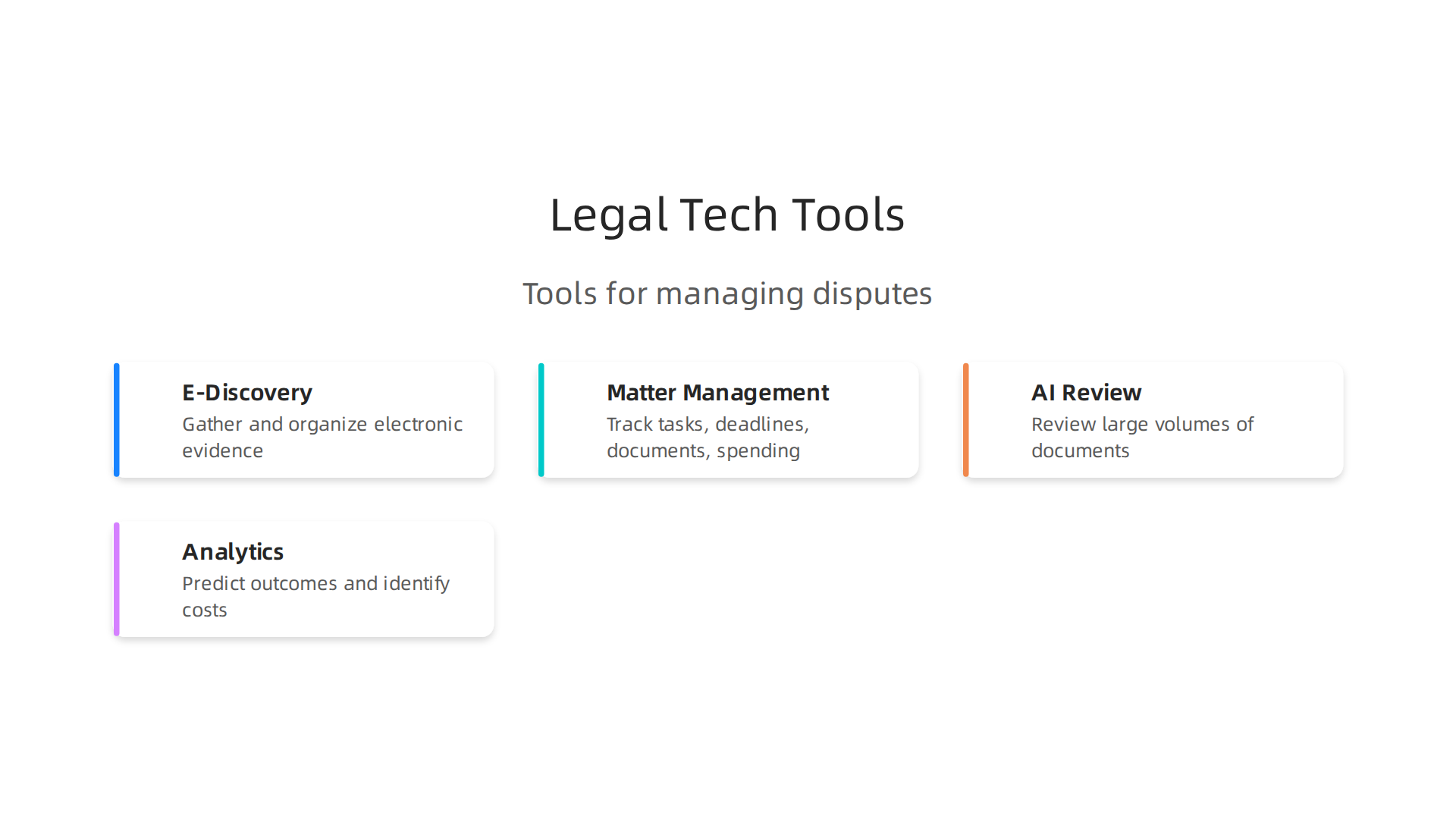
- E-Discovery: When there’s a legal fight, you often need to find lots of digital information, like emails, documents, and chat messages. This process is called e-discovery. It can be very costly and take a long time. But legal tech tools help you gather, review, and organize these electronic items much faster. This can save your business a lot of money. Actually, businesses are investing a lot in e-discovery technology, especially for AI-assisted review tools this year

The e-Discovery Market in 2026.
- Matter Management: Think of this as a smart way to keep all your legal cases and projects organized. Matter management software helps your business attorney track tasks, deadlines, documents, and how much money is being spent on each dispute. This makes everything smoother and helps teams work better together.
- AI for Document Review: Artificial Intelligence (AI) tools can read and understand huge amounts of documents much quicker than people can. They can find important facts or details that are needed for a legal case. This saves a lot of time and reduces errors. However, it is important to know that courts in 2026 are still figuring out how AI-created documents fit with privacy rules Digital Evidence in the Courtroom: A 2026 Mid-Year Review. If you want to keep up with the latest in AI, you might like The AI Newsletter Worth Reading.
- Analytics: Some legal tech tools can look at past cases and data to help predict how your current dispute might go. They can also show you where costs might be high. This helps your lawyers for business disputes make smarter choices.
Choosing and Working with Tech Vendors
Picking the right legal tech tools and the companies that offer them (vendors) is very important. Here’s what your lawyer for small business or a larger company will consider:
- Expertise: Does the vendor or their technology know a lot about your specific business area? For example, if your dispute is about patents, you need a vendor with patent-related tech experience.
- Track Record: Have they helped other businesses with similar problems successfully? A good way to find out is by using a clear method for picking who to work with, like outlined in a guide for evaluating eDiscovery vendor viability.
- Integration: Can their tech work well with the systems you already use? You don’t want tools that cause more problems than they solve.
- Cost Efficiency: Does the technology truly help reduce costs and make things more efficient? You can even ask for bids from different firms and vendors to compare costs, which is a good practice when retaining counsel.
When hiring new legal talent, knowing how they use technology is also key. Your business lawyers in NY or anywhere else should be up-to-date. You can find a good guide to help identify the best lawyers in 2026 for your needs.
Vendor Checklist for Your Business
Before you commit to a legal tech vendor, make sure to check these things:
- Security: How do they protect your private business information? Data security is a very big deal in legal matters. Ask about their security measures.
- Data Handling: Where will your data be stored? How will it be moved? You need to understand how they will handle all your sensitive information.
- Integration: Can their tech easily connect with your current software, like your accounting system or document management tools?
- Service Level Agreements (SLAs): These are agreements that say what the vendor promises to deliver, like how quickly they will respond if you have a problem. Make sure these are clearly written and understood.
Using legal tech wisely and picking the right vendors helps your business stay ahead. It allows your lawyers for business disputes to focus on the legal strategy while the tech handles the heavy lifting, leading to better and more affordable outcomes.
When your business grows beyond your home country, so do your legal challenges. This means dealing with "cross-border disputes," which are fights that involve laws from more than one country. Handling these can be tricky, so it’s very important to have the right lawyers for business disputes on your side. These lawyers need to know about different laws, other countries, and local ways of doing things.
Where Do We Fight? Understanding Jurisdiction
One of the first big questions in a cross-border dispute is "Which country’s laws apply?" and "Where will the legal fight happen?" This is called "jurisdiction." If your business attorney picks the wrong place, it can cause many problems. For example, a court in one country might make a decision, but it might not be able to be "enforced" or made to happen in another country.
Also, gathering information, known as "discovery," works differently everywhere. What you can ask for in a U.S. court might not be allowed in Europe because of strict privacy laws like the General Data Protection Regulation (GDPR). In fact, in 2026, there is still much to figure out about how U.S. discovery rules clash with GDPR when dealing with data across borders Caught Between Courts and Continents: The 2026 Guide to Cross-Border E-Discovery, Data Privacy, and Sanctions. Deciding where to handle these types of fights is a big deal, and new rules are always coming out to help with Jurisdiction in Cross-Border Data Disputes.
Building Your Global Legal Team
For business disputes that cross borders, you often need more than just one lawyer. You’ll need a "multi-jurisdictional team." This usually includes:
- Lead Counsel: This is your main lawyer, often your trusted business attorney from your home country. They will guide the overall strategy and work with everyone.
- Local Counsel: These are lawyers in the other countries where the dispute is happening. They know the local laws, courts, and cultural ways best. For example, if you have a fight in New York and another country, you might have your main business lawyers in NY and then local lawyers in that other country.
Your lead counsel and local counsel must work closely together. They need clear ways to talk and share information so that everyone is on the same page. This teamwork helps make sure the dispute is handled smoothly across all locations. To learn more about how law firms manage these kinds of teams, you might be interested in this article on BK Lawyers: Multi-Jurisdictional Law Firm Strategy and Operations.
Picking and Working with Overseas Lawyers
Finding the right local counsel in another country is very important. Here are some steps a lawyer for small business or a big company will take:
- Verify Credentials: Just like at home, you need to make sure the overseas lawyers are properly licensed and have a good reputation.
- Check Experience: Do they have experience with your type of business problem and in that specific country’s legal system?
- Cultural Fit: Legal work is often about more than just laws. Different countries have different business customs and ways of communicating. It’s important to find lawyers who understand and respect these differences.
- Manage Time Differences: With lawyers in different time zones, you’ll need clear plans for meetings and deadlines to make sure work gets done on time.
Building a strong team for cross-border disputes helps your business handle complicated legal issues around the world. It ensures you have the right local knowledge and guidance every step of the way.
Summary
Business disputes can drain money, reputation, and time, and in 2026 they also raise new data-privacy and cross-border risks. This article explains the main types of disputes—contracts, IP, employment, regulatory and shareholder fights—and shows how those differences shape the lawyer you should hire. It walks through practical decision rules for when to keep matters in-house versus bring in outside counsel, how to triage issues early, and how to set clear budgets and metrics for dispute work. You’ll learn fee models (hourly, flat, capped, contingency, subscription), cost-control tactics, and how to assess ROI on legal spend. The guide covers regulatory pitfalls (especially cross-border data transfers), when ADR makes sense, and how to choose ADR practitioners. Finally, it outlines how legal tech, e-discovery, and multi-jurisdictional teams change strategy and vendor selection so you can resolve disputes faster and more cheaply.