
What is an Attorney Roles Licensing and Key Legal Distinctions

It can sometimes be confusing to understand different legal titles. You might hear people talk about a "lawyer" or an "attorney." You might even wonder, what is an attorney? And is an attorney a lawyer? For most people in the United States, these words mean almost the same thing when talking about someone who helps with legal problems. An attorney is simply someone who is allowed to practice law and can act for another person in legal matters.
A lawyer also fits this description, having gone to law school and passed exams to give legal advice and work in court, as stated by the Legal Information Institute attorney | Wex | US Law | LII / Legal Information Institute.
Knowing the exact difference, even if small, is very important for several groups of people in 2026. For legal teams, knowing the precise roles helps when hiring new team members. It makes sure everyone understands what each person is expected to do. This clarity is also key when looking at things like Lawyer Defined 2026: How Technology Reshapes the Attorney Role and how different legal jobs might change.
For people buying new tech for law firms, understanding what an attorney does helps them pick the right tools. If a tool is for a certain kind of lawyer, like a Los Angeles business lawyer, knowing their specific tasks helps choose the best software. This helps law firms stay up-to-date and run smoothly. Legal innovators, who create new ways to do legal work, also need clear definitions. It helps them build solutions that truly help attorneys and clients. It even helps understand things like how much does a business lawyer make, as job descriptions are tied to pay.
Understanding these terms better reduces problems and helps everyone communicate clearly in the legal world.

Want to stay informed about how technology is changing the legal field?
The AI Newsletter Worth Reading offers clear daily updates on AI and technology important for legal professionals.
When we talk about legal professionals, understanding the core meaning of "what is an attorney" is helpful. For most common-law places, like the United States, an attorney is basically a person who is allowed by law to help people with legal issues. They have the special right to practice law. This means they can act for others in legal matters, like giving advice or representing them in court. Many people use "attorney" and "lawyer" to mean the same thing in everyday talk. In fact, official documents sometimes use both terms to mean a professional who helps clients, gives legal advice, and prepares legal papers, as explained in a glossary of terms for legal professionals in various countries Appendix 3: Glossary of Terms Defining the Function of Legal Professionals in Various Countries.
To be an attorney, a person must meet specific requirements. First, they need to finish law school. After that, they must pass a special test called the bar exam. Once they pass this exam and meet other moral fitness rules, they get a license. This license means they are an "active member in good standing of the bar," which is how the government sees it 37 CFR § 11.1 – Definitions. – Law.Cornell.Edu. This license gives them the authority to legally help others. Without it, a person cannot practice law.
In their daily work, attorneys do many important things. They act as advisors, helping clients understand their legal rights and duties.

They also serve as representatives, speaking for their clients in court or in talks with other parties. For instance, they might help someone deal with legal papers or represent them in a dispute. This role includes being an officer of the legal system, meaning they have a special duty to make sure justice is served fairly. The Rules of Professional Conduct outline that a lawyer represents clients and has a responsibility for the quality of justice
Article V – Rules of Professional Conduct. This shows how serious their job is in our legal system.
The terms "attorney" and "lawyer" are used so much that sometimes it is hard to tell them apart. But knowing that "what is an attorney" comes down to being a licensed professional who can give legal advice and represent people helps make things clear. For more details on what these titles mean and other legal terms, you can explore resources like the esquire and attorney explained crucial distinctions for legal professionals. Understanding these terms deeply is key, especially as legal fields, even those in national security areas, continue to grow and change in 2026.
The words "attorney" and "lawyer" are often used as if they mean the same thing, especially in the United States. But actually, there are a few other words like "counsel" and "solicitor" that mean slightly different things. Understanding these small differences can be very helpful, especially when you are looking for legal help or writing job descriptions in 2026.
Attorney vs. Lawyer: A Closer Look
In the U.S., a person trained in law is generally called a lawyer. When that lawyer is licensed to practice law, they are also called an attorney. So, you could say that all attorneys are lawyers, but not all lawyers are necessarily attorneys (unless they are licensed to act for others in legal matters). This means an attorney is someone authorized to practice law and can represent clients. The term lawyer also means an individual who is authorized to practice law. For practical purposes in the U.S., if someone is giving legal advice or representing you, they are likely both a lawyer and an attorney. To check a person’s license, you might use a tool like the how to use the texas bar attorney search.
What About "Counsel"?
The term "counsel" usually refers to a lawyer who gives advice or represents a client in a legal case. It can be used for a single attorney or a group of attorneys. Often, you will hear "in-house counsel" for a lawyer who works directly for a company, giving them legal advice. "Counsel" points to the role a lawyer plays, focusing on their advisory or representative function. For instance, a company might hire attorneys on retainer for its legal needs.
Understanding "Solicitor"
When we talk about "solicitor," we are usually looking at countries with a different legal system than the U.S., like the United Kingdom, Australia, or Canada. In these places, the legal profession is often split into two main types:
- Solicitors: These are lawyers who work directly with clients. They give legal advice, prepare legal documents, and handle day-to-day legal tasks. They might represent clients in lower courts.
- Barristers: These lawyers specialize in courtroom advocacy. They usually receive cases from solicitors and argue them in higher courts.
So, if you are in London, you would hire a solicitor to help with a contract, and that solicitor might then hire a barrister to represent you in court if needed. This is a big difference from the U.S., where one attorney can do both jobs.
Practical Differences in a Table
Here is a simple way to look at the terms:

| Term | Common Use in U.S. | Common Use Outside U.S. (e.g., UK) |
|---|---|---|
| Lawyer | A person trained in law; often interchangeable with attorney if licensed. | A general term for someone trained in law. |
| Attorney | A licensed lawyer who can represent clients and give legal advice. Often "attorney-at-law." | Less common; sometimes used for an agent (attorney-in-fact) but not typically a practicing lawyer. |
| Counsel | A lawyer giving advice or representing a client; can be in-house. | Similar to U.S., a lawyer advising or representing. |
| Solicitor | Not used in the U.S. for legal professionals. | A lawyer who works directly with clients, handles legal paperwork, and advises. |
Knowing these differences is key, especially for businesses or HR departments hiring legal staff. For example, if your company needs someone to handle legal matters in New York, you would look for a licensed "attorney" or "lawyer." If you need someone in London, you would seek a "solicitor." These terms make a big difference in different national security areas and other global legal fields.
The role of legal professionals is always changing, especially with new tools like AI. To stay current with how technology is shaping the legal world, keep learning about the latest trends.
Get clear daily AI updates from The AI Newsletter Worth Reading.
Continuing from understanding the different terms like lawyer, attorney, counsel, and solicitor, it’s really important to know that simply having a law degree doesn’t make someone an attorney. What is an attorney, then? An attorney is a lawyer who has met strict rules to get a special license. This license gives them the power to officially represent people in court and give legal advice. In 2026, this licensed authority is more vital than ever in ensuring fair and proper legal services.
Licensed Authority and Regulatory Requirements for Attorneys
For a lawyer to become an attorney in the U.S., they must go through several important steps to get their license.
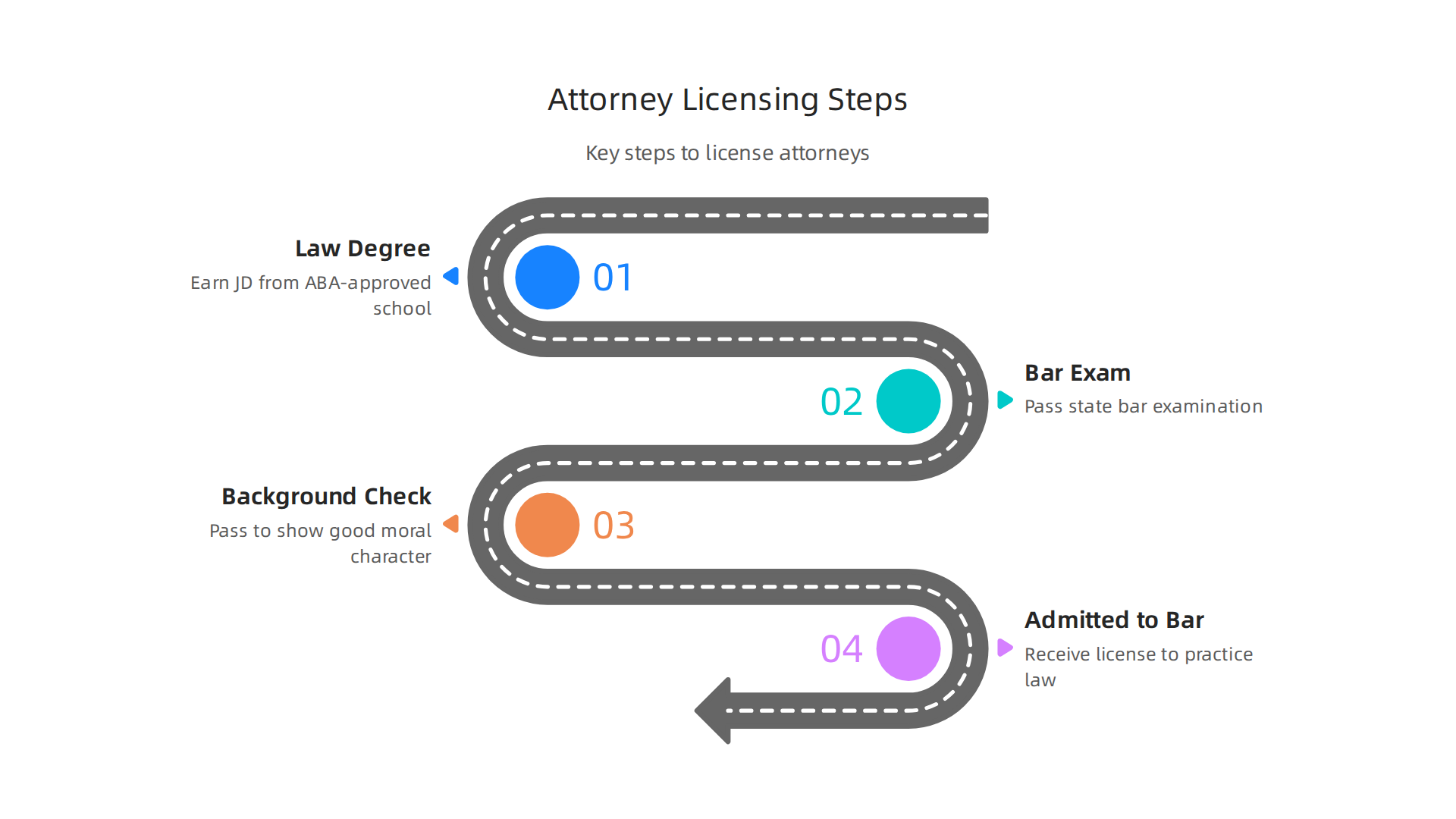
This process makes sure that only qualified people can practice law. First, they must earn a law degree, usually called a Juris Doctor (JD), from a law school approved by the American Bar Association. After law school, they need to pass the bar examination in the state where they want to practice. This exam tests their knowledge of many different laws. Finally, they must also pass a background check to show they have good moral character. This check ensures they are fit to be part of the legal profession.
After these steps, the lawyer is "admitted to the bar," which means they get their license. At this point, they become a licensed attorney. So, while every attorney is a lawyer, not every lawyer has completed these steps to become a licensed attorney who can officially represent clients. This difference is key for anyone seeking legal help or hiring legal staff.
Why Licensing Matters So Much
The licensing process is super important for many reasons:
- For the Public’s Safety: Licensing protects people who need legal help. It makes sure that the person giving advice or going to court for them truly knows the law and follows strict rules of conduct. If an unlicensed person tried to practice law, they could harm clients.
- Preventing Bad Practices: Attorneys must follow a set of ethical rules, known as the Model Rules of Professional Conduct, set by groups like the American Bar Association. These rules cover things like keeping client information private, being honest, and working hard for clients. If an attorney breaks these rules, they can lose their license, which is a big deal. For example, rules about attorney-client confidentiality are very important.
- Dealing with Malpractice: If an attorney makes a big mistake that harms a client, this is called malpractice. Because attorneys are licensed, there are ways to report them and seek justice. This system helps keep attorneys accountable. Learning about the malpractice attorney role in 2026 can show more about this.
- For Businesses and Hiring: When businesses need legal help or want to hire in-house counsel, they must make sure the person is a licensed attorney. This is critical for legal compliance and avoiding risks. For example, if a company is dealing with complex issues in national security areas, they need attorneys who are not just knowledgeable, but also fully licensed to handle such sensitive matters.
Licensing Around the World
It’s also interesting to see how licensing works in other places. For example, in Canada, lawyers must get "called to the bar" in a specific province or territory. This involves having a law degree and meeting the rules of their local Law Society, much like states in the U.S. Some Canadian rules even require U.S. lawyers to write extra exams if they want to practice there. In Australia, the process involves educational and experience requirements, and there isn’t a single "bar examination" like in the U.S. or Canada for local lawyers to become a lawyer, though there are specific pathways for overseas qualified lawyers to apply. These different paths show how important licensing is everywhere, even if the steps vary.
Making sure legal professionals are properly licensed is vital for a strong and fair legal system across the globe.
After understanding that an attorney is a licensed legal professional, many people wonder, "What is an attorney actually doing day to day?" The truth is, the typical duties of an attorney are varied and depend a lot on where they work and what kind of law they practice. But some core jobs are common for most attorneys.
Core Responsibilities of an Attorney
Attorneys spend their days on a mix of important tasks to help their clients. These include:
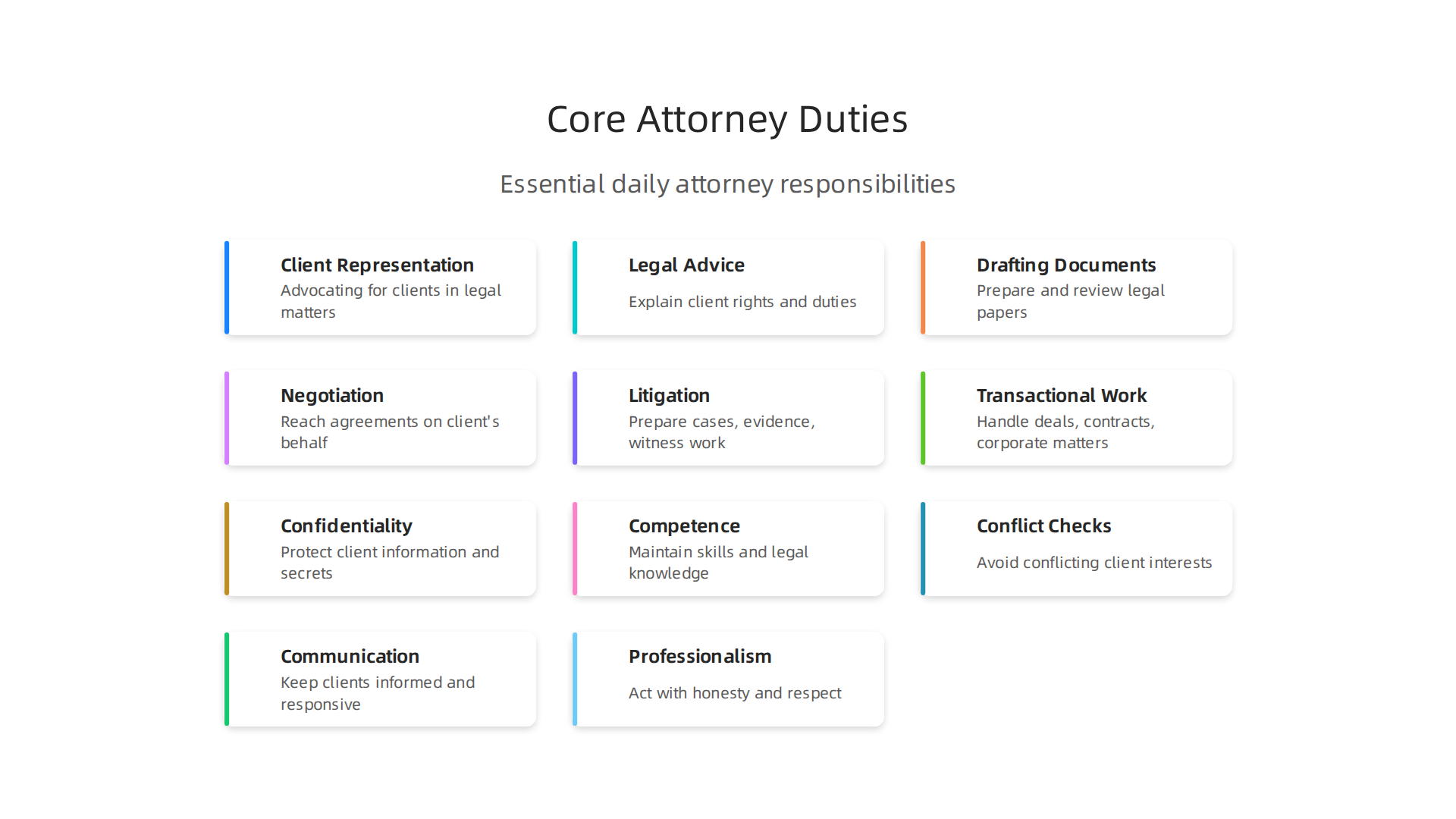
- Client Representation: This means standing up for clients in different legal situations. It could be in court, at meetings, or during talks with other parties. For example, an attorney might represent someone buying a house or someone going through a divorce.
- Giving Legal Advice: Attorneys give clear advice to help clients understand their rights, what they need to do, and any risks they might face. They explain complex laws in a way that makes sense. Research shows that lawyers spend a lot of time on legal analysis and client consultations in their daily work Lawyer Daily Tasks: What Attorneys Really Do Each Day.
- Drafting and Reviewing Documents: A big part of an attorney’s job involves writing and checking legal papers. This can be contracts, agreements, court filings, or letters. They must make sure these documents are correct and protect their client’s best interests. Many sources confirm that drafting legal documents is a key responsibility A Day in the Life of A Lawyer (2026) | OnJob.io.
- Negotiation: Attorneys often talk with other lawyers or parties to reach agreements for their clients. This could be settling a dispute out of court or agreeing on the terms of a business deal.
- Litigation Tasks: If a case goes to court, attorneys handle many tasks. This includes preparing legal arguments, gathering evidence, talking to witnesses, and presenting cases to a judge or jury.
- Transactional Work: For businesses and individuals, attorneys handle things like buying and selling property, setting up new companies, or making sure deals follow the law. This is often done by a business lawyer. If you are curious about what a business lawyer does, you can learn more about the business corporate lawyer in 2026.
Law Firm Attorneys vs. In-House Attorneys
While every attorney shares these core duties, how they do them can look very different based on where they work.
Law Firm Attorneys
Attorneys who work at law firms usually serve many different clients. Their daily tasks are often about:
- Diverse Cases: They might handle a wide range of cases or specialize in one area, like criminal law or family law. For instance, a law firm might help clients with anything from traffic violations to complex business disputes. If you need a lawyer for serious driving issues, knowing when to hire a traffic lawyer is helpful.
- Billable Hours: A lot of their work is tracked by "billable hours," meaning they charge clients for every hour they spend on a case. This means they often have to balance work for many clients at once.
- Court Appearances and Client Meetings: They spend a good amount of time meeting with clients, preparing for court, and actually going to court. Many lawyers confirm that their days include client service and case preparation A Day in the Life of a Lawyer (With Duties and Skills).
- Tool Needs: Law firm attorneys rely on tools for legal research, case management, document automation, and billing to manage many clients and their cases efficiently.
In-House Attorneys
In-house attorneys work for one company or organization. They are like the company’s personal legal team. Their daily work is more focused on:
- Company-Specific Issues: They deal with all the legal needs of their employer. This includes drawing up contracts, making sure the company follows laws (compliance), handling employee issues, and protecting company property. For example, a corporate lawyer spends a lot of time reviewing and drafting legal documents for their company Insider Insights on Life as a Corporate Attorney.
- Preventing Problems: Their main goal is often to prevent legal problems before they happen, rather than fixing them after. This means a lot of proactive advice.
- Internal Collaboration: They work closely with different departments within the company, like HR, finance, and marketing, to make sure all business actions are legal and safe.
- Tool Needs: In-house attorneys often use tools for contract management, compliance tracking, and internal reporting to keep the company running smoothly and legally.
Whether they are in a law firm or working in-house, attorneys play a key role in making sure people and businesses get fair legal support. They help everyone navigate the complex world of laws and rules in 2026.
Staying updated on the latest changes in the legal world and technology is crucial for all attorneys. Get clear daily AI updates from The AI Newsletter Worth Reading.
Beyond the different ways attorneys do their daily jobs, there’s a deep set of rules that every attorney must follow. These rules are about ethics, privacy, and how they should act as legal professionals. For clients, knowing these rules helps understand the trust placed in an attorney.
What Makes an Attorney Trustworthy?
At its heart, what is an attorney if not a trusted advisor? An attorney, or a lawyer as many people also say, promises to follow strict rules of professional conduct. These rules are put in place by bar associations and courts to make sure attorneys serve their clients fairly and with integrity. The American Bar Association (ABA) Model Rules of Professional Conduct set the standard for lawyers in the US in 2026. These rules cover many areas, making sure clients get good help Model Rules of Professional Conduct.
Here are some key parts of these important duties:
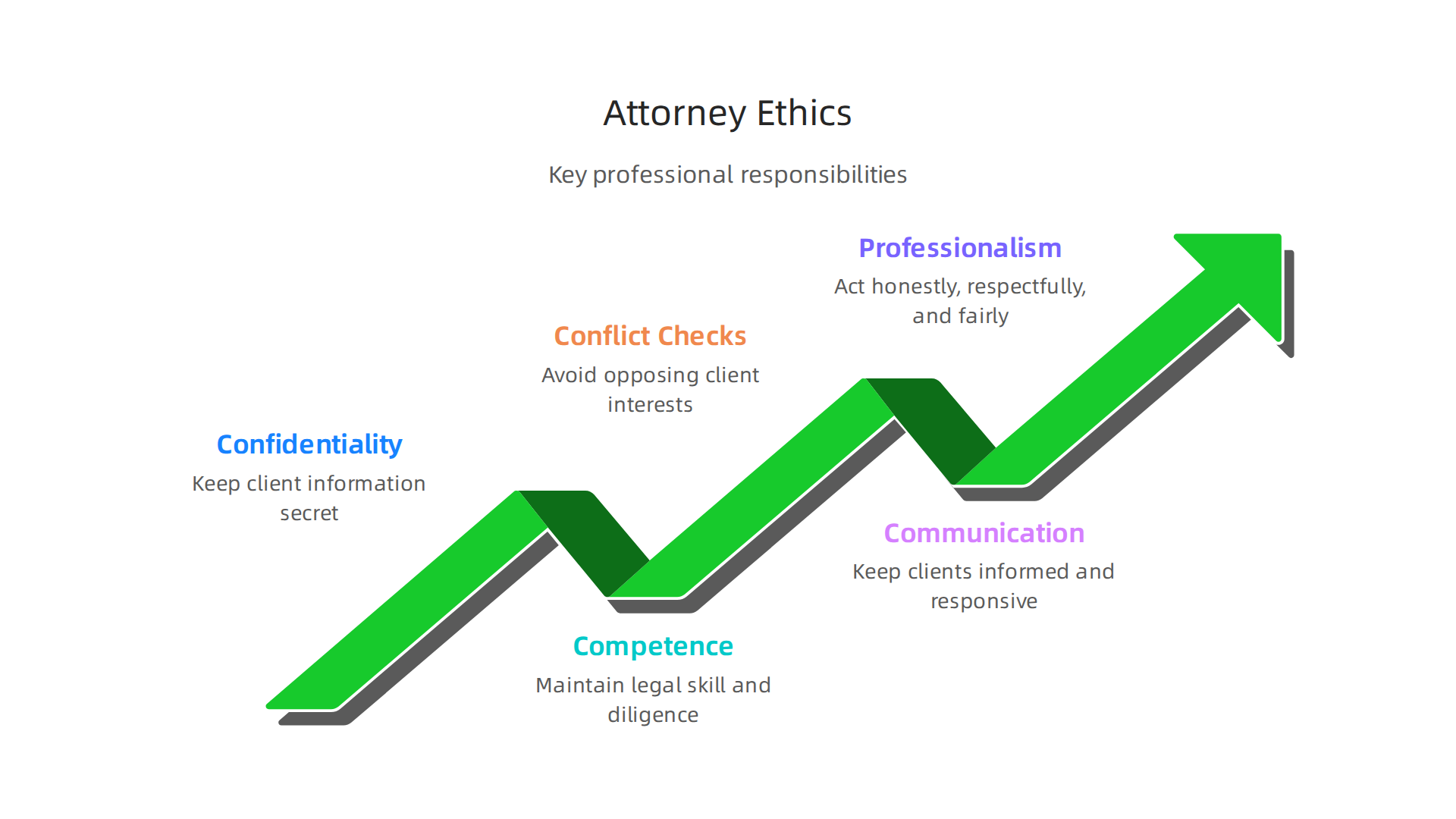
- Confidentiality: This is one of the most basic rules. An attorney must keep secret all information related to a client’s case. This means they cannot share what you tell them, or what they learn about your legal matters, with anyone else unless you say it’s okay or in very special situations allowed by law. This strict duty is part of what’s called "attorney-client confidentiality" and "attorney-client privilege," which protect your private talks with your lawyer Attorney-Client Confidentiality vs. Privilege. This duty helps clients feel safe sharing everything they need to with their attorney.
- Competence: An attorney must be good at their job. This means they need to have the right legal knowledge, skills, and work hard on your case. They must also keep learning and stay updated on laws and legal practices. This is Rule 1.1 of the ABA Model Rules ABA Model Rules of Professional Conduct, Select Rules. It also means they need to understand new tools, like legal technology, to help their clients effectively. If you’re looking to hire someone, it’s wise to check an attorney’s background to make sure they are competent.
- Conflict Checks: An attorney cannot represent a client if it means working against another client’s best interests. This is called a "conflict of interest." Attorneys have to do careful checks to make sure they don’t take on cases where their duties to one client would harm another. This helps ensure fairness for everyone.
- Communication: Attorneys must keep their clients reasonably informed about their case and respond to requests for information. It’s part of ensuring clients can make smart choices about their legal situation.
- Professionalism: Beyond specific rules, an attorney is expected to act with honesty, respect, and fairness towards clients, courts, and other lawyers. They hold a position of public trust and must uphold the dignity of the legal profession.
How Ethical Duties Affect Legal Tech and Data
These ethical duties are super important, especially today with all the new technology. When an attorney uses legal tech tools, they must make sure those tools protect client information just as strictly as paper files. This means choosing secure software and being careful about how client data is stored and shared. For example, using cloud computing must be done in a way that protects confidentiality Seeing Clearly? Interpreting Model Rule 1.6(c) for Attorney Use of Cloud Computing Technology.
Attorneys also need to be good at using these new tools while keeping client privacy safe. Protecting client data from things like hacking or phishing emails is a big part of their responsibility in 2026. Learning how law firms defend legal data against phishing emails is one example of how they must adapt. An attorney is a lawyer who truly understands that their role goes beyond just legal tasks; it includes a strong ethical compass that guides every action, especially with new technologies.
Career paths, adjacent roles, and how technology is reshaping attorney responsibilities
An attorney’s world is always changing. While the core duties remain, the ways attorneys work and the jobs they do are growing. For a long time, being an attorney meant mostly going to court, helping clients make deals, or writing important legal papers. What does a lawyer really do each day? Well, most attorneys spend their days talking to clients, doing research, and preparing for cases Lawyer Daily Tasks: What Attorneys Really Do Each Day. They also draft many different kinds of documents and advise clients on their rights A Day in the Life of A Lawyer (2026).
But in 2026, we see new kinds of jobs appearing in the legal world. These are often called "adjacent roles" because they work alongside traditional attorneys.
- Legal Operations: These people help law firms and legal departments run more smoothly. They focus on making processes better, saving money, and using technology. This role is growing fast, with jobs focused on blending law with technology New-law job titles are outpacing the market. They are key to making sure legal services are given in a smart and effective way. The salary and career path for legal operations are also getting clearer in 2026 Legal Operations Salary & Career Path 2026.
- Compliance Officers: These experts make sure that companies follow all the laws and rules. This is very important in complex areas, for instance, national security areas or banking.
- Legal Engineers: These are folks who mix legal knowledge with computer science skills. They help build and manage the legal tech tools that attorneys use every day. They are at the heart of how an AI law firm drives growth with interactive legal tools.
Technology is changing what an attorney does every day. Things like automation and Artificial Intelligence (AI) are taking over repetitive tasks. For example, AI can help lawyers quickly review many documents, saving them a lot of time. This means attorneys can focus more on the parts of their job that need deep thinking and strategy, like giving advice or representing clients in court. The "2026 Future Ready Lawyer Survey Report" talks a lot about how lawyers are learning to use AI 2026 Future Ready Lawyer Survey Report.
This shift means attorneys need new skills in 2026. They must understand how to use these tools effectively and safely. Knowing about legal technology and how to manage data is now just as important as knowing the law. For those wanting to be an attorney, preparing for the future means learning about legal education trends 2026. The role of an attorney is changing to be more about strategy and guiding clients through complex legal and tech landscapes.

To understand more about how technology shapes the attorney role, you can find further insights on how technology reshapes the attorney role.
Staying updated on AI and technology is key for legal professionals today.
The AI Newsletter Worth Reading offers clear daily updates to keep you informed.
Summary
This article explains what an attorney is, how that title differs (if at all) from lawyer and other legal terms, and why the distinction matters in 2026. It covers the licensing path—law degree, bar exam, and character checks—that gives attorneys authority to represent clients, plus the core day-to-day duties like advising, drafting documents, negotiating, and litigation. The piece also contrasts law firm and in-house roles, outlines key ethical duties such as confidentiality and competence, and explains how legal technology and AI are reshaping responsibilities and required skills. Readers will learn how to verify credentials, what to expect from different attorney roles, and how these definitions affect hiring, risk management, and the selection of legal tools. Overall, the article arms clients, HR teams, and legal innovators with practical clarity so they can communicate accurately and choose the right legal help.