
Learn How to File Complaint Against Georgia Attorney for Professional Misconduct

Sometimes, people need a lawyer for important reasons. But what happens if you have a problem with your lawyer?

Maybe you feel they did not do their job right, or they acted in a way that wasn’t honest. This guide is here to help you understand how to file complaint against georgia attorney.
It’s a big step to make a complaint against a lawyer. This guide explains why it matters and what you can expect.
What a Complaint Can (and Cannot) Do
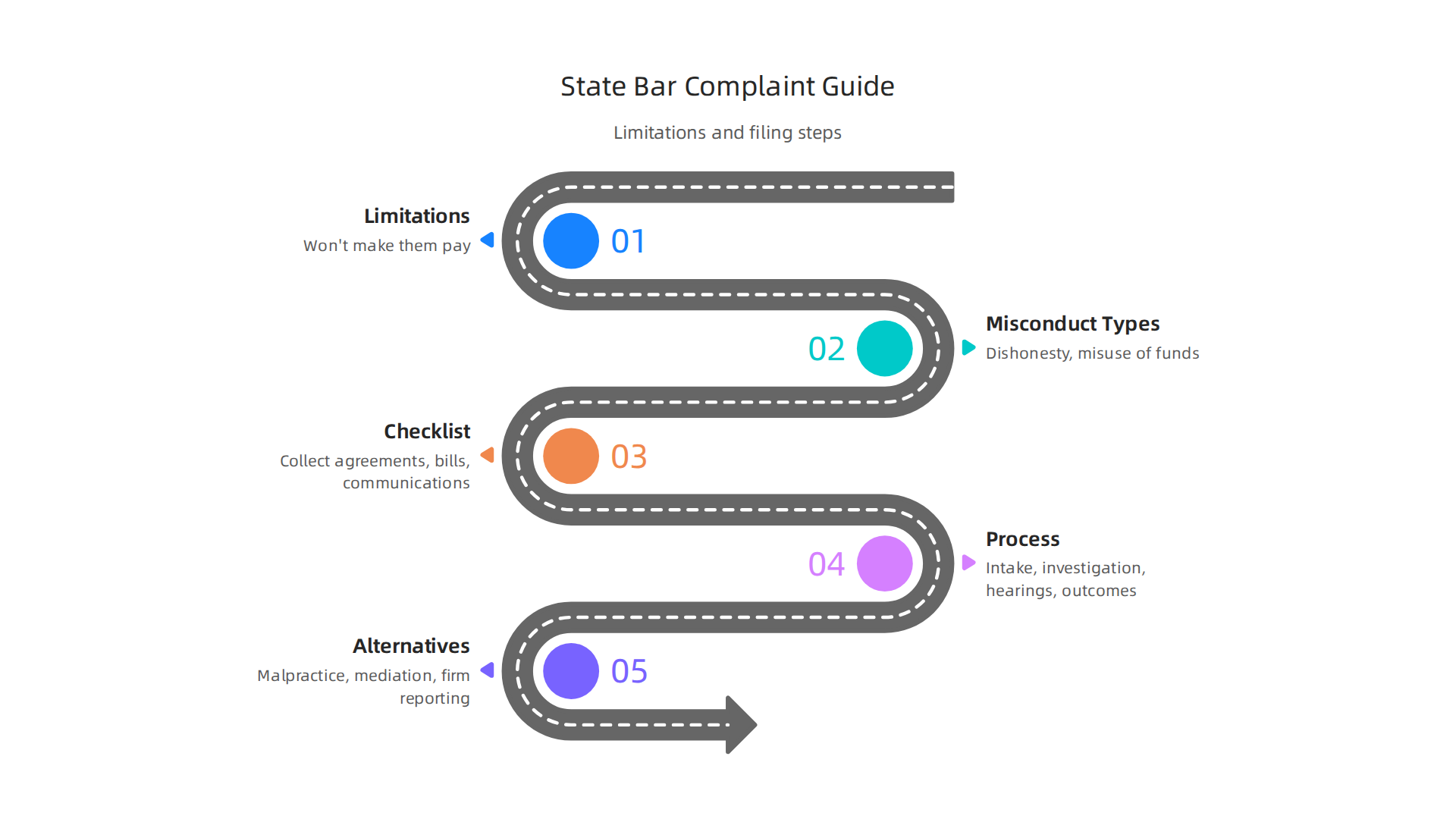
When you file complaint against georgia attorney, it’s important to know what kind of help you can get. A complaint to the State Bar of Georgia is mainly about a lawyer’s professional conduct. This means looking at whether they followed the rules that all lawyers must live by. These rules are called the Georgia Rules of Professional Conduct. If a lawyer breaks these rules, they might face punishment from the State Bar. This could be anything from a warning to losing their license to practice law.
But here’s the thing: filing a complaint is not the same as suing your lawyer. It cannot do certain things for you.
For example:
- It won’t get you money back. If you lost money because of your lawyer’s actions, a disciplinary complaint will not make them pay you back. For that, you would likely need to start a separate civil lawsuit, which is handled by a different type of lawyer, often called a malpractice lawyer vs litigation lawyer how to tell them apart.
- It won’t change a court’s decision. If you lost your case in court, filing a complaint about your lawyer will not reverse that decision. You would need to appeal the court’s ruling through the proper legal channels.
- It won’t give you personal legal advice. The State Bar’s job is to oversee lawyers, not to advise you on your personal legal matters or give you a strategy for your case.
Think of it this way: the State Bar checks if the lawyer acted fairly and by the book. They make sure the public can trust lawyers.
Practical Steps and Questions
Deciding to file complaint against georgia attorney can feel overwhelming. It brings up many questions: What proof do you need? What forms should you use? What will happen after you send it in?
It’s a process that requires you to gather facts and usually fill out specific forms. You need to show that your lawyer likely broke a professional rule, not just that you are unhappy with how your case turned out. This guide will walk you through each step, helping you understand the rules, the process, and what information you’ll need.
For legal professionals and those interested in how technology is changing the legal world, staying informed is key. Get clear daily AI updates in The AI Newsletter Worth Reading.
When you decide to file a complaint against a Georgia attorney, it’s really important to know what types of actions count as professional misconduct.

Not every problem you have with a lawyer is something the State Bar of Georgia can investigate. They mainly focus on ethical violations, which means a lawyer breaking the specific rules of their job.
Think of it like this: just being unhappy with how your case ended or feeling like your lawyer charged too much money usually isn’t an ethical violation. Those are often "client disputes." The State Bar cannot force a lawyer to give you a refund or change a court’s decision, as we talked about before. For issues like a bad outcome, you might need to talk to your lawyer directly or even consider speaking with a specialized malpractice attorney role in 2026 if you believe there was actual harm from their legal mistakes.
What Counts as Misconduct for a Georgia Attorney?
What does count as misconduct? The State Bar of Georgia looks at whether an attorney has broken the Georgia Rules of Professional Conduct. These rules are like a handbook for how lawyers must act. If a lawyer doesn’t follow these rules, they can face serious trouble. When you file complaint against Georgia attorney with the Office of the General Counsel, your information is reviewed to see if it shows a rule was violated.
Here are some common types of actions that do lead to disciplinary review for attorneys in Georgia:
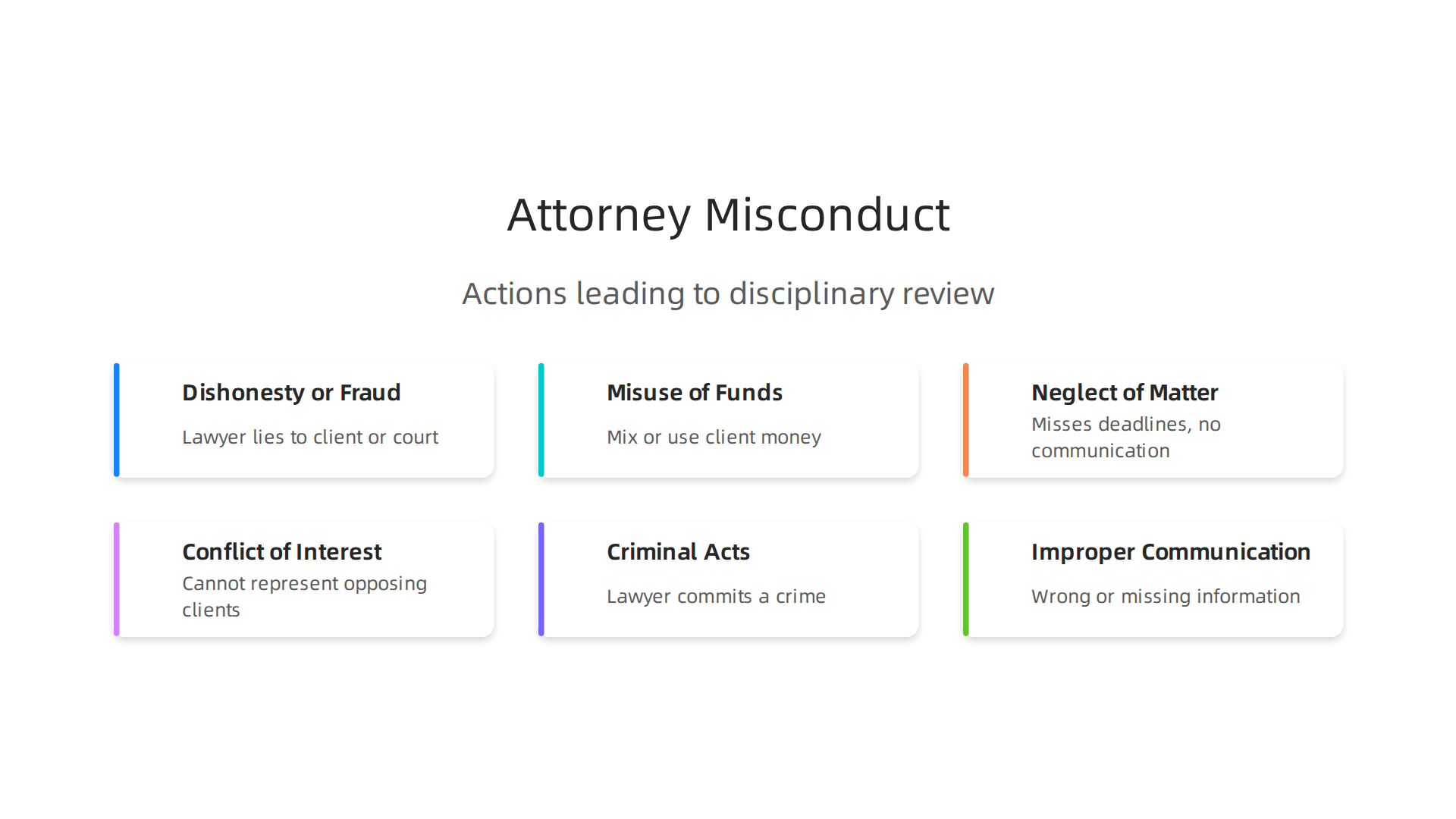
- Dishonesty or Fraud: This means a lawyer lies to you, to the court, or to others. It includes things like stealing money from clients or telling untruths.
- Misuse of Client Funds: Lawyers must keep client money separate from their own money. If they mix these funds or use client money for themselves, it is a very serious offense.
- Neglect of a Legal Matter: This happens when a lawyer does not do the work they promised, misses important deadlines, or does not talk to you about your case for a long time without a good reason. The more specific and documented your complaint, the more seriously it will be taken, as highlighted in insights on Attorney Discipline in Georgia.
- Conflict of Interest: A lawyer cannot represent two clients if their goals are against each other. They also cannot use information from your case for their own benefit or someone else’s.
- Criminal Acts: If a lawyer commits a crime, especially one that makes people doubt their honesty, this is a clear ethical issue that can lead to disciplinary action.
- Improper Communication: While not talking enough is neglect, actively giving wrong information or failing to tell you important things about your case can also be a problem.
If you believe your lawyer’s actions truly broke these rules, then you may have a good reason to file a complaint. Before hiring an attorney, it is always a good idea to check an attorney’s background to look for past issues. Remember to gather all your proof, like emails, letters, and court papers, to show what happened. The State Bar of Georgia’s job is to oversee lawyers and make sure they follow these rules for the public’s trust. Understanding the Disciplinary Process – State Bar of Georgia can help you prepare for what comes next.
Now, let’s look at the actual steps to file complaint against Georgia attorney. It’s a clear process that requires you to be organized. Gathering all the right papers and facts beforehand makes your complaint much stronger.

Step-by-step: How to file a complaint against a Georgia attorney (forms, evidence, and submission)
When you are ready to file a complaint, think of it like telling a story with proof. The more detailed and clear you are, the better. Here is a practical checklist of what you should gather:
- Attorney’s Information: Make sure you have the lawyer’s full name and their business address. You should also know the name of their law firm.
- Your Agreement: Find your written agreement with the lawyer. This is often called a "retainer agreement." It shows what services they were hired to do and how they would charge you.
- Billing Records: Collect all invoices or bills you received from the attorney. This helps show if there were issues with money or work performed.
- Communications: Gather all your written messages between you and your lawyer. This includes emails, letters, text messages, and even notes from phone calls. These show when you talked and what was said.
- Court Papers: If your case went to court, collect copies of any court documents. This might be filings, orders, or transcripts related to your matter.
- Specific Details of Misconduct: Write down exactly what happened. As advised by experts, focus on the lawyer’s actions or inaction, not just that you lost your case. For example, explain if they missed a deadline, lied to you, or used your money wrongly. The more specific and documented your complaint, the more seriously it will be reviewed, as highlighted in insights on Attorney Discipline in Georgia.
The Official Complaint Form
To formally file complaint against a Georgia attorney, you must use an official form. The State Bar Rules require that all grievances be put in writing on a special form approved by the State Disciplinary Board. You can find this grievance form and instructions for filling it out on the State Bar of Georgia’s website, often as a PDF like this STATE BAR OF GEORGIA Grievance Form. This form helps you make sure you include all the necessary details.
How to Submit Your Complaint
Once you have filled out the form and collected all your evidence, you need to submit it. All complaints go to the Office of the General Counsel (OGC) of the State Bar of Georgia. You will typically mail your completed form and supporting documents to their office. Some complaints may also require a signed affidavit, which is a sworn statement, so be sure to check the instructions carefully. The main office address is usually provided on the form itself or on the State Bar’s website. You can find general contact details for the Office of the General Counsel on the Georgia Bar website.
What Happens After You File?
After you submit your grievance, an attorney from the Office of the General Counsel will review it. Their job is to see if the information you provided is enough to show that your lawyer broke the Georgia Rules of Professional Conduct (this was mentioned in the previous section). They will decide if there’s enough reason to move forward with a formal investigation. This initial review is a very important step in the disciplinary process.
Understanding how to put together a strong complaint is key. Knowing the difference between an ethical problem and a simple dispute can make all the difference, as can a clear understanding of the types of lawyers that handle these situations, like a malpractice lawyer vs litigation lawyer.
Stay updated on the latest news affecting the legal field.
Get clear daily AI updates from The AI Newsletter Worth Reading.
Knowing the steps to file a complaint against a Georgia attorney is just one part. You also need to understand the rules they must follow. Every state has its own set of rules for lawyers, and Georgia is no different. These rules are usually based on a larger set of ideas called Model Rules, but each state puts its own spin on them.
Understanding Georgia-specific ethics rules and common violations
In Georgia, the standards for how lawyers should act are found in the Georgia Rules of Professional Conduct. These rules explain what lawyers can and cannot do. They cover everything from how a lawyer talks to clients to how they handle money. The State Bar of Georgia also creates special advice, called Advisory Opinions, to help lawyers understand these rules better. These opinions often clarify what the rules mean in different situations.
When someone decides to file a complaint against a Georgia attorney, it is usually because the lawyer has broken one of these important rules. Here are some common types of violations:
- Conflict of Interest: This happens when a lawyer tries to represent two clients whose needs or goals are against each other. For example, a lawyer cannot represent both sides in a divorce. This is a big problem because a lawyer must always act in their client’s best interest.
- Lack of Competence: A lawyer must be good at their job. This means they need to know the law and be able to handle a case properly. If a lawyer takes on a case they are not skilled enough for, or if they fail to do the work required, that can be a violation. The Georgia Supreme Court has issued rulings on attorney discipline, highlighting the need for lawyers to maintain competence and adhere to professional standards, as noted in legal analysis on Ethics Opinions and Disciplinary Actions.
- Breach of Confidentiality: What you tell your lawyer is private. Lawyers are supposed to keep your information secret. Sharing your private details without your permission is a serious violation.
- Dishonesty: This includes things like lying to a client or a court, or even misusing a client’s money. This is a very severe ethical breach. For instance, lawyers have been disbarred for actions like having romantic involvement with a client or misusing client funds, showing how seriously these actions are taken, according to an article about a disbarred Georgia lawyer.
Breaking these rules can lead to serious trouble for a lawyer, from getting a public warning to losing their license to practice law. The disciplinary process helps keep lawyers honest and fair, and it protects people who need legal help. If you have concerns about a lawyer’s conduct, learning about these specific rules is crucial before you try to file complaint against a Georgia attorney. To learn more about different legal roles and what they do, you can explore resources like Legal Specialties Explained.
Once you decide to file complaint against a Georgia attorney and have gathered your information, you might wonder what happens next. The process has a few steps, from when you first tell your story to what punishment the lawyer might face. It is important to know that these things take time.
What happens after you file: timeline, investigation, and possible outcomes
When you make a complaint against a Georgia lawyer, it starts a formal process through the State Bar of Georgia.
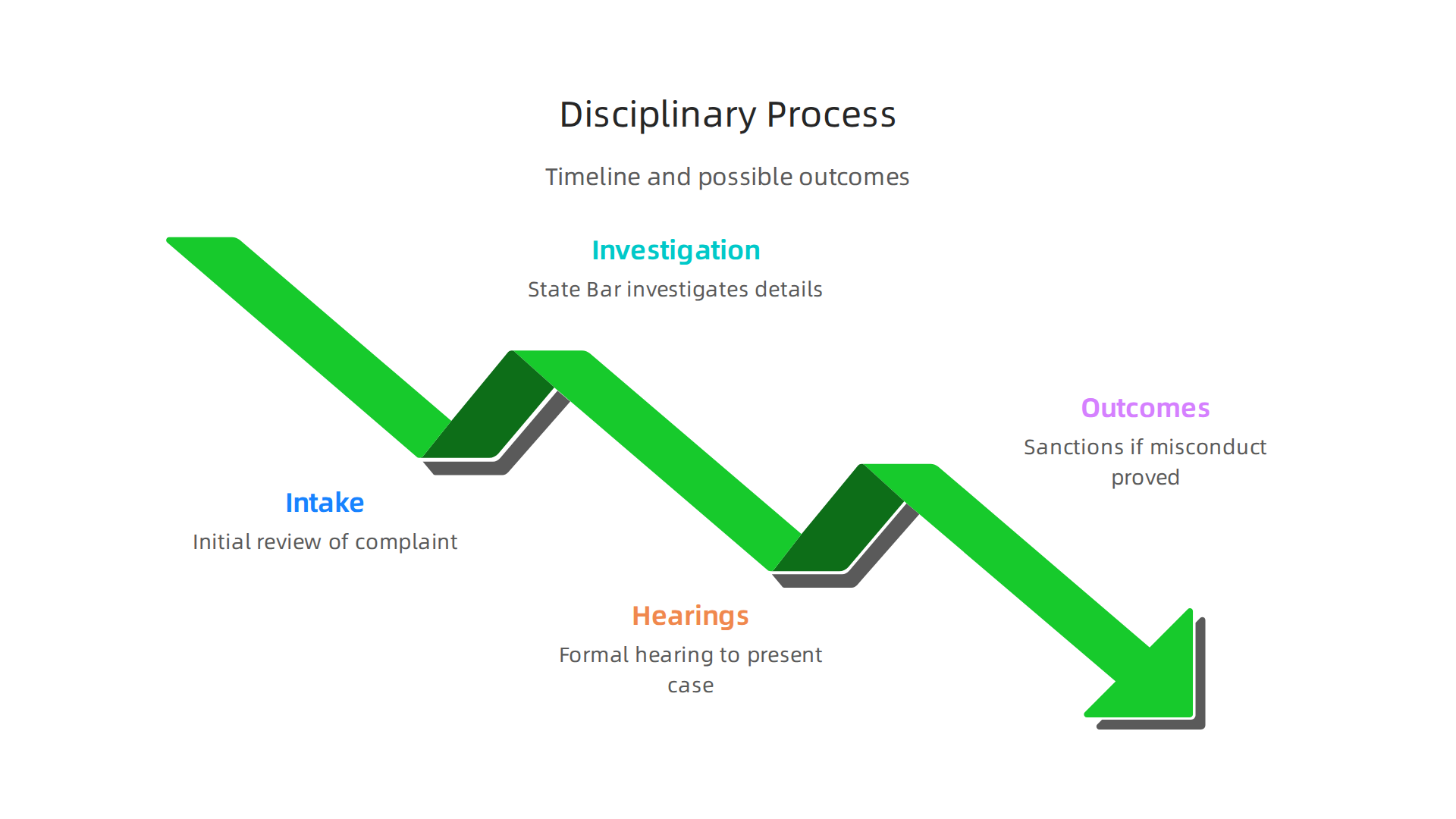
This process is set up to make sure that lawyers follow the rules and that clients are protected.
1. The Intake Process
First, your complaint goes through an "intake" step. This is like a first look at your concerns. Someone at the State Bar will review what you wrote. They want to see if your complaint is about a real ethical rule that a lawyer might have broken. Not every disagreement with a lawyer leads to a formal investigation. If your complaint does not fit the rules, it might be closed at this stage, and you will be told why. If it looks like a rule was broken, your complaint moves on.
2. The Investigation
If your complaint moves forward, it enters the investigation stage. This is where the State Bar of Georgia takes a closer look. They will usually send your complaint to the lawyer you named and ask for their side of the story. They might also ask for documents, talk to witnesses, and gather more facts. This part of the process is very important for understanding everything that happened. The goal is to get a full picture before deciding if the lawyer truly broke any rules. This entire investigation stage can take many months, so it is important to be patient.
You can learn more about how to check a lawyer’s past by looking at resources that explain how to verify credentials and history.
3. Potential Hearings
If the investigation finds strong evidence that the lawyer broke the rules, the case might go to a formal hearing. This is like a small trial where both sides can present their case. A special board or judge will listen to all the evidence and decide if the lawyer is guilty of misconduct. If a lawyer fails to respond or take part in this process, they can be considered to have admitted to the claims against them, sometimes leading to harsh penalties like disbarment, as seen in cases like Default Admissions in Georgia Lawyer Discipline.
4. Possible Outcomes and Sanctions
If the lawyer is found guilty, they will face punishment, also called a sanction. The type of punishment depends on how serious the violation was. According to the State Bar of Georgia and Supreme Court rulings, there are different levels of discipline that a lawyer can receive for misconduct.
Possible outcomes include:
- A private reprimand: This is a warning that is kept secret.
- A public reprimand: This is a public warning that everyone can see.
- Suspension: The lawyer cannot practice law for a certain amount of time, like a few months or even years. This has happened in many cases, with the Georgia Supreme Court ruling on various attorney discipline opinions.
- Disbarment: This is the most serious punishment. The lawyer loses their license and can no longer practice law in Georgia at all. This severe action is usually reserved for very serious misconduct, such as lying to a court or misusing client funds, as detailed in the Georgia Discipline Levels information.
The Supreme Court of Georgia makes the final decision on most public punishments. The goal of these steps is to protect clients and make sure lawyers act honorably. This process often takes a long time, sometimes over a year, so setting realistic expectations for the timeline is important. You will usually be kept informed at key points in the process.
For those interested in staying updated on the legal tech world and its impact, consider subscribing to The AI Newsletter Worth Reading.
While knowing how to file complaint against a Georgia attorney through the State Bar is important, sometimes other ways might help solve your problem. These other options can work instead of, or even along with, a formal complaint. They often aim to get your money back or solve a specific problem, rather than just punishing the lawyer.
Civil Lawsuit: Malpractice Claims
One big alternative is to file a civil lawsuit, often called a malpractice claim. This is very different from telling the State Bar about a lawyer’s bad behavior. When you file a complaint with the State Bar, it’s about checking if the lawyer broke their rules of conduct. If they did, they might get a warning or lose their license. But the State Bar usually cannot help you get your money back. In fact, the State Bar of Georgia does not handle complaints about malpractice or bad legal advice.
If you believe a lawyer’s mistake caused you to lose money or suffer harm, a malpractice claim is how you try to get that money back. This kind of claim needs you to hire a new lawyer, often one who focuses on the malpractice attorney role in 2026. They would help you prepare a civil complaint to start a lawsuit, much like how other Complaint (GA) documents are drafted for court.
Informal Solutions: Talking It Out and Mediation
Sometimes, you can solve issues without going to court or even filing a formal complaint against a Georgia attorney.

Here are some informal steps:
- Talk to the Law Firm: If your lawyer works at a firm, you might try talking to a senior partner or manager there. They might be able to help solve the problem directly, as they want to keep clients happy and protect their firm’s reputation.
- Mediation or Arbitration: These are ways to solve disagreements with the help of a neutral third person. For example, if you have a disagreement about how much your lawyer charged you, the State Bar of Georgia has a Fee Arbitration program. A neutral person helps both sides agree on a fair amount without needing a big court case.
- Client Assistance Program: For general questions or smaller problems, the State Bar of Georgia offers a Client Assistance Program. They can help you understand your options and sometimes resolve misunderstandings with your lawyer directly, before things get more serious.
These alternatives can sometimes be a quicker or more fitting way to handle your lawyer-related issues, depending on what happened and what you hope to achieve.
When you’re dealing with a problem with your lawyer, taking steps to protect yourself is very important, no matter which path you choose. This means keeping good records, understanding privacy rules, and knowing your rights against any unfair treatment. Being prepared helps a lot if you decide to file complaint against a Georgia attorney.
Keeping Good Records and Evidence
One of the most important things you can do is gather and keep all possible evidence. This helps any investigators understand exactly what happened. Think of yourself as building a detailed story.
- Document Everything: Write down dates, times, and what was said during phone calls or meetings. Keep copies of all emails, letters, text messages, and faxes between you and your lawyer. Also, save any court papers, billing statements, and your initial agreement with the lawyer. The more specific details you have, the better your complaint will be received and reviewed. For example, when you look to file a complaint against a lawyer in Georgia, you’ll need the official "Notice of Grievance" form and all supporting papers. The State Bar of Georgia even suggests limiting your first submission to 20 pages, so clear, organized evidence is key.
- Create a Timeline: Put all your notes and documents in order by date. This helps you and anyone reviewing your case see the full picture of events as they unfolded. This step is crucial for outlining your grievance, whether it’s for an informal talk or a formal complaint process about attorney discipline in Georgia.
- Signed Affidavits: Some processes, like filing a complaint with the Professional Association of Quality Control (PAQC) in Georgia, require a signed affidavit, which is a sworn statement of facts. This shows you are serious and truthful about your claims.
Confidentiality and Your Protections
When you discuss your legal issues, especially with another legal professional, there’s an expectation of privacy. This is called confidentiality.
- Confidential Investigations: When you file complaint against a Georgia attorney, the investigation that follows is usually kept confidential. This means the details of your complaint and the investigation process are not made public. This helps protect everyone involved during the review period, though the rules can vary slightly depending on the specific legal body. In general, law societies treat investigation information as confidential, unless it’s for legal objectives.
- Lawyer’s Duty vs. Self-Defense: Lawyers have a strong duty to keep your information private. However, if you make a complaint against them, they might be allowed to share some confidential details to defend themselves in that specific proceeding. This is a limited exception that lets them respond fairly to your allegations.
- Protection Against Retaliation: You might worry about your lawyer trying to "get back" at you for complaining. If you feel this is happening, it’s important to keep documenting any such actions. While specific anti-retaliation laws vary, the legal system generally aims to protect clients who raise valid concerns. For instance, understanding how lawyers build strong retaliation cases can give you insight into your protections. If you have questions about what protections might apply in your specific situation, it’s a good idea to speak with another legal expert who can provide guidance.
In today’s fast-changing legal world, staying informed about all aspects of legal tech and the profession is helpful.
Find out more about how new tools and information can support legal teams by checking out The AI Newsletter Worth Reading. Get clear daily AI updates from The Deep View Newsletter.
Sometimes, a concern about your lawyer’s actions can grow into something more serious than just an ethics problem. This is when you might need to get help from another lawyer, called retained counsel. They can help you turn your concerns into a formal legal claim.
When to consult counsel: turning an ethics concern into a legal claim
It’s really important to know when an issue with your lawyer goes beyond a simple misunderstanding. Here are some signs that you might need to hire another lawyer to look into your case:
- Malpractice Potential: This happens when your lawyer makes a big mistake that harms your case, like missing a deadline or giving you bad advice. This kind of mistake can cause you to lose money or other important things. You might need a specific kind of lawyer, known as a malpractice attorney role in 2026, to help you with such a claim.
- Real Damages: If you have lost money, property, or faced other clear harm because of your lawyer’s actions or lack of action, you likely have damages. This makes your situation a legal claim, not just an ethical complaint.
- Complex Evidence: If your situation involves many confusing papers, tricky legal rules, or detailed financial records, it can be too much to handle on your own. Another lawyer can help sort through this complex evidence.
When you hire new counsel, they can do a few important things for you. First, they can help figure out if you have a strong malpractice case that needs to go to court. They can also help you with filing complaints with the proper groups, like the State Bar of Georgia, about your previous lawyer’s conduct. The disciplinary process has different steps, including screening, investigation, and then a decision on what kind of punishment your former lawyer might face.
For very serious problems, a lawyer might face things like disbarment or suspension, meaning they can no longer practice law. Your new counsel can also start a separate civil claim or lawsuit to get back any money or damages you lost. They will also make sure all your important documents and evidence are properly kept and used to support your case. This dual approach of complaint filing and civil claims can be very powerful.
Summary
This article explains how and why to file a complaint against a Georgia attorney with the State Bar, what the process looks like, and what it can — and cannot — achieve. It describes the kinds of conduct the Bar reviews (dishonesty, misuse of client funds, neglect, conflicts of interest, criminal acts, and breaches of confidentiality) and outlines the official grievance form, what evidence to gather, and how to submit your complaint to the Office of the General Counsel. You will learn the stages the complaint typically passes through — intake, investigation, possible hearings — and the range of sanctions the Bar or courts may impose, from private reprimands to disbarment. The guide also covers practical alternatives like fee arbitration, mediation, and civil malpractice suits when you want money or case relief, plus tips on confidentiality, timelines, and when to hire new counsel. Overall, it helps readers decide whether to file, how to prepare a strong complaint, and what to expect during the disciplinary process.