
How to Become a Probate Lawyer in 2026

Introduction: Unlocking a Rewarding Career in Probate Law
If you are thinking about a legal career, you may not have considered probate law.

Most law students chase flashy fields like corporate litigation or startup business lawyers. But here is the thing: probate law is one of the most stable, growing, and overlooked niches in the legal world right now.
The reason is simple. Demographics are shifting fast. As the population ages, more families need help managing estates, settling wills, and navigating the complex probate process. In 2026, demand for probate lawyers is higher than ever. A comprehensive analysis of legal careers shows over 100 distinct paths available to attorneys, and probate stands out for its steady work and consistent income source: BCG Search.

But becoming a skilled probate lawyer takes more than just passing the bar. You need a clear, evidence-based roadmap. That is what this guide provides. We walk you through everything from law school and licensing to specialization and tech integration. Whether you want to work as a solo practitioner or join a firm handling high net worth estates, this article gives you the steps to get there.
Technology is also changing how probate lawyers work. Legal tech tools now automate routine tasks, help with asset tracking, and even handle document preparation. This shift creates new opportunities to work smarter and serve more clients. To stay ahead, you need to understand how the attorney role is evolving internal link: Lawyer Defined 2026: How Technology Reshapes the Attorney Role.
Ready to explore a career that blends human guidance with modern efficiency? Let us begin with the first step: understanding what a probate lawyer actually does and why this path might be right for you.
Want to stay on top of legal tech trends that can boost your practice? Get quick daily updates from The Deep View Newsletter.
What is a Probate Lawyer? Definition, Role, and Key Responsibilities
You have probably heard the term probate before. But what does a probate lawyer actually do every day? It is more than just reading wills and filing paperwork. Actually, the role mixes legal skills with human understanding.
A probate lawyer is a special type of attorney who handles everything related to a person’s estate after they pass away. This includes making sure a valid will is followed correctly. The court supervises this process to check that the will is real and that property goes to the right people. The Legal Information Institute at Cornell explains probate as the judicial process where a court proves a testamentary document is a valid will. That is the core job.
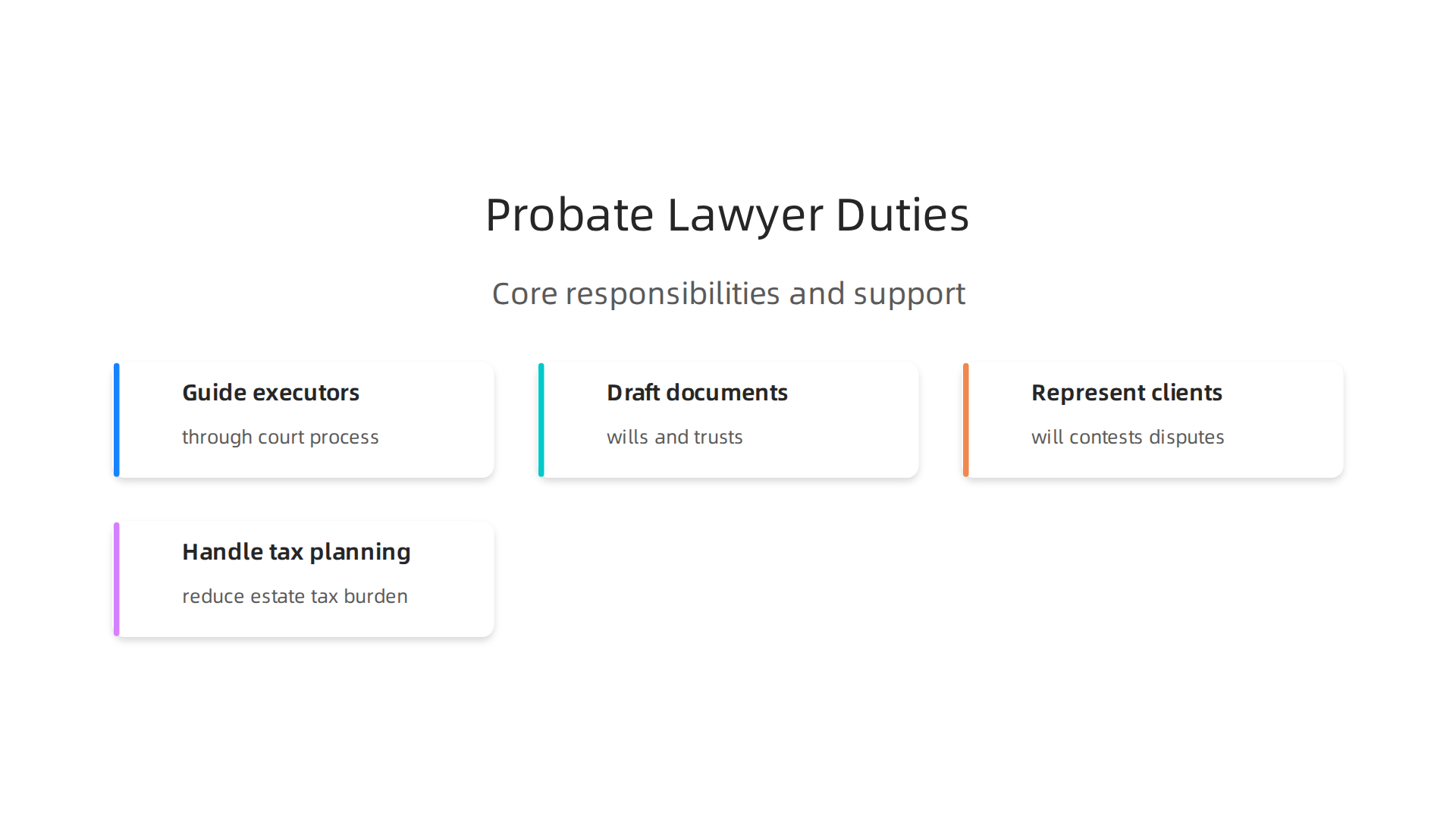
But the daily work goes much deeper. Probate lawyers guide executors through every step of the court process. They also draft important estate planning documents like wills and trusts before someone dies. When families disagree, these lawyers represent clients in will contests and trust disputes. Some even handle tax planning to reduce the estate tax burden.
The State Bar of Arizona notes that the law covers wills, administration of estates, estate and tax planning, and probate court jurisdiction source: State Bar of Arizona Probate & Trust Section.
Here is another thing that makes this role special. Probate lawyers often provide emotional support to families during a very difficult time. You are not just a legal expert. You are a guide who helps people honor their loved one’s final wishes.
Technology is also changing how these attorneys work. Modern tools help with asset tracking, document preparation, and even communication with clients. Leading law firms are embracing technology in 2026 to make probate practice smoother and faster.
Are you ready to stay ahead of the tech trends that will shape your future probate practice? Get quick daily updates from The Deep View Newsletter.
Why Probate Law is a Growing Field in 2026: Market Trends and Opportunities
Now that you know what a probate lawyer does, you may be wondering if this is a smart career path. The short answer is yes. Probate law is booming in 2026, and the numbers back it up.
The biggest reason is demographics. Baby boomers are getting older, and the largest intergenerational wealth transfer in history is happening right now. Trillions of dollars will move from parents to children over the next decade. Every single estate needs a probate lawyer to guide it through the court system. That means steady work for years to come.
Some states are especially busy. Florida, Arizona, and California have high retiree populations, which means more estates going through probate. If you are looking for a place with high demand, these states are hotspots.
The Bureau of Labor Statistics projects steady employment growth for lawyers overall through 2032, and estate planning is one of the fastest-growing specialties within that field. The BLS industry and occupational projections confirm that legal occupations will continue to expand, driven by an aging population and more complex regulations.
Here is a trend that is changing probate practice. Digital assets. Cryptocurrency, online accounts, and digital property are now part of most estates. Probate lawyers in 2026 must know how to handle these assets. That is a skill many older attorneys do not have, which creates opportunity for new lawyers who understand technology.
Leading law firms are already embracing technology to handle this growing caseload more efficiently. Firms like Mintz, Morgan Rafferty, and Rimon are using digital tools to streamline probate work. If you want to stay competitive, keeping up with legal tech is not optional.
The demand for probate lawyers will only rise. Now is the perfect time to get into this field.

Want to stay ahead of the legal tech trends shaping probate practice? Get quick daily updates from The Deep View Newsletter so you never miss a shift.
How to Become a Probate Lawyer: Education, Exams, and Licensing
Now that you understand why probate law is growing so fast, you probably want to know the exact steps to get started. The path is clear, and thousands of lawyers walk it every year. Here is what it takes to become a probate lawyer in 2026.
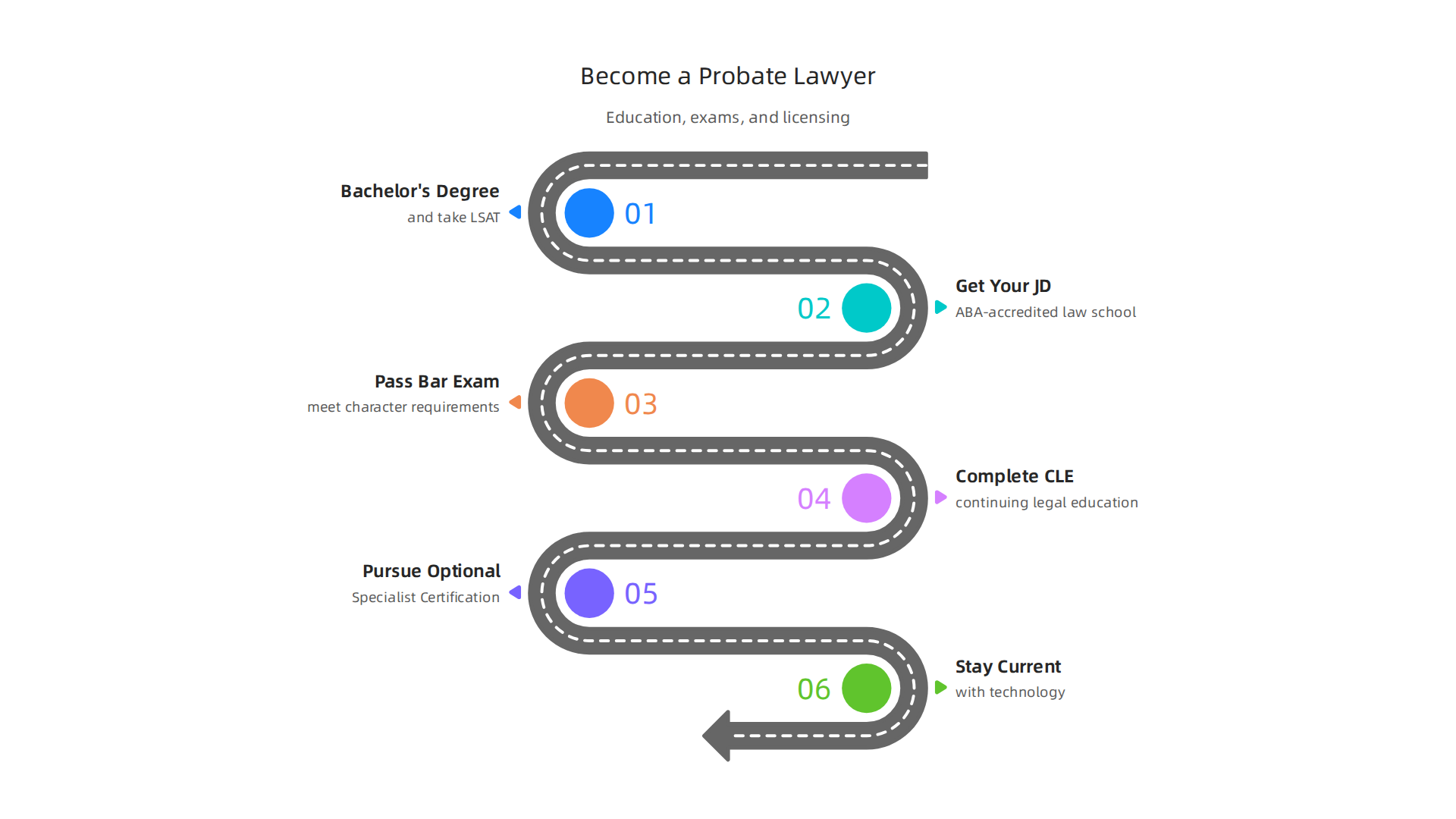
Step 1: Earn Your Bachelor’s Degree and Take the LSAT
The journey begins before law school. You need a bachelor’s degree from an accredited college. No specific major is required, but courses in business, finance, or accounting can help later when you handle estates. After graduation, you take the LSAT. Your score matters a lot for law school admissions. Many future litigation attorneys and estate lawyers start here.
Step 2: Get Your Juris Doctor (JD)
You must earn a Juris Doctor from an ABA-accredited law school. This takes three years of full-time study. During law school, focus on trusts and estates courses. Look for clinics or internships where you can work with real estate plans. This hands-on experience is invaluable. Some students also pursue an LL.M. in taxation or estate planning, which can shorten the time needed for later certification in some states.
Step 3: Pass the Bar Exam and Meet Character Requirements
After law school, you must pass the bar exam in the state where you want to practice. Every state has its own test. You also need to pass a character and fitness review. This background check ensures you are honest and ethical enough to represent clients.
If you are deciding where to practice, check the Florida Bar certification requirements to see how standards vary by state.

Step 4: Complete Continuing Legal Education (CLE)
Once you are licensed, the learning does not stop. Many states require continuing legal education (CLE) specifically in trusts and estates to keep your license active. This keeps you updated on changing laws and new trends like digital assets.
Step 5: Pursue Optional Certification
Here is where you can stand out. Several states offer a certified specialist credential in estate planning and probate law. Requirements vary, but most demand at least five years of practice with a substantial focus on the specialty. The State Bar of Arizona Board Certification outlines typical standards.
Getting certified shows clients and other business fraud lawyers and colleagues that you have deep expertise. It builds trust immediately.
Step 6: Stay Current with Technology
As discussed in the last section, digital assets and legal tech are reshaping probate practice. Understanding how technology fits into your role as a plural for attorney or solo practitioner is no longer optional. Read up on how technology redefines the attorney role to understand what modern clients expect.
The next section covers exactly what your daily work will look like once you land that first probate role.
Want to stay ahead of the tech shifts that affect estate law and compliance? Get quick daily updates from The Deep View Newsletter so you never miss a key trend.
Essential Skills for Modern Probate Lawyers
You have the degree, the bar card, and maybe even that certification. But what does it actually take to succeed as a probate lawyer in 2026? Passing the exam is just the start. The real difference between a good probate lawyer and a great one comes down to three skill areas: deep legal knowledge, strong people skills, and comfort with technology.
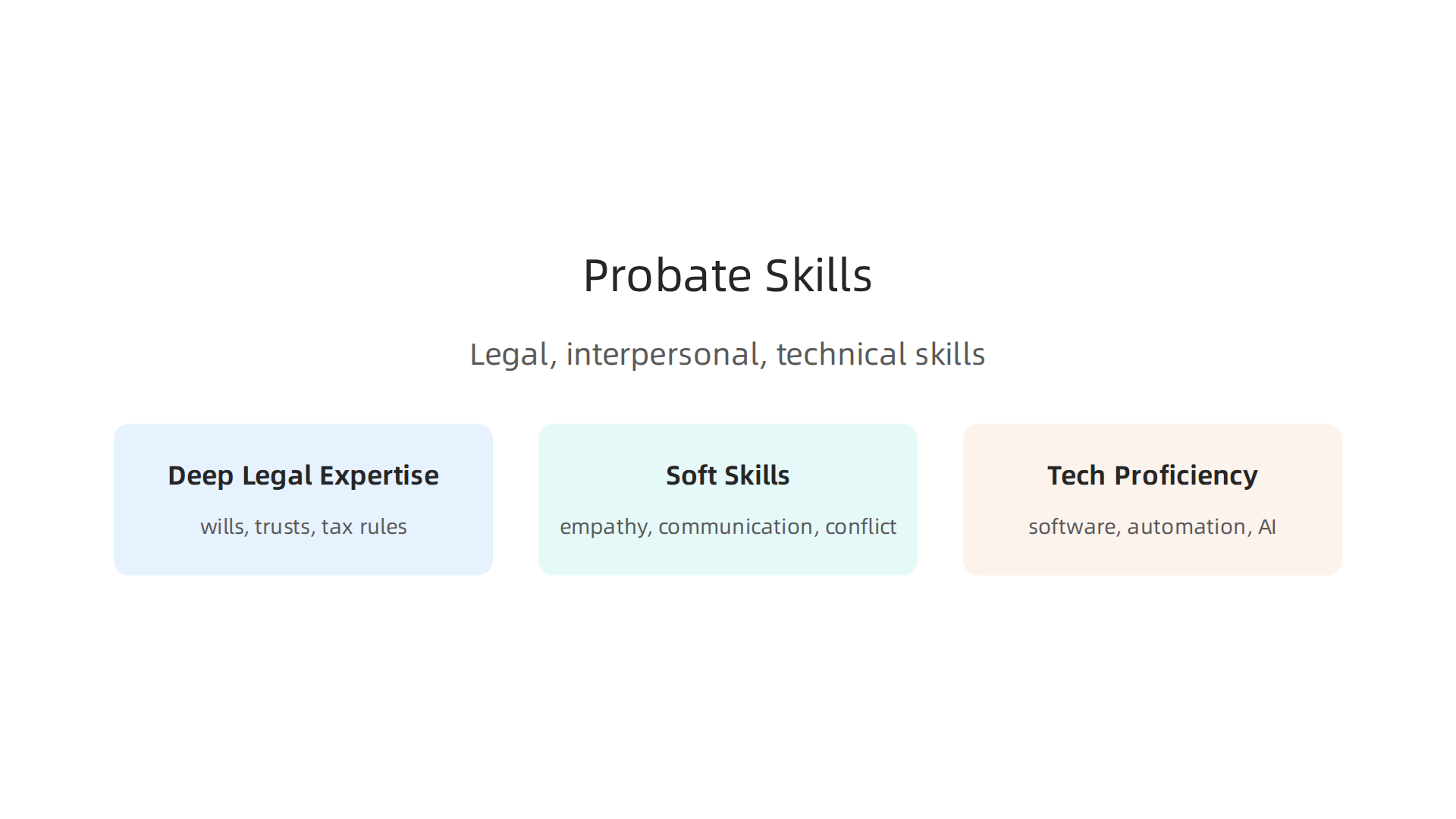
1. Deep Legal Expertise
You need to truly understand wills, trusts, estate administration, and the tax rules that go with them. Clients trust you to protect their family’s future. One mistake can cost them dearly. Many states offer certified specialist programs. These require at least five years of focused practice, with much of your work in estates and trusts. Source: JD Supra. Getting certified shows clients and colleagues you have the depth they can count on.
2. Soft Skills That Matter
This is where many lawyers fall short. You are often the first person a grieving family calls after a loved one dies. They are scared, confused, and sometimes angry. You need empathy to listen without judgment.

You need clear communication to explain complex terms in plain English. When disputes arise between family members, you need conflict resolution skills almost like a litigation attorney. You might also work alongside startup business lawyers or business fraud lawyers when estates involve companies or suspicious activity. Being an attorney who handles tough conversations with grace builds your reputation fast.
3. Tech Proficiency
Technology is no longer optional. In 2026, clients expect you to use estate planning software, document automation, and case management tools. These tools help you work faster, reduce errors, and serve more people. Leading firms are adopting AI and automation to handle routine tasks, freeing you up for the human work that matters most. Read more about how technology reshapes the attorney role to understand what clients now expect.
Staying on top of these tech trends is easier than you think. Get a quick daily update from The Deep View Newsletter to keep your skills sharp and your practice modern.
Top Specializations Within Probate Law
Once you master the core skills, you can focus on a niche within probate law. Each specialization serves a different client need and lets you build deeper expertise. Here are three of the most rewarding paths.
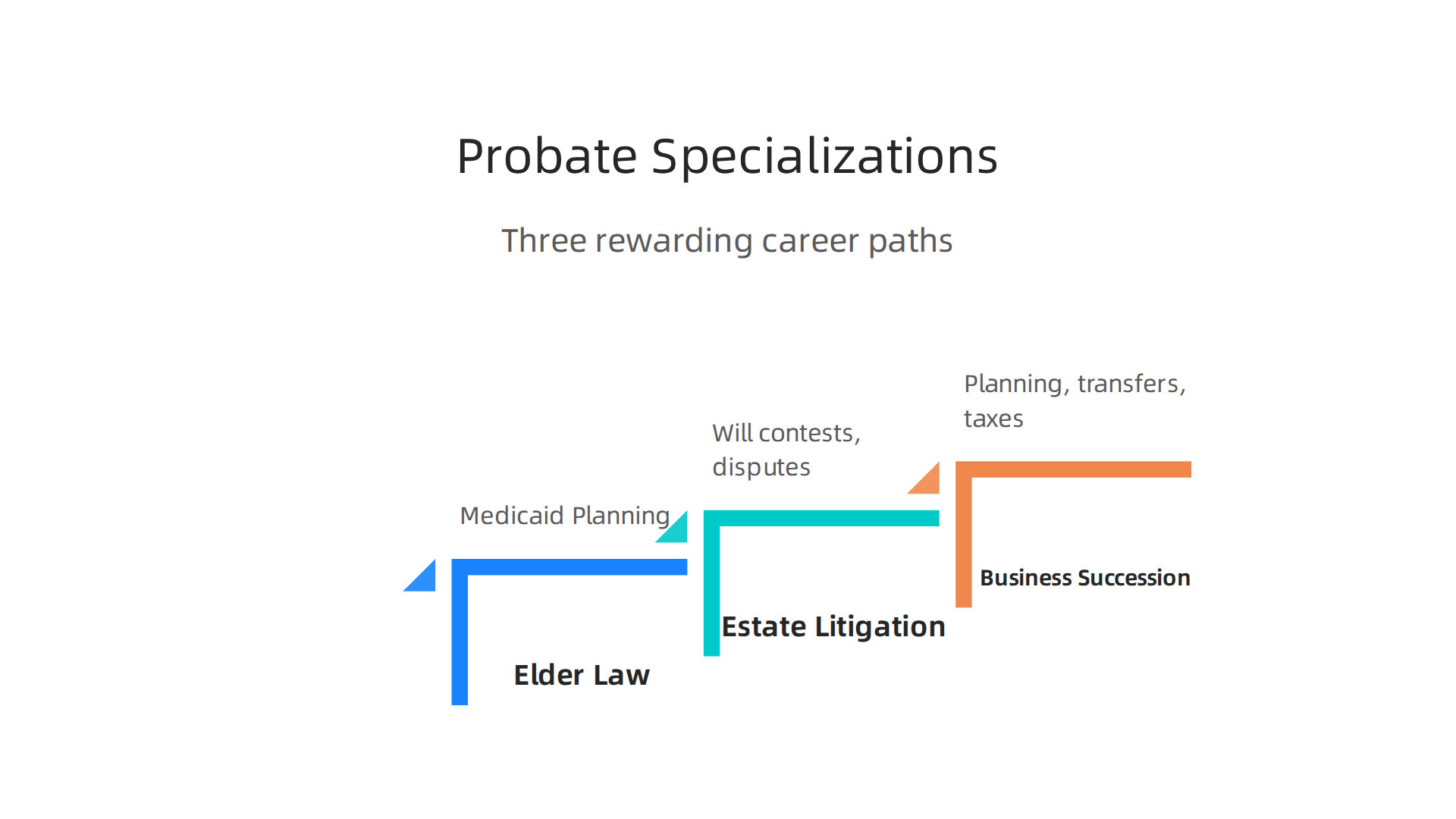
1. Elder Law and Medicaid Planning
Many probate lawyers spend much of their time helping seniors protect their assets and plan for long-term care. Medicaid rules are complex and change often. You guide families through the maze of qualifying for benefits while preserving what they have worked for. This area overlaps heavily with estate planning and requires a thorough understanding of tax implications. It is a growing field as the population ages.
2. Estate Litigation
When family members disagree on a will or trust, things can get messy. Estate litigation covers will contests, trust disputes, and claims against executors or trustees. You act as a litigation attorney within the probate context. These cases can be emotional and expensive. Having strong conflict resolution skills and courtroom experience is essential. Probate courts verify whether a will is valid, which often leads to litigation when questions arise. Understand the basics of probate court jurisdiction from the State Bar of Arizona.
3. Business Succession Planning
Many clients own small businesses they want to pass to the next generation. This requires careful legal work to transfer ownership, minimize tax burdens, and keep the business running smoothly. You coordinate with business fraud lawyers and tax professionals to ensure everything is legal and fair. If your client’s business has contracts, you might work alongside startup business lawyers to structure the transition. For more on the legal side of business agreements, read why you need more than a lawyer for business contracts.
Choosing a specialization makes you stand out as a probate lawyer and deepens the value you bring to clients. The field is broad, but focusing on one area can lead to a more fulfilling and profitable practice.
To stay current on changes in probate law and legal technology, subscribe to The Deep View Newsletter for daily updates.
The Role of Legal Technology in Probate Practice
Legal technology is changing how probate lawyers work. If you still draft wills by hand or store files on a local drive, you are missing tools that save time and reduce risk.
In 2026, tech is not optional. It is part of the job.
Estate planning software automates document generation. Instead of manually creating each will or trust, you use smart templates that update with the latest laws. This cuts down errors and speeds up client turnaround. According to the 2026 legal tech trends report, AI adoption in law firms surged from 37% in 2024 to 80% in 2025 JDSupra. This means most attorneys are already using some form of automation. Estate planning software is a natural fit for any probate lawyer who wants to handle more cases without sacrificing quality.
AI tools go a step further. They can help with asset valuation, will drafting, and even predictive analysis in disputes. For example, an AI can review past probate court rulings to estimate the odds of a will contest. A recent video from ACTEC explains how artificial intelligence affects estate planning in 2026 YouTube. You do not need to be a tech expert to use these tools. They are becoming standard for proactive attorneys.
Cybersecurity is paramount. You handle sensitive estate data like financial accounts, personal IDs, and family history. One data breach can ruin trust and lead to malpractice claims. You need encrypted communication and secure storage solutions. Many firms now use platforms built specifically for legal work to keep client data safe.
Want to see how top firms are adopting new tools? Read about how leading law firms embrace technology in 2026. It shows the practical steps they take.
To keep up with the fast changes in legal tech and probate practice, subscribe to The Deep View Newsletter for daily updates. It helps you spot useful tools before they become standard.
Building a Career as a Probate Lawyer: Tips and Strategies
So you want to become a probate lawyer. That is a smart move. The work is steady, the clients need real help, and the field is changing fast thanks to legal tech. But how do you actually break in and grow?
Start with real experience. You cannot learn probate law from books alone. Look for internships at estate planning law firms. Legal aid clinics are another great option. They handle a lot of guardianship cases, which gives you direct court exposure. Even prosecutor offices that deal with elder fraud can teach you valuable skills. The more hands-on work you do, the better you understand what a probate lawyer does every day.
Build your network. Probate work is local. Judges, trust officers, and estate planners all know each other.

Join your state bar association’s trusts and estates committee. Attend meetings at estate planning councils in your area. These groups are full of experienced attorneys who can mentor you. They also bring referrals. A good rule is to connect with at least one new professional each month. You can see how leading law firms embrace technology in 2026 to network smarter.
Pick a niche to stand out. Every probate lawyer handles wills and trusts. But you can go deeper. Digital estate planning is a hot area in 2026. People have crypto, online accounts, and digital assets that need special attention. International wills are another niche. If your city has a large expat community, that is a strong market. A specialized probate lawyer earns more and faces less competition.
The best part? You do not need to be a litigation attorney or a business fraud lawyer to succeed here. You just need a clear focus and the right guidance.
Want daily tips on legal tech trends that can boost your career? Subscribe to The Deep View Newsletter for AI updates that matter to probate lawyers.
Probate Law and the Future of Legal Services
Building a career as a probate lawyer is just the first step. The real question is whether you are ready for what comes next. The legal world is shifting fast in 2026, and probate law is changing along with it. Three big trends are reshaping the future of estate planning and administration.
Digital assets are creating new challenges. More people own crypto, online accounts, and digital files. When someone passes away, handling these assets is tricky. Most wills were written before Bitcoin or AI existed. A probate lawyer now needs to plan for digital inheritance. A 2026 estate planning guide warns that without clear instructions, a family member could legally create an AI version of the deceased from emails and recordings. This forces courts to rethink how we handle digital property.
Remote lawyering is now standard. Virtual probate hearings are common across the country. This expands access to legal services for families in rural areas who could not easily meet with a lawyer before. A litigation attorney might need to travel to court, but a probate lawyer can often handle a hearing from a home office. The industry is seeing massive tech adoption too. AI usage in law firms jumped from 37% in 2024 to 80% in 2025. Tools that seemed futuristic a few years ago are now everyday essentials.
Lifelong learning is non-negotiable. You cannot learn the laws once and stop. Technology changes too fast. You have to understand how AI tools work to stay efficient. Law firms are expected to show discipline in their tech investments to avoid wasting money on trends that do not deliver real value. Keeping up with these changes separates an average lawyer from a future-proof probate lawyer. If you want to see how top professionals are adapting, check out how leading law firms embrace technology in 2026.
The changes are exciting, but they require constant effort to stay current. You need reliable updates to keep your probate practice strong.
Want to stay ahead of legal tech trends impacting probate practice? Get clear daily AI updates from The Deep View Newsletter to keep your skills sharp and your clients happy.
Summary
This article is a practical roadmap for anyone considering a career in probate law, explaining what probate lawyers do, why demand is rising, and the exact steps to enter the field. It covers education (bachelor’s, LSAT, JD), bar admission, CLE, and optional specialist certification, and it explains the hands-on experience and networking strategies that help you break in. The guide highlights essential skills—deep trusts and estates knowledge, empathy and dispute resolution, plus tech proficiency—and describes high-value niches like elder law, estate litigation, and business succession planning. It emphasizes how legal technology (estate software, AI tools, secure storage) is reshaping practice efficiency and client expectations. The article also details market drivers such as an aging population, intergenerational wealth transfer, and the rise of digital assets, showing where demand will grow. Readers will finish equipped to map a clear training path, choose a specialization, and adopt the tools and habits needed for a future-proof probate practice.