
Esquire and Attorney Explained: Crucial Distinctions for Legal Professionals

Why the distinction between ‘Esquire’ and ‘Attorney’ still matters in 2026
Have you ever wondered about the difference between someone called "Esquire" and an "Attorney"? Many people get these two terms mixed up. But knowing the right way to use "Esquire" versus "Attorney" is super important, especially in the legal world. It shows you know your stuff, helps you seem trustworthy, and keeps you from breaking any rules.

In 2026, using legal titles correctly is not just about old traditions. It is about being clear and following the rules. If you work in law, knowing when to use "Esquire" or "Esq." and when to use "Attorney" helps everyone know exactly what you mean. It can even stop problems related to practicing law without the right license in certain places, like Washington D.C., where "esquire" can mean someone is allowed to practice law, as noted by Rule 49 on the Unauthorized Practice of Law.
Many people think "lawyer" and "attorney" mean the same thing, and for the most part, they do. These words describe someone who gives legal advice or works in law. But "Esquire" (often shortened to Esq.) is a bit different. It’s a special title given to lawyers in the United States, especially when you write to them. It’s like a courtesy title that tells people this person is a legal professional.
Actually, the title "Esquire" itself is not a legal degree or a job title. Instead, it signals that the person has gone to law school, passed the tough bar exam, and is licensed to help people with legal issues. When you see "Esq." after a name, it means that person is a licensed attorney who can practice law. It shows they have met the professional standards for legal work, but it doesn’t give them extra powers beyond their law license. It’s a way to recognize their status as a qualified lawyer.
This guide will help you understand the simple differences between "Esquire" and "Attorney." We will also look at how each title should be used. This is important for legal experts everywhere, because knowing these small but mighty details can make a big difference in how you are seen and how you do your job. For more tips on using legal terms, check out our guide on what does attorney at law abbreviation mean and how to use it right.

As the legal world changes quickly, especially with new technology like AI, staying informed is key. For clear daily updates on how AI and technology are changing the legal field, make sure you get The AI Newsletter Worth Reading.

It will help you keep up.
Let’s dive deeper into what these important legal terms truly mean. Knowing the exact definitions for "Attorney" and "Esquire" helps clear up confusion and ensures you use them correctly.
Definitions: What ‘Attorney’ and ‘Esquire’ technically mean
What is an Attorney?
Simply put, an "Attorney" is a person licensed to practice law. Think of them as a legal helper who can officially act on behalf of someone else in legal matters. To become an attorney in 2026, a person must go to law school, pass a difficult test called the bar exam, and then be sworn in to practice law in a specific area or state. This license means they can give legal advice, represent clients in court, and handle legal documents.
The terms "lawyer" and "attorney" are often used to mean the same thing, and generally, they do. Both describe a professional who gives legal advice and works in the law field. An attorney’s main job is to use their legal knowledge to help people solve problems and understand their rights. If you need to check if a legal professional is properly licensed, you can learn more about how to check an attorney’s background.
What is ‘Esquire’ (Esq.)?
The term "Esquire," often shortened to "Esq.," is a special title that has a long history. It comes from medieval England, where an esquire was someone who carried a knight’s shield and helped them get ready for battle. Later, it became a title for men of higher social standing, like landowners or respected gentlemen. You can read more about Understanding the History and Use of Esquire in Law.
In the United States today, "Esquire" is mainly used as a courtesy title for lawyers. It’s not a degree, like "Doctor," or a job title itself. Instead, when you see "Esq." after someone’s name, it signals that they are a licensed attorney who has passed the bar exam and can practice law. It’s a way to show respect and acknowledge their professional status, particularly when writing to them. The Legal Information Institute at Cornell Law School explains that it’s a title of courtesy commonly added to a lawyer’s name in written form.
It’s important to remember that using "Esquire" suggests that someone is a licensed legal professional. Using this title without actually being admitted to the bar can be misleading and might even count as practicing law without a license, which is against the rules in places like Washington D.C., as noted by Rule 49 on Unauthorized Practice of Law. So, while it’s an honorary title, it carries a big responsibility. It truly shows that the person has met the high standards for legal work, but it doesn’t give them extra powers beyond their law license. As FindLaw notes, "Esquire" is an honorary title placed after a practicing lawyer’s name.
The titles "Attorney" and "Esquire" have a rich history that helps us understand their meaning today. Their origins go way back, showing how they became important in the legal world.
The journey of ‘Esquire’ from shield-bearer to legal title
The word "Esquire" comes from a very old Latin word, "scutarius," which means "shield-bearer." Imagine a time long ago in medieval England. An esquire was a young man of good family who would carry a knight’s shield and help him get ready for battle. These men were often learning to be knights themselves. They were seen as important people, just below a knight in social rank, as explained in the article on Esquire.
Over many years, the meaning of "Esquire" changed. It moved from being about helping knights to being a general title for respected gentlemen. By the 1700s, it was simply a courtesy title. Later, especially in the United States, this special name became closely tied to lawyers. It was a way to show respect for someone who had gone through tough schooling and passed the bar exam to become a licensed attorney. This long history shows how a title once used for noblemen came to be a mark of a practicing lawyer.

Learning about the past of words like "Esquire" helps us see the bigger picture of the origins of ‘esquire’.
How the ‘Attorney’ role became official
At the same time, the role of an "Attorney" was also growing. In early days, legal helpers might not have had formal training like they do now. But over time, societies saw the need for people with special knowledge of laws to help others. This led to rules about who could give legal advice and represent people in court.
To make sure people got good help, the legal field became more organized. This meant lawyers had to go to school and pass exams. The work of an attorney became a respected profession. As this happened, the old, honorable title of "Esquire" naturally started to be used for these new, formally trained legal professionals. So, when you see "Esq." after a name, it’s a nod to both the old idea of respect and the new standard of legal training. It’s a useful lawyers abbreviation. To understand more about how these titles are used today, especially in written forms, it helps to know about attorneys abbreviation rules that save time and prevent mistakes.
Knowing the history of "esquire vs attorney" helps us see that while "Esquire" is a courtesy title, it signals that the person is a professional attorney. This tradition highlights the importance and respect given to legal work throughout history.
To stay on top of all the modern changes in law and technology, you need reliable information.
Get clear daily AI updates from The Deep View Newsletter. The AI Newsletter Worth Reading
Knowing the history of "esquire vs attorney" helps us see that while "Esquire" is a courtesy title, it signals that the person is a professional attorney. This tradition highlights the importance and respect given to legal work throughout history.
Jurisdictional differences: US, UK, Commonwealth, and beyond
The way legal titles like "Attorney" and "Esquire" are used can change a lot depending on where you are in the world.
What might be common in one country could be very different in another. This is especially true when we look at the United States, the United Kingdom, and countries that are part of the Commonwealth.
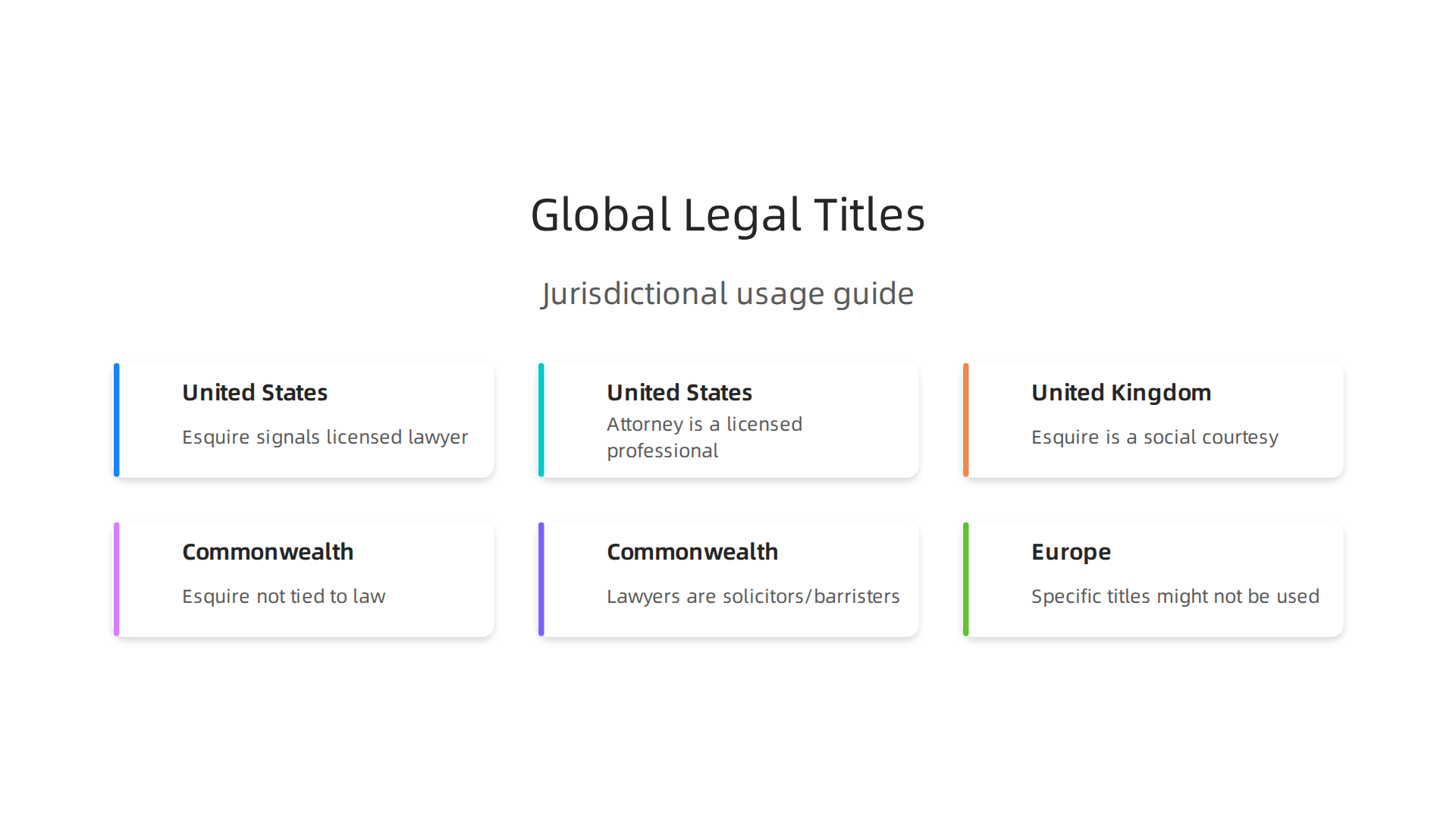
In the United States, "Esquire" (often shortened to "Esq.") is almost always used to show that someone is a licensed lawyer. It’s a way of giving respect to a legal professional. When you see "John Doe, Esq." on a letter, it tells you that John Doe is an attorney. It’s a widely accepted practice, and state bar associations even encourage lawyers to use it, though it’s not a formal degree. The American Bar Association (ABA) considers it "entirely proper" for lawyers to use "Esquire" as an honorary title that shows a lawyer’s ability to practice law, according to one expert’s post on LinkedIn. Using "Esquire" falsely, though, can be misleading and can even be seen as practicing law without a license, which is against the rules in many places. It’s important for someone to be authorized before they use such a title. For example, in New York, lawyers must be clear about their status if they are retired or have limits on their practice, even if they use the title on business cards, as per an Ethics Opinion by the New York State Bar Association.
However, if you travel to the United Kingdom or many Commonwealth countries like Canada or Australia, the meaning of "Esquire" is quite different. There, it’s generally a courtesy title for gentlemen of higher social standing, not necessarily tied to the legal profession. It doesn’t mean you are a lawyer. An attorney in these countries would simply be called a "solicitor" or "barrister." It is not a lawyers abbreviation for them.
So, while the titles might have old roots that connect them, their modern use varies greatly. In some parts of the world, like much of Europe, these specific titles might not be used at all. Understanding these differences is key, especially for legal professionals who work across different countries or for anyone looking to hire an attorney. It’s crucial to know that the title itself does not grant power beyond a law license, but using it without being admitted to the bar can be misleading and break rules against unauthorized practice. To ensure you understand who you’re dealing with, it’s always wise to check an attorney’s background and verify their credentials and history, no matter the jurisdiction.
Knowing how legal titles change from place to place helps us understand their importance. Now, let’s look at how lawyers actually use titles like "Esquire" and "Attorney" in their daily work. This includes things like business cards, emails, and even their firm’s website.
Professional contexts: when to use ‘Esquire’ vs ‘Attorney’ in practice
For lawyers in the United States, deciding between "Esquire" (Esq.) and "Attorney" in professional settings can sometimes be tricky. Both titles show that someone is a legal professional. However, they are used in different ways.
On business cards, stationery, and email signatures, it’s okay for an attorney to use "Esquire" after their name. For example, "Jane Q. Attorney, Esq." is a common way to show their legal status. It’s similar to how a dentist might use "D.D.S." after their name. Lawyers can also simply state their role as "Attorney at Law" or "Counsel" on these items. But here’s a key rule for how others should address lawyers: when "Esquire" is used after a name, you should not put "Mr." or "Ms." before the name. It’s either "John Doe, Esq." or "Mr. John Doe," but not both together. For email signatures, including your full name and professional title like "John Smith, Esq." is standard, along with your job title and firm name. To avoid common mistakes in legal writing and communication, it’s helpful to understand proper attorneys abbreviation rules.
When it comes to firm websites and client-facing documents, clarity is most important. Law firms often list their lawyers with "Attorney at Law" or just "Attorney" to make it clear what they do. Using "Esquire" on a website for a lawyer to describe themselves is generally accepted in the U.S., much like on a business card. The main goal is to be professional and make it easy for clients to understand who they are working with. A well-designed website clearly shows a firm’s legal expertise and helps build trust. In fact, bad law firm websites can drive clients away and hurt how people see the firm.
Different kinds of lawyers might choose different ways to present themselves. For example, a prosecuting attorney working for the government or a trial attorney arguing cases in court might prefer "Attorney" to directly state their active role. An in-house counsel, who works for a company, might use their job title like "Legal Counsel" instead of "Esquire" in some contexts, but still use "Esquire" on formal documents.
It’s all about making sure that the title chosen correctly reflects the lawyer’s professional standing and helps them connect clearly with clients and other legal professionals.

Are you interested in how technology impacts the legal world? Stay informed about the latest developments. Get clear daily AI updates from The Deep View Newsletter.
Using titles like "Esquire" or "Attorney" is important for lawyers to show what they do. But beyond simply choosing a title, lawyers also need to think about the rules and ethics. Using a title in the wrong way can cause serious problems.
Ethical and compliance considerations when using professional titles
Lawyers have a big responsibility to be honest and clear in all their communications.

This includes how they use their professional titles, whether it’s "esquire" or "attorney." There are rules to make sure the public is not tricked or confused.
Avoiding misleading titles
A key ethical rule for lawyers is that they cannot make any false or confusing claims about themselves or the legal help they offer. This means if a lawyer uses a title like "Esquire" or "Attorney," it must be truthful. For example, a person who went to law school but never passed the bar exam and cannot legally practice law should not use "Esquire" to suggest they are a practicing attorney. Doing so would be misleading. The rules of professional conduct clearly state that lawyers should not make statements that are false or that leave out important facts, which could make the statement confusing overall 7.1 Communications Concerning A Lawyer’s Services. This applies to how titles are used, especially in public settings or advertising.
Understanding cross-border risks
The legal profession has different rules in different states and countries. A lawyer practicing in one state might follow certain rules for using their title, but those rules might be different if they practice or advertise in another state or country. For example, some places might have very strict guidelines about using specific terms or abbreviations. If a lawyer works across state lines or even internationally, they must understand all the rules in each place to avoid problems. This is a very important part of legal compliance in 2026, as legal work becomes more global.
Setting internal policies for legal teams
To avoid ethical problems, legal teams and law firms often create their own clear rules for how their lawyers use professional titles.
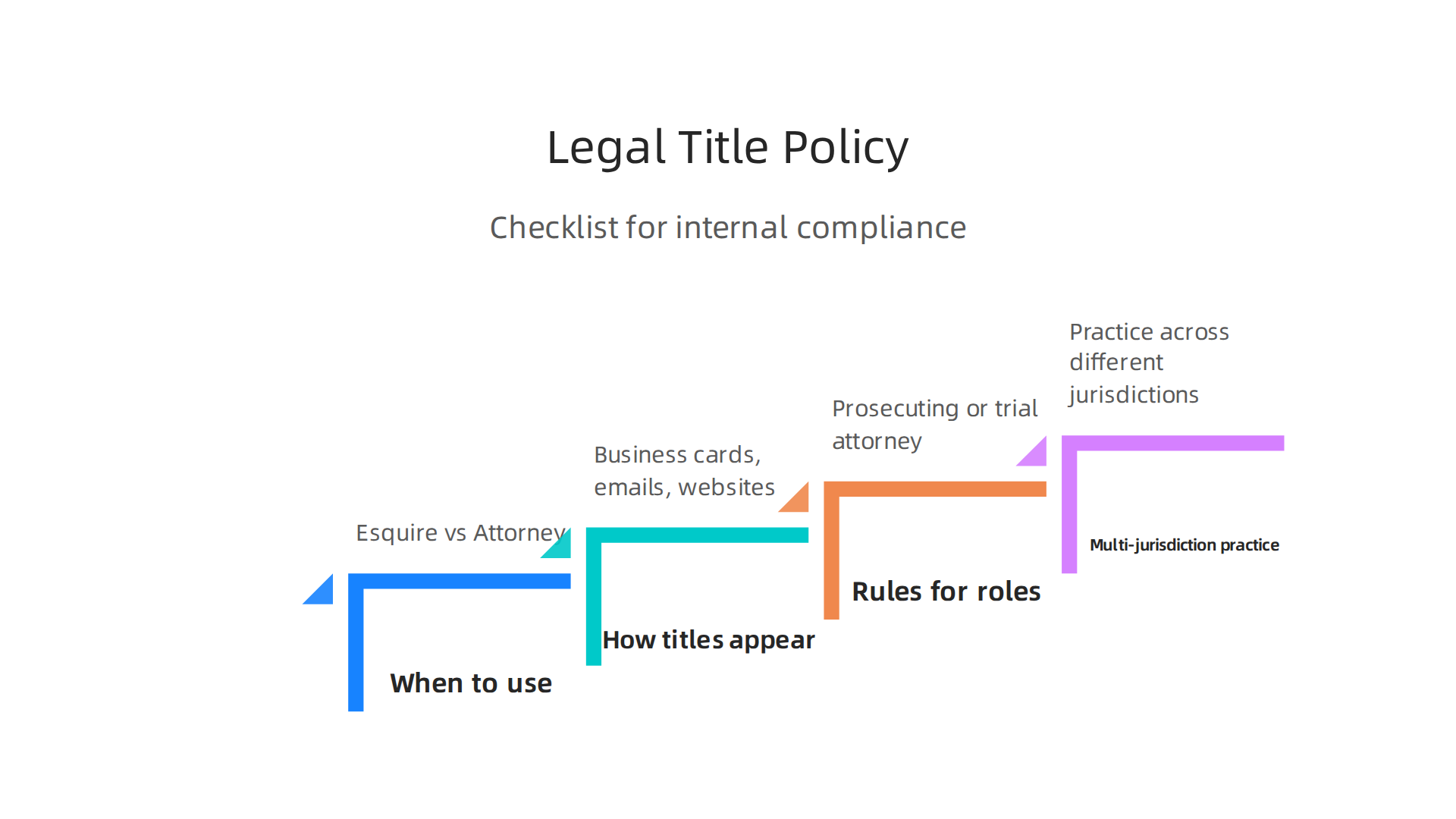
This is a "risk-based approach." It helps everyone in the firm understand what is okay and what is not. These policies might cover:
- When to use "Esquire" (Esq.) versus "Attorney"
- How titles should appear on business cards, emails, and websites
- Rules for how lawyers, like a prosecuting attorney or a trial attorney, describe their roles
- What happens if a lawyer practices in more than one place
Having clear rules helps ensure all lawyers, including those just starting out in their careers, use their titles correctly and honestly. This protects the law firm’s good name and makes sure clients can trust the information they see. It’s always a good idea to check an attorney’s background to confirm their credentials and history. By following these guidelines, legal professionals keep their practice fair and open.
When it comes to the daily work of legal professionals, how they use their titles like "esquire" or "attorney" really matters. It’s not just about what sounds good; it’s about being clear and following the rules. Let’s look at some real-world examples in 2026, like on business cards, in court papers, and within law firm teams.
Practical examples: signatures, court filings, and team directories
How a lawyer signs their name, lists themselves in a directory, or designs their business card all show how they use their professional title. These everyday uses need to be precise to make sure clients and other lawyers understand their role and status.
Signatures and Business Cards
For many lawyers, how they sign off on letters or present themselves on a business card is the most common way they use their title. Here are some common ways you might see "esquire" vs. "attorney" used:
- For a practicing lawyer:
- John Doe, Esq.
- Jane Smith, Attorney at Law
- Maria Rodriguez, Attorney
- Mark Johnson, Senior Counsel, Attorney
The term "Esquire," often shortened to "Esq.," is typically used as a suffix after a lawyer’s full name, separated by a comma. It shows that the person is a licensed lawyer who can practice law in the United States. While anyone can technically be called an "Esquire," state bar groups often suggest that only licensed lawyers use it to avoid confusing people Understanding Esquire and Other Legal Titles.
On a business card, a lawyer might choose "John Doe, Esq." or "Jane Smith, Attorney." The key is to be clear about their role. For instance, if a lawyer is retired or has limits on their ability to practice, they must make that clear on their business cards and letterheads to avoid misleading others Ethics Opinion 1089 – New York State Bar Association.
Formal Court Filings
In court documents, the use of titles is more formal and follows specific legal customs. When a lawyer files papers with the court, they usually identify themselves as "Attorney for [Party’s Name]." Their signature block might look like this:
Respectfully submitted,
[Signature]
John Doe, Esq.
Attorney for the Plaintiff
Bar No. 12345
Or:
[Signature]
Jane Smith
Attorney at Law
Counsel for the Defendant
Bar No. 67890
Here, using "Esq." or "Attorney at Law" confirms their standing to act on behalf of a client. It’s vital that the use of a lawyers abbreviation or full title in these filings is accurate and doesn’t suggest a misleading status.
Internal Team Directories and Public Listings
Within a law firm’s internal directory or on its public website, titles help define roles. A firm might list lawyers with their full titles and specific roles:
- Sarah Lee, Esq.
- Role: Partner, Corporate Law
- David Chen, Attorney
- Role: Associate, Litigation
For some, it’s about making sure their specific role, like a prosecuting attorney or a trial attorney, is clearly understood. Creating consistent policies for how names and titles are displayed across all platforms helps avoid confusion and ensures everyone, including a new associate or even a lady of law, uses titles correctly. This helps keep things professional and clear.
To learn more about how to properly shorten titles and names in the legal field, check out our guide on attorneys abbreviation rules that save time and prevent mistakes.
In the world of law, staying updated on everything from titles to technology is crucial. For daily insights into AI and its impact on the legal sector, consider subscribing to The AI Newsletter Worth Reading.
After looking at how lawyers use "esquire" vs. "attorney" in different places, it’s natural to have more questions. Legal teams and anyone working with lawyers need clear answers for daily tasks. Here are some common questions and a quick guide to help you use these titles correctly in 2026.
FAQ and quick-reference: fast answers for legal teams and communicators
Knowing when to use "esquire" versus "attorney" can sometimes be tricky. Let’s clear up some common points with simple answers.
Common Questions about Legal Titles
-
Can a lawyer call themselves "Esquire" in their own signature?
It’s usually seen as more proper for "Esquire" or "Esq." to be used when addressing a lawyer, not when a lawyer refers to themselves. Think of it like a polite title someone else gives you, not one you put on yourself. For their own signatures, lawyers often use "Attorney" or "Attorney at Law" after their name, or simply their name. Some sources say it’s okay for lawyers to use "Esq." on their business cards or signature lines What Is the Difference Between J.D., Lawyer, Attorney, and Esquire?. But when writing to a lawyer, you would use "John Doe, Esq." or "Ms. Jane Smith, Attorney at Law" Q&A: Titles for Attorneys. -
What about using "Dr." if a lawyer has a J.D. (Juris Doctor) degree?
Even though a J.D. is a doctoral degree, lawyers usually don’t use "Dr." in professional messages or when dealing with the public. It’s best to stick to legal titles like "Attorney" or "Esquire" to avoid confusion. There are rules that limit how some titles are used in communications Opinion 550 on using ‘Dr.’. -
When should I use "Esquire" in a letter or email to a lawyer?
When you are writing to a lawyer, it’s polite to use "Esquire" or "Esq." after their full name, like "Mr. David Lee, Esq." But a key rule is to not use both "Mr./Ms." and "Esq." together. Pick one or the other. So, you can write "Mr. David Lee" or "David Lee, Esq." Simple Ways to Address an Attorney. -
Can misleading titles get a lawyer in trouble?
Yes, absolutely. Lawyers have to be truthful in all their communications. Using a title or claiming a status that isn’t true is against the rules of professional conduct. It can even be seen as a marketing ethics mistake for lawyers. This applies to business cards, websites, and even email signatures. Clear communication helps everyone understand a lawyer’s true role and avoids misleading the public 7.1 Communications Concerning A Lawyer’s Services. -
Does a prosecuting attorney or trial attorney use titles differently?
The core rules for "esquire vs attorney" apply to all lawyers, including specific roles like a prosecuting attorney or a trial attorney. While their job titles might explain their specific work, their professional titles for general use follow the same guidelines. For instance, when looking into a criminal lawyer salary in 2026 or an employment lawyer’s career, you’ll see they also use the standard titles.
Quick-Reference Checklist for Title Policies
To make sure your legal team or department uses titles right, here’s a checklist for setting clear policies:
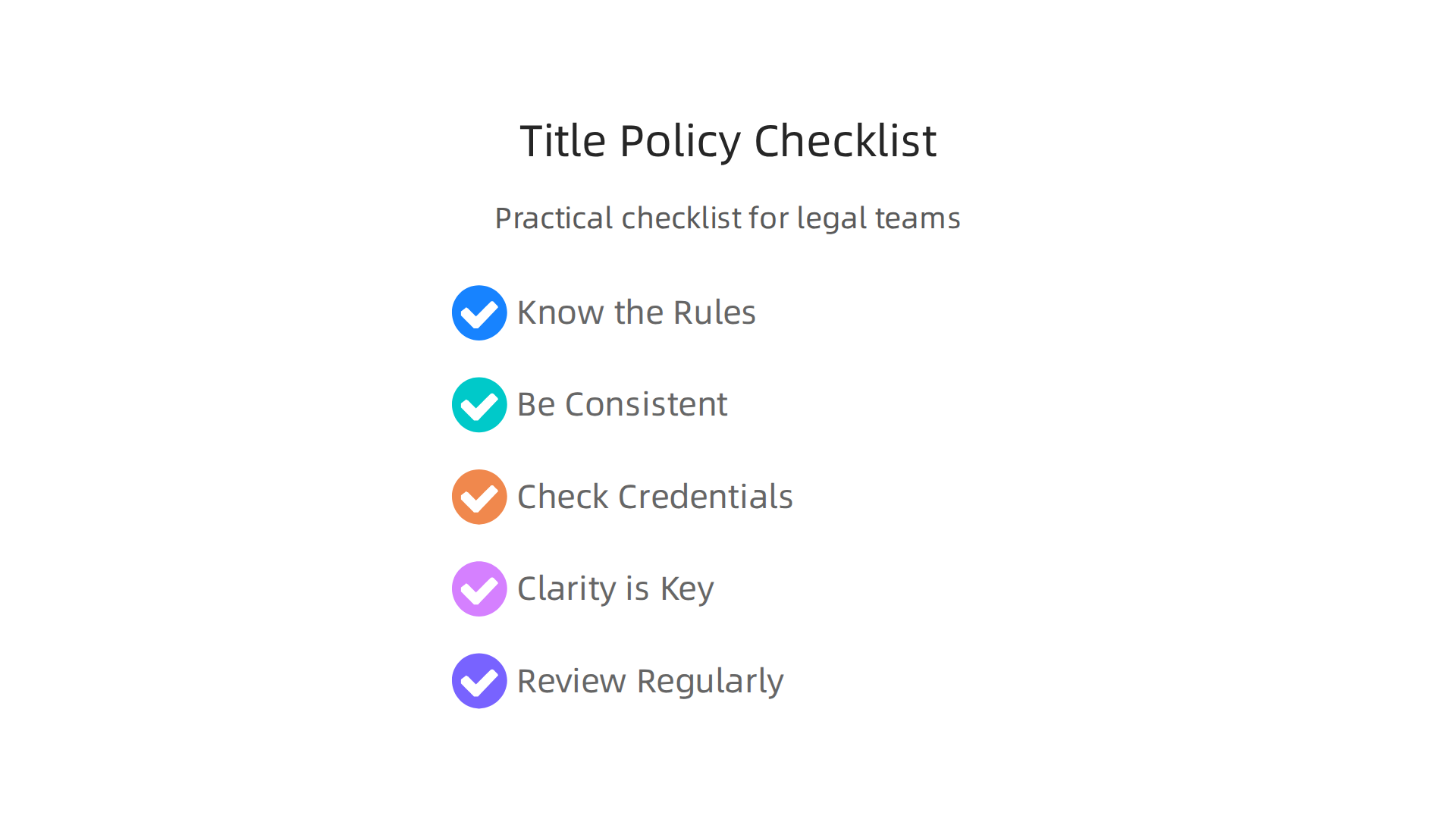
- Know the Rules: Always follow your state bar’s rules on how lawyers should present themselves. These rules stop misleading the public.
- Be Consistent: Decide if your firm will use "Esquire" or "Attorney" on business cards, emails, and website profiles. Make sure everyone sticks to it.
- Check Credentials: Before listing a lawyer, make sure their license is active. You can learn more about how to check an attorney’s background.
- Clarity is Key: For specific roles like "prosecuting attorney" or if someone is a "lady of law" in a certain field, make sure their title is clear about their actual job and not confusing.
- Review Regularly: Look over your firm’s materials (like websites and letterheads) often to make sure titles are still correct and meet current standards.
Following these tips helps maintain a strong, honest image for your legal professionals.
Summary
This article explains the practical difference between the titles "Esquire" (Esq.) and "Attorney" and why the distinction still matters in 2026. It defines each term—showing that "Attorney" denotes a person licensed to practice law while "Esquire" is a courtesy suffix commonly used in the U.S. to indicate a licensed lawyer—and traces the history that shaped those meanings. The guide covers real-world uses (business cards, email signatures, court filings, team directories), jurisdictional variations between the U.S. and Commonwealth countries, and the ethical risks of misusing titles. It also gives firms a framework for consistent internal policies and compliance checks so teams avoid misleading the public. After reading, you will know when and how to use each title correctly, how to prevent common mistakes, and where to verify a lawyer’s license and disciplinary history.