
Marketing Strategist for Law Firms The Hidden Engine of Firm Growth

Introduction: The Hidden Engine of Law Firm Growth
You have built a strong law practice. Your attorneys win cases. Your reputation in the community is solid. Yet something feels off. New client inquiries are slowing down. Your website looks fine but does not seem to bring in leads. You are spending money on different marketing efforts, but nothing really connects the dots.
Here is the hard truth that many law firm leaders discover too late. The difference between a firm that grows steadily and one that just survives often comes down to one key role. That role is a marketing strategist.

So what is a marketing strategist exactly? Many firms confuse this role with a marketing coordinator or a social media manager. A coordinator handles tasks. A strategist builds the entire game plan. While a manager focuses on executing campaigns, a strategist asks the bigger questions: Who is our ideal client? What makes our firm different? Which channels will actually reach the right people? A strategist understands the critical difference between a marketing strategy vs marketing plan, and they know how to turn high-level goals into real results.
In 2026, law firms face more competition than ever. Clients expect modern, helpful experiences online. They judge your firm by its website, its content, and its reputation before they ever pick up the phone. Without a clear strategy, even the best lawyers can get lost in the noise. A marketing strategist acts as the hidden engine that connects your legal expertise with the people who need it most.
This article will explain the marketing strategist role from the ground up. You will learn what these professionals actually do, what skills they need, and how they can help your law firm attract better clients and grow with confidence. We will also look at practical examples, including what sets top-performing firms apart in areas like the best website designs and client experience.
If you want to stay ahead in the ever changing legal market, understanding this role is the first step. And if you are curious about how technology and AI are reshaping legal marketing, you might want to check out The AI Newsletter Worth Reading for clear daily insights.
Defining the Marketing Strategist Role in a Law Firm
So what is a marketing strategist when it comes to a law firm? Think of this person as the architect. A marketing strategist is a senior-level professional who designs the long-term marketing and business development plan for the firm. They do not just post on social media or send emails. They look at the big picture.
Here is the key difference. A marketing coordinator handles tasks. They schedule posts, update the website, and manage day-to-day activities. A marketing manager oversees those tasks and keeps campaigns running smoothly. But a strategist asks the deeper questions. What does our ideal client actually need? How do we stand out from other firms? Which channels will give us the best return?
This role connects attorney expertise with client needs. Lawyers know the law inside and out. But they often struggle to communicate that value in a way that clicks with potential clients. A strategist builds that bridge. They research the market, study competitors, and find opportunities that the firm may be missing. They then design campaigns that turn legal knowledge into clear, helpful messages.
For instance, a strategist might notice that the firm’s website is getting traffic but not converting visitors into calls. They would dig into the data, improve the messaging, and test new layouts. They understand that a website wireframe is just the starting point. The real work is making sure the design guides visitors toward taking action. That is why firms with the best website designs often have a strategist guiding the process.
Compare this to the difference between a marketing strategy vs marketing plan. A strategist builds the strategy first. The plan is just the step-by-step execution that follows. Without strategy, plans wander. With it, every action has a purpose.
If you want to see how leading firms approach this, check out this overview of smart content and interactive legal tools. It shows how modern firms use strategy to stand out. A marketing strategist makes all of that possible by keeping the focus on what really matters: connecting great legal work with the people who need it.
Marketing Strategist vs. Marketing Coordinator: Key Differences
It is easy to confuse a marketing strategist with a marketing coordinator. But they serve two very different purposes.

A strategist focuses on the big picture. They dive into analysis, long-term planning, and return on investment. They ask the tough questions about what is working and why. A coordinator, on the other hand, is tactical. They handle the daily tasks like scheduling social media posts, updating the website, and executing campaign details. Many legal marketing roles require this mix of skills, but a strong strategist stays focused on strategy.
A strategist has the autonomy to change direction based on data and market trends. A coordinator follows the roadmap that the strategist creates. This difference in autonomy is huge. A strategist’s decisions directly affect the firm’s revenue growth. They spot new opportunities and design the path forward.
For example, a strategist knows exactly why bad law firm websites drive clients away. They use that knowledge to build a better online presence. A coordinator helps make that vision a reality by keeping everything running smoothly day to day.
For legal marketing professionals looking to build smarter strategies, staying informed is essential. The AI Newsletter Worth Reading delivers clear daily updates that help you keep a competitive edge.
Core Responsibilities and Day-to-Day Tasks
So what is a marketing strategist actually doing each day? It goes far beyond writing a few social posts. A strategist spends most of their time on three big areas: strategic planning, campaign oversight, and collaboration with attorneys.
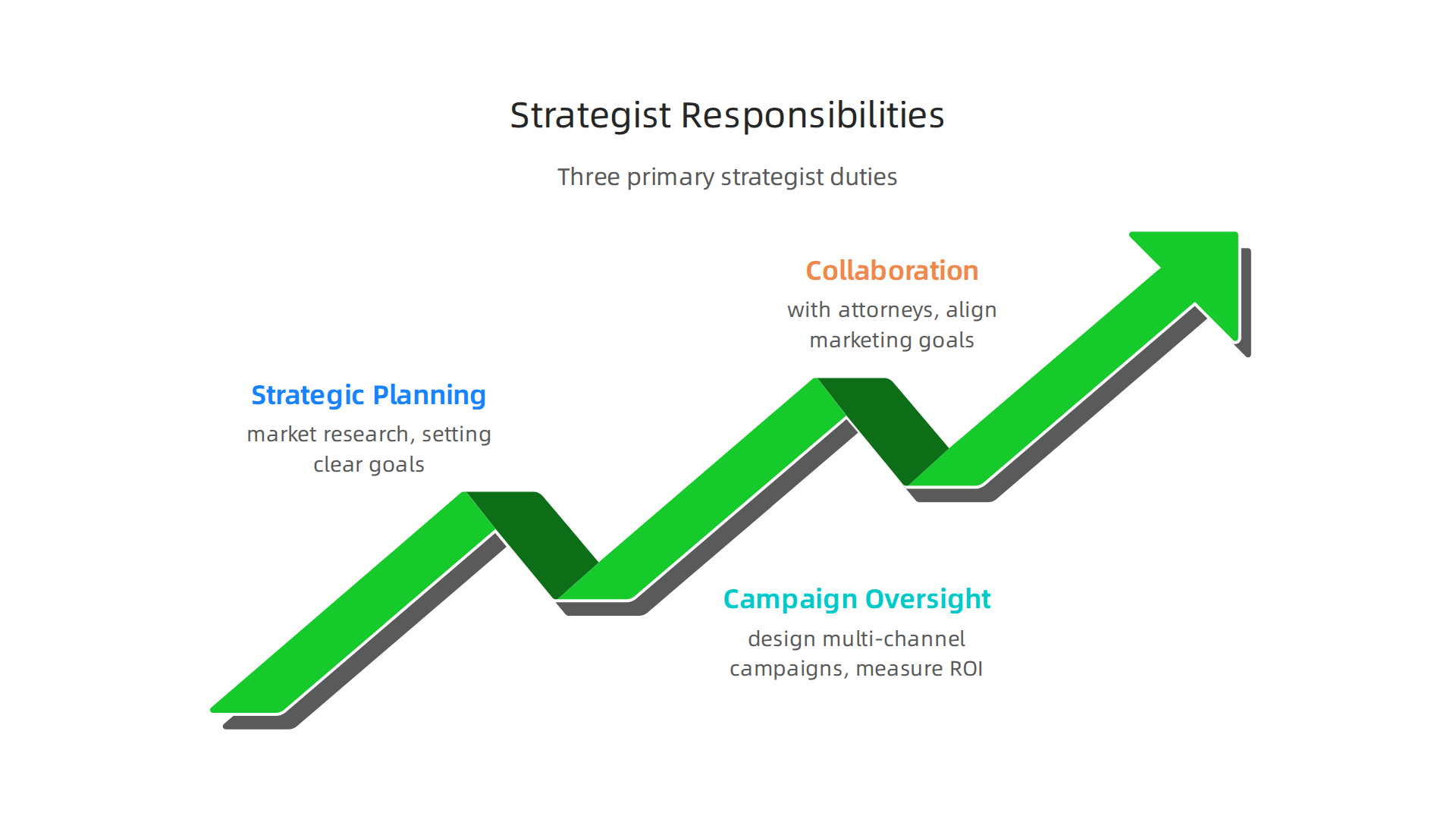
Strategic planning is the foundation. Each day, a strategist digs into market research. They study what competitors are doing, spot new opportunities for practice areas, and set clear marketing goals. This means looking at data like client demographics, case trends, and even website performance. They understand the difference between a marketing strategy and a marketing plan. The strategy is the big idea. The plan is how you execute it. One of the main jobs is constantly analyzing market trends and researching competitors to keep the firm ahead.
Campaign oversight takes up another big slice of the day. A strategist designs multi-channel campaigns that might include digital ads, content marketing, events, and direct outreach. They do not just launch campaigns and walk away. They measure everything. They look at cost per lead, conversion rates, and return on investment. If a campaign is not working, they shift resources fast. For example, they might review a website wireframe with a designer to improve user flow, or they might update ad copy based on real-time performance data. The goal is steady improvement, not set-it-and-forget-it.
Collaboration is the third core task. A strategist works closely with attorneys and practice group leaders. They help align marketing with business development goals.

They ask attorneys what clients are asking about and use that feedback to shape content. They also help attorneys prepare for speaking events or media interviews. This teamwork is key. When attorneys and marketers speak the same language, the firm grows faster. Many leading law firms embrace technology and innovation by making this collaboration a daily habit.
In short, a marketing strategist is the person who makes sure every marketing dollar is spent wisely, every campaign has a purpose, and every attorney has a clear path to attract more clients.
Strategy Development Process: From Data to Execution
But how does a strategist actually build that path for attorneys? It all starts with a clear, repeatable process that turns raw numbers into real results.
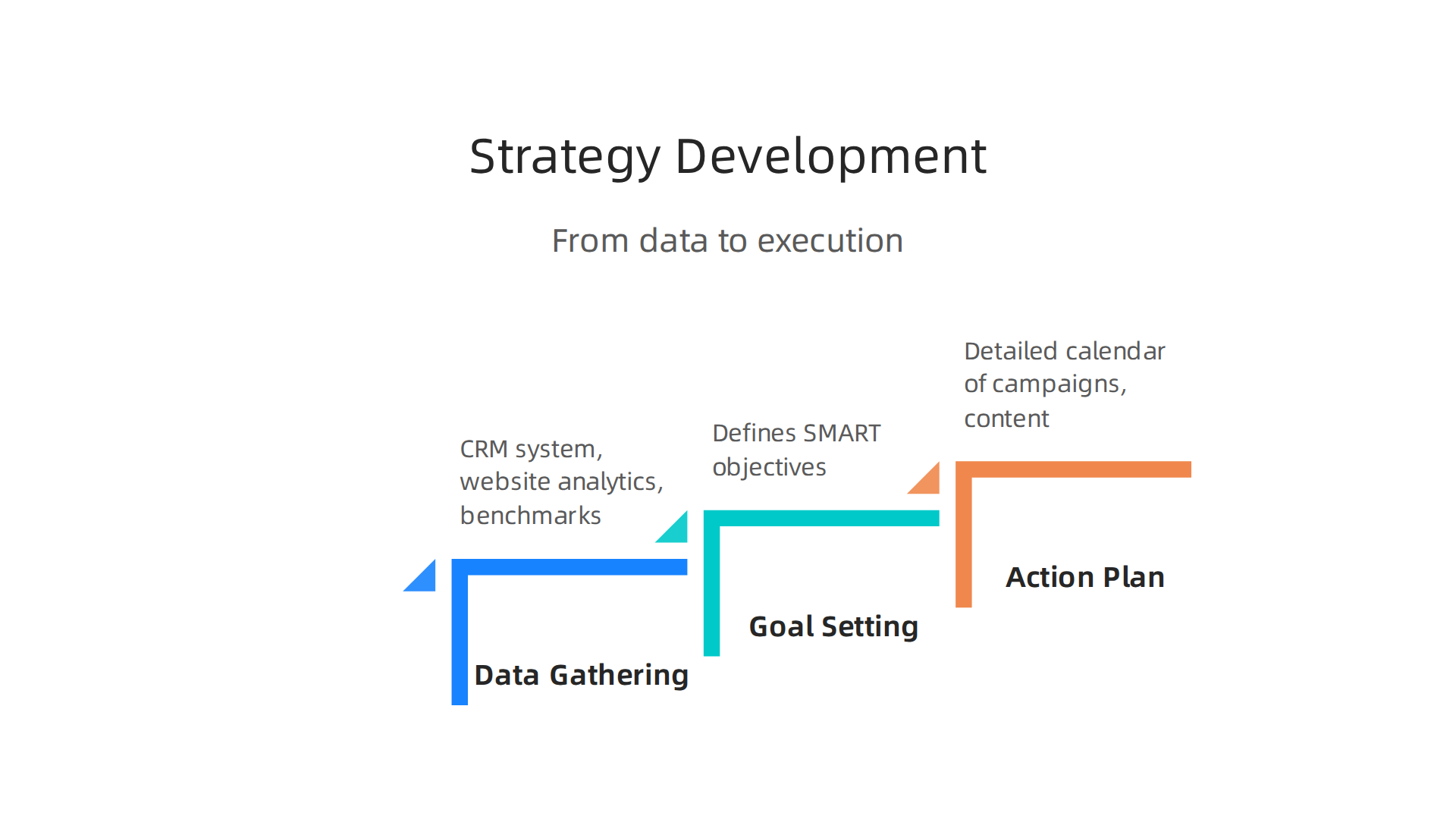
Data gathering comes first. The strategist dives into the firm’s CRM system, studies website analytics, and checks industry benchmarks. They look at which practice areas are growing, where leads are dropping off, and what competitors are doing. This research helps them spot hidden opportunities. For example, if data shows corporate clients are searching for faster contract reviews, that becomes a priority. Many firms now use tools like the why the Am Law 200 ranking matters for growth to benchmark their own performance.
Goal setting comes next. The strategist defines SMART objectives. A sample goal might be: increase corporate client inquiries by 20% in Q3. That goal is specific, measurable, and tied to a real deadline.
Finally, the action plan. This is a detailed calendar of campaigns, content, and events. Every item has a clear KPI, like cost per lead or conversion rate. The plan is flexible, so the team can adjust fast when data tells a new story.
This process makes sure every marketing dollar has a purpose. If you want to stay ahead of the latest legal tech trends that shape these strategies, check out The Deep View Newsletter for clear daily AI updates.
Skills and Qualifications Needed for Success
So what does it actually take to be a great marketing strategist for a law firm? The role isn’t about guessing what might work. It’s about bringing a specific set of skills that turn data into decisions and ideas into income. Let’s look at the three core areas that matter most.

Analytical skills are the foundation. A strategist has to feel comfortable digging into numbers. That means looking at website traffic, client conversion rates, and cost per lead. They need to spot patterns. For example, if personal injury leads spike after a certain blog post, the strategist knows to create more content like that. They also need to understand marketing strategy vs marketing plan differences one is the big picture, the other is the day to day execution. Without strong analytics, a strategist is just guessing. The Clio team outlines exactly what to look for in a law firm marketing consultant, including graphic design ability and Google Analytics know how.
Communication skills matter just as much. A strategist has to write persuasive content that speaks to real people facing real legal problems. They also have to present their ideas to law firm partners who may not be tech savvy. That means translating legal jargon into plain language and doing it without sounding boring. A good strategist can take a complex area like corporate compliance and turn it into a short email that makes a client say, "I need that lawyer."
Industry knowledge is the secret weapon. You cannot market something you do not understand. A legal marketing strategist needs to know how law firms operate, what ethical rules restrict advertising, and what clients actually care about. They should be aware of who wins awards like american lawyer law firm of the year because those brands set the standard. They also need to know how the best website designs work for law firms including website wireframe basics so they can guide web developers. Without this knowledge, a strategist might suggest tactics that violate bar rules or waste money on the wrong audience.
One common mistake firms make is investing in a website that looks good but drives clients away. A strategist with the right skills can spot those problems fast. Read more about why bad law firm websites damage credibility and what to do instead.
These three skill sets analytical, communication, and industry knowledge are what separate a true strategist from someone who just runs ads. The best strategists build all three over time through real experience and constant learning.
Analytical and Technical Skills in High Demand
Of those three skill sets, the analytical and technical side changes the fastest each year. A strategist who understood what is a marketing strategist five years ago would need a whole new toolkit for 2026.
AI tools lead the list. Legal marketing strategists now use AI for content generation, predicting which practice areas will grow, and automating reports. If someone cannot prompt an AI tool well or interpret its output, they fall behind quickly. For a deeper look at how AI is changing legal workflows, check out this guide on iris law 2026 ai contract analysis for legal teams.
Legal-specific software also matters. Platforms like Litera for document management and Clio for practice management are standard in modern firms. A strategist who already knows these tools spends less time learning and more time executing.
FindLaw notes that the best marketing managers have qualities to look for in a law firm marketing manager, including deep experience with how law firms operate differently from other businesses.
And since AI keeps evolving fast, staying informed matters. The AI Newsletter Worth Reading sends clear daily updates straight to your inbox so you never miss a major shift.
The Marketing Strategist’s Impact on Business Development
All those analytical skills and tools mean nothing if they don’t bring in clients. That is where the marketing strategist makes a real difference.

Instead of guessing which activities work, they build systems that connect marketing efforts directly to new business.
Driving lead generation through targeted campaigns and thought leadership
A good strategist does not blast the same message to everyone. They study the firm’s ideal client profiles and create content that speaks to those people specifically. Maybe that means publishing articles that answer common legal questions. Or it could mean running a LinkedIn campaign that positions a specific partner as an expert in employment law. The strategist decides the mix.
Thought leadership matters more in 2026 than ever before. Clients research firms online before they ever pick up the phone. If your attorneys are not publishing insights, someone else is. A strategist coordinates this content so it feels consistent and builds trust over time. For a full list of approaches that actually produce results, see these 12 law firm marketing strategies that work in 2026.
Enhancing attorney-client relationships through better data
Here is something most people miss. A marketing strategist does not just find new clients. They help the firm keep the ones it already has. By tracking where referrals come from and which existing clients send the most business, the strategist gives attorneys a simple list of people to thank or meet for lunch.
The same data helps attorneys understand what their current clients actually care about. When a strategist shares market insights like which practice areas are growing or what questions clients ask most, attorneys show up to meetings better prepared. That makes every client interaction stronger.
And when a strategist monitors competitors, the firm can spot opportunities early. If a competing firm stops serving a certain area, that is a gap your firm can fill. This kind of awareness comes straight from a strategist’s ongoing research.
Measuring ROI: connecting marketing to real revenue
This is the part that makes partners pay attention. A marketing strategist links every campaign and activity back to actual dollars. How many website visitors turned into consultation requests? How many of those consultations turned into retained clients? Which marketing channel produced the highest-value cases?
Without a strategist, firms spend money on ads and content without knowing what works. With one, they track everything. A solid legal marketing strategy built around clear objectives makes this tracking possible. The result is a clear picture: this campaign brought in three new personal injury cases worth this much revenue. That email series brought in two corporate clients.
For firms that want to grow faster, understanding how the AM Law rankings connect to business development is worth exploring. Check out this overview on why the Am Law 200 ranking matters for law firm growth to see how top firms benchmark their own success.
Measuring ROI: From Activity to Revenue
But measuring ROI is trickier than it sounds. Without a clear system, firms waste time on numbers that look good but mean nothing. That is the difference between vanity metrics and conversion metrics.
Avoiding vanity metrics
Vanity metrics are numbers that make you feel good but don’t drive decisions. Website traffic is a classic example. A hundred thousand visitors means nothing if zero people pick up the phone. Conversion metrics are what matter. How many visitors filled out a contact form? How many of those turned into consultations? How many consultations became paying clients? A good strategist ignores the fluff and focuses on these real numbers. When hiring someone, look for a law firm marketing manager who focuses on real results over fancy reports.
Simple attribution models
Attribution models help you understand which marketing touches actually led to new engagements. Maybe a client first found you through a Google ad, then read three blog posts, then called after seeing a LinkedIn post. The strategist can track this journey and tell you which channel deserves credit. First-touch attribution gives credit to the initial ad. Last-touch gives it to the LinkedIn post. Multi-touch spreads credit across all interactions. None are perfect, but using one consistently beats guessing.
Dashboards for firm leadership
Every month, the strategist should present a dashboard to the partners. This report shows the real picture: cost per lead, conversion rate by practice area, and revenue generated per campaign. It turns marketing from a vague expense into a measurable investment. For firms struggling to keep clients on their website, tracking bounce rates helps identify problems. A site that drives visitors away can kill ROI, which is why learning about why bad law firm websites drive clients away is essential for any marketing strategist.
Staying current on marketing technology also improves reporting accuracy. If you want to keep up with the latest AI tools that help track and analyze campaign performance, check out The AI Newsletter Worth Reading. It delivers clear daily updates straight to your inbox.
Current Trends Shaping the Role in 2026
Understanding what is a marketing strategist today means looking at how the role keeps evolving. The days when a strategist just wrote a plan and checked in quarterly are over. In 2026, the best strategists adapt constantly to shifts in technology, data, and client behavior.
AI integration is now standard
Generative AI has changed how law firms create content, personalize outreach, and predict which potential clients are worth pursuing. According to recent data from a survey of US law firms, AI-driven innovation was the number one reason firms shifted their marketing strategies for 2026. A strategist who does not understand how to use AI for tasks like drafting blog posts, generating ad copy, or segmenting audiences will fall behind fast. But it is not about replacing human judgment. It is about using AI to handle the repetitive work so the strategist can focus on bigger decisions.
The shift also changes how clients find firms. Instead of scrolling through search results, more people ask AI tools direct questions like "Do I have a case?" Firms that optimize their content for these answer engines get surfaced first. A good strategist adapts the marketing strategy vs marketing plan approach to include GEO and AEO optimization.
Data-driven decision making is the new baseline
Real-time analytics now let strategists change course mid-campaign instead of waiting for monthly reports. If a LinkedIn ad is underperforming by Wednesday, the strategist can shift budget to the Google campaign that is driving consultations that same afternoon. This requires comfort with dashboards, attribution models, and tools that track the full client journey. The firms winning in 2026 are the ones using data to make decisions, not guesses.
A strategist who understands these tools can suggest improvements like fixing a slow-loading page that kills conversions. That might mean updating a website wireframe or redesigning a form to capture better lead information.
The client journey gets full attention
Mapping every touchpoint from awareness to retention is now a core part of the job. Clients do not move through a straight line anymore. They might watch a video, read a review, ask a chatbot a question, then call. Each step needs to feel smooth and helpful. Firms that invest in personalizing that experience see higher conversion rates.
One way to build this kind of personalized experience is through smart content tools that engage visitors in real time. If you want to see how firms are creating these interactive touchpoints, check out smart content interactive legal tools for modern law firms.
The strategist role in 2026 is less about writing a single plan and more about steering a moving vehicle with better information, better tools, and better timing.
AI in Legal Marketing: Opportunities and Ethical Considerations
One of the most powerful tools reshaping that vehicle is artificial intelligence. AI opens up big opportunities for legal marketing. You can use generative AI to draft blog posts, write email sequences, and create social media content in minutes instead of hours. Predictive analytics can spot which potential clients are most likely to hire you, and even suggest cross-selling other services. In fact, AI-driven innovation was the number one reason law firms shifted their marketing strategies for 2026.
But you have to be careful. Ethical guardrails matter. AI content can sometimes be misleading, contain bias, or accidentally share confidential client information. Every piece of AI-generated content needs a human review before it goes live. A smart strategist uses AI to speed things up, not to skip the quality check. If you want to dive deeper into how AI tools are transforming legal work, check out the IRIS Law 2026 AI contract analysis for legal teams.
Getting AI right takes daily learning. For clear, practical updates on AI tools and trends, sign up for The AI Newsletter Worth Reading from The Deep View Newsletter.
How to Hire or Become a Marketing Strategist for a Law Firm
So you’ve seen how AI and smart strategy can transform your law firm. But having the right tools is only half the battle. You also need the right person running them. That brings us to a key question: what is a marketing strategist in the legal space, and how do you find one or become one?
When hiring, look for someone with real legal industry experience. A strategist who knows how law firms work will save you time and money.

They should understand the difference between a marketing strategy vs marketing plan and have a track record of building strategies that actually bring in clients. The best candidates also stay current on tech. Firms that win today, as shown in how leading law firms embrace technology, have strategists who blend marketing know-how with digital innovation.
If you want to become a strategist yourself, the path usually starts in a coordinator or associate role. From there, you can move up by earning certifications in digital marketing, SEO, or legal operations. Many strategists also hold degrees in marketing, communications, or business. The key is to learn how law firms generate leads, manage client relationships, and track what works.
Now for the numbers. Salary varies a lot by firm size and location. According to 2026 hiring trends in legal marketing, a BD Manager earns an average base salary of $174,000. That jumps to $231,000 for Senior Managers and $307,000 for Assistant Directors. These figures show that skilled strategists are valued highly in the legal industry. Whether you are hiring or building your own career, the investment is worth it.
Building a Marketing Strategist Career in Legal: Tips and Pathways
So how do you actually get started on this path? The best first step is hands-on experience. Look for internships or coordinator roles at law firms or legal marketing agencies. These positions let you learn how law firms generate leads and manage client relationships from the ground up.
Next, earn a certification to stand out. The Legal Marketing Association offers the Certified Legal Marketing Associate (CLMA) credential. This shows employers you know the basics of legal marketing and strategy. You can browse current openings on the LMA Career Center to see what firms are looking for.
Finally, build your network. Connect with experienced strategists on LinkedIn or through local legal marketing groups. A mentor who has been through the process can give you practical advice and open doors. Reading about how firms in the Am Law 200 ranking embrace technology can also inspire your own strategy.
One thing every good strategist does is stay current on industry trends. The legal tech space moves fast. For daily updates on AI and technology that affect legal marketing, check out The AI Newsletter Worth Reading. It helps you keep your finger on the pulse.
Summary
This article explains the marketing strategist role for law firms and why it often becomes the hidden engine of sustained growth. It defines how strategists differ from coordinators and managers, outlines their core daily responsibilities—strategic planning, campaign oversight, and attorney collaboration—and shows the repeatable process of turning data into executable plans. The piece details the key skills required (analytical, communication, industry knowledge), current 2026 trends like AI and real-time analytics, and how strategists connect marketing activity to revenue through proper attribution and dashboards. Readers will learn how a strategist improves website conversion, builds thought leadership campaigns, measures ROI, and helps firms retain and attract higher-value clients. The article also covers hiring and career pathways, plus salary benchmarks and practical tips for integrating AI ethically into legal marketing.