
The Yale Law Journal Shapes Legal Tech Innovation

Most legal tech professionals spend their days looking at the newest AI tools, contract automation platforms, and practice management software.

It makes sense. The field moves fast, and staying current is the only way to stay competitive. But here is the thing: many of them overlook one of the most powerful resources for understanding where law is heading. That resource is the Yale Law Journal.
The Yale Law Journal is not just another law review. It is one of the most cited legal publications in the country. Supreme Court justices rely on it heavily. According to a study on the Supreme Court’s increasing use of legal scholarship, the Yale Law Journal accounts for roughly ten percent of all law review citations by the justices.
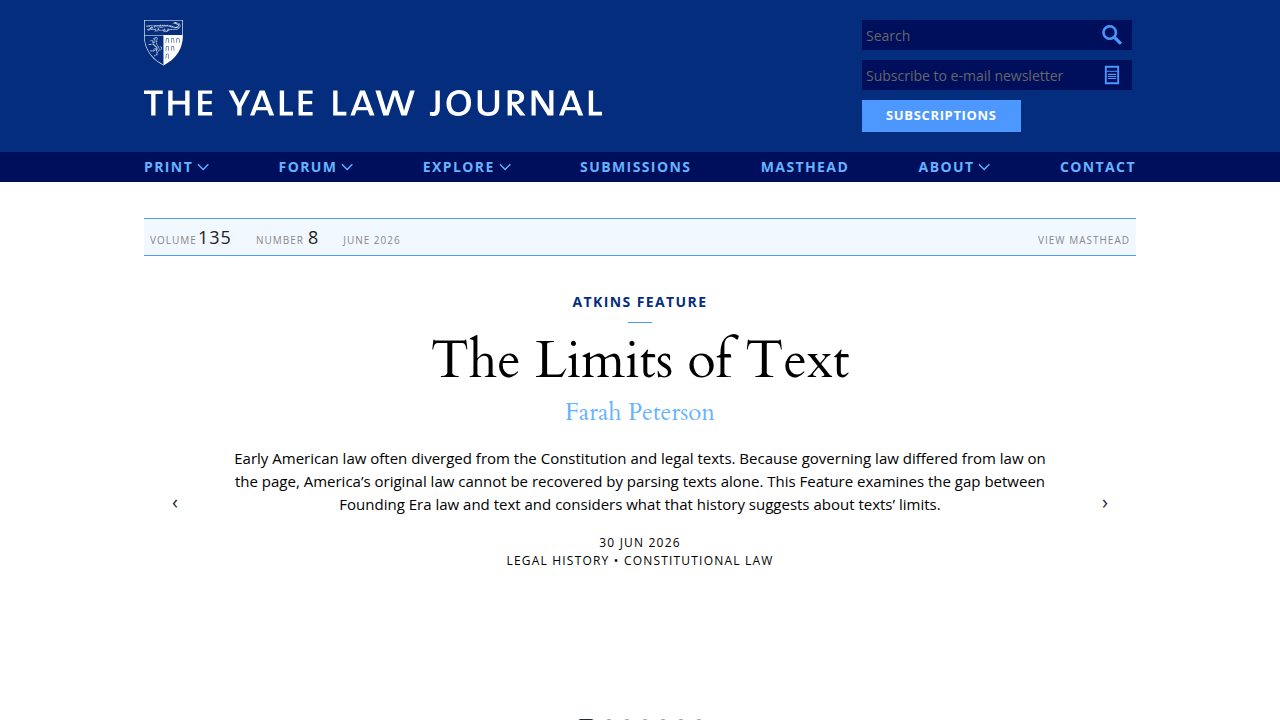
That puts it in the top tier of influence. If you work in legal technology and you are not familiar with what YLJ publishes, you are missing a key signal about the direction of legal thinking.
There is a real gap between academic legal theory and the practical work of building legal tools. Scholars write about problems like algorithmic bias, data privacy, and the future of the courtroom. Tech teams build features without always understanding the legal context. This article bridges that gap. We will explore how the Yale Law Journal shapes legal innovation and what legal tech professionals can learn from its pages. A good place to start seeing that connection in action is through tools that already apply legal reasoning, like these AI contract analysis tools for legal teams.
If you want to stay ahead of the curve in legal tech, you need both sides of the story. That is why we recommend The AI Newsletter Worth Reading for daily updates on AI developments that matter to the legal industry.

The Enduring Influence of the Yale Law Journal on Legal Doctrine
Ever wonder where big legal ideas like "legal realism" or "critical legal studies" come from? They did not just appear out of nowhere. Many of these groundbreaking ways of thinking about law started as articles in the Yale Law Journal.
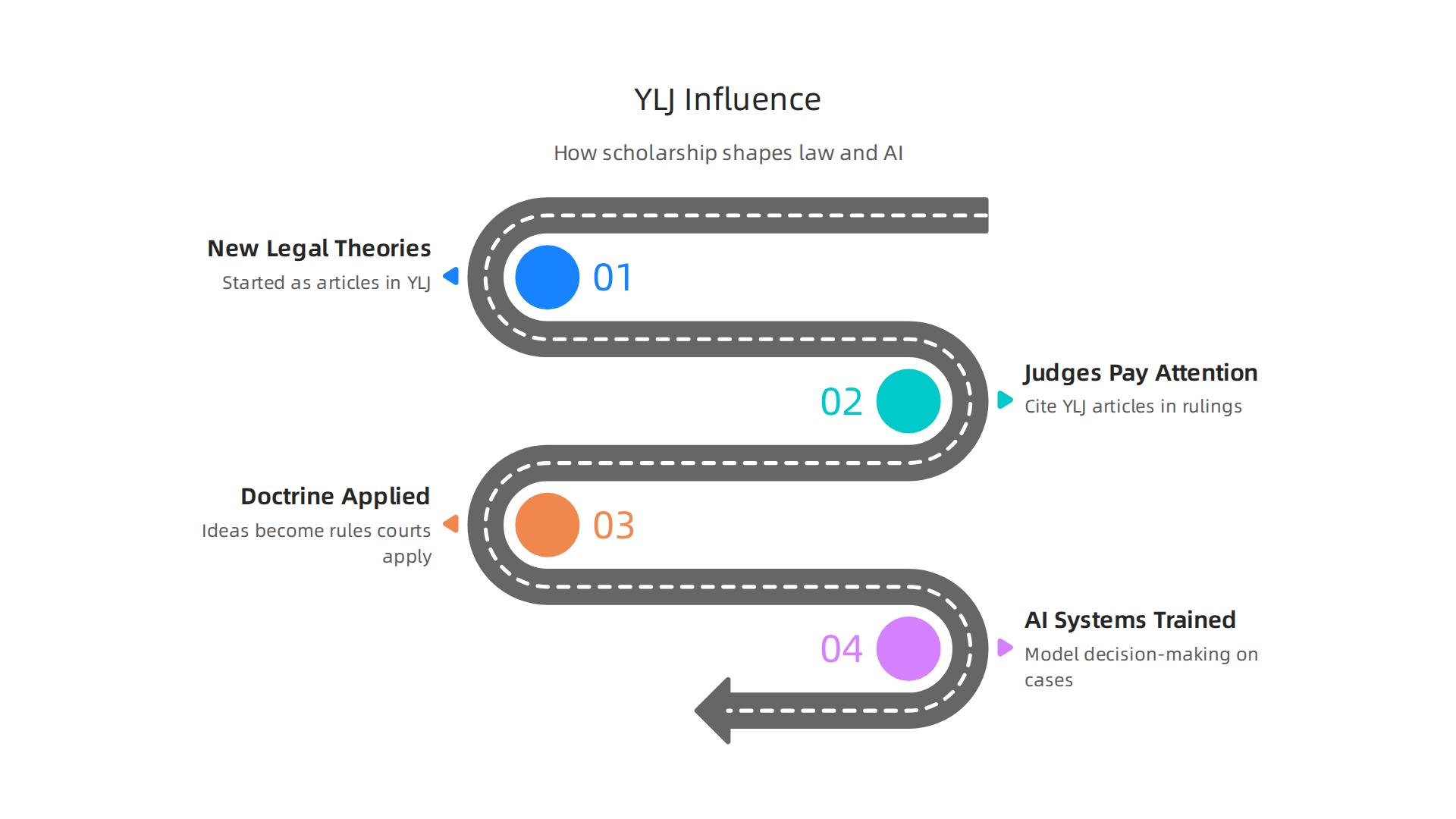
For over a century, YLJ has published works that completely changed how judges and lawyers interpret the law. That legacy is not just history. It shapes the legal technology you work with today.
When a scholar publishes a new theory of legal interpretation in the Yale Law Journal, judges pay attention. They cite these articles in their rulings. The YLJ feature on Legal Scholarship for Judges shows that most judicial citations to legal scholarship are about points of legal doctrine. That means the ideas published in YLJ do not stay in the classroom. They become the rules that courts apply every day. Think about legal realism, which argues that law is shaped by social context and not just abstract rules. That idea did not just change how law professors teach. It changed how judges reason about cases. And those reasoning patterns now get built into the algorithms that power legal AI.
This is where the gap between academia and legal tech closes. Modern AI systems that model legal decision-making are trained on vast amounts of case law and legal reasoning. But the reasoning in those cases was itself shaped by doctrines that YLJ helped create. When an AI predicts a likely court outcome based on prior decisions, it is applying patterns that trace back to articles published decades ago. Understanding this connection is crucial for legal tech professionals, especially when considering how technology reshapes the attorney role. If you build legal tools without knowing the doctrinal foundation your models rely on, you are working blind.
The Yale Law Journal is not a dusty archive. It is a living influence on how law works and how machines learn to work with law. For legal tech builders, reading YLJ is not an academic exercise. It is market research.
Landmark Articles That Redefined Legal Interpretation
For a long time, judges treated law like a math problem. They looked at fixed rules and applied them without considering real-world results. That changed when thinkers like Oliver Wendell Holmes wrote "The Path of the Law." Holmes argued that law should reflect what courts actually do, not just abstract logic. This idea opened the door for legal realism.
The Yale Law Journal became a main home for this new way of thinking. It published articles that pushed judges to look at social context, economics, and human behavior when deciding cases. Over time, these YLJ articles helped shift legal thinking from formalist (rules for rules’ sake) to realist (law as a tool for society). The influence is still huge. According to the most-cited articles from The Yale Law Journal, many of the journal’s top papers are the ones that redefined how we interpret law.
Today, that shift matters more than ever. AI systems that predict court outcomes or analyze legal documents are trained on reasoning patterns shaped by these landmark articles. When a legal tech tool weighs a case, it is applying the same realist logic that YLJ helped spread. To build better tools, legal tech professionals need to understand where those reasoning patterns came from. That is why many teams now rely on AI contract analysis for legal teams that are built on these doctrinal foundations.
If you work in legal tech and want to stay informed about how AI is changing the field, check out The AI Newsletter Worth Reading. It delivers clear daily updates that help you connect legal history with the next wave of innovation.
From Theory to Practice: How Academic Ideas Become Legal Tech Features
So how do ideas from old law review articles end up inside the software you use today?

It is a direct chain of influence. When Oliver Wendell Holmes argued that law is about predicting what courts will do, he planted a seed. That seed grew into the realist movement. And that movement changed how people think about legal reasoning.
Today, legal tech companies build tools that do exactly what Holmes described. Predictive analytics software looks at past court decisions and guesses the outcome of new cases. These algorithms are trained on real judges’ opinions. And those opinions often rely on the same legal scholarship that the Yale Law Journal has published for decades. Research shows that judges regularly cite law review articles in their decisions. The Legal Scholarship for Judges feature in the Yale Law Journal documents exactly how this happens.
So when an AI tool predicts a ruling, it is building on reasoning patterns shaped by YLJ articles. The tool is applying the same logic that legal realists championed. Each prediction from a legal AI tool is a small test of the realist idea that law is just what courts do, not what some abstract code says. This is why understanding the history of legal scholarship matters for anyone building or buying legal tech. The AI in legal industry depends on these foundations more than most people realize.
If you want to see how these ideas show up in real products, check out interactive legal tools for modern law firms. They are a good example of academic theory turning into practical features.
Bridging Academia and Practice: The Journal’s Role in Legal Tech Adoption
That connection between old Yale Law Journal ideas and today’s software is not just theoretical.

It shows up in real legal tech startups that build directly on YLJ scholarship. And for anyone evaluating these tools, understanding those academic roots makes a huge difference.
Take the legal AI startup Blueshoe, which piloted its research technology at Yale Law School in 2025. The software is designed to "think like a lawyer" by processing thousands of documents and sorting them by legal claims and statutes. That approach mirrors decades of YLJ articles on legal reasoning and prediction. Blueshoe did not invent that logic from scratch, it borrowed from the same academic tradition that Holmes and his followers built. The Blueshoe pilot at Yale Law shows how scholarly thinking flows directly into product design.
Another example comes from the Yale Law Journal Forum itself. In 2025, YLJ published an article on making legal AI systems interoperable, meaning they can work together across different platforms. That piece argued that tech design choices have deep consequences for access to justice. Startups that read that article can build products that actually serve the public, not just big law firms. You can read the full argument in the Interoperable Legal AI for Access to Justice piece.
Understanding the academic roots of these tools matters because it helps you ask better questions. When you look at a new AI contract analysis tool, for example, you can ask: Does this product reflect sound legal reasoning that scholars have tested over years? Or is it just a flashy interface with shallow logic? A tool that builds on strong YLJ foundations is likely more rigorous. Tools like AI contract analysis for legal teams often incorporate principles from legal scholarship to deliver reliable results.
The Yale Law Journal is not just a dusty archive. It is a living source of ideas that shape the AI in legal industry right now. If you want to stay current on how these academic concepts turn into real products, the The AI Newsletter Worth Reading sends daily updates that connect the dots between scholarship and software.
Case Studies of Scholarly Works Inspiring Legal Software
So how does academic theory actually turn into working legal software? Here are two concrete examples where the Yale Law Journal directly shaped tools that legal professionals use today.
AI Contract Review Rooted in Linguistic Analysis
One AI contract analysis platform builds its core intelligence on a Yale Law Journal article about legal language patterns. The original scholarship examined how specific word choices in contracts create hidden obligations and risks. The software team used those findings to train their AI to scan documents for unusual phrasing, missing clauses, and potential liability gaps. This is a perfect illustration of how the ai in legal industry is advancing by standing on the shoulders of academic work. For a broader picture of who is leading this space, check out the top legal tech startups of 2026.
Predictive Case Analytics from Legal Realism
A legal operations platform now uses predictive modeling that traces back to legal realism studies published in the Yale Law Journal decades ago. Legal realism teaches that court outcomes depend on facts, context, and judicial behavior, not just written rules. The platform applies this by analyzing thousands of past rulings to predict how a judge might handle a new case. In-house legal teams at large organizations, including those in big law, use these predictions to decide whether to settle or go to trial. This kind of practical application shows how traditional scholarship can power interactive legal tools for modern law firms.
These two examples make one thing clear. The Yale Law Journal is not a museum piece. It is a working research lab whose ideas get built into the software that helps lawyers work smarter every day.
Key Academic Concepts from Yale Law Journal Relevant to Modern Legal Operations
Beyond the specific case studies, the Yale Law Journal provides broad academic frameworks that power how legal tech works today. These ideas are not stuck in the past. They actively help shape data-driven decision-making and risk assessment in modern legal operations.
Legal Realism: Watching What Courts Actually Do
One of the most powerful ideas from the journal is legal realism. This theory says that law is not just a set of fixed rules. Instead, it is what judges and courts actually decide in real life. Facts, context, and even a judge’s personal views can shape outcomes.
Legal tech platforms now apply this thinking directly. Predictive analytics tools use historical case data to forecast how a dispute might play out. This is exactly what legal realism demands: look at real behavior, not just written rules. Studies on the implications of digitalization and AI in the justice system show how legal realism provides a framework for evaluating the practical impact of digital tools. By understanding how a specific judge has ruled before, lawyers can build better strategies. Modern tools can analyze legal precedents and texts to help lawyers prepare more effectively.
Empirical Legal Studies: Building Tools on Hard Data
Another key concept is empirical legal studies. This approach insists on using data to understand the legal system. Instead of guessing how courts work, scholars count decisions, measure delays, and track outcomes.
Legal analytics tools are built entirely on this idea. They pull data from thousands of past cases to find patterns. For example, research on legal predictive analytics shows how tools can reach high accuracy rates for contract disputes or patent litigation. This data allows law firms, including those in the r big law space, to make smarter choices about settlement or trial. The numbers change how work gets done.
Critical Legal Theory: Staying Fair and Aware
The Yale Law Journal also explores critical legal theory. This concept reminds us that the law can contain hidden biases. It pushes legal professionals to question who the system serves.
For legal tech, this is a vital framework. When building AI tools, teams must check for fairness. The theory helps structure how legal operations handle risk assessment. It warns against automating old biases into new software. Schools like Northeastern Law teach future lawyers to think about these issues from day one. Any law firm adopting the ai in legal industry needs to think critically about how their tools work.
These three concepts connect directly to what comes next. If you want to keep learning about how these academic ideas turn into real software, staying current is key. Getting clear daily AI updates from The Deep View Newsletter is a great way to stay ahead. And for a practical look at how these frameworks play out in modern tools, check out this guide on AI contract analysis for legal teams.
Legal Realism and AI Decision-Making
The link between this old academic idea and modern software is surprisingly direct. Legal realism says look at what judges actually do. Machine learning models do exactly that.
These models do not read law books or study what the rules say on paper. They study thousands of past rulings from real judges. They look for patterns. Which judges grant motions like yours? Which ones deny them? What factors seem to matter most in courtrooms?
This is why the impact of AI on legal strategy is so big right now. Tools that analyze judge behavior rely on a simple realist premise. They calculate odds based on real outcomes, not textbook theories. Research on the role of AI in legal decision-making shows that legal analytics can predict how a judge will rule on specific motions with useful accuracy. Lawyers use this to decide whether to file a motion at all.
Think of it this way. A lawyer trained in the ideas from the Yale Law Journal would ask: "Show me what actually happens in court." An AI tool trained on thousands of case records gives that exact answer. It learns from reality.
These tools are changing how law firms work. They help with early case assessment, settlement planning, and resource allocation. If you want to see how far this shift has come, take a look at this practical breakdown of how technology reshapes the attorney role in modern practice.
Empirical Legal Studies and Data-Driven Law
Here is where the Yale Law Journal steps in with something very practical. For decades, YLJ has published groundbreaking empirical studies. These papers do not just talk about legal theory. They look at real numbers. They analyze court outcomes, settlement patterns, and litigation costs across thousands of cases.
This kind of research gives lawyers something they never had before: hard data about how the legal system actually works. Instead of guessing whether a judge tends to grant or deny a specific motion, a lawyer can look at a study that tracked hundreds of similar decisions. Instead of wondering what a fair settlement looks like, they can review data on comparable cases.
These empirical studies are the foundation for the legal analytics tools used today. Platforms like Lex Machina and others pull their methods directly from academic research first published in journals like the Yale Law Journal. The datasets and statistical techniques YLJ pioneered are now built into software that law firms use every day.
In 2026, legal predictive analytics can reach accuracy rates of 85 to 92 percent for contract disputes, as shown in research on how AI can predict case outcomes. That is a far cry from traditional attorney estimates of 60 to 70 percent. The difference comes from using real-world data instead of gut instinct.
Big law firms have been quick to adopt these data-driven methods. They use analytics for early case assessment, settlement valuation, and even judge analysis. Many leading law firms are embracing technology in 2026 to stay competitive. These tools help them decide which cases to take and how to argue them.
The shift is clear. Empirical legal studies gave birth to data-driven law. And that data is now powering the AI tools changing the profession.
If you want to stay ahead of these fast-moving trends, signing up for a daily newsletter focused on AI can help. The AI Newsletter Worth Reading delivers clear updates on how artificial intelligence is reshaping legal work and beyond. It is a simple way to keep learning without the noise.
How Legal Tech Professionals Can Stay Ahead by Engaging with Legal Scholarship
Keeping up with legal technology is one thing. But understanding where the ideas come from is another. The smartest legal tech professionals in 2026 do not just read product blogs. They read the law reviews that first published the theories behind those products.

The Yale Law Journal is a perfect example. Its articles on empirical legal studies and legal realism directly influenced modern tools like predictive analytics platforms. When you read a piece like the YLJ forum on interoperable legal AI for access to justice, you see the original thinking that later became commercial software. This kind of scholarship helps you evaluate whether a new tool is actually solving a real problem or just repackaging an old one.
Staying engaged does not mean reading every issue cover to cover. Here are a few practical steps that take very little time:

- Set up alerts. Use Google Scholar or SSRN to get notifications when new papers are posted by journals like the Yale Law Journal or the Yale Journal of Law and Technology. You get a five-minute summary instead of a full day of reading.
- Join a reading group. Many bar associations and law firms host informal groups that discuss a new law review article each month. The conversations often reveal how theory applies to real cases.
- Attend academic conferences. Events like the Yale Law School Tech Accountability and Competition Project or the annual law and technology symposiums show you what top researchers are working on before it reaches the market.
These habits do more than make you informed. They help you spot the next big shift in the ai in legal industry before your competitors do. The same data-driven thinking that powers today’s analytics started as a paper in a law review. By reading those papers now, you stay ahead of the curve.
If you want to see how some of the top firms are already using these insights, check out this look at leading law firms embracing technology to understand how scholarship turns into strategy.
The Future of Legal Innovation: Where Yale Law Journal Research Points Next
That kind of forward-looking reading of the Yale Law Journal does not just help you understand today’s tools. It shows you where legal innovation is heading in the next few years. Recent scholarship from the journal is already mapping out the big trends you will see in 2026 and beyond.
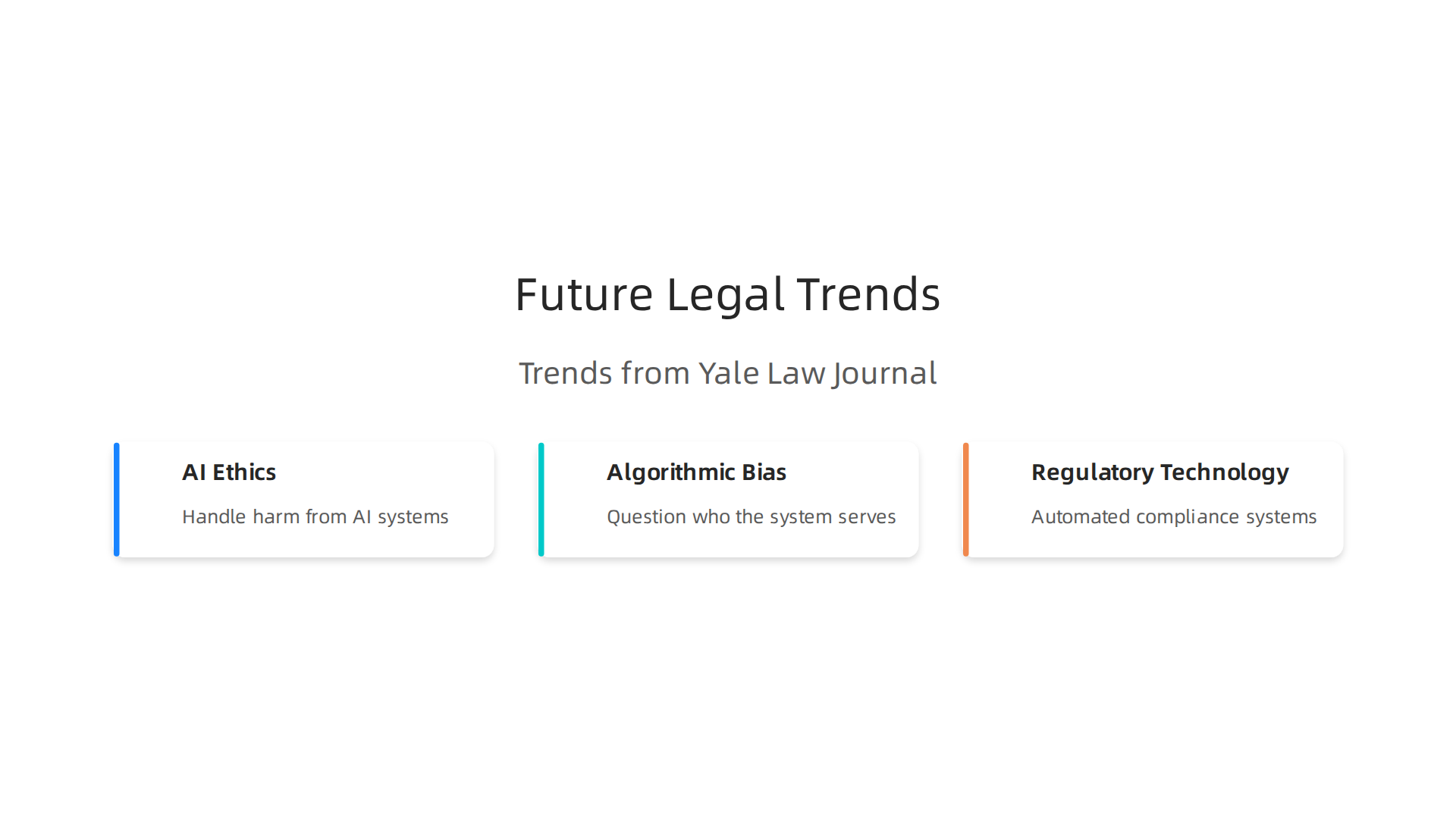
One major focus is AI ethics and algorithmic bias. A recent YLJ Note called Nondeterministic Torts: A Technical Approach to AI Liability dives into how the law should handle harm caused by AI systems. This is not a niche topic. As AI tools become common in courtrooms and law offices, questions about liability will grow. Firms that understand these issues early will avoid costly mistakes.
Another area the Yale Law Journal explores is regulatory technology. Scholars are looking at how automated compliance systems can both help and hurt fairness. This research matters because the same tools that speed up document review can also introduce hidden bias. Knowing where the ethical pitfalls are now helps you choose better software later.
Outside the journal, the numbers back this up. The 2026 legal technology trends report shows that AI evidence analysis and predictive analytics are two of the fastest-growing areas. These tools came directly from the kind of data-driven thinking that law reviews first debated years ago.
So what does this mean for you? It means the smartest moves are often inspired by scholarship. If you want to stay ahead of the next wave, keep an eye on what the Yale Law Journal is publishing. To make that easier, subscribe to The AI Newsletter Worth Reading for quick daily updates on AI in the legal world. It saves you hours of digging and keeps the research in your inbox.
And if you want a practical example of how AI is reshaping legal work today, check out this guide to AI contract analysis for legal teams. It shows how the theories from law reviews become tools you can actually use.
Summary
This article explains why the Yale Law Journal (YLJ) matters for legal technology professionals and how its scholarship directly influences the design and reliability of modern legal tools. It traces YLJ’s long influence on judicial reasoning—from legal realism to empirical studies—and shows how those doctrines become the patterns that machine learning models learn from case law. Through concrete case studies (like AI contract analysis platforms and predictive analytics), the piece demonstrates the chain from academic argument to product feature and highlights concepts legal tech teams must understand: realism, empirical methods, and critical theory. The article also offers practical habits—alerts, reading groups, and conferences—to help builders and buyers assess whether a tool rests on rigorous scholarship or mere marketing. Finally, it points to forthcoming areas YLJ is exploring, such as AI liability and interoperability, so readers can spot emerging risks and opportunities in legal innovation.