
Merger and Acquisition Lawyer Mastering Tech M&A Deals in 2026

Why M&A Legal Expertise Still Decides Deals and How Tech Is Changing the Game
Buying or merging with another company is a big deal. In 2026, these merger and acquisition (M&A) deals are more complex than ever before.

It’s not just about money anymore. Now, companies also need to look closely at a target company’s data and technology to make smart choices. This is where a good merger and acquisition lawyer truly shines.
The landscape for M&A is changing fast. Businesses are dealing with more detailed agreements and bigger risks. Because of this, legal teams need to do a lot more checking and fact-finding, called due diligence. They look at all sorts of things, from financial records to intellectual property and information technology matters, to ensure everything is above board. Using smart tools like AI helps them find hidden risks or problems much faster. This means a skilled business law attorney must understand not just legal rules, but also how new tech impacts every part of a deal.
This article will give you clear, trusted advice. We will help legal teams understand new ways to plan M&A deals and pick the right technology. We’ll explore how modern business law attorneys and firms can use these tools to make sure deals succeed, avoid big problems like business commercial litigation, and even use business dispute mediation when needed. Understanding these new ways is key for anyone involved in M&A today.
To stay on top of how AI is changing the legal world and beyond, consider subscribing to The AI Newsletter Worth Reading. It offers clear daily updates. You can also learn more about the evolving role of the business corporate lawyer in 2026 and how technology shapes their work. For example, a thorough review of a company’s intellectual property is a must for any M&A transaction today, as detailed in an IP Due Diligence Issues in M&A Transactions Checklist.
A good merger and acquisition lawyer does much more than just check boxes. They are like the main architect of a deal, making sure all parts fit together well. This is extra true in 2026, especially with so many tech companies buying or joining others.
One key job for a merger and acquisition lawyer is to shape the deal itself. This includes deciding how the company will be bought (like buying all its shares or just its assets). They also set up important parts of the agreement, such as "representations and warranties." These are like promises from the seller about their business, its money, and its legal standing. If these promises are not true, the buyer could face big problems later. The lawyer also looks at "closing conditions." These are things that must happen before the deal is final, like getting permission from the government or from certain investors. A skilled business law attorney makes sure these promises and conditions are clear and protect their client.
What makes deals even harder today is the focus on data, intellectual property (IP), and AI assets.

These are not just extra details; they often make up the true value of a company. Because of this, the negotiation part of a deal changes a lot. Buyers need to know exactly what kind of technology and data they are getting, and if it’s truly owned by the seller. They also need to know if there are any legal limits on using this tech. For example, a thorough check of a company’s software and cloud services is a must for any tech M&A deal today, as outlined in guides like the Software, Cloud & Other IT Due Diligence in M&A Transactions Checklist.
When these tech assets become so important, the risks in a deal change too. A merger and acquisition lawyer has to figure out how to share these risks fairly between the buyer and seller. This might mean having special terms in the contract about who is responsible if an AI system has a flaw or if data privacy rules are broken. If these things are not handled well, they can lead to big legal fights, known as business commercial litigation, or require business dispute mediation to find a solution. Understanding these complex parts helps lawyers choose the best new legal tools for their firms, which you can learn more about by reading how to choose the best new legal tech for law firms in 2026. This careful planning ensures a smoother journey for everyone involved in buying or merging businesses.
When we talk about careful planning in buying or merging businesses, a very important part is looking closely at all the rules and laws. These are called regulatory and compliance risks. A good merger and acquisition lawyer must check many areas to make sure a deal doesn’t hit legal roadblocks.
Here are some main areas that often cause problems in deals:
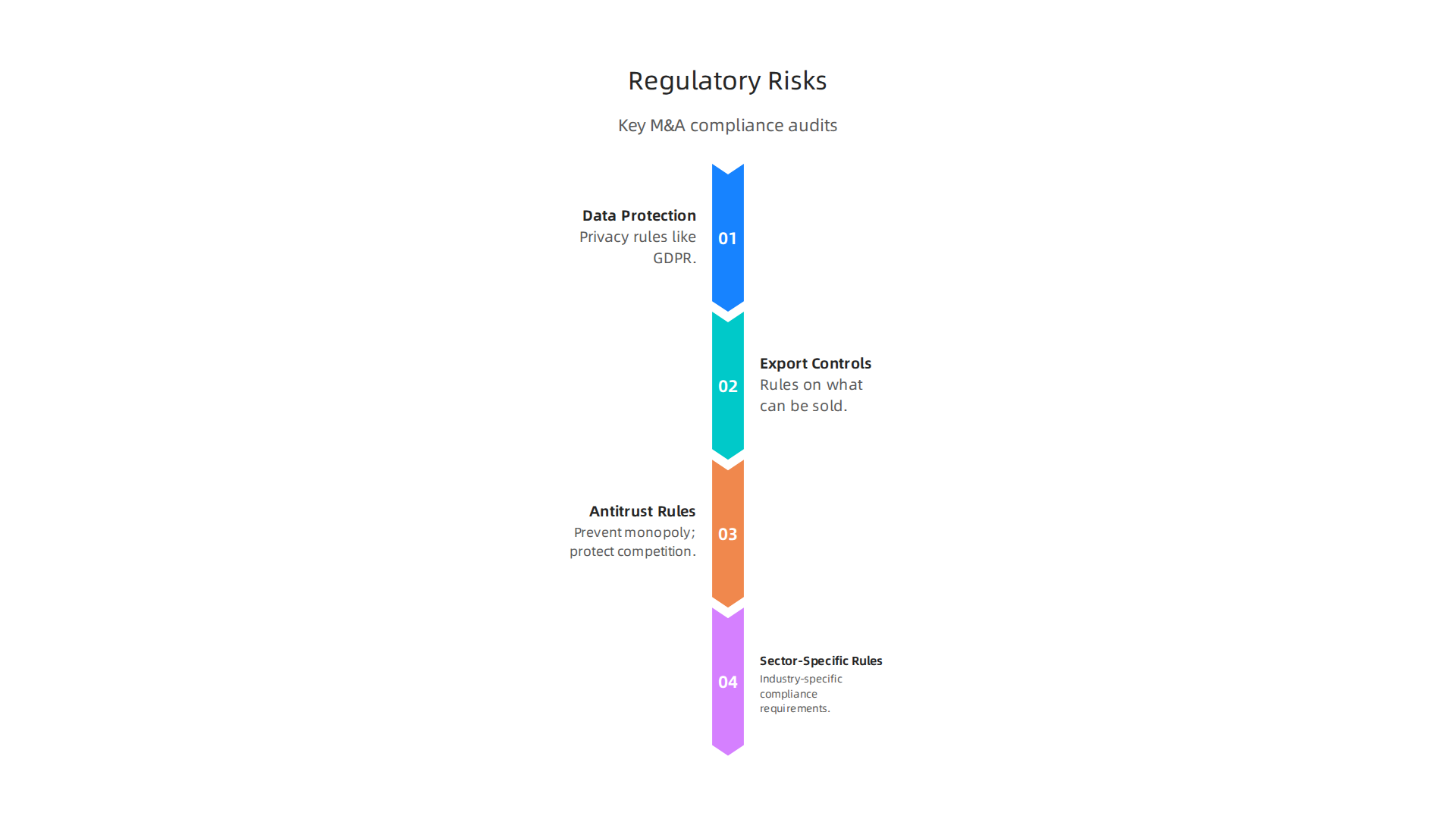
- Data Protection: With so much data involved in businesses today, privacy rules are a big deal. Laws like the EU’s General Data Protection Regulation (GDPR) and the new EU AI Act in 2026 mean companies must be very careful with how they collect, store, and use data. If a company doesn’t follow these rules, the buyer could face big fines or legal trouble later. This is even more important with AI systems, as they use a lot of data. Checking for proper data use is a key part of AI due diligence in M&A transactions.
- Export Controls: If a company sells special technology or products to other countries, it might have to follow export control rules. These rules decide what can be sold where, often for national security reasons. A business law attorney needs to make sure the target company has followed these rules carefully.
- Antitrust (Fair Competition) Rules: Governments want to make sure that a merger doesn’t create a monopoly or hurt competition in the market. They review big deals to prevent one company from becoming too powerful. If a deal breaks these rules, it might be stopped, or the companies might have to sell off parts of their business.
- Sector-Specific Rules: Some industries have their own special rules. For example, a company in healthcare has different rules than one in finance or energy. A merger and acquisition lawyer must know all the unique rules for that specific business area.
To make sure everything is in order before a deal is signed, lawyers create a checklist. They need to confirm things like:
- Does the company have all the right licenses and permits to operate?
- Are there any lawsuits or investigations against the company for breaking rules?
- Are its contracts with customers and partners clear about data use and privacy?
- Are its AI systems tested and compliant with new AI laws, especially if they are used for important decisions?
- Does the company have good plans in place to keep following all rules after the deal is done?
Ignoring these risks can lead to serious problems, like business commercial litigation or the need for business dispute mediation to sort things out. That’s why a careful look at all regulatory and compliance aspects is a must for any smart M&A deal in 2026.
Stay informed on all the big changes in AI and technology that impact legal decisions. Get clear, daily insights by reading The AI Newsletter Worth Reading.
When making sure a business deal follows all the rules, especially with how quickly things change, lawyers now use smart tools to help them. This is where Artificial Intelligence (AI) comes in, changing how due diligence is done in 2026.

These new tools help a merger and acquisition lawyer do their job better and faster.
AI-powered systems can look through huge amounts of information, like contracts, financial papers, and other important documents, much quicker than people can. This means they can check a lot more data in a shorter time. It helps expand the scope of what can be checked and speeds up the whole process of collecting evidence. These systems can also find hidden problems or things that don’t match up, which might be missed during a manual check. For example, AI can cross-check agreements across many documents to find conflicts or gaps, then sort these findings by how risky they are, and even make summaries of reports quickly The impact of AI on M&A transactions: opportunities, risks ….
But it’s not just about speed. These tools also help lawyers collect more complete and accurate information. When a business law attorney uses AI for due diligence, they can focus on the deeper legal analysis, knowing that the basic data review is handled efficiently.
To make the most of AI in due diligence, lawyers follow some important steps:
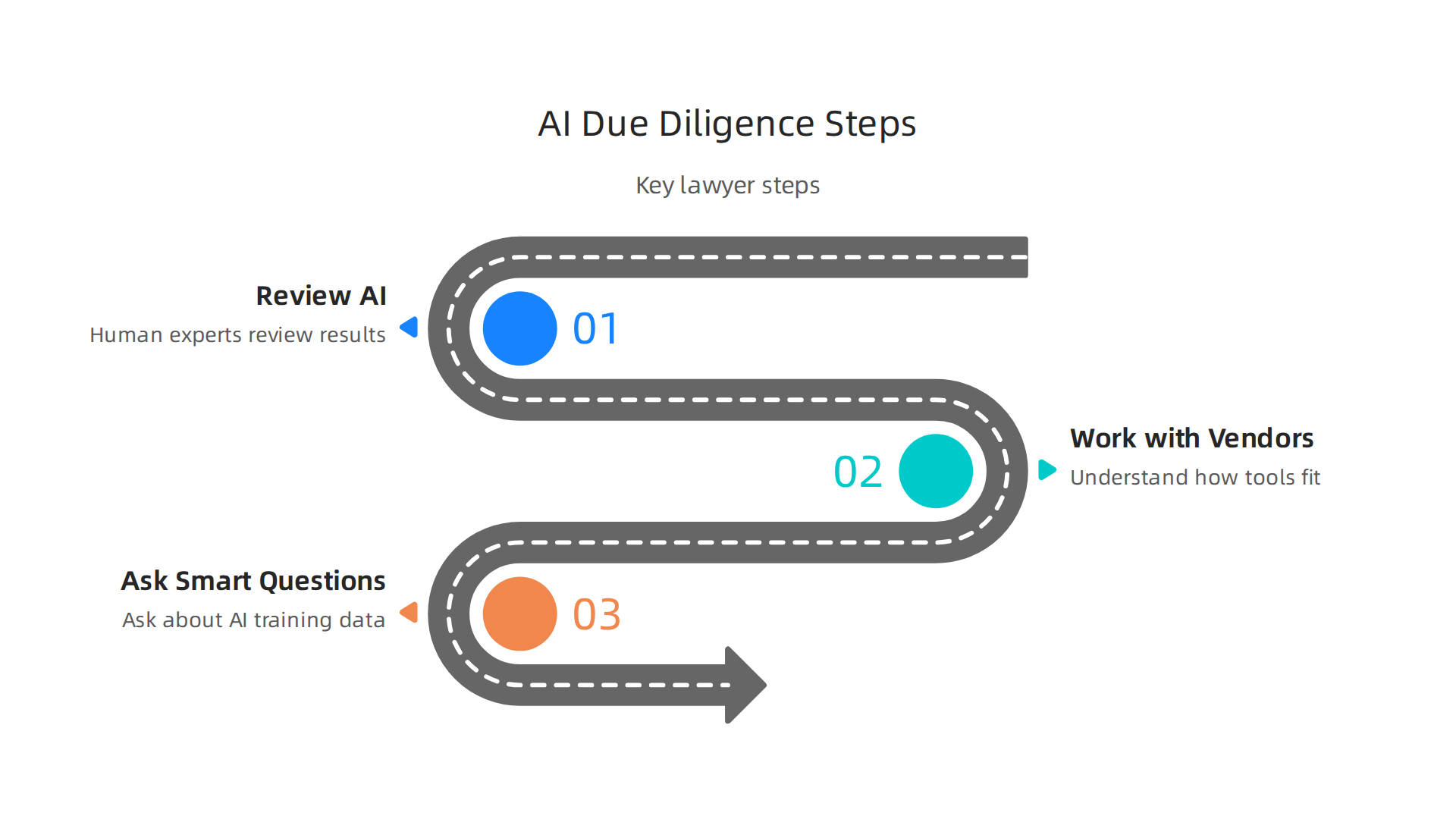
- Checking AI’s Work: It’s key for human experts to review what the AI finds. They make sure the automated results are correct and make sense for the deal.
- Working with Vendors: When using tools from other companies, lawyers need to understand how these tools work and how their findings fit into the overall legal review.
- Smart Questions: Lawyers must ask the right questions about the AI tools themselves. For instance, where did the AI’s training data come from, and how reliable is it? This helps confirm the value that AI claims to find.
Combining the sharp minds of a merger and acquisition lawyer with smart AI tools means a more thorough and efficient due diligence process. This mix of human skill and data-first approaches is how smart M&A deals are being handled today, making sure all risks are seen and managed. Mastering these new tools can significantly improve how legal teams conduct investigations. Learn more about how to master legal research databases in 2026.
After a thorough review during due diligence, the next big step is making sure all the agreements are written clearly. This is especially true when deals involve new things like Artificial Intelligence (AI) and lots of data. Lawyers need to create smart contract clauses to handle who owns what, who can use what, and how to deal with risks.
A merger and acquisition lawyer in 2026 needs to be very careful with these new types of clauses.
Intellectual Property (IP) and Data Ownership
One key part is deciding who owns the IP. This includes things like the AI models themselves, the special data used to train them, and even what the AI creates. Contracts now need clear rules about this. For example, a buyer will want to make sure they fully own the AI assets and their training data. Important warranties in contracts now cover things like who truly owns the training data and how it was licensed. They also clarify who owns the IP of what the AI model produces after the deal is done, as noted in insights on AI Vulnerability in M&A Due Diligence: A 2026 Buyer’s Framework.
When it comes to data, specifically, lawyers must outline who has the right to use it. This often means adding strong rules that stop vendors from using a company’s data (like customer information or internal prompts) to train their own AI models unless they get clear permission. This helps protect important company secrets and customer privacy, as detailed in AI Vendor Contract Clauses (2026) | Free Template – Aona AI. Without clear rules, companies could face big problems with data privacy and IP rights, which can lead to complex business commercial litigation.
Handling AI Model Access and Use
Another important area for a business law attorney involves how AI models can be accessed and used after a merger. Contracts need specific clauses that say who can use the AI software, tools, and technologies. Often, this means one party cannot use AI systems without getting written approval first. These "Use of Artificial Intelligence Sample Clauses" help make sure everyone is on the same page and that the AI is used in a safe and agreed-upon way.
Managing Risks and Making Deals
Because AI and data bring new kinds of risks, how buyers and sellers share these risks is a big part of negotiations. Sometimes, payments in a deal, called "earncouts," are now linked to how well the AI performs. This means the seller only gets more money if their AI tools meet certain goals, like making enough revenue or working very efficiently. Buyers might also hold back some of the purchase price to protect themselves if the AI doesn’t work as expected. These tactics help buyers confirm and protect the value they are getting, according to reports like M&A in the AI Era: What Buyers Can Do to Confirm and Protect Value.
Handling these new and complex issues takes a lot of skill. Staying up to date on these fast-changing topics is key for any legal professional. If you want to keep up with the latest in AI and legal tech, there’s a great resource:
The AI Newsletter Worth Reading: Get clear daily AI updates from The Deep View Newsletter.
Legal teams face new challenges every day, especially when dealing with advanced technologies like Artificial Intelligence in big business deals. After making sure the contracts are clear, the next big step is choosing and using the right legal tools to help with M&A workflows. A good merger and acquisition lawyer in 2026 knows that having the best tech makes all the difference.
Evaluating Legal Tech Vendors
When you pick new legal tech, it’s like choosing a new helper for your team. You need to look at a few main things to make sure it’s the right fit for M&A work.
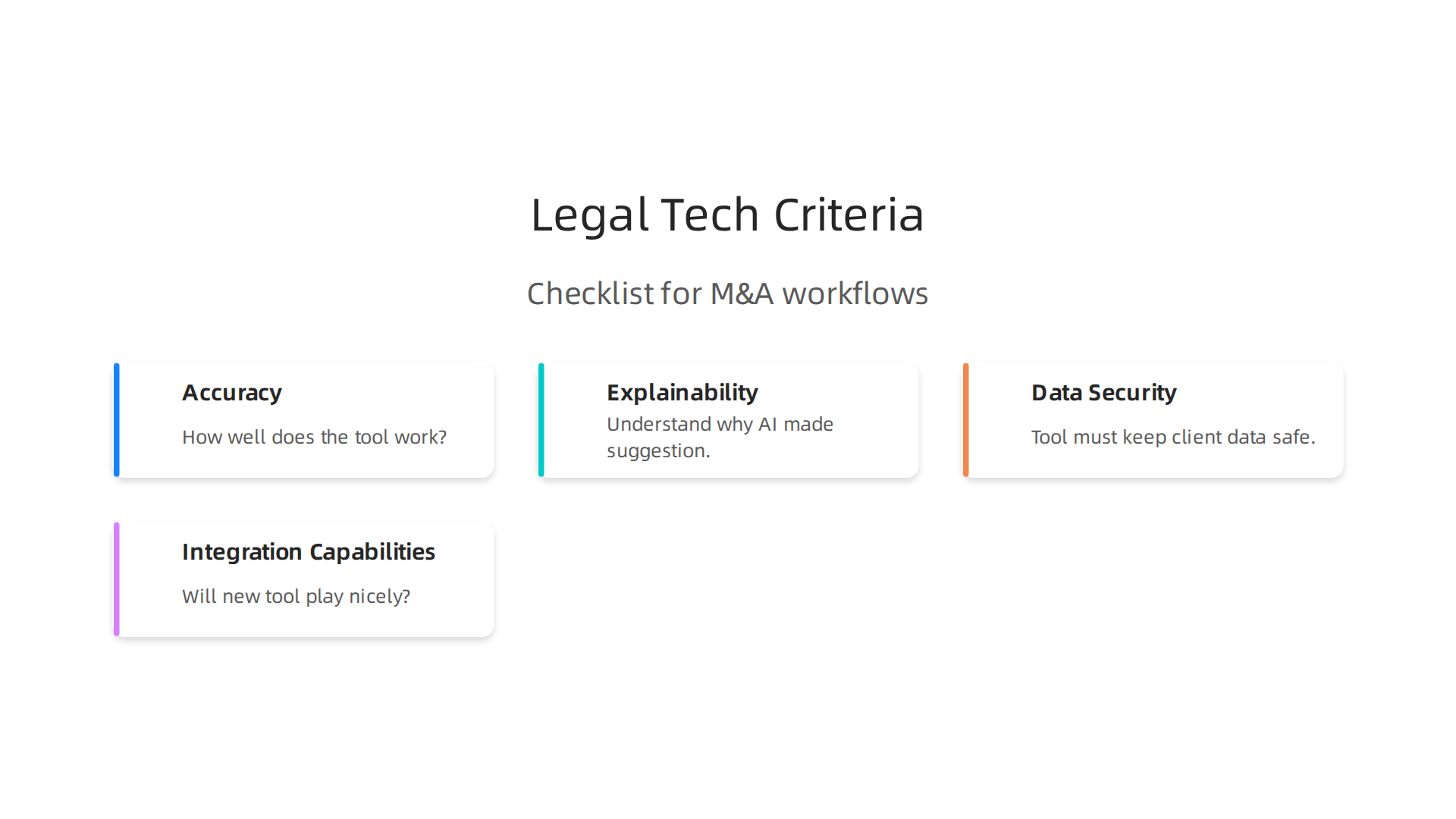
- Accuracy: First, how well does the tool actually work? Does it make mistakes often, or is it very precise? For legal tasks, errors can be costly, so high accuracy is a must.
- Explainability: Can you understand why the AI made a certain suggestion or found a specific piece of information? In law, you can’t just trust a "black box" answer. You need to explain decisions to clients and courts. This is called "explainability," and it is a key part of AI Vendor Due Diligence.
- Data Security: Mergers and acquisitions involve lots of secret information. The tech tool must keep this data very safe. This means looking at how it protects client information and follows strict privacy rules. Using templates for things like Free AI Governance Templates & Policy Downloads can help make sure you cover all the important security checks.
- Integration Capabilities: Will the new tool play nicely with the software you already use? It’s important that it can easily connect with your existing systems, like those for managing cases or document storage. This smooth connection means less work for your team and better overall flow. Finding ways to choose the best new legal tech is vital.
Integration Checklist for New Tools
Once you’ve picked a new tool, getting it to work well with your current setup needs a plan. Here’s a simple checklist to help bring new legal tech into your existing workflows:
- Plan Ahead: What specific problem will this new tool solve? How will it make your M&A process better? Knowing this helps you set clear goals.
- Check Compatibility: Make sure the new software can connect and work with your current matter management systems and data rooms. This stops future headaches.
- Data Transfer: Think about how you’ll move your old files and data into the new system. You want this to be easy and safe.
- Team Training: Your team needs to know how to use the new tool. Offer clear training so everyone feels comfortable and can use it to its full potential.
- Support System: What kind of help can you get if the tool has problems? Good customer support from the vendor is very important.
For example, when using AI for things like contract review during M&A due diligence, tools can quickly look through many documents, saving a lot of time and money. This kind of specialized legal tech can truly change how a business law attorney handles complex deals, helping them stay on top of the latest trends in Technology M&A: Key Trends and Structuring Considerations. Learning to master legal research databases in 2026 alongside these new AI tools can further boost efficiency.
After a deal closes, the work for a merger and acquisition lawyer isn’t over. In fact, many mergers and acquisitions run into trouble after the papers are signed. Close to half of all M&A deals in the first half of 2026 did not meet their goals within the first 100 days after closing, according to one report

M&A Deal Analysis: Why 42% of 2026 Transactions Miss Integration Benchmarks. This means careful planning for what comes next is super important.
Common Post-Closing Traps for Technology Deals
Technology deals, in particular, have special challenges after they close. Here are some common problems a good business law attorney helps avoid:
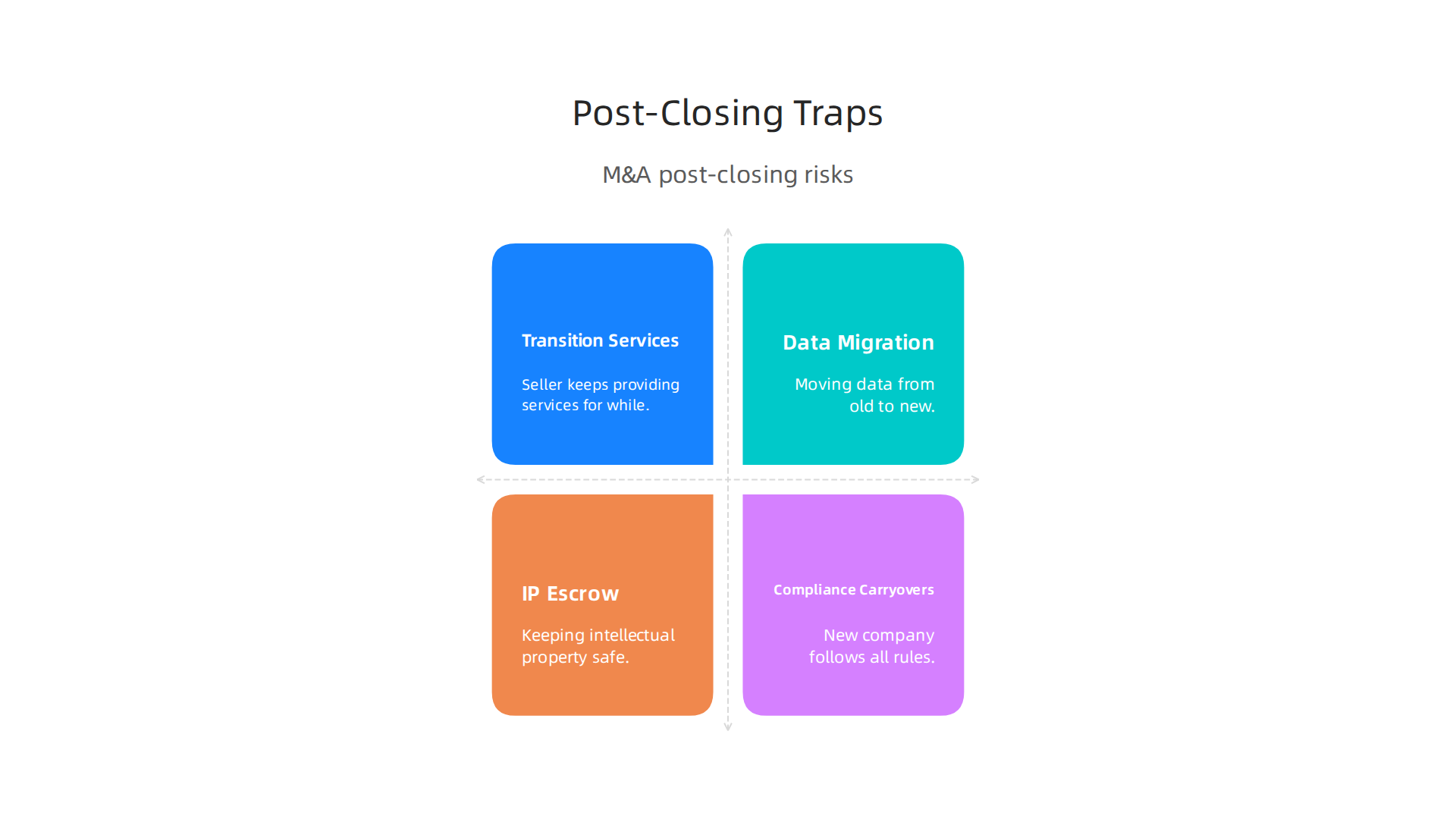
- Transition Services: Sometimes, the seller needs to keep providing services to the bought company for a little while after the deal. This can be things like IT support or accounting. If these services are not clear and planned out, it can cause big delays and arguments.
- Data Migration: Moving all the data from the old company to the new one is a huge task. It needs to be done safely and completely. If data gets lost or damaged, it can lead to legal problems and stop the new company from working right away. A good plan for Post-Merger IT Integration is key here.
- IP Escrow: This is about keeping intellectual property (like software code or patents) safe with a neutral third party. If something goes wrong with the seller, the buyer can still get access to these important assets. This protects the buyer’s investment.
- Compliance Carryovers: Both companies must follow many rules and laws. After a merger, the new, bigger company still needs to follow all these rules. This means checking that all licenses, permits, and legal promises are still in place or updated. This is where a sharp business commercial litigation lawyer can make sure everything is in order.
Monitoring and Enforcement Mechanisms
To avoid these traps, a smart merger and acquisition lawyer builds strong plans into the deal from the start. They make sure there are ways to watch how things are going and steps to take if problems come up.
- Clear Goals: Define what success looks like for the integration. What should happen by Day 30, Day 90, and so on?
- Regular Check-ins: Set up regular meetings to see how the integration is moving along. This helps catch small problems before they become big ones.
- Problem-Solving Steps: Create a clear path for how to solve problems or disagreements. This might include mediation or arbitration if a serious business dispute mediation arises, avoiding costly court battles.
- Legal Action Plans: Know what legal options are available if a party does not follow the agreement. This could mean clauses for penalties or other ways to make sure promises are kept.
By having these plans in place, a merger and acquisition lawyer helps make sure that the deal truly benefits both sides and avoids future headaches.
To stay on top of the latest changes in legal tech and M&A, remember to:
The AI Newsletter Worth Reading
After setting up plans to avoid problems, another important part of M&A deals is how legal work is paid for and who does it. For a merger and acquisition lawyer, figuring out costs and building the right team, especially for deals involving technology, is a big task.
Pricing M&A Legal Work Involving Tech Assets and AI
Pricing legal work for technology deals, like those involving Artificial Intelligence (AI) assets, can be tricky. These deals often have many special parts that are hard to value. Many law firms are now using different ways to charge instead of just hourly rates. These are called "alternative fee structures."
For example, a law firm might agree to a set price for a whole project. Or, they might use a "success fee," where they get more money if the deal goes really well. Some even use "risk-sharing" models, where their fees go up or down based on how well the deal does. This means a good business law attorney can share some of the risk with the client. It helps both sides feel like they are working towards the same goal. Actually, AI is changing how these deals are valued and managed, making it even more important for a merger and acquisition lawyer to use smart pricing methods AI is changing the M&A playbook.
When to Use Outside Experts for Complex Work
M&A deals, especially with lots of technology, often need a lot of checking and review. This is called "diligence." It can be too much work for just one law firm’s usual team. That’s when a smart merger and acquisition lawyer knows to bring in outside help.
- External Specialists: These are experts in very specific areas, like how certain AI software works or special rules for data. They can help with deep dives into tricky parts of a deal.
- Contract Counsel: These are lawyers who work on a project-by-project basis. They can step in to help with big tasks, like looking through thousands of documents quickly. This helps the main legal team scale up for busy times without hiring new full-time staff.
- Managed-Review Providers: These companies specialize in reviewing huge amounts of data and documents. They use special tools, sometimes even AI, to sort through information fast and accurately. This is super helpful for complex diligence, as it helps find important details and avoid potential legal problems. Using these providers means the legal team can focus on the big picture while the smaller, detailed work gets done efficiently. Having a strong business corporate lawyer in 2026 who understands these resources is key. This careful approach helps avoid future issues that could lead to business dispute mediation later on.
Summary
M&A transactions in 2026 center less on paper valuations and more on technology, data and AI, making skilled merger and acquisition lawyers indispensable. This article explains how modern M&A counsel design deal structures, run expanded due diligence that includes IP, cloud and AI assets, and allocate risk through tailored representations, warranties and post-closing protections. It covers the regulatory checklist—privacy (GDPR), the EU AI Act, export controls, antitrust and sector rules—and shows how AI tools can speed document review while requiring human validation. You will learn practical contract tactics to protect AI models, training data and generated output, negotiation levers such as earnouts and holdbacks, and post-close steps to avoid integration failures. The piece also explains how to evaluate and integrate legal tech—focusing on accuracy, explainability, security and vendor support—and when to bring in outside specialists or managed-review providers. Finally, it outlines pricing options for legal work and governance measures to reduce the chance of later litigation or mediation, giving legal teams a roadmap to manage complex, tech-driven deals.