
How a Trademark Lawyer Safeguards Your Brand from Costly IP Mistakes

Introduction: Why Trademark Protection Matters Now More Than Ever
Think about the brands you trust most. That name on the coffee shop down the street. The logo on your favorite running shoes. Those words and symbols carry real value. They tell customers who you are and what you stand for.
Here is the thing. In today’s economy, your brand identity is one of your most valuable assets. But it is also one of the most vulnerable.

The numbers back this up. Global intellectual property filing activity showed broad-based growth in 2024 according to the World Intellectual Property Organization, with trademark filings remaining at staggering levels worldwide. In the United States alone, the USPTO processed hundreds of thousands of trademark applications in the first half of 2026, with first action pendency hovering just over four months.
That is a lot of people trying to protect their brands. And it means the marketplace is more crowded than ever.
So what happens when you do not protect your brand? Your name could get confused with a competitor’s. Someone else could start using a logo that looks just like yours. You could lose customers. You could lose your competitive edge. You could even face expensive legal battles to sort it all out.
This is where a skilled trademark lawyer comes in. An experienced ip lawyer understands the full landscape of intellectual property protection. They do not just file paperwork. They help you build a strategy that keeps your brand safe from day one. They know how to search for conflicts before you invest too much time and money. And if someone does try to copy your brand, they know how to fight back.
But a good trademark lawyer does not work in a silo. They often connect with other legal professionals who handle the bigger picture of your business. For example, business contracts lawyers make sure your licensing agreements are solid. A business transactional lawyer helps you navigate deals that involve your IP. Having the right legal team in place protects every part of your company.
Of course, technology is changing how all of this works. Smart legal professionals stay up to date on new tools and trends that make IP protection faster and more effective. You can get clear daily updates on these trends from The Deep View Newsletter, a trusted resource for staying current with what matters in legal and business tech.
In this guide, we will walk through exactly how a qualified trademark lawyer helps you secure and enforce your IP rights. You will learn the strategic, legal, and practical steps that keep your brand strong in 2026 and beyond.
Why Trademark Protection Is Critical for Your Business
Imagine you have spent years building a brand. Customers recognize your name. They trust your logo. They come back because they know what you stand for. Now picture someone else using a name that sounds almost the same. Confusion sets in. People start buying from them by mistake. Your hard work starts slipping away.
That is the reality of not protecting your trademark. Your trademark is not just a name or a symbol. It is the foundation of your brand recognition and consumer trust. When people see your mark, they connect it with the quality you deliver. That connection directly impacts your revenue and market share.
The numbers show why this matters now more than ever. According to the World Intellectual Property Organization, global IP filing activity grew broadly in 2024, with millions of trademark applications filed worldwide.
In the United States alone, the USPTO processed hundreds of thousands of applications in the first half of 2026, with first action pendency hovering just over four months. The Clarivate Trademark Filing Trends Report 2026 highlights how brand owners and representatives continue to build large trademark portfolios across key regions.
Here is the thing. If you do not register your trademark, you open the door to serious risks. You could lose your rights to someone who files first. You could face expensive legal battles to prove you were using the name before them.

Worst case, you might need to rebrand completely. That means new packaging, new marketing, new everything. It costs time, money, and customer trust.
Early registration gives you nationwide protection. It makes enforcement much easier. If someone tries to copy your mark, you have the law on your side. You can stop them quickly.
A skilled trademark lawyer helps you navigate this process. They search for conflicts before you invest too much. They file your application correctly the first time. And they connect with other legal professionals who handle the bigger picture, like business contracts lawyers who make sure your licensing agreements are solid or a business transactional lawyer who protects your IP in deals. Having the right legal team around you keeps your brand safe from day one.
Technology is also changing how IP protection works. Smart legal professionals stay current with new tools and trends. You can get clear daily updates on these changes from The Deep View Newsletter, a trusted resource that helps you stay ahead of what matters in legal and business tech.
Understanding the Different Types of Intellectual Property Protection
So you know trademarks are important. But what about your secret recipe? Or the software code your team spent months writing? Or the logo design you paid a designer to create? Each of these is a different type of intellectual property. And each needs a different kind of protection.
Intellectual property falls into four main categories. According to the United States Patent and Trademark Office, the main types are trademarks, patents, and copyrights. Trade secrets also count as a major category, as noted by the World Intellectual Property Organization.
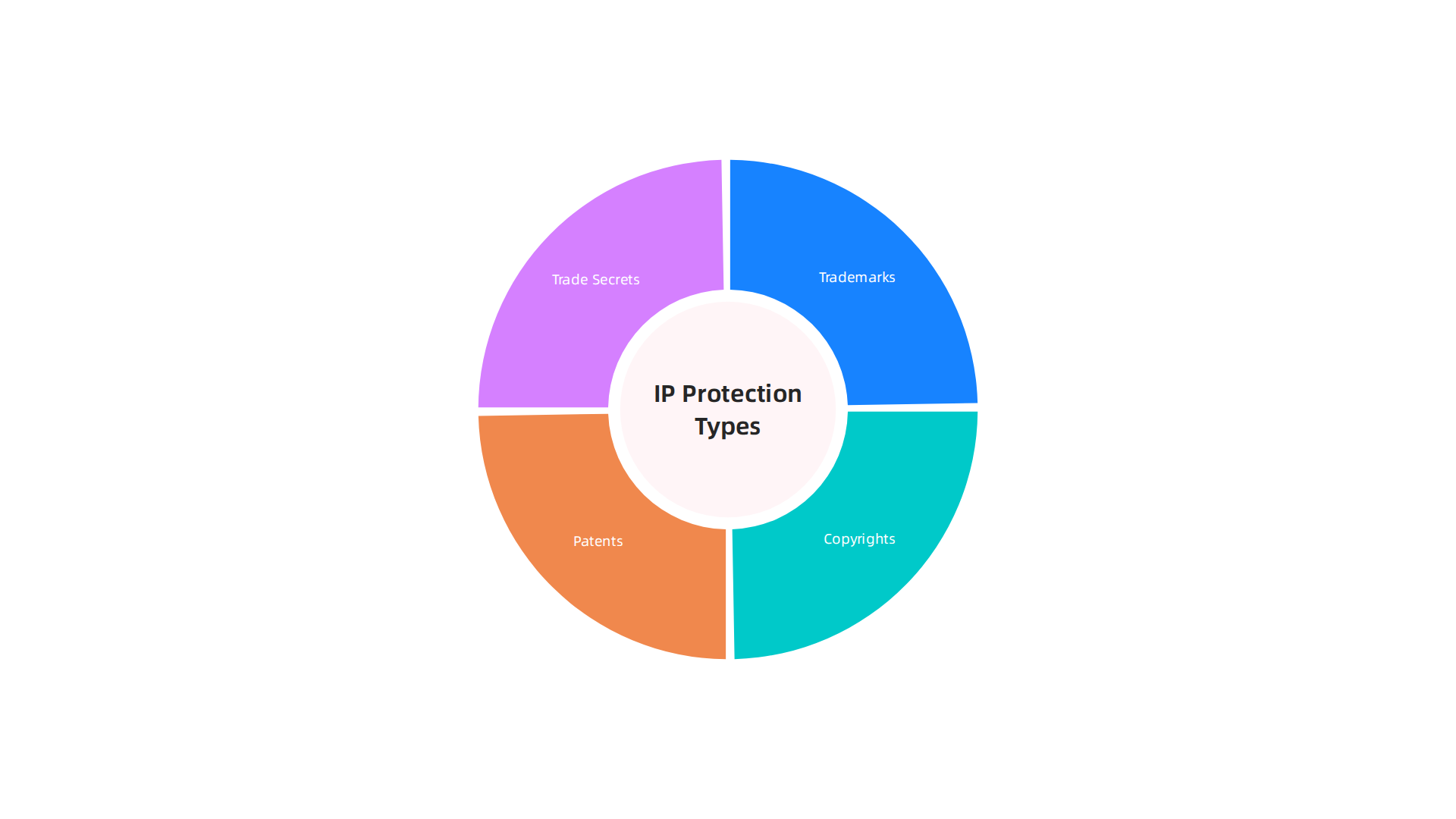
Here is a simple look at each one.
Trademarks protect brand identifiers. Your business name. Your logo. Your slogan. These are the things that help customers find you and trust you. Registration with the USPTO is voluntary but highly recommended. It gives you nationwide rights and makes legal action much easier if someone copies you. A good trademark lawyer can walk you through the search and filing process. They help you avoid mistakes that could cost you big later.
Copyrights protect creative works. This includes books, music, paintings, movies, and software code. According to the University of Wisconsin Libraries, copyright gives authors legal protection for their original works. You own a copyright automatically when you create the work. But registering it gives you extra legal power if you need to sue someone.
Patents protect new inventions. If you invent a new product, machine, or process, a patent stops others from using it without your permission. Patents are granted by the USPTO and last for a set number of years. They are a powerful tool for inventors and businesses that create new things.
Trade secrets protect confidential information. Think of the Coca-Cola recipe. That is a trade secret. As the Tulane Innovation Institute explains, trade secrets protect confidential information while trademarks protect brand identifiers. Trade secrets have no end date as long as you keep them secret. You do not register them anywhere. You just need to take reasonable steps to keep them private.
Now here is where it gets interesting. These types can overlap. Your logo might be both trademarked and copyrighted. Your software code might have both copyright and trade secret protection. A smart ip lawyer helps you figure out the best strategy for each asset.
This is also where business contracts lawyers come in. When you license your IP or sell part of your business, you need solid contracts that protect your rights. A business transactional lawyer makes sure your IP is clearly defined and protected in every deal. Having the right legal team around you keeps everything safe.
The bottom line is simple. Know what IP you have. Know which type of protection fits each asset. And get help from the right legal professionals early. It saves you headaches and money later.
If you want to learn more about the legal support your business needs, check out this guide on why you need more than a lawyer for business contracts.
The Essential Role of a Trademark Lawyer in Your IP Strategy
Let’s get real for a second. You know trademarks matter. But filing a trademark application on your own? That can get messy fast.
Why do so many business owners say they will handle it themselves? It looks simple online. Fill out a form. Pay a fee. Wait. Done.
Not exactly.
Here is what a good trademark lawyer actually does for you.
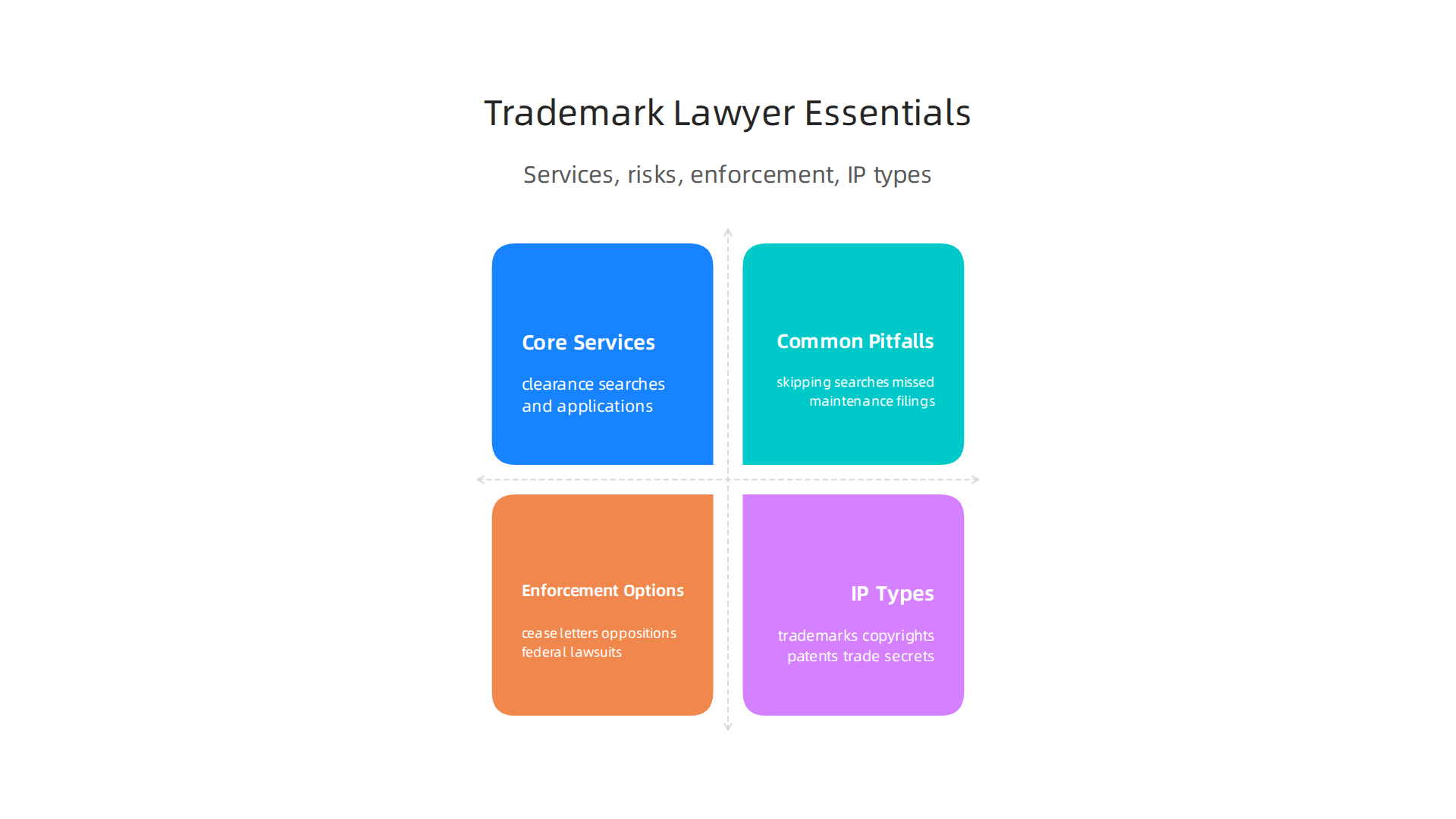
And why you really want one on your team.
They conduct thorough clearance searches first.
Most people skip this step or do a quick Google search. That is a big mistake. According to Jaburg Wilk, failing to conduct a proper search is one of the most common trademark mistakes businesses make. A trademark lawyer runs professional searches through the USPTO database and common law sources. They find conflicts you would never see on your own. That saves you from wasting money on an application that will get rejected. Or worse, from getting sued later.
They prepare strong applications that actually get approved.
The USPTO has very specific rules about how to describe your goods and services. Get it wrong and you get an office action. That is a formal letter saying your application has problems. A trademark lawyer knows exactly how to write descriptions that meet USPTO standards. They also know how to respond when you do get an office action. Many applications get abandoned because people do not know how to handle these responses.
They give you strategic advice on portfolio management.
Trademarks are not file and forget. You need to use them correctly. You need to monitor for infringers. You need to renew them on time. And you need to enforce your rights when someone copies you. A smart ip lawyer helps you build a strategy that grows with your business. They tell you which marks matter most and where to focus your budget. They also help you license your IP safely through solid contracts.
They help you avoid costly mistakes.
Here is the hard truth. Even trademark lawyers make branding mistakes sometimes, as Erik Pelton points out. The difference is they catch those mistakes early. When you work with an experienced trademark lawyer, you avoid weak marks. You avoid incomplete searches. You avoid missing deadlines. And you avoid the headache of trying to fix problems after they happen.
Think about it this way. Your brand is one of your most valuable business assets. Would you do your own surgery? Probably not. So why treat your brand any differently?

The small upfront cost of hiring a trademark lawyer saves you thousands in legal fees and lost business down the road.
If you want to stay informed about the latest legal tech trends that make IP management easier, you might enjoy getting clear daily updates from The Deep View Newsletter. It helps legal professionals like you keep up with what is changing.
Common Pitfalls in IP Protection (and How a Lawyer Helps You Avoid Them)
So you know you need a trademark lawyer. Good. But do you know what actually goes wrong when people try to go it alone? Even experienced business owners fall into the same traps. Here are the three biggest pitfalls in IP protection and exactly how a skilled lawyer helps you dodge every one.
Pitfall 1: Skipping a comprehensive clearance search.
This is the most common mistake, and it hurts the most. Many people do a quick Google search or check the USPTO database once. They find nothing obvious and assume they are safe. That is a dangerous assumption. According to Jaburg Wilk, failing to conduct a proper search is one of the top trademark mistakes businesses make. A thorough search goes far beyond the USPTO. It digs into state registrations, common law uses, and even social media handles. A trademark lawyer runs these deep searches. They find hidden conflicts before you invest time and money in a brand. And they prevent you from accidentally infringing on someone else’s rights, which can lead to expensive lawsuits.
Pitfall 2: Using a mark without registration and relying only on common law rights.
You might think using your brand name in business gives you some protection. It does. Sort of. Common law rights are very limited. They only protect the mark in the specific geographic area where you actually do business. If another company uses a similar name in another state, you likely have no case. Even worse, if they register their mark first, you could be forced to rebrand. An ip lawyer will tell you straight: federal registration gives you nationwide priority, the right to use the ® symbol, and the ability to sue in federal court. Without it, your brand is fragile.
Pitfall 3: Neglecting maintenance filings.
Trademarks are not a one-and-done deal. After registration, you must file specific documents to keep your mark alive. Between the fifth and sixth year, you need a Section 8 declaration showing you still use the mark. Then you need renewals every ten years. Miss a deadline and your registration gets cancelled. Gone. A good business transactional lawyer or trademark specialist tracks these deadlines for you. They handle the paperwork so you never lose your rights because of a forgotten form.
The best trademark lawyer does more than fix mistakes. They prevent them from happening in the first place. They save you from weak marks, incomplete searches, and abandoned registrations. Investing in their guidance early is one of the smartest moves you can make for your brand.
If you want to build a stronger IP strategy from the ground up, learning how business contracts lawyers handle IP in agreements is a smart next step. Check out our guide on why you need more than a lawyer for business contracts to see how transactional lawyers protect your assets.
Enforcing Your Trademark Rights: Monitoring and Litigation Strategies
Getting your trademark registered is a huge win. But the work does not stop there. Think of your trademark like a house. You put a lock on the door (registration). But you still need an alarm system and a plan for what happens if someone tries to break in (enforcement). This is where a skilled trademark lawyer becomes your most valuable partner.
Proactive monitoring catches problems early.
A good trademark lawyer sets up watch services right away. These services scan new trademark applications and the wider market for anything that looks or sounds like your brand. If you catch a similar name early, before a company invests money in it, you can often resolve the issue quickly with a simple letter. Litigation trends in 2026 are showing that disputes are becoming more common and complex, especially with the rise of AI generated content. Being proactive helps you avoid expensive court battles later and protects the brand you worked so hard to build.
You have a range of enforcement tools available.
When a conflict is found, your ip lawyer helps you pick the right tool for the job. The choice depends on how serious the threat is.
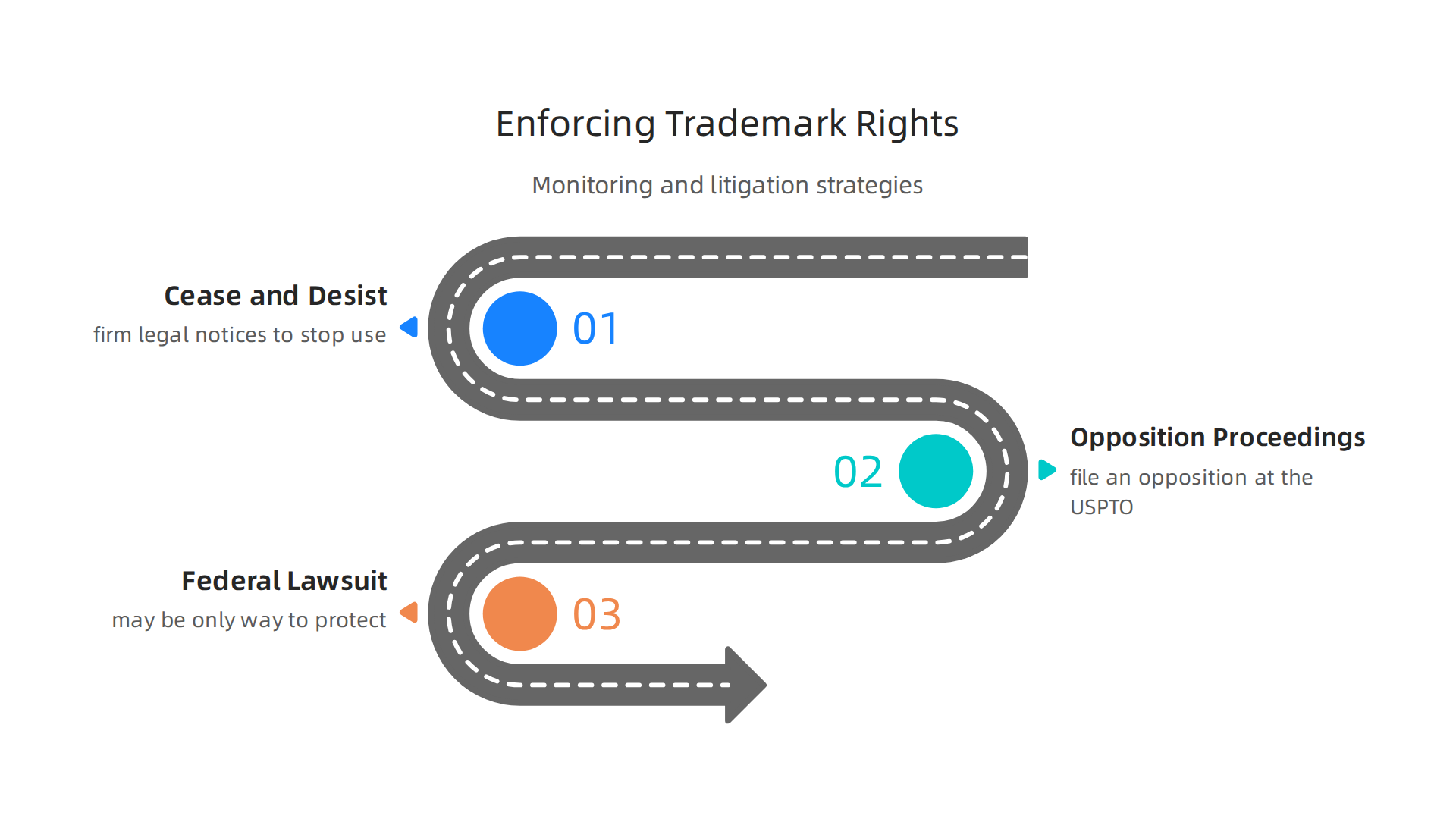
- Cease and desist letters: These are often the first step. They are firm legal notices that ask the other party to stop using your mark. Many conflicts end right here.
- Opposition proceedings: If someone tries to register a similar mark at the USPTO, you can file an opposition. This is usually faster and cheaper than a full lawsuit.
- Federal lawsuits: If a company ignores your letter and keeps infringing, a lawsuit may be the only way to protect your brand. A skilled business transactional lawyer or litigator knows how to navigate these complex cases.
A strong enforcement strategy requires a strong advisor.
Your trademark lawyer does not just send letters. They act as your strategic partner. They assess the strength of your mark and the other party’s actions. They give you an honest answer about whether it is worth fighting or if a settlement makes more sense. According to Wilson Sonsini, the litigation landscape in 2026 is defined by complex new areas like AI driven disputes. You want a lawyer who understands these modern challenges. They build a strategy that fits your business goals and your budget, making sure you do not waste resources on a losing battle.
The legal landscape in 2026 is shifting fast. If you want to stay ahead of these trends without the noise, getting clear daily updates is a smart move. Check out the The Deep View Newsletter for straightforward AI and tech insights that affect the legal world.
To learn more about how technology is changing the role of attorneys in this new era, read our guide on how technology reshapes the attorney role.
International IP Protection: Navigating Cross‑Border Trademark Issues
Imagine this: You own a registered trademark in the United States. Your brand is growing fast. You decide to start selling your products in Germany and Japan. A few months later, you find out another company is using your exact brand name in those countries. Your heart sinks. Can you stop them?
Here is the hard truth. Your U.S. trademark registration gives you zero protection overseas. Trademark rights are strictly territorial. That means a mark registered with the USPTO only protects you within the United States. If you want protection in other countries, you need to register separately in each one. The World Intellectual Property Organization (WIPO) explains that different types of intellectual property, including trademarks, are governed by the laws of each country where protection is sought.
So how do you handle this without going crazy with paperwork? Many business owners use a system called the Madrid Protocol. This is an international treaty that lets you file one single application to seek trademark protection in multiple countries at once. It is a huge time saver. But it is not a magic wand. The Madrid Protocol still requires careful strategy. Each country can still reject your application based on its own laws. A good ip lawyer can help you choose which countries to include and how to handle rejections.
Territoriality means you need a plan for every market you enter. Do not assume your brand is safe just because you own the U.S. rights. Work with a business contracts lawyers or a business transactional lawyer who understands international rules. They can help you file in priority markets first and set up monitoring systems worldwide.
For more on how to structure your business for global growth, check out our guide on New York LLC law in 2026. It covers formation and compliance basics that matter when you expand internationally.
Taking the time to protect your brand in every country where you do business is not optional. It is the only way to keep your trademark strong everywhere.
How to Choose the Right Trademark Lawyer for Your Business
Now that you understand the global stakes, the next big question is: who do you trust with your brand? Picking the right trademark lawyer is one of the most important decisions you will make for your business. A great lawyer does more than just file paperwork. They become your strategic partner in protecting everything you have built.

So what should you look for?
Start with specialization and experience. Not all lawyers handle trademarks. You need someone who focuses on this area every day. The USPTO recommends making sure your attorney has real experience prosecuting trademark applications before the USPTO and handling proceedings before the Trademark Trial and Appeal Board. A general practice lawyer might miss important details that an ip lawyer catches in their sleep. Look for someone who has worked with businesses like yours and understands your specific industry. Their familiarity with your market can save you time and costly mistakes.
Think about the full scope of what you need. If you plan to grow, you may need help with more than just one registration. Ask about their experience with portfolio management, trademark litigation, and international filings. A lawyer who only knows U.S. filings might not be the best fit if you are expanding overseas. A business contracts lawyers or business transactional lawyer who handles the full picture can often coordinate both your trademark strategy and your broader business agreements.
Do not forget about technology and communication. The best trademark lawyer in 2026 uses modern tools to serve clients better. Ask how they handle searches. Do they use AI-powered tools to find conflicting marks faster? How do they communicate with you? Some firms offer client portals and regular updates. Others might leave you in the dark for weeks. You want a lawyer who treats your brand with the same care you do.
Taking the time to vet a lawyer properly now will save you from painful surprises later. The right choice means a stronger brand and less stress.
Want to stay ahead of the curve on legal tech and AI trends that can help you work smarter? Subscribe to The Deep View Newsletter for clear daily updates that busy professionals actually read.
Future Trends: AI, Technology, and the Evolution of IP Law
The world of trademark law is changing faster than ever. And honestly, it can feel a bit overwhelming. But here is the good news. These changes can actually make protecting your brand easier and smarter.
AI is transforming the way we handle trademarks. Think about it. A top trademark lawyer today might use AI to search for conflicting marks in minutes instead of hours. These tools can scan millions of trademarks across the globe. They catch potential conflicts that human eyes might miss. Some platforms can even help draft trademark applications. But remember, a machine can only do so much. You still need a great ip lawyer to apply their judgment and experience to the results. The USPTO recommends verifying that your attorney has real experience before the office. That human touch remains vital.
Non-traditional marks are becoming more common. We are not just talking about logos and names anymore. Thanks to technology, you can now register sounds, motion, and even holograms as trademarks. Think about the Netflix "ta-dum" sound or the way a smartphone turns on. These sensory cues are powerful brand tools. Your business transactional lawyer should know how to handle these new types of marks, especially if you work in tech or media.
Legal professionals must adapt to these new tools. This means staying informed about ethics rules around AI. Who owns the rights to a logo created by an AI? How do you prove you are using a mark in commerce when it only exists digitally? These are real questions in 2026.
So what does this mean for you? It means your legal team needs to be techsavvy. They need to understand how these tools work and how to use them ethically. The best business contracts lawyers are already learning.
Want to stay ahead of the curve on legal tech and AI trends that can help you work smarter? Subscribe to The Deep View Newsletter for clear daily updates that busy professionals actually read.
Summary
This guide explains why trademarks are among your company’s most valuable assets and how a skilled trademark lawyer helps protect them. It walks through the different types of intellectual property—trademarks, copyrights, patents, and trade secrets—and shows when each protection applies. You’ll learn what a trademark attorney does day to day: thorough clearance searches, filing and responding to USPTO actions, portfolio strategy, monitoring, and enforcement. The article outlines common pitfalls business owners make (skipping searches, relying only on common-law rights, neglecting maintenance) and practical enforcement tools like cease-and-desist letters, oppositions, and litigation. It also covers cross-border issues, the Madrid Protocol, and how to pick a lawyer who fits your growth plans. Finally, it discusses emerging trends—AI tools, non-traditional marks, and ethics—that are reshaping IP work in 2026.