
Employment Attorney 2026 Skills and Tools for Modern Practice

Introduction: Why Employment Law Is at a Tech Crossroads
If you are an employment attorney, you have probably noticed something shifting in your daily work. It is not just the laws that keep changing. The tools, the workplace, and even the basic expectations of your role are evolving fast.
Here is the thing. Artificial intelligence, remote work policies, and strict data privacy rules are creating legal questions that did not exist a few years ago.

According to the U.S. Bureau of Labor Statistics, the legal field is projected to grow 4 percent from 2024 to 2034, and much of that growth is happening in roles that require both legal skill and comfort with technology.
This means a modern employment attorney needs more than a strong understanding of labor law. You also need to know how AI affects hiring, how remote work blurs jurisdictional lines, and how data privacy regulations impact employee monitoring. Whether you work as a small business lawyer, a contract lawyer for business clients, or an international law lawyer, this new landscape touches every part of your practice.
In this article, we take a practical, evidence-based look at the tools, skills, and strategies that define the modern employment lawyer in 2026. We will cover what is actually changing, what still matters most, and how you can stay ahead without getting overwhelmed.
If you want to keep learning about how technology is reshaping the legal profession, check out our guide on the evolving role of lawyers in a tech-driven world.
And if you want a simple way to stay informed, consider subscribing to The Deep View Newsletter. It delivers clear daily AI updates so you never miss what matters in legal tech.
How AI and Automation Are Reshaping Employment Law Practice
Here is the reality in 2026. If you are an employment attorney who still does everything manually, you are already falling behind. AI adoption in the legal industry has reached 78%, according to a recent survey. That is not a future trend. It is happening right now.
So what does this mean for your daily practice?
First, AI-powered legal research tools can cut your case law analysis time by up to 60%. You find relevant precedents in minutes instead of hours. That frees up energy for building stronger client relationships. Second, automated document review has transformed discovery in employment litigation. Instead of spending weeks scanning contracts and internal emails, AI handles the heavy lifting fast. Third, predictive analytics helps you assess settlement risks and trial outcomes with real data. You give clients informed advice instead of gut feelings. The Harvard Law School Center on the Legal Profession has examined how these tools are reshaping law firm business models.
For an employment attorney in 2026, understanding these tools is no longer optional. If you want to see how this shift affects your career path, read our guide on the evolving role of an employment lawyer.
And if you want to stay ahead of AI trends without the noise, The Deep View Newsletter delivers clear daily updates straight to your inbox so you never miss what matters in legal tech.
AI-Powered Legal Research and Document Review
So how do these tools actually help you in your day to day work? Let’s look at the two biggest changes: legal research and document review.
You probably already know platforms like Casetext and Westlaw. In 2026, both now use generative AI inside their search tools. Instead of typing in keywords and sorting through hundreds of cases, you can ask a question in plain English. The AI finds the most relevant precedents in minutes.

That is a huge time saver for any employment attorney who needs to prepare for a hearing fast.
Document review has changed too. Instead of spending weeks scanning contracts and emails by hand, AI software handles the heavy lifting. It finds patterns, flags risky language, and reduces human error. This is especially useful for a small business lawyer who needs to review dozens of employment agreements quickly.
But here is the catch. AI tools are not perfect. They can make mistakes or miss context. You must always validate the outputs before using them in court or sharing with clients. Skipping this step could lead to malpractice claims.
For a deep look at how one tool handles contract analysis, check out our walkthrough of IRIS Law 2026 AI contract analysis for legal teams.
And if you want to stay ahead of AI trends without the noise, The Deep View Newsletter delivers clear daily updates straight to your inbox.
Predictive Analytics in Litigation Strategy
What if you could predict the outcome of a case before stepping into the courtroom? That is the promise of predictive analytics in 2026. These tools analyze historical case data to forecast likely outcomes. For an employment attorney, this is a game changer.
Instead of guessing how a judge might rule on a discrimination claim, you can look at data from similar past cases. Predictive models can even estimate class action settlement values with surprising accuracy. That helps you decide whether to settle or push for trial.
This data driven approach also changes how you talk to clients. You can show them realistic scenarios and set clear expectations. It even helps with fee arrangements, because you know the probable range of work involved.
AI adoption in the legal industry has reached 78%, according to a 2026 survey. Forward thinking firms use these tools to stay competitive. Whether you are an employment attorney, an international law lawyer, or a contract lawyer for business, predictive analytics gives you a strategic edge.
For more on how technology is reshaping the attorney role, check out our article on the employment lawyer career in 2026.
And if you want regular updates on AI in the legal world, The Deep View Newsletter delivers clear insights to your inbox every day.
Essential Technology Tools for Employment Lawyers
Predictive analytics is just one piece of the tech stack every employment attorney needs in 2026. Three essential tools make modern practice efficient.
Practice management software centralizes case tracking, billing, and client communication. Platforms like Clio Manage are a top choice for solo and small firms, according to Uptime Legal. E-discovery platforms scale to handle massive employee data records, a must for discrimination or wage claims. Cloud-based collaboration tools keep remote and hybrid teams aligned, critical for any modern lawyer.
These tools help not just an employment attorney but also an international law lawyer or a small business lawyer reduce manual work and improve client service. Even a contract lawyer for business can automate contract review with AI.
To see how top firms are adopting these systems, read about leading law firms embracing technology. And to stay current on legal tech trends, subscribe to The Deep View Newsletter.
Case Management and Practice Management Software
Think about your daily chaos as an employment attorney. You track deadlines, manage documents, bill clients, and juggle communication. Practice management software pulls all that into one dashboard.
Platforms like Clio Manage and PracticePanther are firm favorites because they centralize cases, time tracking, and billing in the cloud.
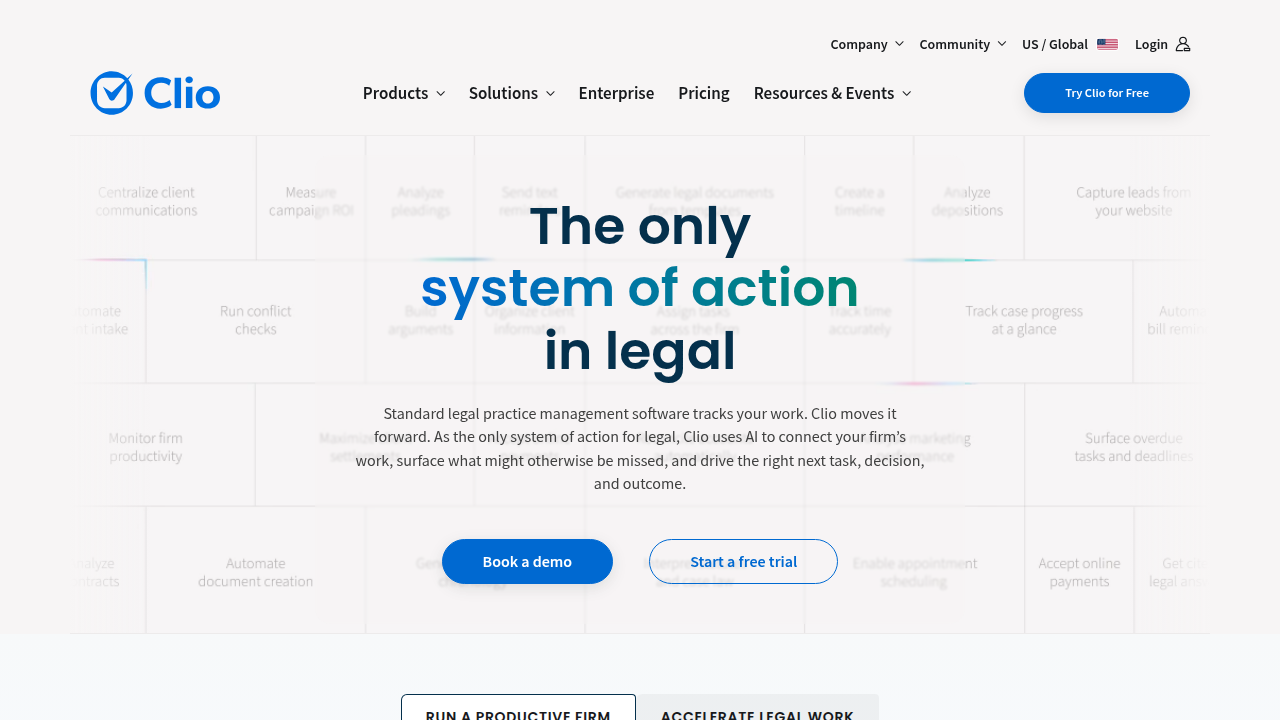
According to Uptime Legal, Clio works best for solo and small firms, which covers many employment law practices. These systems now use AI to automate repetitive tasks, like setting billing rules or sending follow-up emails, freeing you for higher value work.
Another big win is integration. Many tools connect directly with e-filing courts and document management systems. This cuts down on manual data entry and reduces the risk of missed deadlines. CARET Legal, for example, offers an all-in-one approach that includes document management and accounting, so nothing falls through the cracks.
The key is choosing a platform that fits your firm size and practice area. A solo employment lawyer needs different features than a mid-size firm or an international law lawyer handling cross-border claims. Before you commit, check out Clio’s detailed guide on selecting legal practice management software to match the tool to your workload.
To keep learning how technology is changing the role of the modern lawyer, read about the employment lawyer career evolution in 2026. And to stay updated on the latest trends, subscribe to The Deep View Newsletter.
E-Discovery and Data Analysis Tools
Now let’s talk about the mountain of data that comes with every employment case. Emails, payroll records, performance reviews. Sifting through all of it manually is a nightmare. That is where e-discovery tools like Relativity come in. They use AI to quickly remove irrelevant data, so you focus only on what matters.
Data analytics tools go a step further. They help you spot patterns across employee claims and identify compliance risks before they blow up. For example, a small business lawyer handling a wrongful termination case can use analytics to compare similar claims and build a stronger argument. An international law lawyer dealing with multinational cases also benefits from these tools to manage data across jurisdictions.
But here is the catch. You need a basic understanding of data formats and chain of custody. If you don’t know how the data was collected or stored, it might not hold up in court. That is why staying current matters.
To see how AI is changing contract work, check out this piece on Iris Law 2026 AI contract analysis for legal teams. And for daily updates on legal tech and AI trends, subscribe to The Deep View Newsletter.
Navigating the Legal Landscape of Remote Work
Remote work is here to stay, but it brings messy legal problems for any employment attorney. When an employee lives in one state but works for a company in another, which laws apply? It gets complicated fast.

An international law lawyer dealing with cross-border teams faces even more layers.
Employers must update their policies to cover worker classification, overtime rules, and tax obligations across multiple states. Failing to do so leads to expensive lawsuits. A small business lawyer often helps companies navigate these overlapping requirements before a dispute arises. You can find more guidance on handling these compliance challenges in this article about remote worker compliance for multi-state employers.
Here is another tough issue: workplace surveillance tools. Monitoring productivity with software might seem smart, but it raises serious privacy and ethical concerns. Employees have rights, and a contract lawyer for business can help draft clear policies that balance oversight with trust.
Staying current on these fast-moving laws is critical. For a daily dose of AI and legal tech updates that help you keep up, subscribe to The Deep View Newsletter.
Compliance with Multi-Jurisdictional Employment Laws
Here is where things get really tricky for any employment attorney. When you have team members scattered across different states, one employee’s workday could fall under two or even three different wage and hour laws at the same time. For example, California’s strict overtime rules might apply to a remote worker living in Los Angeles even if the company is based in Texas. As SHRM notes, employers must conduct a thorough analysis of legal and tax issues before allowing remote work across state lines.
Out-of-state workers also create new tax and insurance obligations. You might need to register your business in a new state, withhold income taxes differently, and carry workers’ compensation coverage in multiple jurisdictions. The Multi State Payroll Compliance guide breaks down how to handle these obligations in 2026.
Here is some good news. Legal tech tools can now automate jurisdiction tracking and compliance alerts. These systems monitor changes in state laws and flag when your policies need updating. If you are looking to build expertise in this area, check out this overview of the evolving role of an employment lawyer in 2026. To stay ahead of these fast-changing rules, get clear daily updates from The Deep View Newsletter.
Workplace Surveillance and Employee Privacy
As remote work grows, employers are using keystroke monitoring, webcam checks, and productivity tracking more than ever. This creates a new legal minefield for any employment attorney. Here is the challenge: employees have only limited privacy expectations in remote settings, but those expectations vary sharply by state and jurisdiction.
Take California as an example. Under the California Consumer Privacy Act (CCPA), workers have the right to know when employers monitor them and for what purpose, as explained in this overview from UC Berkeley’s Labor Center. The 2026 CCPA updates also clarify employer obligations around notice and consent, which you can read about in this Jackson Lewis guide.
An employment attorney must help businesses balance their need for productivity data with workers’ privacy rights. This means writing clear monitoring policies, posting required notices, and handling data access requests correctly. If you are navigating these issues for a client, the evolving role of an employment lawyer in 2026 covers how technology is reshaping this practice area.
Data Privacy and Cybersecurity in Employment Law
Employee data is a goldmine for hackers. A single data breach can expose payroll details, health records, and personal contact info. For any employment attorney, that means helping clients avoid massive liability when the worst happens.
Laws like the CCPA and GDPR already hold employers to a high standard. The 2026 updates to California’s CCPA go even further. Businesses must now conduct risk assessments with attestation before processing personal information, as outlined in this Thompson Coburn summary. Employers also have to give workers clear notice about what data they collect and why, something the California Privacy Protection Agency is actively refining.
You cannot do this work alone. A smart employment attorney partners with IT and privacy officers to build real compliance systems, not just paper policies. If you want to stay ahead of these fast-changing rules, staying informed is your best defense. Get clear daily AI and tech updates from The Deep View Newsletter to keep your knowledge current.
Here is the thing about data privacy in 2026: It is no longer a California problem or a European problem. It is an everyone problem. If you work as an employment attorney for a European company with US employees, you now need to navigate both GDPR and state laws like the CCPA.
Under the CCPA, workers now have the right to know when their employer is monitoring them and for what reason. They can also access their personal data and ask to have it corrected or deleted, as explained in this Berkeley Labor Center overview. These rules took a big step forward in 2025 when California expanded employee data rights, and the 2026 regulations now require businesses to conduct formal risk assessments before processing that information, according to Jackson Lewis.
But California is not alone. States like Texas and Florida are now proposing their own employment privacy bills. This means an international law lawyer or a small business lawyer must track multiple sets of rules at once. It is a lot to keep straight.
That is why the best employment attorney does not just memorize the rules. They partner with privacy officers and stay current on fast-moving regulations. If you want guidance on how this role is growing, check out this article on the employment lawyer career in 2026. And if you want to stay ahead of these changes without drowning in headlines, get clear daily AI updates from The Deep View Newsletter to keep your knowledge sharp.
Managing Data Breaches and Employee Data Rights
Once an employment attorney helps a company understand its monitoring obligations, the next big challenge is handling data breaches. Breach notification laws vary wildly by state. Some states give you 30 days to notify affected employees. Others give you 72 hours. If you are a small business lawyer or an international law lawyer, you have to track every deadline separately. That is why every employer needs a clear response plan that gets updated each year.
On top of that, employees now have concrete rights under state laws like the CCPA. They can access their personal data, ask for corrections, and even request deletion, according to the Berkeley Labor Center overview. The 2026 regulations also require businesses to run formal risk assessments before processing employee data, as shown in this Thompson Coburn summary.
An employment attorney guides companies through all of this. They help decide when to report a breach, how to handle employee data requests, and which regulators to notify. If your company needs to find the right legal partner for this work, read this guide on how to choose the best employment lawyers NYC. And to keep up with the fast pace of privacy rule changes, get clear daily AI updates from The Deep View Newsletter while you’re at it.
Career Development and Skills for Employment Attorneys
As the legal landscape shifts fast, your career as an employment attorney needs to keep up. You can’t just rely on knowing the old laws anymore. Firms now look for lawyers who bring extra skills to the table.
Certifications in legal operations and privacy law are becoming more common. Getting a credential like the Legal Technology Professional (LTP) certification can set you apart, according to this LawCrossing guide on tech skills for lawyers. Continuing legal education programs now include technology competence credits. That means learning about data analytics and contract automation counts toward your requirements.
Firms also want attorneys with both litigation experience and data analytics skills. If you can argue in court and also look at workforce data to find hidden patterns, you are more valuable. The same goes for small business lawyers and contract lawyers for business who handle compliance tooling and risk reports.
If you are exploring this career path, check out this overview of the employment lawyer career in 2026 to see how the role is evolving.
And to stay sharp on the tech changes affecting your practice, get clear daily AI updates from The Deep View Newsletter. It helps you keep that edge.
Certifications and Continuing Legal Education
Getting the right certifications can help you stand out as an employment attorney. One of the most respected is the Certified Information Privacy Professional (CIPP). It shows you understand data privacy laws, which is a big deal when handling employee records and compliance issues for clients. Many firms now see this credential as a major plus.
Legal operations certifications are also gaining traction. The CLOP (Certified Legal Operations Professional) and LTC (Legal Technology Certificate) are two examples. These help you manage the business side of law better. If you work as a small business lawyer or a contract lawyer for business, these certifications make you more useful to clients who need efficient, tech-savvy legal support.
Your continuing legal education requirements are changing too. Many states now require you to take courses on technology and cybersecurity. This is not just a trend. It is becoming a standard part of staying licensed, according to Robert Half’s 2026 legal hiring report. The shift means you need to learn about data security and legal software just to keep your license active.
To stay on top of these fast changes, get clear daily AI updates from The Deep View Newsletter. It helps you track the tech shifts that affect your practice.
The Demand for Tech-Savvy Legal Talent
The push for technology skills is reshaping how law firms and legal departments hire. This is especially true for the modern employment attorney. Firms are no longer looking for just strong legal research and writing. They want lawyers who understand data, software, and automation.
Many law firms are now hiring legal technologists and data analysts to support their employment teams. These specialists help manage e-discovery, data privacy compliance, and AI-driven case analysis. According to Robert Half’s 2026 legal hiring report, these hybrid roles are among the fastest-growing in the legal sector.
Job postings for employment attorneys increasingly list AI proficiency as a preferred qualification. Employers want lawyers who can work with contract analysis tools and predictive analytics. A quick look at job boards like Indeed shows this trend clearly. As the Bureau of Labor Statistics notes, lawyer employment is projected to grow 4 percent from 2024 to 2034, and tech skills will help you stand out in that competitive market.
In-house legal departments are also creating specialized technology roles, such as legal operations managers and tech-focused counsel. This opens doors for lawyers who have a blend of legal and tech knowledge. If you are considering a career as a small business lawyer or a contract lawyer for business, building tech skills now will future-proof your practice.
Being tech-savvy is no longer optional. It is a requirement for career growth. For a deeper look at how the role is evolving, read our guide on the employment lawyer career in 2026.
Ethical Considerations in a Tech-Driven Employment Practice
As technology becomes central to an employment attorney’s work, it brings new ethical responsibilities. AI-driven hiring tools can unintentionally perpetuate bias, creating liability under Title VII. You must audit these systems regularly to ensure fairness.
Cloud storage of client data is now standard practice, with solutions like Smokeball being recommended by bar associations such as The Florida Bar. But convenience comes with a duty to protect sensitive information through robust cybersecurity measures. A data breach can harm clients and your reputation.
State bar ethics committees are also updating guidance on technology competence. They now expect lawyers to understand the tools they use. This shift is part of the larger transformation described in our guide on how technology reshapes the attorney role.
To stay ahead of these ethical challenges, you need reliable insights on AI and legal tech. Subscribe to The Deep View Newsletter for daily updates that help you practice responsibly in 2026.
AI Bias and Fairness in Hiring Algorithms
Here’s where the ethical concerns we just covered get really specific. AI hiring tools are everywhere now, but they can accidentally hurt job applicants from certain groups.

The EEOC has made it clear that using AI to screen candidates is still covered by anti-discrimination laws. If an algorithm filters out more women or people of color, that’s a problem, even if no one meant for it to happen.
By 2026, 19 states have passed laws about how companies can use AI in hiring, according to the SHRM 2026 report. That means as an employment attorney, you need to help your clients check their algorithms for something called disparate impact. Vendors should be running regular bias audits. And you should be guiding employers to follow the Uniform Guidelines on Employee Selection Procedures, which apply to both traditional tests and AI systems.
This work is different from what a contract lawyer for business or a small business lawyer typically handles. It takes a specialist who understands both tech and employment law. The role of the employment lawyer is evolving fast, and staying current on AI bias rules is now a core part of the job. For daily updates on how these laws change, subscribe to The Deep View Newsletter.
Maintaining Client Confidentiality with Cloud Tools
Cloud tools make law practice easier, but they also bring new risks around client secrets. Every employment attorney needs to know how to keep data safe when using these platforms. Strong encryption and strict access controls are non-negotiable. Before choosing a cloud provider, make sure the platform follows the latest security standards. Clio’s guide to legal practice management software explains what to look for when picking a secure system.
You also have an ethical duty to vet your vendors carefully. ABA Model Rule 1.6 requires you to take reasonable steps to protect client information. That means asking cloud providers about data handling, access permissions, and storage locations. The Florida Bar offers a list of approved practice management software options that can help you find compliant tools.
Do not forget data breach insurance and a clear incident response plan. Even the best systems can be hacked. Being prepared is part of modern legal practice. The role of the lawyer is evolving fast, and cloud security is now a core skill for any attorney. Whether you work as an employment attorney, a small business lawyer, a contract lawyer for business, or an international law lawyer, you need to take these steps to protect your clients.
Summary
This article explains how technology—especially AI, automation, predictive analytics, and cloud tools—is reshaping employment law practice in 2026 and what attorneys must do to keep up. It covers practical changes to everyday workflows, from AI-assisted legal research and e-discovery to case outcome forecasting, and outlines the essential tech stack (practice management, e-discovery, collaboration) that modern employment lawyers should adopt. The piece also walks through thorny legal issues created by remote work, multistate compliance, employee surveillance, and evolving data-privacy rules like the 2026 CCPA updates. It highlights breach response, employee data rights, and the ethical duty to audit AI tools for bias and protect client confidentiality in the cloud. Finally, the article discusses career implications—what certifications, skills, and hybrid legal-technical roles firms now value—and gives guidance on staying current without getting overwhelmed.