
How the International Right of Way Association Shapes Modern Law and Technology

Introduction: The Enduring Role of Professional Legal Associations
Most lawyers don’t spend much time thinking about the old roots of their professional groups. But those roots matter more than you might expect. Groups like the International Right of Way Association (IRWA) didn’t appear out of nowhere. They grew out of a long tradition of legal professionals coming together to set standards and share knowledge.

The first major international legal associations were born in 1873, right after the Franco-Prussian War. The International Law Association was one of them, created to promote peace and codify rules between nations. That same year, the Institute of International Law also started in Belgium. These early efforts shaped how modern associations like IRWA operate today.
Understanding this history helps legal professionals see why standards matter and how they evolved. And in 2026, technology is pushing those standards to change faster than ever. This article explores key international legal associations, their origins, and what they mean for a tech-driven legal world.
Curious about staying ahead? Get clear daily AI updates from The AI Newsletter Worth Reading. It helps legal pros keep up with how technology reshapes the attorney role without the noise.
The Role of International Legal Associations in Shaping Modern Law
The Introduction showed how early groups like the International Law Association set the stage. But what do international legal associations actually do today? Quite a lot.
These organizations grew out of local bar associations and professional guilds. As business and law moved across borders, lawyers needed ways to work together. International associations filled that gap.

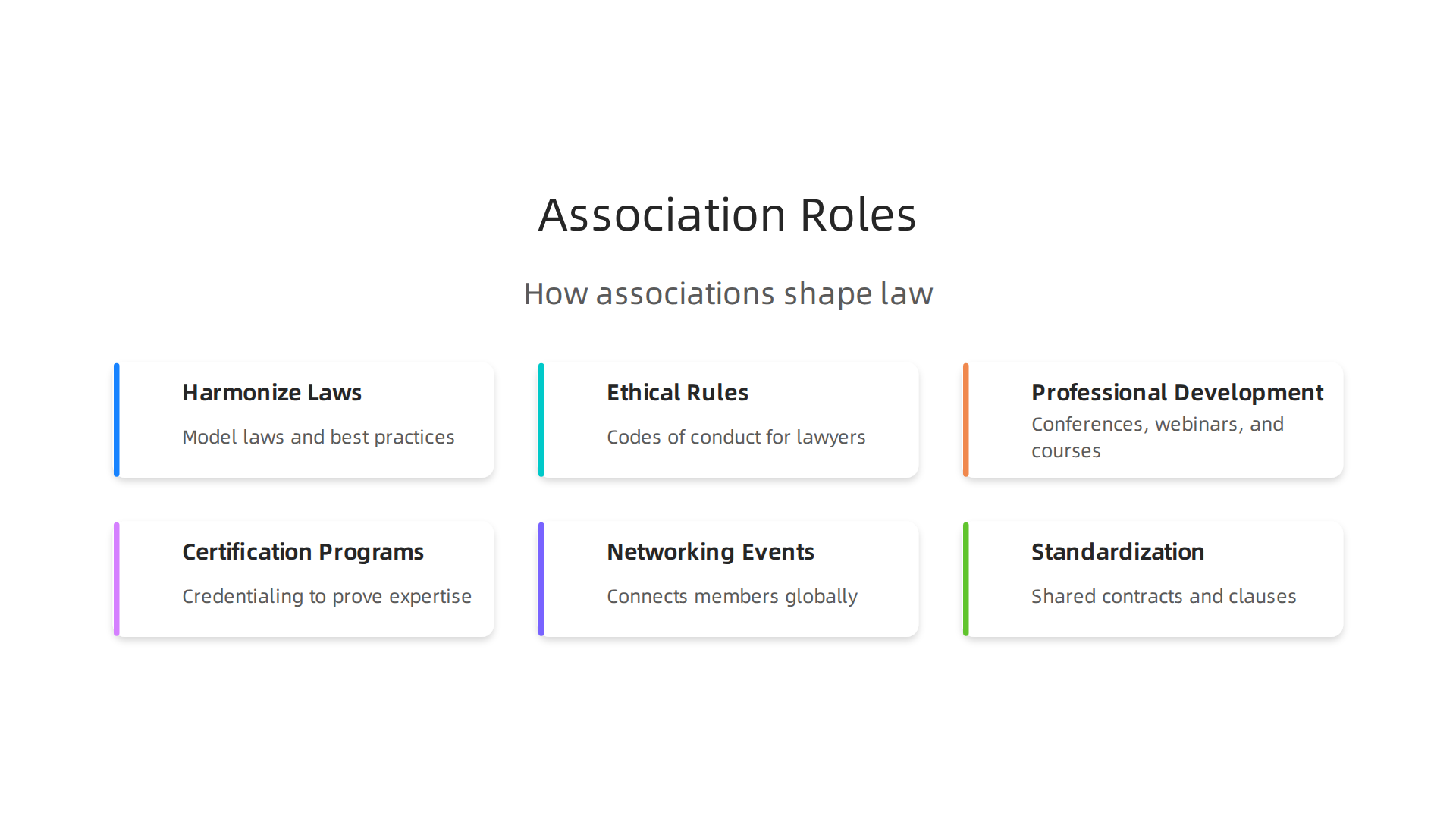
One big job they handle is harmonizing laws. When you have different rules in different countries, cross-border deals get messy. Associations bring experts together to write model laws and best practices. For example, the Union Internationale des Avocats (UIA) connects two million lawyers from 110 countries. That kind of network helps attorneys understand how laws in one place affect clients in another.
Specialized groups dig even deeper. The International Right of Way Association (IRWA) focuses on property rights and infrastructure projects. It sets standards for how land is valued and acquired. Without groups like IRWA, a road project crossing state lines would face chaos. These standards make things smoother for everyone on a law scale that reaches across North America.
Associations also set ethical rules. They create codes of conduct that lawyers follow. This protects clients and keeps the profession honest. When a new technology appears, associations often release guidelines first. That is why many firms turn to groups like the International Legal Technology Association (ILTA) for data security advice. You can see how law firms defend legal data against phishing emails using standards from these groups.
Finally, associations offer professional development. They host conferences, webinars, and courses. Attorneys earn continuing education credits by attending. This keeps their skills fresh in a fast-changing field. Law schools like Lewis and Clark Law School even encourage students to join these groups early. It builds a career foundation that spans borders.
Think about attorneys in every country. They all rely on these associations to stay connected and informed. Even the legacy of figures like Thurgood Marshall reminds us that strong bar associations have always been vital for justice.
In short, international legal associations shape modern law by harmonizing rules, setting ethics, and teaching attorneys.
Whether you are a solo practitioner or part of a global firm, these groups help you practice law better.
Historical Origins: From Guilds to Global Networks
The international legal associations we just explored did not appear overnight. They grew from much older roots. Think back to ancient guilds and medieval universities. Guilds were groups of craftsmen who protected their trade and set quality standards. Early universities, like those in Bologna and Paris, trained scholars in law. These two ideas came together over time.
By the 1800s, lawyers in Europe and the United States started forming the first real bar associations. These were local at first. They gave attorneys a place to share knowledge and set ethical rules. One early example is the International Law Association, founded in 1873. That group continues today, with over 5,000 members across 65 branches worldwide. You can read about the International Law Association’s founding and current work to see how far these groups have come.
After World War II, global commerce took off. Companies began doing business across borders more than ever. Lawyers needed to keep up. International legal associations expanded fast to meet that need. They created networks that helped attorneys in different countries work together smoothly.
Now, those networks have grown into powerful organizations. Some law firms have turned from tiny shops into regional powerhouses. For a modern example, check out how one firm grew from three lawyers to a regional powerhouse. It shows the same spirit of growth that started in those ancient guilds.
So the roots of today’s international bar go deep. What started as small guilds and university lectures turned into a global system that connects attorneys in plural across every continent.
Spotlight on the International Right of Way Association (IRWA)
So far, we have talked about how ancient guilds and bar associations grew into global networks. But not every international legal group follows the same path. One standout example is the International Right of Way Association (IRWA).
IRWA started in 1934 in Los Angeles, California. At that time, it was called the Southern California Right of Way Agent’s Association. A handful of land professionals met to share knowledge and set standards for their work. Over the years, the group grew far beyond California. By 1980, it had changed its name to the International Right of Way Association. Today, the International Right of Way Association connects nearly 10,000 professionals across 15 countries. You can read more about the IRWA’s founding and mission to see how it evolved.
What Does IRWA Do?
Right of way is the legal right to travel over or use land owned by someone else. That might sound simple, but it is a huge part of building roads, pipelines, power lines, and other infrastructure.

IRWA supports the people who handle these complex land deals. The association offers education, certification programs, and networking events.
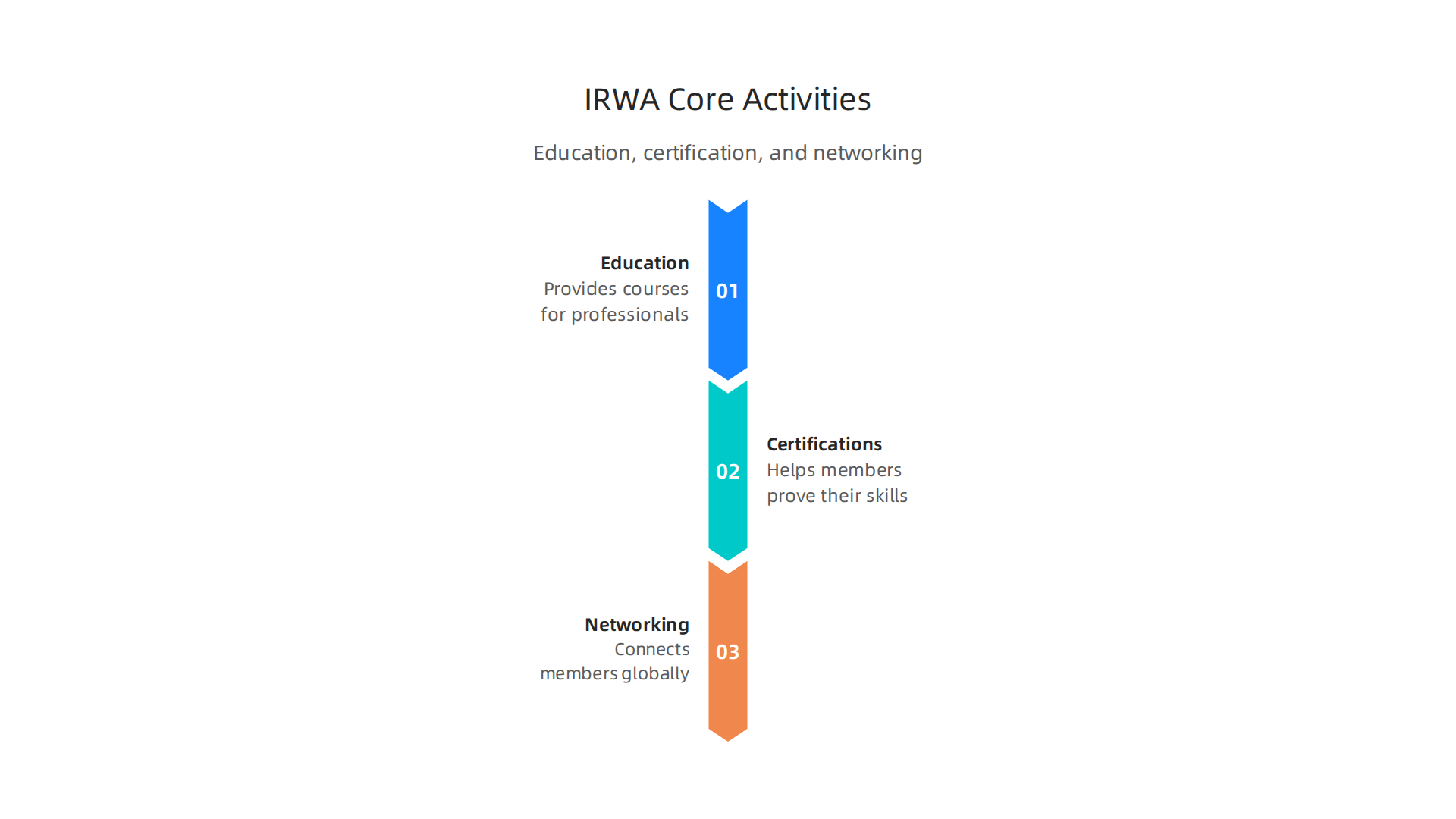
Its certification programs are especially important. They help members prove their skills in areas like land acquisition, appraisal, and property management. These credentials are recognized worldwide. Because of IRWA, right of way work is now seen as a real profession with high standards.
Why IRWA Matters for Attorneys
You might wonder how this relates to lawyers. Many right of way professionals are not attorneys. But the field sits right at the intersection of real estate law, property rights, and government regulations. So a lot of attorneys work alongside IRWA members. For example, if you are an employment attorney handling a case about a land acquisition company, knowing IRWA’s standards helps. If you plan to select attorneys on retainer for 2026 legal needs, understanding the right of way industry gives you an edge.
IRWA also sets global best practices. This means whether you are in the United States, Canada, or even Australia, the same professional rules apply. That kind of consistency makes cross-border legal work smoother.
A Community That Keeps Growing
IRWA is not just about education. It is also about community. The association has over 70 chapters worldwide. Members share ideas, solve problems, and support each other. If you work in real estate, infrastructure, or land law, joining a group like IRWA can open doors.
And if you want to stay sharp in a fast-changing legal world, you might also want to get the latest tech and AI news. The Deep View Newsletter is a great daily read. You can sign up for The AI Newsletter Worth Reading to keep your skills current.
IRWA shows how one small group of professionals can build a global standard. It is proof that even niche fields can have a huge impact.
IRWA’s Mission and Historical Milestones
IRWA’s mission has always been clear: equip right of way professionals with the education, credentials, and community they need to build critical infrastructure. Over the decades, the association has turned that mission into real action.
The first big milestone came in 1934 when Frank C. Balfour gathered 14 colleagues in Los Angeles.
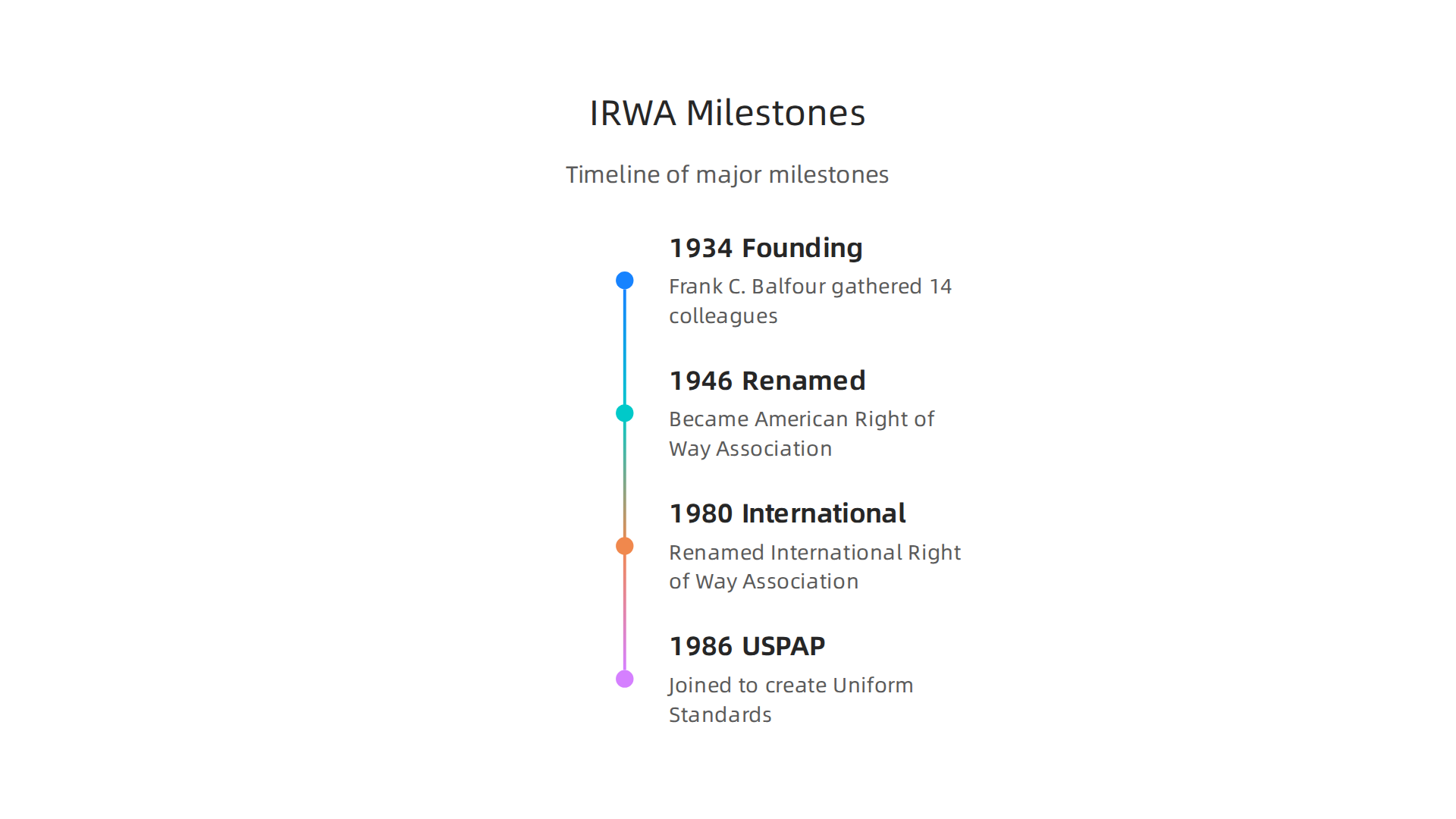
That small meeting grew into the American Right of Way Association by 1946, and then into the International Right of Way Association in 1980. Today, the association connects more than 14,000 members across North America and beyond. You can read the full history of the International Right of Way Association on Wikipedia.
Another key moment happened in 1986. IRWA joined eight other appraisal groups to create the Uniform Standards of Professional Appraisal Practice (USPAP). This set a consistent code of ethics and standards that all members must follow. That kind of self‑regulation builds trust with clients and governments.
Fast forward to 2026. IRWA now offers online education platforms that let members earn credentials from anywhere. This shift to digital learning means a right of way agent in Texas and an attorney in plural no matter where they practice can take the same course. The association is also integrating AI and data tools into its training programs. For attorneys who handle land disputes or infrastructure deals, staying current with these standards is a smart career move. If you are looking for inspiration on how professional groups scale their impact, check out the story of growing from a small firm to a regional powerhouse.
IRWA’s journey shows that even a niche profession can build a global network with high standards. And as technology reshapes the field, the association keeps evolving to meet new needs.
Historical Legal Foundations: Property Rights and Right of Way
Ever wonder why you can drive on a road that cuts through private farmland? That road exists because of ancient legal ideas that we still use today. Right of way laws have deep roots, and understanding them helps you see the big picture in property and infrastructure work.
It all starts with Roman law. The Romans created a system where the state could claim a path across private land for public use. They called this idea part of the "law of nations" or ius gentium. This concept shaped how later societies thought about property and public access. In fact, the whole field of international law grew out of these early Roman frameworks. You can explore how the history of international law traces back to antiquity and Roman thinkers.
After Rome collapsed, medieval Europe kept many of these rules. In England, common law judges invented the legal tool called an "easement." An easement gives someone permission to walk or drive across another person’s land for a set reason. That is basically the same thing as a modern right of way. Meanwhile, in continental Europe, civil law countries wrote similar rights directly into their legal codes.
These two traditions, common law and civil law, still shape how we handle land use today. If you are a lawyer who deals with property disputes or infrastructure projects, knowing this history gives you a deeper understanding. It also helps you see how the role of the lawyer has evolved over time. For more on how attorneys adapt to new tools and challenges in 2026, check out this overview of the lawyer defined in 2026.
Understanding these foundations is not just academic. It helps you make better arguments and smarter decisions when a right of way issue comes up.
From Roman Law to Modern Codes
From these early Roman servitudes, the idea of granting access across private land took shape. The Romans called these rights servitudes, which simply meant a duty on one piece of land to serve another. This was the forerunner of what we now call an easement. English common law later refined these concepts into clear, recognized property interests. Judges created rules to define exactly what a landowner could and could not do with their right of way.
By the 20th century, lawmakers wanted to bring order to these scattered rules. That led to modern codifications like the US Uniform Commercial Code, which includes principles that govern property access and right of way in commercial transactions. The UCC made it easier for businesses and lawyers to handle these issues consistently across state lines.
Understanding this evolution helps attorneys at every level. Law schools like Thurgood Marshall Law and Lewis and Clark Law teach these foundations to prepare students for real world cases. Whether you are a solo practitioner or work at a large firm, knowing how servitudes turned into easements gives you an edge. It also matters when you negotiate right of way agreements across state boundaries.
At the scale of modern law practice, professionals rely on associations to stay updated. Today, organizations such as the International Law Association and the international right of way association work to harmonize these principles across borders. If you need to hire a specialist, knowing how to select attorneys on retainer for your 2026 legal needs can save you time and headaches.
How International Associations Facilitate Cross-Border Legal Practice
When an attorney in plural jurisdictions starts working across borders, they quickly hit a wall of different licensing rules, ethics codes, and local customs. International associations exist to tear that wall down. Groups like the International Bar Association and the international right of way association create uniform standards that make cross-border transactions simpler. For example, the IBA publishes model rules on professional conduct that lawyers can follow no matter where they practice. These shared guidelines reduce confusion and help build trust between attorneys from different countries.
Networking is another big benefit. International associations host conferences, workshops, and online forums where lawyers meet peers from around the world.

These events are perfect for sharing best practices and learning how other jurisdictions handle tricky issues like easements or right of way disputes. The IBA also runs specialized sessions on topics such as harmonizing training standards across borders, as seen in their work on cross-border legal practice in Africa. By attending, you gain contacts who can help on future cases.
Compliance with multiple jurisdictions gets easier when you use association resources. Many groups publish guides on double deontology, fee arrangements, and data protection rules that affect cross-border work. The international right of way association, for instance, provides tools specific to property access rights that align with local laws in different states and countries. These resources save you hours of research and reduce the risk of missing a critical rule.
Associations also help you stay current with technology that supports global practice. Understanding how technology reshapes the attorney role can help you adapt to modern cross-border demands. Joining one or more of these groups is a smart move for any lawyer looking to scale their practice internationally.
Standardization, Networking, and Education
International associations tackle the chaos of cross-border practice by creating shared tools.
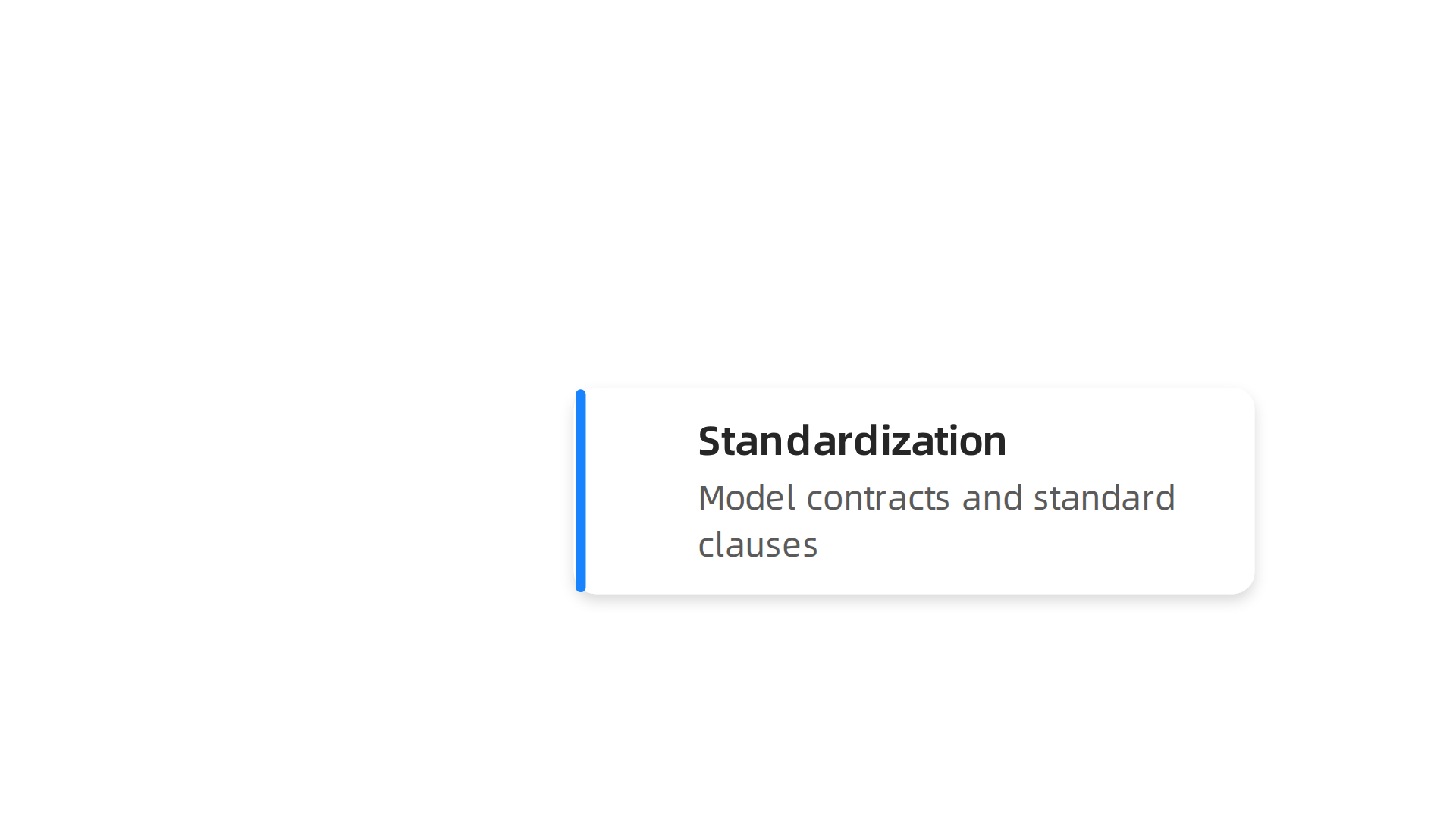
Groups like the international right of way association publish model contracts and standard clauses that work across different legal systems. These templates cut down on friction because both sides know what to expect. The IBA International Principles on Conduct for the Legal Profession offer a clear example. They give lawyers a common ethical baseline, which makes transactions smoother.
Networking is the second pillar. Annual conferences and online communities bring together professionals who might never meet otherwise. For an attorney in plural jurisdictions, these connections are gold. You can ask a peer in another country how they handle a tricky easement issue. The Understanding Cross-Border Legal Services For Global Expansion article highlights how active participation in professional associations raises your international profile and opens doors to collaboration.
Education rounds out the offering. Many associations now provide e-learning courses and certification programs. These programs make sure that lawyers from different regions meet the same competence bar. For example, a lawyer trained at Thurgood Marshall Law or Lewis and Clark Law can take the same certification as one from Europe. This levels the playing field and builds trust with clients. Some programs even cover how to handle selecting attorneys on retainer for your 2026 legal needs when working across borders.
Staying current with legal tech also matters for cross-border work. As you build your skills, you might want daily updates on AI and automation tools that affect global practice. That’s why The AI Newsletter Worth Reading is a smart addition to your learning routine. It delivers clear, practical AI news that helps you stay ahead.
The Intersection of Legal Associations and Technology
Here’s where things get really interesting. Legal associations are no longer just about rulebooks and annual meetings. They are jumping headfirst into technology. And the international right of way association is a perfect example of this shift.
This association now runs an online education platform that delivers courses directly to members. A lawyer trained at Thurgood Marshall Law or Lewis and Clark Law can log in from anywhere and learn about digital property tools, data analytics, and AI-powered research methods. That flexibility matters a lot when you practice as an attorney in plural jurisdictions.
Why does this matter for you? Because technology is changing how property and infrastructure law works. Associations are building digital systems that let members share data across borders more easily. Secure platforms allow right of way professionals to access project benchmarks, property records, and case studies from other regions. That shared knowledge speeds up negotiations and cuts down on legal disputes.
AI is another big piece of the puzzle. The American Bar Association’s latest tech survey on AI adoption in legal practice shows that AI use among legal professionals nearly tripled from 2023 to 2024. Associations are responding by creating AI ethics guidelines, digital literacy courses, and vendor evaluation checklists. They want their members to use these tools safely and effectively.
Some associations are even launching their own AI tools. Think chatbots that answer questions about licensing rules or algorithms that flag compliance risks in contracts. These tools let you scale your expertise without getting overwhelmed. That is the real promise of law scale done right.
If you want to see how real firms are blending law with technology, take a look at this guide on how leading law firms embrace technology. It gives practical examples of firms that are already doing what associations are now teaching.
Digital Transformation and Future Trends
The international right of way association is embracing the future in big ways. Virtual conferences and webinars are now a standard part of their programming. A lawyer trained at Thurgood Marshall Law or Lewis and Clark Law can attend a live session on digital property tools from their home office. This shift makes continuing education much more accessible for an attorney in plural jurisdictions.
AI powered research tools are becoming part of the member resources too. Instead of digging through paper records, right of way professionals can use algorithms to find key property data in seconds. This speeds up negotiations and helps you achieve true law scale by handling more cases with less effort. The 2025 Legal Industry Report by the Federal Bar Association found that 31% of legal professionals now use generative AI at work, up from 27% the year before. Associations are taking note and offering training on these tools.
Blockchain and smart contracts are the next frontier for right of way documentation. Imagine a property agreement that updates itself automatically when conditions are met. No more manual signatures or lost paperwork. The international right of way association is exploring how these technologies can make land records more secure and transparent. Its a game changer for reducing disputes.
To stay ahead of these trends, read about how technology reshapes the attorney role in 2026. It shows exactly what skills you will need next.
One easy way to keep up with AI changes is to subscribe to a daily update. Get clear daily AI updates from a newsletter worth reading. It helps you spot new tools before your competition does.
Summary
This article traces how professional legal associations grew from medieval guilds and early bar groups into today’s international organizations that harmonize law, set ethics, and train practitioners. It uses the International Right of Way Association (IRWA) as a detailed example—covering IRWA’s founding, mission, certification programs, milestones like joining USPAP, and its global chapter network. The piece explains why associations matter for lawyers working on property, infrastructure and cross‑border deals: they publish model rules, offer standardized training, and create practical networks that speed transactions and reduce disputes. It also shows how technology—online education, AI tools, blockchain pilots—now reshapes association services and member expectations. After reading, lawyers and land professionals will understand the origins and roles of international associations, how IRWA’s standards affect practice, and practical ways to use association resources to stay current and scale international work.