
Why Bad Law Firm Websites Drive Clients Away and Damage Credibility

Why ‘bad websites’ still cost law firms clients and credibility
In today’s fast-moving world, people look for everything online. This includes finding a lawyer. If a law firm’s website is not good, it can really hurt their business. We’re talking about more than just looking pretty. Poor website design, unclear messages, and technical problems can cause law firms to lose new clients and make people trust them less.
Think about it: when someone needs legal help, they often start by searching for answers. If they land on a website that is slow, hard to understand, or looks old, what do you think they’ll do? They’ll probably click away and find another firm.

In 2026, where even simple professional services rely on online presence, a firm’s website is a key part of how people see them. Many firms are investing in technology, as shown by some leading firms embracing new tools to serve clients better. You can see how Leading Law Firms Mintz, Morgan, Rafferty, and Rimon Embrace Technology in 2026 to stay ahead.
Bad websites are not just an annoyance; they directly impact how much money a firm makes and its good name. When a site is difficult to use, potential clients might think the law firm is also disorganized or not up to date. This can lead to lost leads, meaning fewer new cases and less revenue. For example, a report showed the importance of professional services revenue in fiscal year 2026 for many businesses, highlighting how crucial a good online presence is for getting those clients in the first place Annual Report Fiscal 2026 – SEC.gov.
This article will help lawyers and legal operations teams understand why their websites might be struggling. We’ll show you how to find the problems, fix them in order of importance, and put rules in place to stop them from coming back. We’ll talk about everything from how to design a website that attracts clients to making sure your site works well, whether you use a simple website builder for small business like a Wix website maker or a more complex system for e commerce websites. Our goal is to give you clear, useful advice so your firm’s website truly helps your business grow.
To stay on top of all the new tools and changes in the legal world, especially when it comes to technology, you need good information.
Get clear daily AI updates from The AI Newsletter Worth Reading.

How ‘bad websites’ damage trust and conversion (quick diagnosis)
When someone visits a law firm’s website, they quickly form an opinion. If your website is one of the many bad websites out there, it can really hurt how people see your firm. Think of your website as your firm’s online front door. If it looks messy or broken, people might not step inside. This first feeling is super important. People decide in just a few seconds if they trust what they see. If your site looks old, is hard to read, or acts strange, potential clients might think your legal services are also old or unreliable. This makes them leave your site quickly, which we call a high "bounce rate."
Another big problem for trust is when your website doesn’t match your firm’s real-world image. This is called inconsistent branding. If your office looks modern but your website looks like it’s from 2005, it creates confusion. Your brand is what people expect from you, and a good website helps to build that. For example, knowing How a Trademark Lawyer Safeguards Your Brand From Costly IP Mistakes shows how important it is to protect your brand’s image, and your website is a key part of that.
Slow load times are also a big trust killer. In 2026, people expect websites to open almost instantly. If your site takes a long time to show up, visitors get frustrated and often just close the tab. This loss of patience means you lose a chance to connect with them.
Bad websites also stop people from becoming clients. This is called low lead conversion. How does this happen?
- Missing or Unclear Contact Paths: Your website must make it super easy for people to reach you. If someone needs a lawyer, they want to find your phone number, email, or a contact form right away. If these are hidden or hard to find, they’ll just go to another firm that makes it easier.
- Poor Mobile Experience: Most people look at websites on their phones. If your site isn’t designed to work well on a small screen, it’s a huge problem. Buttons might be too small, text might be unreadable, or parts of the site might not show up at all. This bad experience on a phone means you’re missing out on a lot of potential clients. Many firms, no matter if they use a simple
website builder for small businesslike aWix website makeror a custom system like those used fore commerce websites, need to make sure their site works on all devices. According to a 2026 report, the need for effective professional services is high, showing how important it is for firms to connect with clients through all channels, including a well-designed website 2026 Annual Report from the Vermont Legislature.
By knowing these common problems, you can start to understand why your firm’s website might not be doing its best job. Fixing these issues is key to making your website a strong tool for your business.
First impressions and branding pitfalls: design that undermines expertise
Beyond just fixing what’s broken, your website’s look and feel directly tell people about your firm’s quality. This is all about making a good first impression and showing off your brand. Many bad websites make common mistakes that can make a law firm seem less expert or old-fashioned.
Visual Mistakes That Make Firms Look Amateur
Think about the colors, fonts, and pictures on your website. If they’re outdated or poorly chosen, they can make your whole firm look amateur.
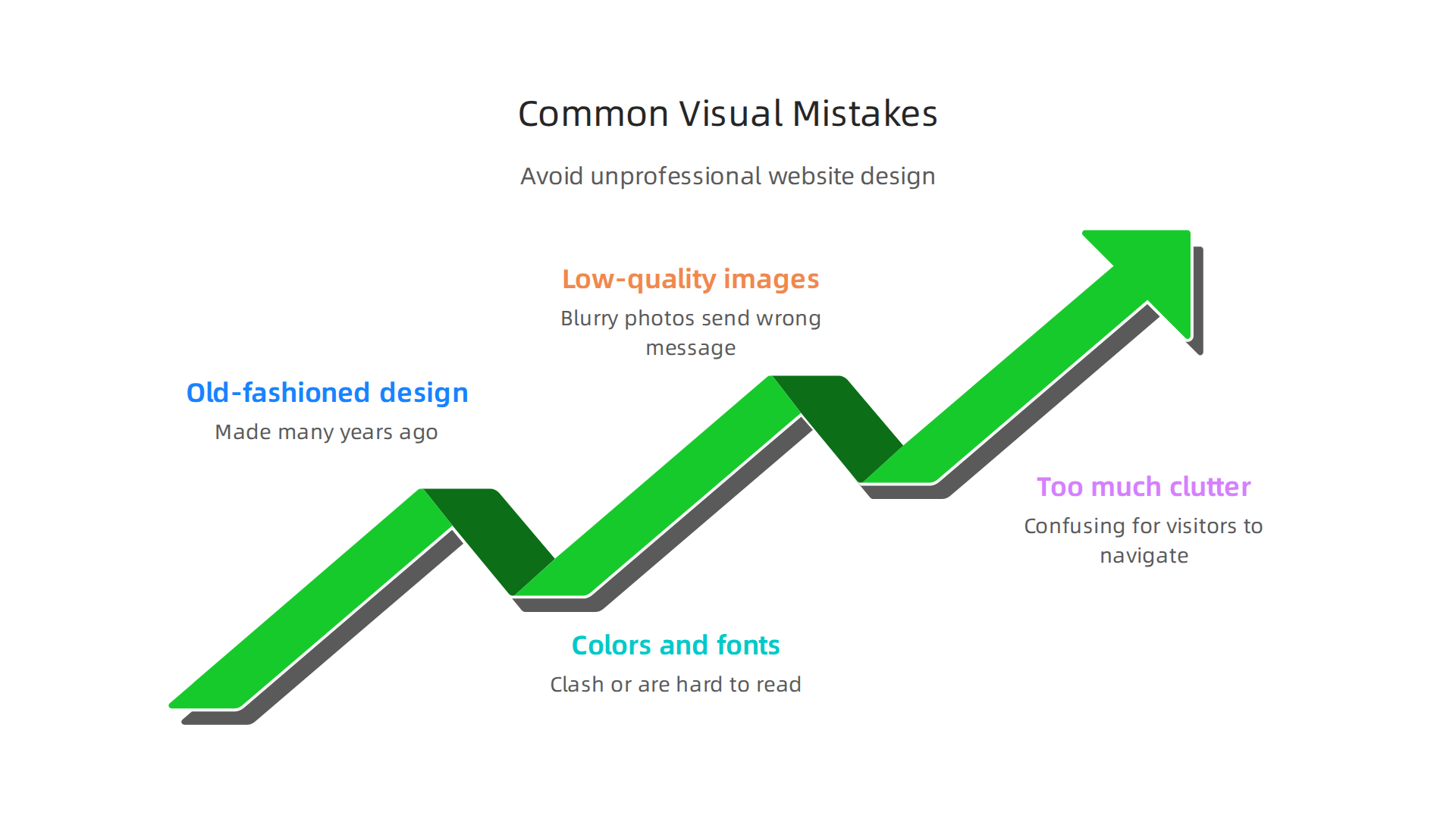
For example:
- Old-fashioned design: If your website looks like it was made many years ago, people might think your firm isn’t modern. In 2026, fresh, clean designs are a must.
- Bad colors and fonts: Colors that clash or fonts that are hard to read can make your site feel messy. Clear, professional choices show you pay attention to details.
- Low-quality images: Blurry photos of your team or office can send a wrong message. High-quality pictures make your firm look professional and trustworthy.
- Too much clutter: A website that has too many things on one page can be confusing. Keeping it simple helps visitors find what they need easily.
These visual issues are common problems when people think about Law Firm Website Redesigns: Seven Common Pitfalls. It’s not just about getting online, but how to design a website that truly reflects your firm’s excellence.
Even when using a simple website builder for small business like a Wix website maker, careful thought about these visual elements is crucial.
Branding: Making Your Website Match Your Expertise
Your website is a big part of your firm’s brand. It needs to align with who you are and what you offer in real life. If your office is sleek and modern, but your website looks cheap, it creates confusion. Your online presence should always match the quality of your legal services.
To build trust, your website should clearly show:
- Professional photos: Good headshots of your lawyers help people connect with your team.

- Clear bios: Easy-to-read descriptions of your lawyers’ experience, specialties, and backgrounds show their expertise.
- Signals of expertise: Don’t hide your achievements! Show off any awards your firm has won, important publications your lawyers have written, or notable cases you’ve handled. These prove your value.
- Consistent messaging: Make sure the words on your website use the same tone and message as your real-world communication.
When your website does a great job of showing your firm’s true expertise, it helps potential clients feel confident in choosing you. This alignment is what modern clients expect. For instance, many leading law firms embrace technology in 2026 to ensure their online image is as strong as their legal practice. Even for e commerce websites, brand alignment is key, and it’s even more vital for professional services.
Beyond just looking good, a website must also work well. Even if your brand shines, bad websites can still hide your expertise if they are hard to use or difficult to find. This often happens because of mistakes in how the website is built, how its content is put together, and how it shows up in search results.
When Good Content Gets Lost: Navigation and Structure Issues
Imagine walking into a beautiful store but not being able to find anything you need. That’s what a website with poor navigation feels like.
- Confusing Paths: If your website doesn’t have a clear menu or easy-to-follow links, visitors might get lost. They won’t know where to go to learn about your services.
- Hidden Services: Important pages, like those about specific types of law you practice (your "practice-area pages"), might be hard to find. If a client is looking for a trademark lawyer safeguards your brand, but that page is buried, they might give up and leave. This is a common flaw in how to design a website if you are not careful.
- Too Much Clutter, Again: Just like bad visuals, too much text or too many options on one page can be confusing. Simple, clear paths help people find what they need.
These problems mean that even if you have great legal advice or important news, people won’t see it. This reduces the trust and value your website should bring.
SEO and Content Mistakes That Make Your Firm Invisible
Having a well-organized website is only half the battle. People need to find it first. This is where SEO, or Search Engine Optimization, comes in.
- Not Using the Right Words: When someone searches for a lawyer online, they use certain words. If your website doesn’t use those words, search engines like Google won’t know to show your site. Many
bad websitesforget to think about what clients are actually searching for. - Generic Content: If your website talks about law in a very general way, it might not catch the eye of someone looking for help with a specific problem. "One-size-fits-all" content often doesn’t answer specific questions, making it less useful for potential clients. Focusing on specific legal services with tailored content helps people find you. Learn more about Best Law Firm SEO Strategies in 2026.
- No Way to Connect: After someone finds your site and learns about your services, what’s next? Many
bad websitesdon’t have clear "lead-capture paths." This means there’s no easy button to call you, send an email, or fill out a form to set up a meeting. This is a huge missed chance to turn a visitor into a client. Even a simplewebsite builder for small businessorWix website makercan include these vital contact points.
In 2026, making sure your website is easy to find and use is just as important as how it looks. If you want to show your legal expertise, your website needs to guide visitors smoothly from finding you online to becoming a client.
Even if people find your website and see your services, the journey isn’t over. Many bad websites fall short when it comes to turning a interested visitor into an actual client. This step is about making it easy for people to reach out and hire you.
Conversion and Contactability Failures: Turning Visitors into Clients
Think about what happens after someone reads about your law firm. Do they know what to do next? Bad websites often make it hard to take that next step.
- Missing Trust Signals: Potential clients want to feel sure they are making the right choice. If your "Contact Us" page doesn’t show things like client reviews, legal awards, or clear pictures of your team, it can feel less trustworthy. People might worry about working with a firm they don’t know much about.
- Complicated Forms: Imagine a client who needs urgent help filling out a long, confusing online form. If the form asks too many questions or is hard to understand, they might just leave. A poor intake form is a big problem that can stop new business.
- Slow to Respond: What happens after someone fills out a form or sends an email? If your firm is slow to get back to them, they might think you’re not interested or too busy. In today’s fast world, quick follow-up is key to winning new clients. Websites need to guide visitors to contact you, but the real magic happens in how you respond.
Simple Fixes for Better Client Connections
Luckily, you don’t need a complete overhaul or a fancy e commerce websites setup to fix these problems. Even a website builder for small business can help you improve. Here are some easy ways to make your website better at getting new clients:
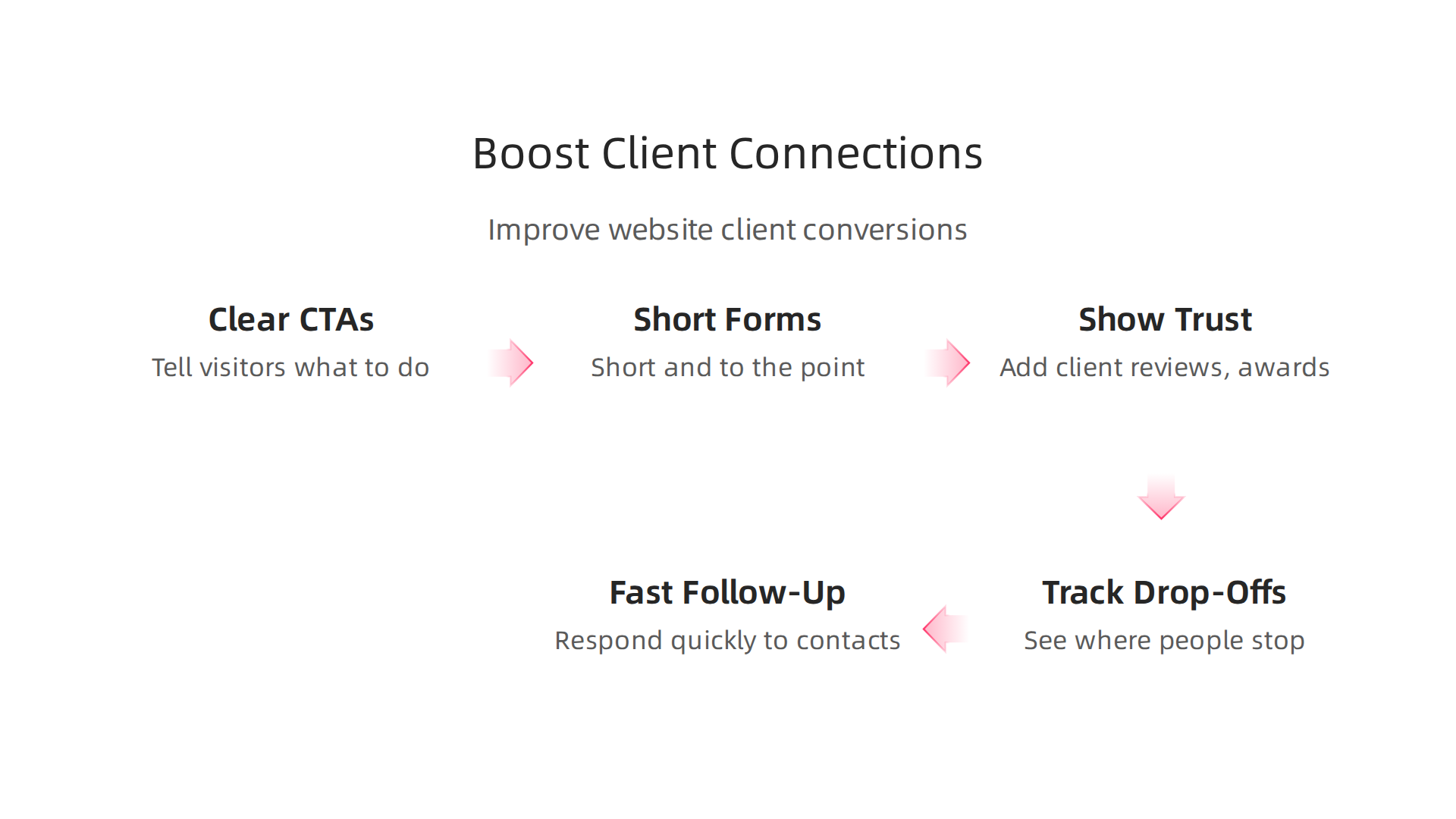
- Clear Calls to Action (CTAs): Make sure every important page has clear buttons or links that tell visitors what to do. Phrases like "Schedule a Free Consultation," "Contact Our Team," or "Get Started Today" work well. These clear directions help people move forward.
- Simplify Contact Forms: Keep your contact forms short and to the point. Ask only for the most important information, like their name, email, and a brief message about their problem. You can always ask for more details later. Making it easy for people to reach out is how to design a website that works.
- Show Trust and Authority: Add client testimonials, case study highlights, or awards to your contact pages. This builds trust right when people are deciding to reach out. Also, consider having a clear spot that shows how you handle fees, if that’s something your clients often ask about. This transparency helps build confidence. You can also look at
2026 Legal Marketing Trends You Should Already Be Usingto see what else helps build client trust. - Track Form Drop-Offs: Use tools to see where people stop filling out your forms. This can show you which parts are confusing or too long. Fixing these small issues can make a big difference in how many people complete the form. This is an important step in making sure your website doesn’t have hidden problems that lose you leads. Learning about effective client intake can also boost your firm’s success, as shown in the video, What Law Firms Must Do to Win with SEO, AI & Intake.
- Fast Follow-Up: Make sure your team has a plan to respond quickly to new contacts. An automated email confirming receipt can also help set expectations.
By focusing on these practical steps, your website can do a much better job of turning visitors into happy clients.

After all, a great website isn’t just about looking good; it’s about connecting with people who need your help.
Beyond connecting, a good website also acts as a responsible digital face for your law firm. In 2026, it’s not enough for a website to just look good or get clients. It also needs to follow important rules about who can use it, how it handles private information, and other laws. Ignoring these can turn good intentions into problems for your law firm.
Accessibility Issues: Can Everyone Use Your Site?
Imagine someone needing legal help but they can’t use your website because it’s poorly designed. This is an accessibility problem. Bad websites often forget that people with disabilities use the internet too. For example, if someone uses a screen reader to hear what’s on a page, but your website’s images don’t have descriptions, they can’t understand them. Or if someone can’t use a mouse, they might need to use a keyboard to click through your site. If your website isn’t built for this, they’re stuck.
In 2026, rules like the Web Content Accessibility Guidelines (WCAG) are very important. The ADA also has new rules for web content to make sure everyone can access information online, including those with disabilities. Law firms, especially, need to make sure their websites are easy for everyone to use. It’s not just the right thing to do; it also helps you reach more clients and avoid possible legal issues. Making your site accessible is key to how to design a website that serves all potential clients, as explained in why website accessibility is key for law firm growth in 2026.
Privacy and Data Problems: Keeping Client Info Safe
When someone visits your website, especially a law firm’s, they might share personal information. Maybe they fill out a contact form or just browse. Your website needs to handle this information carefully. Bad websites often don’t have clear rules about how they use cookies (small files that remember things about your visit) or what they do with client data.
- Cookie Banners: Do you have a clear banner that asks visitors if they agree to your use of cookies? Many places have laws that require this.
- Privacy Policy: Is your privacy policy easy to find and understand? It should tell people what information you collect and how you use it.
- Data Security: If you collect client information, like their case details, how secure is it? Protecting this data is a big deal for a law firm and prevents major trust issues.
Not following these rules can lead to big problems, including fines and losing client trust. For a general guide, you can check a Website Compliance Checklist 2026 to stay legal and accessible.
Simple Steps to a Better, Safer Website
You don’t need to be a tech expert to fix these issues. Even if you used a website builder for small business to create your site, you can improve it.
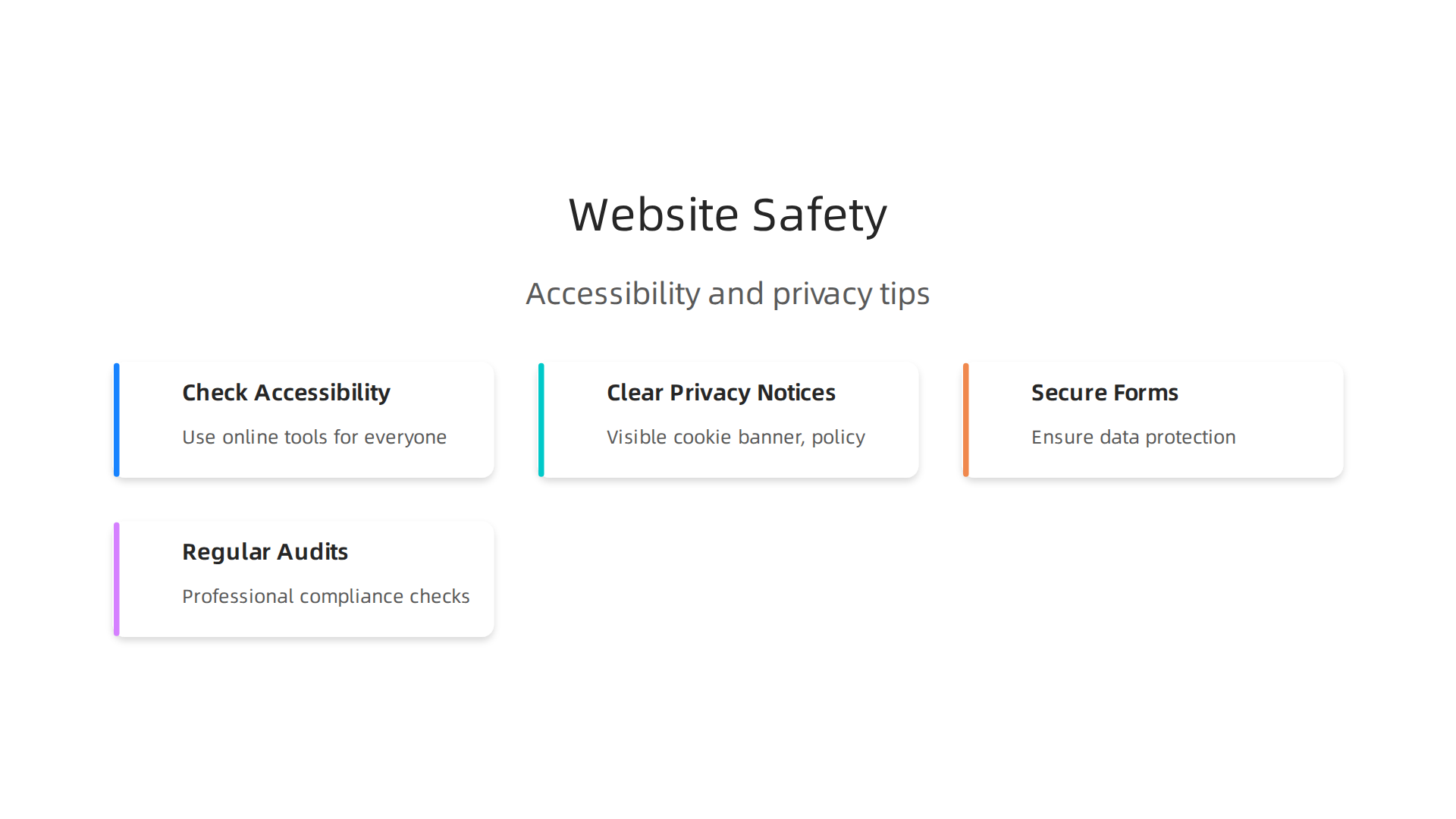
- Check for Accessibility: Use online tools to check if your website can be easily used by everyone. Look for things like clear text, good color contrast, and keyboard navigation. The Fact Sheet: New Rule on the Accessibility of Web Content from ADA.gov gives specific requirements.
- Clear Privacy Notices: Make sure your cookie banner is visible and your privacy policy is easy to find. It should be written in plain language, not confusing legal talk.
- Secure Forms: If you have online forms, make sure they are secure. Your website developer can help with this. Only ask for information you truly need at the start.
- Regular Audits: Think about getting a professional to check your website for compliance issues every so often. This can save you trouble down the road.
Making your law firm’s website accessible and compliant is not just about avoiding risks; it builds trust with clients and shows you are a responsible, forward-thinking firm in 2026. Staying up-to-date with legal technology can help you manage these aspects better.
If you’re interested in how technology is changing the legal world and helping firms stay compliant, there’s a great resource you should explore.
The AI Newsletter Worth Reading offers clear daily AI updates from The Deep View Newsletter, which can help you understand these advancements.
While making sure your website follows rules is key, there’s another set of problems that can hurt your law firm: how fast and how well your website actually works. Even if your website looks good, a slow or broken site can turn clients away. This is where bad websites truly fall short, causing frustration and missed chances.
Why Speed and Mobile Matter
Imagine clicking on a law firm’s website and it takes forever to load. What do you do? Most people just click away. This slow loading time is a big problem for bad websites. In 2026, people expect websites to be super fast. If your site is slow, it doesn’t just annoy visitors; it also makes it harder for search engines like Google to show your site to new clients. Fast websites are often seen as more trustworthy and professional, which is important for a law firm.
Another big thing is how your website looks on different devices. Most people use their phones to search for information, including legal help. If your website looks messy or is hard to use on a small phone screen, it’s a huge barrier. A good website must change its look to fit any screen, from big computers to tiny phones. This is called mobile responsiveness. For law firms, having a website that works well on mobile is vital for attracting and keeping clients, as it directly impacts user experience and how many visitors become clients. You can see more about why user experience matters in a recent article on Why Website Design and User Experience Will Make or Break Law Firms in 2026.
What is Technical Debt?
Sometimes, websites are built on old systems or with quick fixes that cause problems later. Think of it like a rickety old building that needs constant repairs. This is called technical debt. Maybe your site was made years ago with an older website builder for small business that isn’t updated anymore. Or perhaps it uses a legacy CMS (Content Management System) that’s hard to change or speed up. This technical debt makes your website slower, less secure, and much harder to update. It also affects how to design a website for future growth, making it costly and risky to improve. Ignoring these issues means your site might not perform as well as those of leading firms who embrace modern solutions, as seen in how leading law firms Mintz, Morgan, Rafferty, and Rimon embrace technology in 2026.
How to Make Your Website Faster and Safer
You can take steps to fix these issues and reduce technical debt.
-
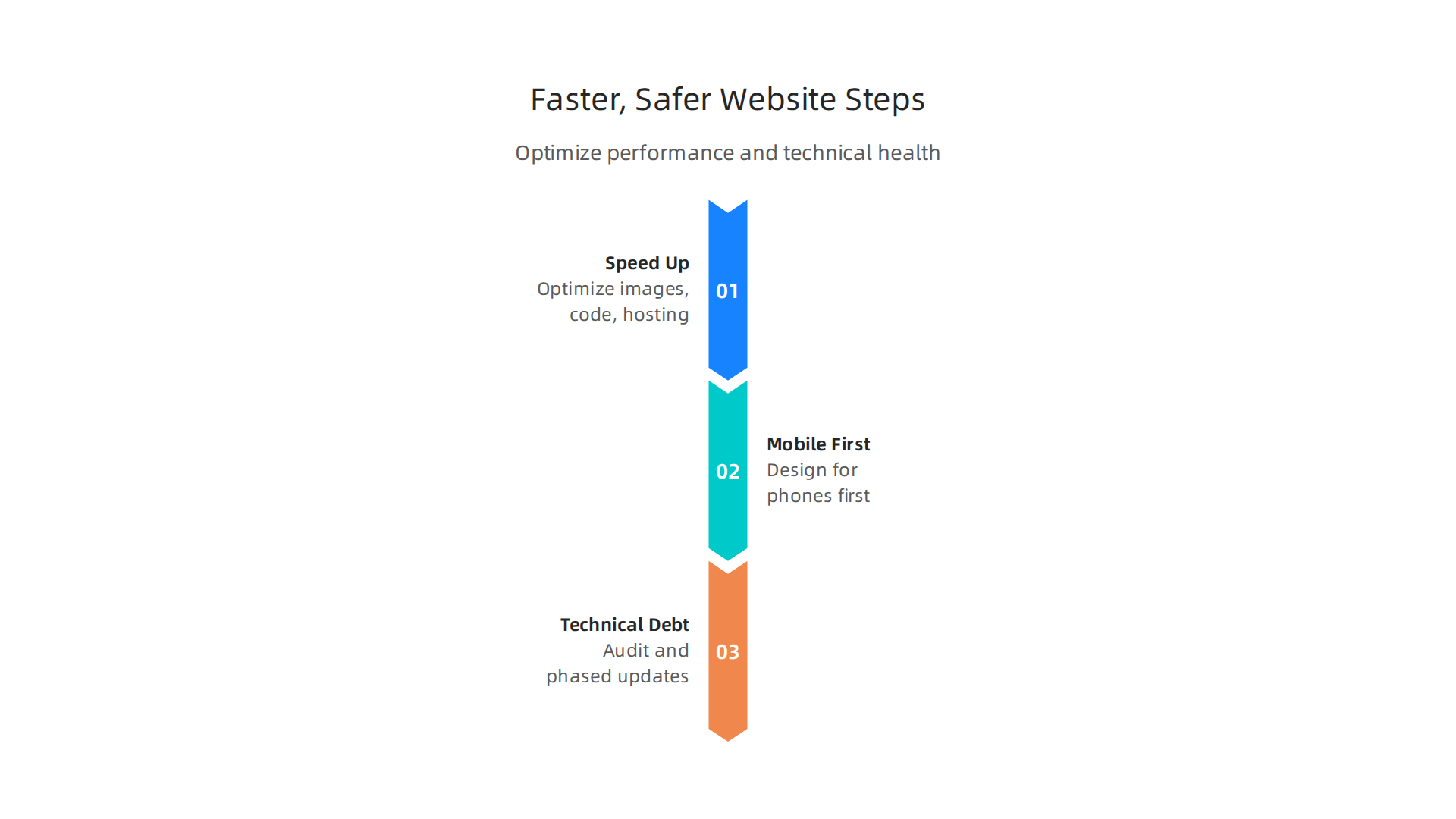
Speed Up Your Site:
- Compress Images: Make sure pictures on your site are not too big. Smaller files load faster.
- Clean Up Code: Sometimes, websites have extra code that slows them down. A web developer can help clean this up.
- Better Hosting: Like renting a faster highway for your website’s traffic. A good web host can make a big difference.
-
Ensure Mobile-First Design:
- Make sure your website looks great and is easy to use on phones first. This is often called "mobile-first" design. This approach helps you capture the majority of potential clients browsing on the go.
-
Address Technical Debt with a Plan:
- Audit Your Site: Find out exactly where the problems are. A website audit can show you what needs fixing, as outlined in a How to audit a law firm website: the complete checklist for 2026.
*   **Phased Updates**: You don't have to fix everything at once. Make a plan to update parts of your website bit by bit. This can be less risky and more budget-friendly than a complete overhaul.
*   **Consider a Redesign**: If your site is very old, thinking about a full [law firm website redesign](https://www.luniq.io/en/resources/blog/law-firm-website-redesign-the-2026-client-winning-guide) might be the best option in 2026. This allows you to start fresh with modern tools and best practices.
By focusing on performance and getting rid of technical debt, your law firm’s website will not only attract more visitors but also give them a much better experience. This helps build trust and shows your firm is up-to-date and ready for the future.
By focusing on performance and getting rid of technical debt, your law firm’s website will not only attract more visitors but also give them a much better experience. This helps build trust and shows your firm is up-to-date and ready for the future. But making a website good is just the start. You need a clear plan to keep it that way, so it doesn’t turn into one of those bad websites again. This is where website governance comes in.
Measurement, governance and continuous improvement to avoid ‘bad websites’ returning
Website governance is like having a rulebook and a team to make sure your website always stays in top shape. It’s about setting up clear ways to manage your site, from who writes new articles to who makes sure it’s secure. Think of it as a set of policies and procedures that keep your website working well for a long time. This is really important for law firms because your website is a key part of your business in 2026. A good governance plan helps avoid bad websites by ensuring everything is always up to date and following the best rules.
A strong website governance framework includes many things, like policies and practices for content and performance, and helps keep your site from getting messy or slow again. It makes sure that your online presence always meets your firm’s goals and helps clients find you easily Website Governance Framework: What It Is + Why It Matters in 2026.
Who Helps Keep the Website Good?
To keep your website from becoming one of the bad websites, different people in your firm need to work together:

- Marketing Team: They usually handle what goes on the website, like blog posts and service descriptions. They make sure the words are clear and helpful for clients.
- IT Team (or your web experts): They handle the technical stuff. They make sure the website stays fast, secure, and works well on all devices. They also help with
how to design a websitefor future needs. - Partners and Leadership: They set the main goals for the website. They make sure the website helps the firm grow and stays true to the firm’s values.
How to Check if Your Website is Still Good
You can’t just fix your site once and forget about it. You need to keep checking it regularly. Here’s how:
-
Watch the Numbers (KPIs):
- Website Speed: How fast does your site load? Keep checking this.
- Mobile Use: Do people use your site easily on their phones?
- Visitor Engagement: How long do people stay on your site? Do they visit many pages? This helps you see if your content is interesting.
- Client Inquiries: How many people contact you through the website? This shows if your site is helping you get new clients.
-
Regular Testing:
- Speed Tests: Use free online tools to check your website’s speed every month.
- Mobile Checks: Look at your website on different phones and tablets to make sure it looks right.
- Security Scans: Make sure your site is safe from online threats. This is super important for a law firm.
Keeping Your Content Fresh
Content governance is about making sure all the information on your website is correct, up-to-date, and useful. For law firms, this means reviewing legal articles, contact information, and service descriptions often Content Governance Is a Must for a Successful Content Strategy.
Here’s a simple checklist:
- Content Inventory: Make a list of all your website pages and what’s on them.
- Review Schedule: Plan when you will check each page. Maybe every three, six, or twelve months.
- Update or Remove: If information is old or wrong, update it. If a page is no longer needed, take it down. This prevents outdated information from giving clients the wrong idea.
By doing these things, your law firm can avoid having bad websites and instead keep a strong online presence that truly helps your business grow. Staying updated on technology trends can also give you a leg up.
Get clear daily AI updates from The AI Newsletter Worth Reading.
Summary
This article explains how a poor law firm website damages client acquisition and the firm’s reputation, and it shows what to fix first. It covers first impressions and branding errors, navigation and SEO gaps that hide your services, conversion and contactability failures that lose leads, and legal obligations like accessibility and privacy. You’ll learn practical, prioritized fixes — from clear CTAs and simpler intake forms to image compression, mobile-first design, and phased technical updates — plus how to measure results. The piece also explains governance: who should own site health, which KPIs to track, and why regular audits prevent old problems from returning. After reading, lawyers and operations teams will be able to diagnose their site’s biggest weaknesses, apply immediate improvements, and build a plan to keep their website performing and compliant.