
Build a Powerful Marketing Strategy for Law Firms in 2026

It is harder than ever for legal practices to get noticed and attract new clients in 2026. The market is very crowded, and there are many rules about how law firms can advertise their services. Because of this, many legal teams struggle to stand out and reach the people who truly need their help. Clients today expect more from law firms, wanting clear contact information, quick replies, and regular updates on their cases, as noted in a recent survey on What Clients Want from Law Firms in 2026.
This is why it is so important to make a marketing strategy that is disciplined and well-thought-out. Without a clear plan, efforts to market your services can feel like guesswork. You might spend money and time on things that do not bring in the right clients. But a strong marketing strategy helps modern legal practices overcome these challenges.

Here are the main benefits of having a documented marketing strategy:
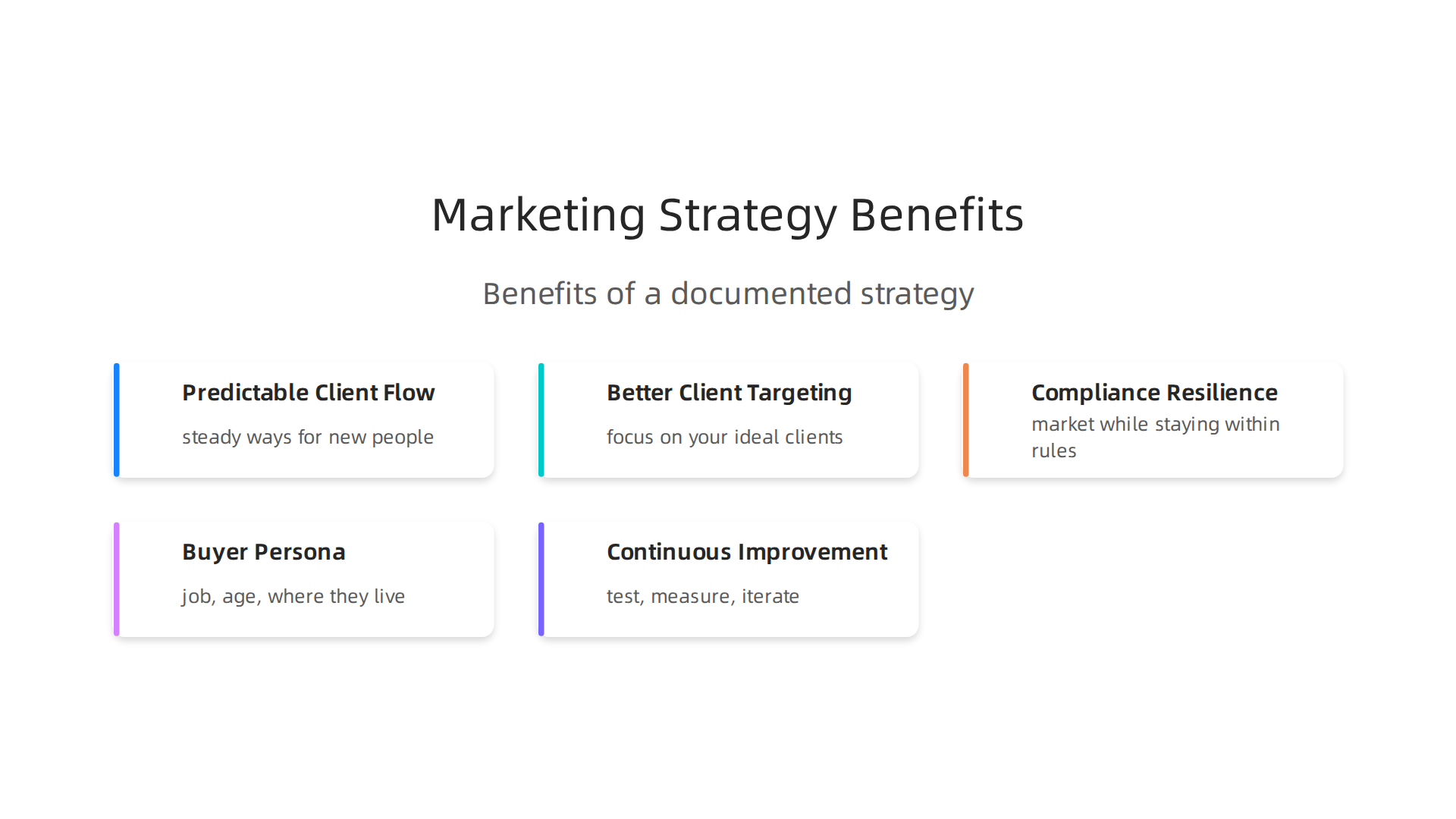
- Predictable Client Flow: A good strategy helps you know what to expect. Instead of just hoping clients will call, you can create steady ways for new people to find your firm. This means a more reliable stream of work and less worry about where the next case will come from.
- Better Client Targeting: A smart marketing plan helps you focus on your ideal clients. This means you will not waste time and money trying to reach everyone. Instead, you will speak directly to the people who truly need your specific legal services. It involves understanding different groups of people and creating client personas, which are like detailed pictures of your perfect client, helping you to segment the market effectively to find those who need your help most, as explained in research on How Law Firms Can Use Market Segmentation and Buyer Personas.
- Compliance Resilience: The legal world has strict rules about advertising. A well-planned strategy helps you market your firm while staying within all these rules. This keeps your practice safe from fines or problems, giving you peace of mind.
Overall, having a strong marketing plan is not just a nice-to-have, it is a must-have for any legal practice wanting to grow and succeed in 2026. If you are a legal professional looking to enhance your firm’s growth and understand how strategic marketing can make a difference, consider learning more about the role of a marketing strategist for law firms.
To stay on top of the latest advancements, including how AI is shaping industries and professional practices, consider signing up for a valuable resource.
Get clear daily AI updates from The AI Newsletter Worth Reading.
To truly make a marketing strategy that works for your legal practice, you must first know what makes your firm special and who you want to help. This means figuring out your unique value and understanding your ideal clients very well.
Your Firm’s Unique Value
Think about what makes your law firm different from all the others. What problems do you solve better than anyone else? What special skills or experiences do your lawyers have? This is your unique value. It is not just about what you do, but how you do it and why that matters to your clients.
For example, maybe your firm is known for being extra kind and understanding, or for handling very tricky cases with great success. When you know your unique value, you can tell potential clients why they should choose you. This helps you stand out in a crowded market.
Defining Your Target Client Profiles
Once you know what makes your firm special, the next step is to understand who needs your help the most. These are your target clients. Instead of trying to reach everyone, you focus your marketing efforts on people who truly benefit from your unique skills. This is a smart approach for any legal practice, including effective marketing strategies for small business.
To do this, you create "buyer personas." Think of a buyer persona as a detailed picture of your perfect client. It includes things like:

- Who they are: Their job, age, where they live, and family life.
- What they need: The legal problems they are facing.
- What they want: Their goals for a legal outcome.
- What worries them: Their biggest fears or challenges when looking for legal help.
Creating these detailed pictures helps you speak directly to your ideal clients in a way that truly connects with them.

To begin defining your ideal client, you can give your persona a name and list their key details, as suggested by advice on Ideal Clients and the Client Persona (2026).
Mapping the Client Journey
After creating your buyer personas, the next step is to map out their "client journey." This is like drawing a map of all the steps a client takes from realizing they need a lawyer to becoming a happy, long-term client.
A client journey map helps you see things from your client’s point of view. It shows:
- How they find you: Do they search online? Get a referral?
- How they learn about you: What information do they look for on your modern website design or in reviews?
- How they decide to contact you: What makes them pick up the phone or fill out a form?
- What happens during their case: How do you keep them informed and supported?
By mapping this journey, you can find ways to make every step better and more helpful for your clients. This makes their experience smoother and builds trust. Building a client journey mapping practice is key for adapting to how client experience is reshaping legal services in 2026, as noted in a recent State of CX in Legal Benchmark Report. Understanding this journey allows you to showcase your firm’s expertise and value clearly.
After you know your ideal clients and how they move through their journey, the next big step is to set clear goals for your marketing efforts. You need to know what success looks like so you can truly [make a marketing strategy] that works.
Set clear, measurable marketing goals for legal services
Setting goals means deciding what you want your marketing to achieve. It is not enough to just say "I want more clients." You need to be specific and make your goals easy to measure. This helps you track your progress and see what’s working and what is not. Think of it like planning a trip: you need to know your destination and how you’ll know when you get there.
Your marketing goals should aim for three main areas:

- Getting new clients: How many new clients do you want each month? How many people do you want to call your office or fill out a form on your website? These are your client acquisition goals.
- Keeping current clients happy: Happy clients often come back or tell their friends about you. How many clients do you want to keep? How many referrals do you want to get? These are your client retention goals.
- Making a good profit: Your marketing should bring in more money than it costs. What is the return you want on your marketing investment? This is about profitability.
To make these goals real, you use Key Performance Indicators (KPIs). KPIs are like scorecards that show you if you are winning. For example, if your goal is to get more new clients, your KPIs might include:
- Conversion rates: How many website visitors actually become leads? How many leads become paying clients? Average law firms convert about 2-4% of website visitors, but top firms can get 8-12% or more, according to The 2026 Law Firm Marketing Benchmarks.
- Cost per lead: How much does it cost you to get one person to contact your firm?
- Return on investment (ROI): For every dollar you spend on marketing, how many dollars come back to your firm? You can learn more about how to measure these costs and benefits in a guide on Marketing ROI for Lawyers: Measure, Track & Improve Performance.
It is important for your marketing goals to fit with your firm’s larger business plans. If your firm wants to grow a certain area of law, your marketing should focus there. These goals also need to respect all the rules and ethics that lawyers must follow. Having a clear plan and understanding how to measure success helps you use your resources wisely, whether you are building a [portfolio website design] or figuring out other [marketing strategies for small business].
To dive deeper into the strategies that drive firm growth, consider exploring how a marketing strategist for law firms can help. By setting smart goals and tracking your progress, you ensure your marketing efforts lead to real results.
The AI Newsletter Worth Reading: Get clear daily AI updates from The Deep View Newsletter.
To make your marketing goals happen, you need a smart plan for what you share with people. This is called a content strategy. It means deciding what kinds of information you will create and how you will share it to reach your ideal clients. A good content strategy is a key part of how you will [make a marketing strategy] work.
Build a content strategy tailored to legal audiences
For law firms, your content should show off your legal smarts and help people understand tricky legal ideas. Here are some types of content that really help legal buyers:
- Thought Leadership: This is where you share your deep knowledge on legal topics. You can write articles explaining new laws or how court cases might affect businesses. This shows you are an expert.
- Case Studies: These tell stories about how you helped real clients. For example, you can explain a problem a client had and how your firm solved it. These stories build trust.
- Client Alerts: New laws or big legal changes happen often. Sending out short updates to clients keeps them informed and shows you are on top of things.
- Educational Articles: Many people search online for answers to legal questions. Writing simple articles that answer these common questions can bring new people to your website.
Planning Your Content
You can’t just make content whenever you feel like it. You need a plan. This plan is often called an editorial calendar. It helps you decide what topics to cover, when to publish them, and who will write them. Thinking ahead helps you keep sharing useful information all the time, which is important for any [marketing strategies for small business].
When planning, think about these things:
- SEO Basics for Legal Topics: This means using words and phrases that people search for online when they need legal help. For example, if many people search for "divorce lawyer near me," you would want your content to use similar phrases so search engines can find you. A good editorial calendar will connect your main service pages with educational articles that help with SEO for those pages, according to tips for Legal Editorial Calendar Ideas for Law Firms.
- Repurposing Old Work: Lawyers often do a lot of research for cases and write detailed legal briefs. You can turn parts of this work into helpful blog posts or articles for your website. This saves time and makes the most of what you already have. Creating briefs from client questions is a smart way to start, as explained in a 2026 guide on Law Firm Content Marketing: The 2026 Strategy Guide.
- Consistent Schedule: It’s better to publish good content regularly than to publish a lot all at once and then stop. Many firms aim for 2-4 quality posts a month to stay top of mind, as suggested by Law Firm Content Marketing Strategies.
A well-planned content strategy helps you build a strong online presence. It also improves your website, whether you are aiming for a sleek [modern website design] or a polished [portfolio website design] to showcase your firm’s abilities.
To stay updated on how AI is shaping legal technology and content creation, consider checking out The AI Newsletter Worth Reading for clear daily updates. Learning how to compare the top website building platforms for law firms in 2026 can also help you find the right place to host all your valuable content.
After you plan out the kinds of information you will share, the next step in how to make a marketing strategy work is choosing where to share it. This means picking the right ways, or "channels," to reach potential clients. For law firms, it is extra important to choose channels that build trust, follow legal rules, and bring in new clients efficiently.
To pick the best channels, think about these things:
- How many people can you reach? (Reach)
- How much will it cost? (Cost)
- Are there any special rules for lawyers to follow? (Compliance Risk)
- How likely is it that people will become paying clients? (Conversion)
Let’s look at some key marketing channels for law firms:

Your Website: Your Firm’s Online Home
Your website is the most important channel. It is where potential clients learn about your firm, your experience, and how you can help them. A well-designed site with a clear modern website design and a strong portfolio website design shows off your professionalism. It should be easy to use and filled with helpful information. Actually, a bad website can drive clients away and hurt what people think of your firm, as explained in an article about why bad law firm websites drive clients away and damage credibility.
SEO (Search Engine Optimization)
SEO helps your website show up higher in Google and other search results when people look for legal help. This is a long-term plan. It means creating good content and making sure your website is set up so search engines can easily find and understand it. While it takes time, SEO can be very cost-effective for getting new clients. For example, the cost to get a lead through SEO can be as low as $50 to $150, but it can also be as high as $456, depending on the firm and area of law, according to the 2026 Law Firm Marketing Benchmarks report.
Paid Media (Ads)
Paid media means running ads, like Google Ads, that appear at the top of search results. These ads can bring quick results. However, they are often more expensive than SEO. The average cost per lead for paid ads can range from $150 to $400 for law firms, but it can be even higher. Still, paid search campaigns in the legal field convert at a healthy 7.8%, meaning a good number of clicks turn into potential clients, according to a 2026 report on Legal Marketing Statistics Backed by Real Data 2026.
Referrals and Events
Referrals are when happy clients or other lawyers tell people about your firm. This is a very powerful way to get new business because it comes with built-in trust.
Events mean attending or hosting gatherings where you can meet potential clients or partners face-to-face. This could be local business meetings or legal conferences.
Balancing Your Strategies
To truly make a marketing strategy successful, it is smart to use a mix of these channels. Paid ads can bring in new clients quickly. But for long-term growth, focusing on SEO, a great website, and referrals creates a strong foundation. You are building trust and authority over time, which is key for marketing strategies for small business. Thinking about how to make these pieces fit together is what a good marketing strategist for law firms helps you do. When evaluating different law firms, leaders often look at how well firms balance these short-term and long-term marketing efforts, as noted in insights on how legal leaders evaluate law firms for strategic growth.
After choosing your marketing channels, the next big step is figuring out how much money to spend and how to know if it’s working. This is all about budgeting, measuring your efforts, and showing your firm’s leaders that the money spent is bringing in good results, also known as Return on Investment (ROI).
Budgeting for Your Law Firm’s Marketing
When you want to make a marketing strategy work, setting a budget is super important. You need to decide how much money you can spend on things like your website, SEO, ads, and events. Law firms often set aside a part of their total earnings for marketing. For example, some firms might put 2% to 10% of their revenue into marketing efforts, according to a 2026 guide on Law Firm Marketing.
It is smart to think about where your money will go. Many firms divide their budget, putting a good chunk into SEO (around 45%) and another part into paid ads (about 30%), as shown in some Law Firm Marketing Benchmarks for 2026. When you know how much you can spend on each channel, it helps you plan better and make sure you’re using your money wisely.
Showing Your Marketing is Working (ROI)
Once you’re spending money, you need to know if it’s actually helping your firm grow. This is where measuring comes in. You want to see how many new clients come from your marketing efforts and how much money they bring in compared to what you spent. This is called demonstrating ROI.
To do this, you need to track a few things:
- Cost Per Lead (CPL): How much it costs to get one potential client to show interest. This can be different for each marketing channel. For instance, SEO might have a CPL of $50 to $150, while paid ads could be $150 to $400 for law firms on average, based on The 2026 Law Firm Marketing Benchmarks.
- Conversion Rate: How many interested people actually become paying clients.
- Revenue from New Clients: How much money these new clients bring in.
To properly measure your marketing efforts, you need to follow all costs, like ad spending, software, and fees for creating content. Then, you look at the total income from the new clients that came from those efforts. Learning how to properly measure, track, and improve performance is key for lawyers. Actually, the average law firm can see a marketing ROI of about 526% over three years, which shows it can be a very good investment if done right, as reported by 92 Legal Marketing Statistics for 2026.
To make marketing strategies for small business or any law firm more successful, it is helpful to look at how different types of law firms get their money back. Some practice areas, like criminal defense, might see a marketing ROI of 2 to 6 times their spending, according to Legal Marketing Benchmarks 2026.
Reports and Dashboards for Leaders
Your firm’s leaders need to trust that marketing is helping the business. This means you should set up clear ways to show them the results. Creating simple dashboards and reports that update regularly helps everyone see what is working and what might need changes. These reports should clearly show the CPL, how many leads turn into clients, and the overall ROI. This way, leaders can make smart choices about where to put their marketing budget in the future and how to unpacking the 2026 legal market landscape report.
As technology keeps changing, understanding how AI impacts legal marketing is crucial. Get clear daily AI updates to help guide your strategic thinking.
The AI Newsletter Worth Reading
After learning how to show that your marketing money is well spent, it is also very important to make sure your marketing is done the right way. This means following all the rules and being honest. For law firms, this means looking closely at ethical rules, privacy laws, and managing any risks.

Compliance, ethics, and risk management for legal marketing
When you make a marketing strategy for your law firm, you must follow strict rules. These rules are put in place by different states and the government to protect people and make sure lawyers act fairly. Ignoring these rules can cause big problems for your firm.
Marketing Rules for Lawyers
Every state has its own rules for how lawyers can advertise. For example, in Massachusetts, lawyers cannot pay someone just for recommending their services, except for normal advertising costs, as stated in their rules of professional conduct. New York also has strict lawyer advertising guidelines that say ads cannot be false or misleading.
Also, if you want to use what clients say about you, like endorsements or testimonials, there are rules for that too. For example, New Jersey has an opinion on how to use client endorsements and testimonials to make sure they are truthful.
Another area getting a lot of attention in 2026 is "lead generation" for legal services. Some places, like Colorado, now have laws to prohibit lead generation legal marketing if it’s considered a deceptive trade practice. These specific rules mean that a law firm’s marketing efforts must always be clear and honest.
Protecting People’s Privacy
In today’s digital world, privacy is a huge deal. Your law firm’s marketing strategies for small business or large firms must protect the personal information of potential clients. There are important laws like the California Consumer Privacy Act (CCPA), which saw new amendments to the CCPA take effect in 2025. This law gives people more control over their data.
Also, if your marketing targets children under 13, you must follow the Children’s Online Privacy Protection Rule (COPPA). This rule from the FTC sets strict rules for collecting information from kids online. At a federal level, there are also efforts to create more general Online Privacy laws to protect consumer data across different states. Staying up to date on these laws, like the Louisiana privacy law passed in 2026, is key.
Working with Outside Help (Vendor Due Diligence)
Many law firms use outside companies for their marketing, like those that build websites or run ad campaigns. It’s vital to make sure these outside companies also follow all the rules. You need to perform due diligence on them. This means checking if they are reliable, have good security, and understand privacy laws. For example, when evaluating vendors, you should look at how they protect sensitive data and ensure their actions comply with all necessary privacy laws, as highlighted in guidance on vendor compliance with privacy laws.
Making sure your partners are compliant helps you avoid risks and keeps your firm’s reputation strong. Taking these steps helps to make a marketing strategy that is both effective and ethical. To ensure your firm is making smart technology choices for its various needs, it can be useful to learn how to choose the best new legal tech for law firms in 2026.
To truly grow your firm and reach more clients, you need to make a marketing strategy that can keep up. This means looking at the best tools, how your team is set up, and always finding ways to do better.
Using Technology and the Right Team
When you want to scale your marketing, think about the technology you use and how your team works. For many law firms, deciding between an in-house team, an outside agency, or a mix of both is key.
- Small Internal Team: If you have a small firm or just starting, a small internal team can be great. One person or a few staff members can manage your marketing directly. This works well for marketing strategies for small business where you want hands-on control. They can focus on updating your website, maybe doing some basic social media, and creating content like blog posts.
- Outside Agency: For bigger firms, or if you need special skills like search engine optimization (SEO) or advanced social media, an outside marketing agency can help. They bring experts and the latest tools. This allows your firm to grow its marketing reach without hiring many new people.
- Hybrid Model: Many firms choose a mix. They might have a small internal team for daily tasks and basic content, then hire an agency for bigger projects, like launching a new modern website design or building a new client portfolio website design. This way, you get the best of both worlds.
No matter your team setup, technology is vital for scaling. Tools like content calendars are a must. A good content calendar helps you plan what to publish, when, and who is responsible, making sure your marketing efforts are consistent and can grow with your firm. It helps create a rhythm that your firm can truly keep up with, as highlighted in guides for a content calendar for law firms.
Always Getting Better: Test, Measure, and Change
Marketing is not a one-and-done task. To scale effectively, you need a cycle of continuous improvement. This means:
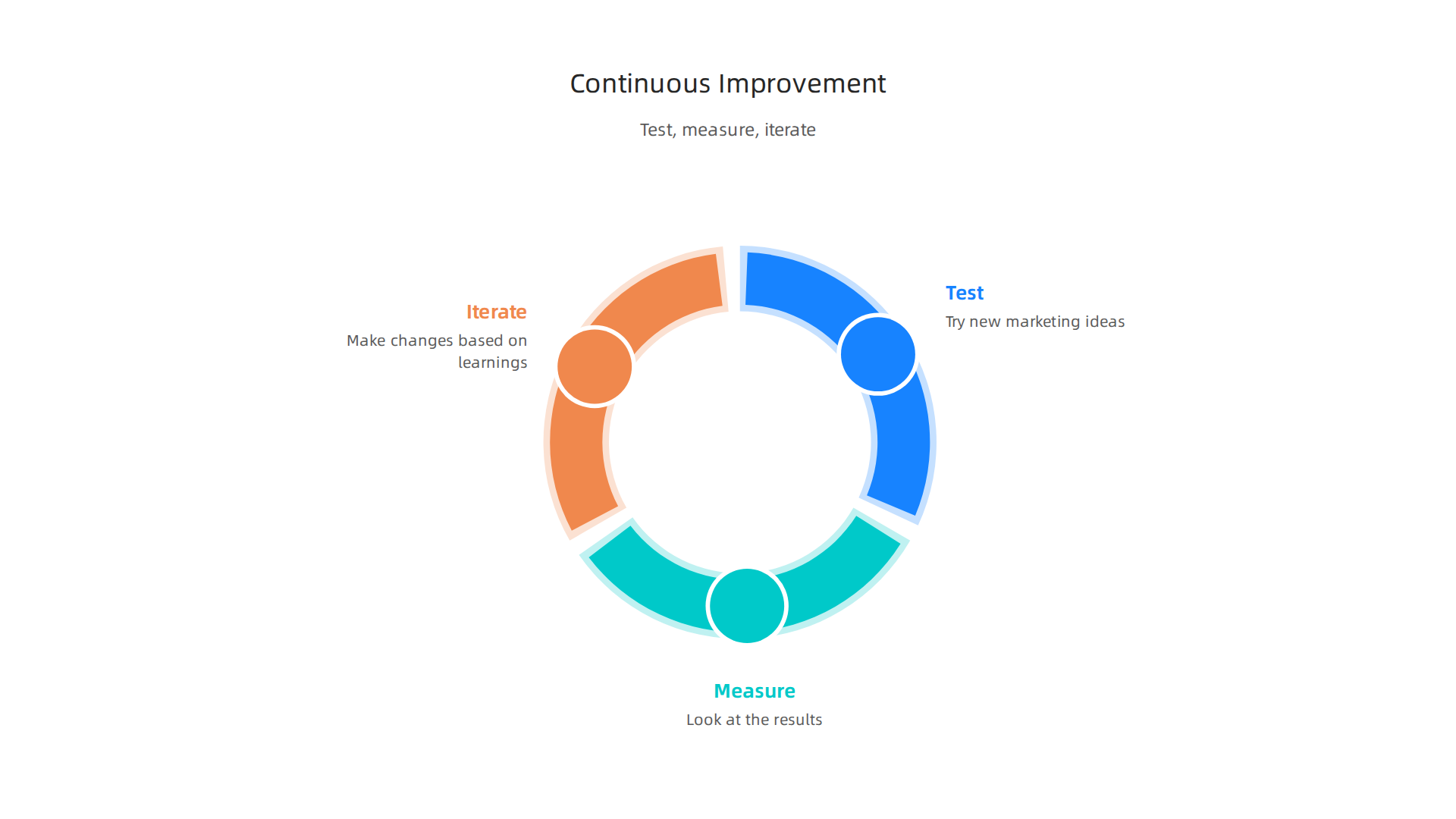
- Test: Try new marketing ideas. This could be a new type of ad, a different blog topic, or a new way to share your message.
- Measure: Look at the results. How many people saw your ad? Did your blog post bring in new website visitors? What actions did they take? Use data to see what worked and what didn’t.
- Iterate: Based on what you learned, make changes. If an ad worked well, do more of that. If a blog topic didn’t get much attention, try a different angle next time. This constant adjusting helps you refine your marketing strategy.
It’s also important to have a clear plan (governance) to keep all your marketing efforts moving in the same direction. This ensures that every test and change aligns with your firm’s main goals.
Staying informed about new technologies, especially AI, can give your firm an edge in scaling and improving your marketing.
Get clear daily AI updates from The AI Newsletter Worth Reading.
Summary
In a crowded, highly regulated marketplace, a disciplined, documented marketing strategy is essential for law firms that want steady growth in 2026. This article walks through the full process: clarifying your firm’s unique value, defining target client personas, mapping the client journey, and setting specific goals with KPIs. It explains how to build a practical content plan, choose the right channels (website, SEO, paid media, referrals), and allocate a budget that delivers measurable returns. The guide also covers compliance, privacy, vendor due diligence, and how to scale using the right mix of internal teams, agencies, and technology. By following these steps and tracking CPL, conversion rates, and ROI, legal teams can attract better-fit clients, stay ethically compliant, and make marketing a predictable engine for firm growth.