
2026 Legal Tech Market Report Actionable Insights for Law Firms

Why this 2026 legal tech market report matters to law firms and legal teams
The legal world is changing very fast in 2026. New technology, called legal tech, is popping up all the time. These tools help lawyers and legal teams do their work better and faster. Things like Artificial Intelligence (AI) and smart ways to manage documents are making a big difference. If you want to stay updated on AI specifically, consider getting The AI Newsletter Worth Reading. This speedy change means that law firms and legal groups need to stay updated. They have to know what new tools are out there and how to pick the right ones.
Understanding the legal tech market is super important. In 2026, this market is growing hugely. Experts say the global legal technology market was valued at about $36.72 billion this year and will keep getting much bigger Legal Technology Market Size, Share & Growth Report, 2034. Because of this fast growth, law firms must have a clear picture of what’s going on. This helps them make smart choices about buying new tech (procurement) and planning for the future (strategy).

Without this knowledge, it’s easy to fall behind.
This 2026 legal tech market report is here to help you. It gives you a clear legal tech market overview. We will look at what’s new and what’s coming next. You will find helpful advice on:
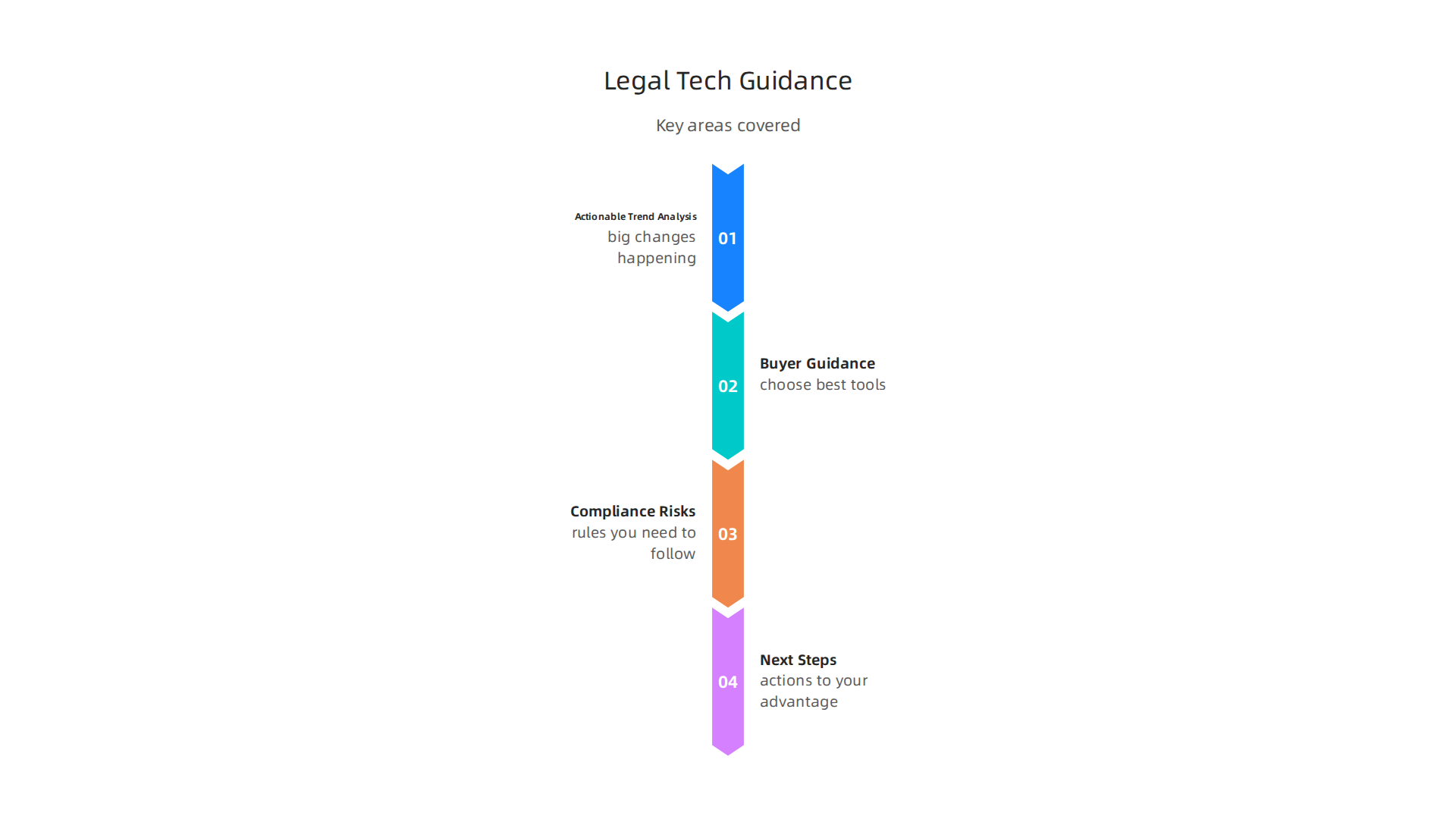
- Actionable Trend Analysis: What big changes are happening in legal tech right now.
- Buyer Guidance: How to choose the best tools for your law firm or legal team. If you need help picking the right tools, check out our guide on how to navigate the 2026 legal tech companies list choose the right tools for your law firm.
- Compliance Risks: What rules you need to follow and how to keep your data safe.
- Next Steps for Legal Leaders: Clear actions you can take to use legal tech to your advantage.
Our goal is to give you honest advice so you can make smart decisions. This will help your firm grow and stay strong in the fast-moving world of legal technology.
Key Legal Tech Market Trends in 2026
To truly get the most out of this legal tech market report, it helps to know what big changes are happening. In 2026, the legal technology world is buzzing with two main shifts: how companies that make legal tech are changing, and what law firms really want.
Legal Tech Companies are Changing
Think of the legal tech market like a big garden. Lately, some of the smaller plants are joining bigger ones. This is called consolidation. Larger legal tech companies are buying up smaller ones. This means there might be fewer different companies, but the ones left are often bigger and stronger. They can offer more services all in one place.
At the same time, many companies are also becoming very specialized. This means they focus on doing one thing extremely well. For example, some companies are experts in "matter automation." These tools help lawyers manage all the small steps in a legal case automatically, saving lots of time. Other companies focus entirely on "contract lifecycle management." This type of tech helps firms handle contracts from start to finish, from writing them to making sure they are followed. This move towards specific tools makes the legal tech market overview more clear.
Experts have been tracking this. Reports show that the global legal tech market is expected to keep growing fast, reaching over $63 billion by 2033 from $32.8 billion in 2026 LegalTech Market Share & Forecast 2026 to 2033. This growth means more changes are coming for how legal services are delivered.
What Law Firms Want: Driving the Demand for New Tech
Law firms are not just buying legal tech because it’s new. They have clear reasons, which are called "customer demand drivers."
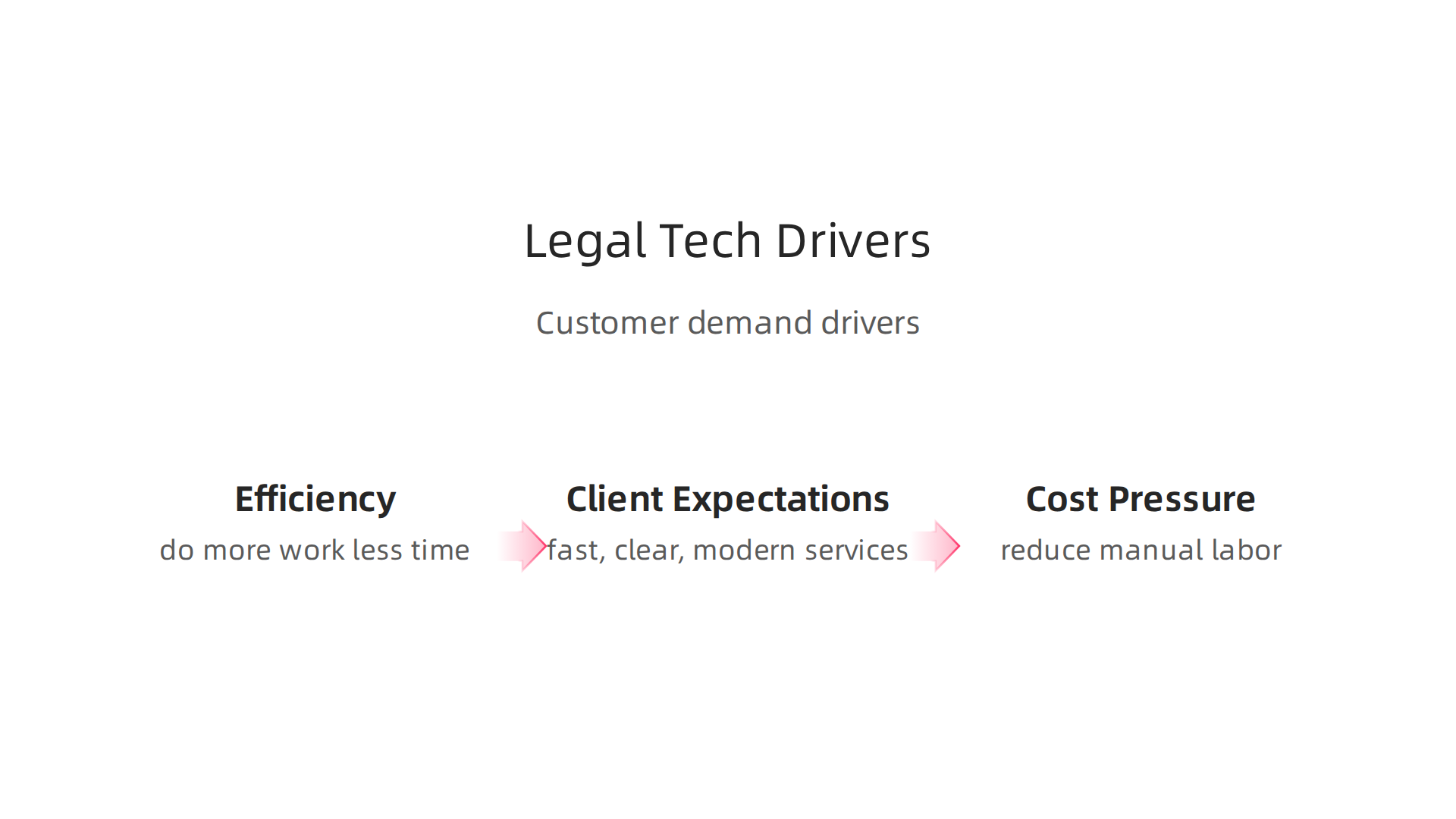
These are the main things making firms want to invest in technology.
- Efficiency: This is a big one. Law firms want to do more work in less time. They want to cut down on tasks that take a lot of effort but do not bring in much money, like sorting through piles of documents. Legal tech tools can automate these tasks, making lawyers and their teams much more efficient.
- Client Expectations: Clients today expect legal services to be fast, clear, and modern.

They want their lawyers to use the best tools to handle their cases. If a law firm doesn’t use modern tech, clients might go somewhere else. This pressure from clients makes firms look for smart new solutions.
- Cost Pressure: Every business wants to keep costs down, and law firms are no different. Legal tech can help here by reducing the need for so much manual labor. It can also help firms use their resources better. This means they can offer competitive prices to clients while still making a good profit.
These demands are shaping what kind of legal tech gets bought and used. Firms are prioritizing tools that can directly help them be more efficient, meet client needs, and control costs. For any legal leader, understanding these trends is a key part of choosing the right path forward, as this 2026 legal tech market report aims to explain. If you are looking to make smart tech choices for your firm, you might want to consider how to choose the best new legal tech for law firms in 2026.
The legal technology market continues its strong growth, showing how important these tools have become for legal work. In 2026, the global legal tech market is valued at around $36.72 billion and is expected to grow a lot, possibly reaching $77.93 billion by 2034 [Legal Technology Market Size, Share & Growth Report, 2034]. This clear trend tells us that legal tech is not just a passing new idea. It is now a main part of how legal services are offered.
Core Segments of the Legal Tech Market
This big market is made up of many different parts, called segments. Each part focuses on a special need in the legal world.
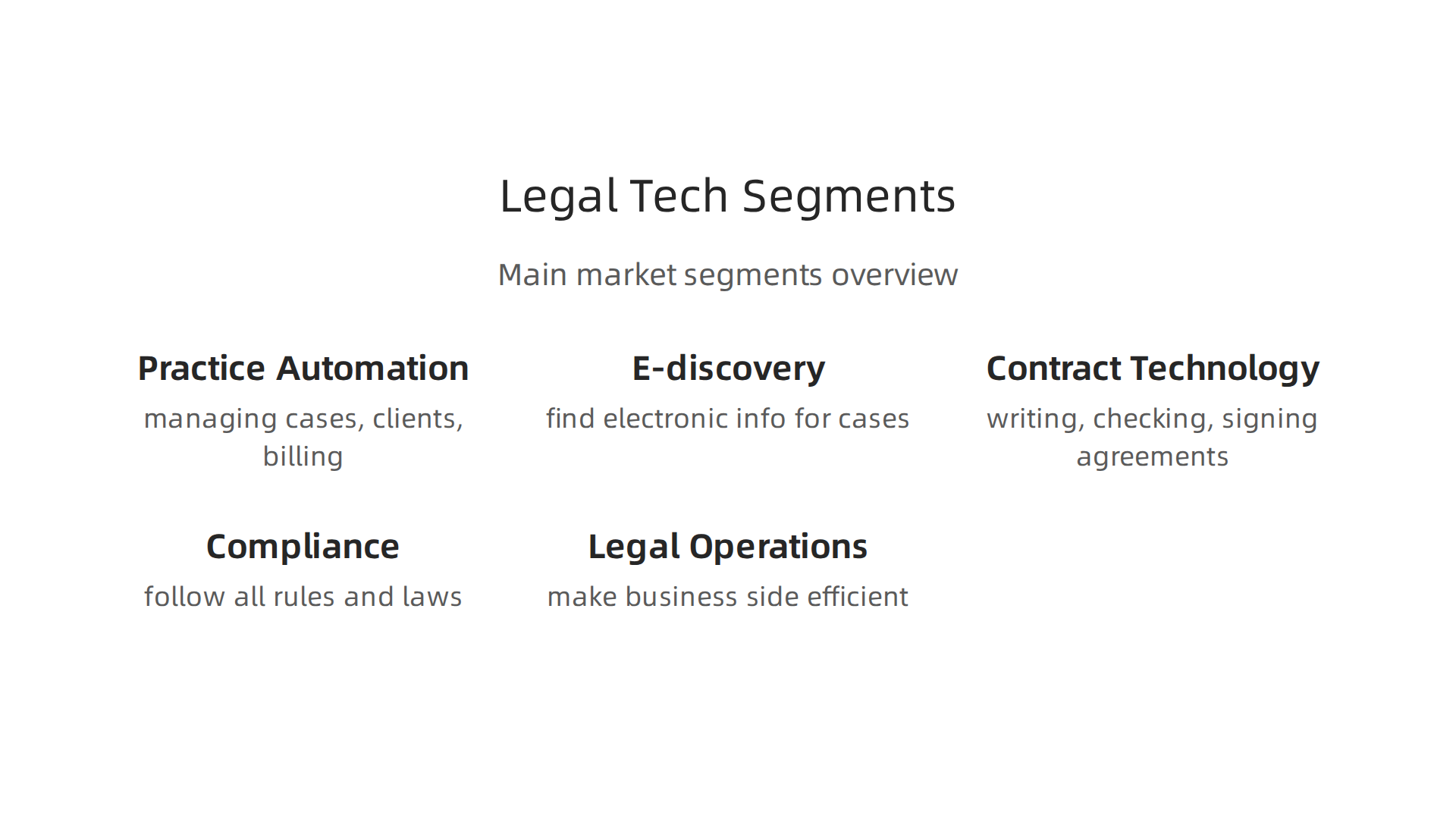
For anyone looking at a legal tech market report, understanding these segments is key to seeing the whole picture.
- Practice Automation: This is a big segment. It includes tools that help law firms with their daily tasks. Think of managing cases, keeping client details safe, and handling billing. These tools make sure everything runs smoothly and saves time.
- E-discovery: Another important segment is e-discovery. This helps lawyers find and handle electronic information for court cases. This includes things like emails and computer documents. It can be a huge job, and technology makes it much faster and more correct.
- Contract Technology: This segment offers tools for contracts. As we talked about before, tools for managing contracts help with writing, checking, and signing legal agreements. Many of these tools now use smart computer programs, called AI, to read and understand contracts. This makes things even smarter. To see how AI is helping with contracts, you can learn more about Iris Law 2026 AI contract analysis for legal teams.
- Compliance and Legal Operations: Compliance technology helps law firms follow all the many rules and laws. Legal operations tools provide ways to make the business side of law more efficient. This means things like managing money, working with other companies, and making sure legal work is done smartly. For a wider view of the entire legal tech market overview, you might find this unpacking the 2026 legal market landscape report for strategic advantage helpful.
Who is Buying Legal Tech and Where
It is also important to see who is buying these tools and what they need. There are differences between big companies with their own legal teams inside (these are called in-house legal departments) and regular law firms.
Law firms, especially the larger ones, often buy new technology quickly. They do this to stay ahead of others and offer better services to their clients. Many law firms are now using AI tools to help with their work. Actually, about one out of every three lawyers now uses AI-based tools. This is a big jump from a few years ago [Legal Tech Trends in 2026: 6 Data-Backed Shifts in How Law Firms …].
In-house legal teams at big companies also use legal tech. But they might focus more on tools that help them manage legal costs, handle many contracts, or make sure the whole company follows all the rules. The way they use tech can depend on where they are in the world, too, as different regions might have different needs or laws about new technology.
Keeping up with all these changes can be hard, especially with new AI tools showing up all the time. For clear, daily updates on AI and how it impacts the legal world, consider subscribing to The AI Newsletter Worth Reading.
As lawyers continue to adopt new tools, understanding artificial intelligence (AI) and automation becomes even more important. This is especially true for anyone looking at a legal tech market report in 2026. AI is not just a buzzword. It is changing how legal work gets done every day.
Practical AI Use Cases and Real ROI
AI and automation tools are being used in many practical ways in the legal field, bringing real benefits that save time and money.
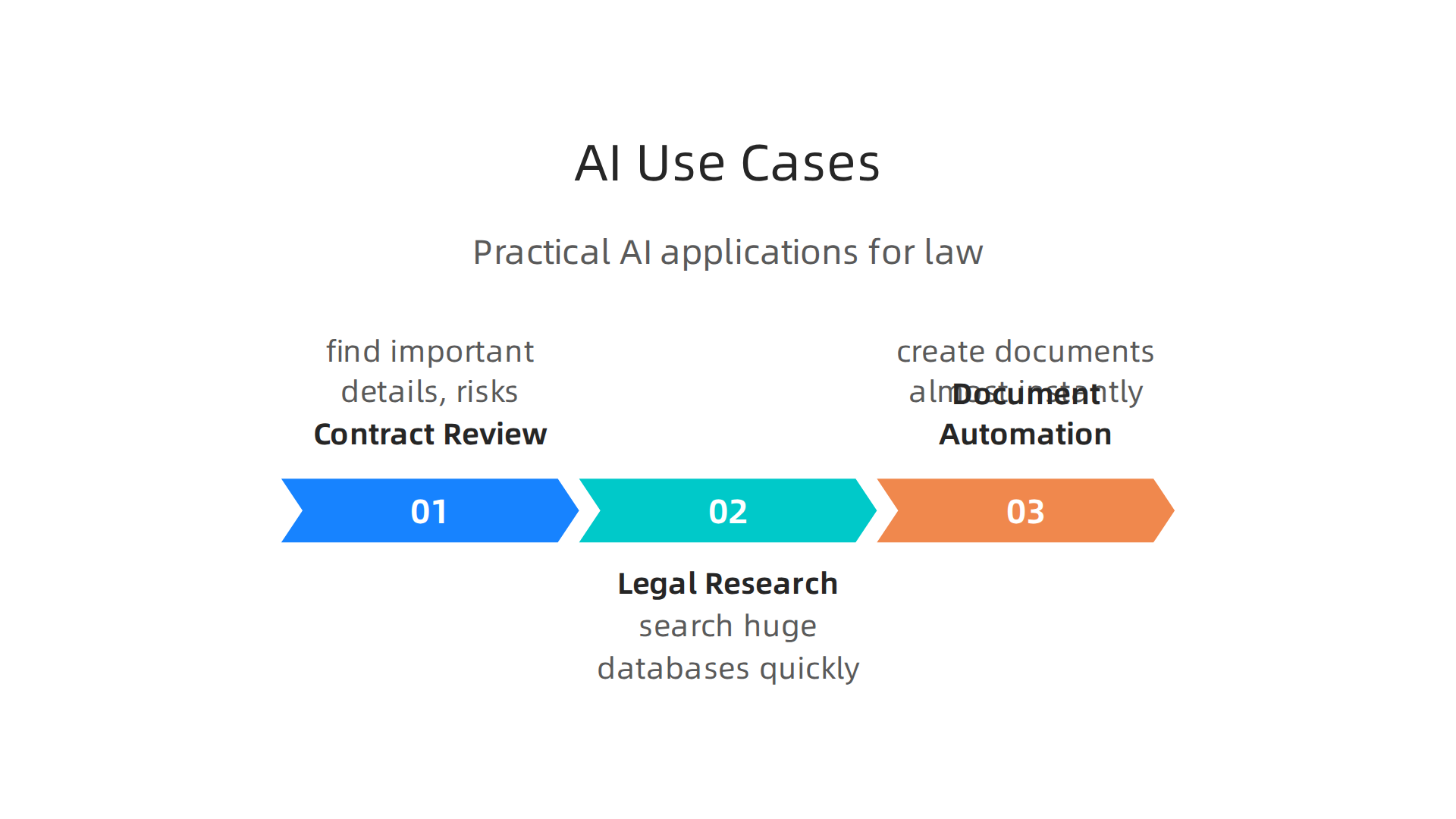
Here are some key areas where AI is making a big difference:
- Contract Review: This used to take a lot of time. Lawyers had to read through countless pages of contracts to find important details or possible risks. Now, AI can do this work much faster. It can spot specific clauses, compare agreements, and even highlight unusual language. This means lawyers can review more contracts in less time, and with fewer mistakes. For example, AI tools can quickly find key information in large sets of documents, helping legal teams manage their tasks better.
- Legal Research: Finding the right laws and court cases for a legal matter is a core part of a lawyer’s job. AI helps here by searching huge databases of legal information very quickly. It can find relevant cases, statutes, and legal articles that a human might miss or take days to discover. This makes legal research much more efficient and thorough. If you want to dive deeper into how technology is changing legal learning, check out legal education trends for 2026.
- Document Automation: Many legal documents follow a standard pattern. Think of non-disclosure agreements or simple wills. AI-powered tools can create these documents almost instantly by filling in details from a client’s information. This frees up lawyers to focus on more complex tasks that truly need their special skills.
The return on investment (ROI) from these tools is clear. Law firms and in-house legal teams are saving many hours of work. This leads to lower costs for clients and allows legal professionals to take on more cases or projects. Some reports show that legal tech, including AI tools, is seen as vital for the growth of the overall legal tech market.
Risks and Limitations: Humans Still Lead the Way
While AI offers huge benefits, it is very important to know its limits. As any good legal tech market report will tell you, AI is a tool, not a replacement for human judgment.
- Hallucinations: Sometimes, AI can "hallucinate." This means it might make up information that sounds real but is not true. This is a big problem in legal work, where accuracy is everything. A lawyer must always double-check any information an AI tool provides to make sure it is correct and based on real facts.

In fact, a 2025 report from the London School of Economics and Political Science mentioned concerns about the factual accuracy of AI in law [LSESU Artificial Intelligence].
- Accuracy Concerns: Even when AI doesn’t hallucinate, it might still give answers that are not quite right or miss important details. Legal cases are often full of subtle points that only a human lawyer can fully understand. Relying solely on AI could lead to serious mistakes.
- Required Human Workflows: Because of these risks, it is essential to have human lawyers involved every step of the way. AI should be used to help and speed up work, but a lawyer’s expert review and final decision are always needed. This means that when law firms adopt AI, they also need to set up new ways of working that include strong human oversight. This ensures that legal services remain accurate, ethical, and trustworthy.
Choosing the right legal tech tools requires careful thought. To explore more about making smart choices for your firm, consider learning how to choose the best new legal tech for law firms in 2026.
When we talk about the risks of AI, like it sometimes making up facts, it’s clear why we need good rules. Legal professionals must always think about new laws and good practices when bringing AI tools into their work. Any reliable legal tech market report you read in 2026 will stress these points.
Rules and Good Practices for Legal Tech
There are many new rules about how legal tech can be used, especially with AI.

These rules aim to protect people’s information and make sure AI is used fairly and correctly.
- Data Privacy Rules: Laws like GDPR in Europe and CCPA in California are very important. They tell companies how they must collect, store, and use people’s data. When legal teams use AI, they need to make sure these tools follow all these privacy rules. This is especially tricky when data moves across different countries.
- AI-Specific Laws: New laws are being made just for AI. The Global Privacy Watchlist from Mayer Brown notes that the EU AI Act, a big set of rules for AI, is taking full effect in stages, with many parts starting in 2026. This law helps guide how AI systems should be built and used, especially for systems that carry high risks. Also, states in the U.S. like California, Texas, and Colorado are bringing in their own new rules about AI and data privacy, as detailed in a 2026 Data Privacy, AI Regulatory, and Compliance Update. It is a fast-changing area, so staying informed is key. You can learn more by checking out how to Master Legal Updates Websites.
Keeping Risks Low When Using Legal Tech
Because AI is still new and changing, legal teams need to be careful when choosing and using legal tech tools. They must ask vendors tough questions to make sure the tools are safe and follow all the rules.
- Security Checks: Legal teams should ask for proof that a legal tech tool is secure. This means checking if the company has proper security certificates. It shows they take data protection seriously.
- Where Data Stays (Data Residency): It’s important to know where your clients’ data will be stored. Some laws require data to stay in a specific country. Legal teams must make sure their chosen legal tech tools can meet these needs.
- How AI Models are Built and Managed (Model Governance): This goes back to the accuracy issues we talked about before. Legal teams need to understand how the AI model was made, what data it was trained on, and how it is checked for mistakes or unfairness. A 2026 guide on AI Regulation highlights that AI tools should only access data they are allowed to. This helps prevent problems and ensures the AI is fair.
Making smart choices about legal tech helps legal professionals use new tools well while keeping their clients’ information safe and meeting all legal requirements. Understanding the full picture from a broad Unpacking the 2026 Legal Market Landscape Report can help make these big decisions.
The world of AI and legal tech is moving very quickly, with new rules and best practices appearing all the time. Staying informed is a full-time job.
Get clear daily AI updates that matter to the legal world. Try The AI Newsletter Worth Reading today.
The quick pace of change in AI and legal tech means that selecting the right tools is more important than ever. It’s not just about picking new software, but about making sure it fits well with how legal teams already work and helps them do their jobs better and safer.
Choosing the Right Legal Tech Tools
When a law firm decides to bring in new legal tech, especially tools that use AI, they need a clear plan. This plan helps them pick tools that truly help, not cause more problems.
- Asking the Right Questions (RFP Essentials): Before buying anything, firms should send out a "Request for Proposal" or RFP. This is like a detailed shopping list asking potential tech providers how their tools meet specific needs. It helps firms compare options side by side. For instance, what features does the tool have? How much does it cost? How secure is it?
- Checking Out the Company (Vendor Diligence): It is smart to check the background of the company selling the legal tech. Is it a stable company? Do they offer good help when you need it? This step is important for long-term success, as you want a reliable partner.
- Making Sure It’s Safe and Works Well With Others (Security and Interoperability Checks): Any new legal tech must be very secure to protect client information. Also, it needs to work smoothly with the computer programs and systems a law firm already uses. This is called interoperability. New regulations mean that AI tools must be carefully governed, checking that they only access data they are allowed to. This helps avoid legal trouble and builds trust, as noted in a 2026 guide on AI Regulation. Mapping out all AI systems and vendors is also a smart move, as discussed in AI Governance Key Takeaways From the 2026 IAPP Global Summit.
If you are looking for new legal tech for your firm, consider how to Choose The Best New Legal Tech For Law Firms In 2026.
Bringing New Tech into Daily Work
Getting a new tool is only half the battle. Making sure everyone uses it and likes it is the other half.
- Fitting It In (Integration): Legal tech tools need to connect with a firm’s current systems. This might mean using special connections called APIs or moving parts of the firm’s work to cloud services. The goal is to make sure the new tool doesn’t create extra steps but makes things easier.
- Learning How to Use It (Training): People need to know how to use the new tech. Good training helps everyone feel comfortable and confident. This also includes understanding the ethics around AI use, which many new rules for AI governance cover. Actually, the AI Regulations taking effect in 2026 emphasize the need for firms to prepare for more AI rules on privacy rights and data protection.
- Getting Everyone on Board (Change Management): Sometimes, people don’t like change. A law firm needs a plan to help everyone accept and use new tools. This means explaining why the new tech is helpful, listening to concerns, and offering support. This step is crucial for the new tech to truly succeed and become a normal part of how the firm works. Embracing a clear legal tech market overview can really help in showing the team the benefits of modern tools.
By carefully choosing and slowly bringing in new legal tech, law firms can make sure they are using modern tools in a way that is smart, safe, and helpful for everyone. A good strategy for selecting and integrating legal tech will always consider both the technology itself and the people who will use it.
Buyer’s Guide: RFP Questions, KPIs, and Vendor Evaluation Templates
After deciding to bring in new legal tech, the next step is to make smart choices. This means having clear ways to ask vendors what they offer, measure how well a new tool performs, and test it before going all-in. It’s like having a detailed map for your journey into the legal tech market.
Asking the Right Questions (RFP Essentials)
When a law firm looks for new legal tools, it often sends out a "Request for Proposal" (RFP). This document asks potential tech providers specific questions. A good RFP helps firms compare different tools fairly. What should your firm ask?
- About the Services: What does the tech tool actually do? How will it help your daily work? A good RFP will describe the services you need and the business reasons behind them, as noted in a guide on how to create a legal RFP.
- Costs and Money: How much does the tool cost? Are there extra fees for setting it up or for ongoing help? Make sure the pricing is clear, covering licenses, setup, and support. This is a key part of any legal technology vendor RFP form template.
- Security and How it Connects: How safe is your client’s information with this tool? Does it work well with the computer programs your firm already uses? This is super important for protecting sensitive data.
- Help and Training: What kind of help does the company offer if you run into problems? Is there training for your team to learn how to use the new tech?
- Company Background: How stable is the company selling the tech? Do they have a good track record?
By asking these detailed questions, firms can get a better sense of the overall legal tech market report and find tools that truly fit.
How to Measure Success (KPIs)
Once you pick a legal tech tool, how do you know if it’s actually helping? This is where Key Performance Indicators (KPIs) come in. KPIs are like scorecards that show you if your new tech is meeting its goals. Before you even start using the tool, you should decide what you want to measure. For example, do you want to:
- Save time on tasks?
- Reduce mistakes?
- Lower operational costs?
- Make client communication smoother?
Knowing your business goals helps you pick the right KPIs. For instance, you might track how much time is saved on document review or how quickly cases move through certain stages. This helps ensure that the legal tech is truly driving positive change, much like how firms use contract performance KPIs to measure efficiency.
Picking the Best Vendor (Evaluation Templates)
When you get all the answers from different tech companies, you need a clear way to compare them. Evaluation templates can help. These templates list important criteria like:
- Accuracy and Reliability: Does the tool do what it says it will do, consistently?
- How Well it Fits: Does the tool fit into your existing work style and other systems?
- Advanced Features: Does it have smart features, especially if it uses AI?
- Vendor Partnership: Does the company seem like a good partner for the long run? Will they support you?
A good resource like The 2026 Legal AI Planning Guide provides evaluation criteria across these important categories.
Small Tests for Big Wins (Pilot Projects)
Bringing in new legal tech can feel like a big step. That’s why many firms start with a small test, called a pilot project. This helps you try out the new tech with a small group or for a specific task before rolling it out to everyone.
Here’s a quick checklist for a successful pilot project:
- Start Small: Focus on a single task that causes a lot of trouble, like reviewing documents or doing legal research. This helps you see clear results from day one, as suggested by a playbook for how to market legal tech to law firms.
- Clear Goals and Timelines: Set specific goals for what you want the pilot to achieve and by when. A common pilot might last 60-90 days with clear success measures agreed upon from the start, according to advice on how to structure an enterprise pilot.
- Pick the Right Team: Choose a small group of users who are open to new things and willing to give feedback.
- Measure Everything: Keep track of your KPIs during the pilot. For example, measure how long a task takes before the new tool and after it. This helps you see the real difference, as explained in a legal AI pilot program step-by-step guide.
- Get Everyone on Board: Make sure leaders and users understand why you’re doing the pilot and what you hope to learn.
By using these methods, law firms can make sure they choose the best legal tech tools that truly help them grow and succeed in 2026 and beyond. Staying up to date on these fast-moving changes is also critical.
Get clear daily AI updates. Sign up for The AI Newsletter Worth Reading.
Summary
This 2026 legal tech market report explains how rapid advances—especially in AI and automation—are reshaping law firms and in‑house legal teams, why staying informed matters, and how to make smarter technology choices. It reviews market size and growth projections, core product segments like practice automation, e‑discovery, contract tech, and compliance, and the customer drivers pushing adoption: efficiency, client expectations, and cost pressure. The report gives practical AI use cases (contract review, research, document automation), describes real ROI benefits, and warns about AI limits such as hallucinations and accuracy issues that require human oversight. It also summarizes evolving data privacy and AI regulations and offers vendor selection guidance: RFP essentials, KPIs, pilot testing, security checks, and change management steps. After reading you will understand market dynamics, how to assess and pilot tools safely, and what governance and procurement steps to take to protect clients while improving firm productivity.