
Pillsbury Law Innovation Drives Record Growth and AI Leadership

Introduction: Pillsbury Law at the Forefront of Legal Innovation
When you think about the biggest shifts happening in law right now, one name keeps coming up. Pillsbury Law has quietly built itself into something different. Not just a firm with a long history. But a firm that actually seems to understand where the legal world is heading.

Here is the thing. The legal landscape of 2026 demands more than just knowing the law. Clients want speed. They want technology. They want a partner that can handle complex work without the old-school friction. That is exactly where Pillsbury Law shines.
The firm has been around since 1868. But do not let that history fool you. In 2025, the firm brought in record revenue of more than 939 million dollars. That was an 18 percent jump from the year before. Partner profits hit nearly 2.89 million dollars on average. Those numbers tell a clear story about a firm that is betting big on the future.
What is driving this growth? A clear bet on technology, financial services, and energy. As the firm states, its mission is to use law, technology, and human intelligence to help clients thrive. That is not just marketing talk. It is a strategy that is clearly paying off.
This article will take a close look at how Pillsbury Law is shaping the 2026 market. We will explore its tech integration, market strategy, and client focus. And we will compare it with other firms like Jones Law Firm, Gunster Law Firm, and Bailey Law Firm to see what real innovation looks like.
If you are curious about how legal education is catching up, check out how the Yale Law Journal shapes legal tech innovation.
And if you want to keep up with all these changes without the noise, The AI Newsletter Worth Reading delivers clear daily AI updates straight to your inbox.
The Strategic Prowess of Pillsbury Law in 2026
Pillsbury Law’s 2025 numbers put it in a strong spot among the Am Law 100. The firm’s revenue crossed $939 million and partner profits hit $2.89 million. Those results come from a clear focus on a few key areas.
The firm’s biggest growth drivers are technology, financial services, and energy.

Technology work alone jumped 25 percent last year. Financial services and energy also saw double-digit gains. The emerging companies practice, which handles deals for big names like AT&T Ventures and Chevron Technology Ventures, saw deal volume rise 40 percent. This shows Pillsbury is deeply plugged into the innovation economy.
These gains are not random. They come from a multiyear growth plan that started in 2025.

The plan focuses on scaling the firm to serve clients better in these high-demand areas. According to Pillsbury’s 2025 revenue and profit growth driven by tech and government demand, the firm’s chair and CEO David Dekker said the mission is to use law, technology, and human intelligence to help clients thrive.
What about strategic moves in 2026? The firm is investing heavily in technology, especially artificial intelligence. It plans to create a new role of chief AI officer. That is a big step for a law firm. It means Pillsbury wants to be a leader in legal tech, not just a follower.
All this growth is organic. The firm is not relying on big mergers to expand. Instead, it is building from within. It is adding lawyers in its core areas and investing in tools that make legal work faster and smarter.
If you want to understand how law firms use rankings to guide their growth, check out why the Am Law 200 ranking matters.
Deep Dive into Pillsbury’s Technology and Innovation Practice
Pillsbury’s push into technology is not just about dollars. It is about building real expertise in areas that matter most to clients today. The firm’s artificial intelligence practice is a perfect example.
The AI team at Pillsbury works with startups, global corporations, and government agencies. They help these clients deal with the fast-changing rules around AI. What makes this group special? Many on the team have advanced degrees in computer science and engineering. They understand machine learning, natural language processing, and neural networks at a deep level. According to the firm’s Artificial Intelligence (AI) Law page, the team works across industries like technology, media, health care, financial services, and energy.
Beyond the legal advice, Pillsbury also uses its own AI tools. The firm has built an AI-enabled analytics platform that helps lawyers tackle labor-intensive tasks. It uses machine learning and text-mining to find patterns in big data sets. This makes e-discovery and document review faster and more accurate.
This focus on AI is part of a larger trend. Law firms across the country are adopting AI tools at an unheard-of pace. In 2025, every large law firm with 500 or more attorneys reported using legal-specific AI, as shown in a report on law firms adopting AI tools. Pillsbury is not just following that trend. It is helping lead it.
The firm also has a strong Technology Transactions practice. This team handles deals that involve technology and intellectual property. From licensing agreements to complex tech mergers, they help clients turn their inventions into revenue. You can learn more on their Technology Transactions page.
All of this adds up to one clear message: Pillsbury Law is betting big on innovation. And that bet is paying off for its clients and its bottom line.
If you want to keep up with how AI is changing the legal world, consider The AI Newsletter Worth Reading. It delivers clear daily updates on AI news and tools that matter for law firms.
AI and Automation in Legal Workflows
Pillsbury Law is putting AI directly into the daily work of its lawyers. The firm uses generative AI to speed up contract analysis and due diligence.
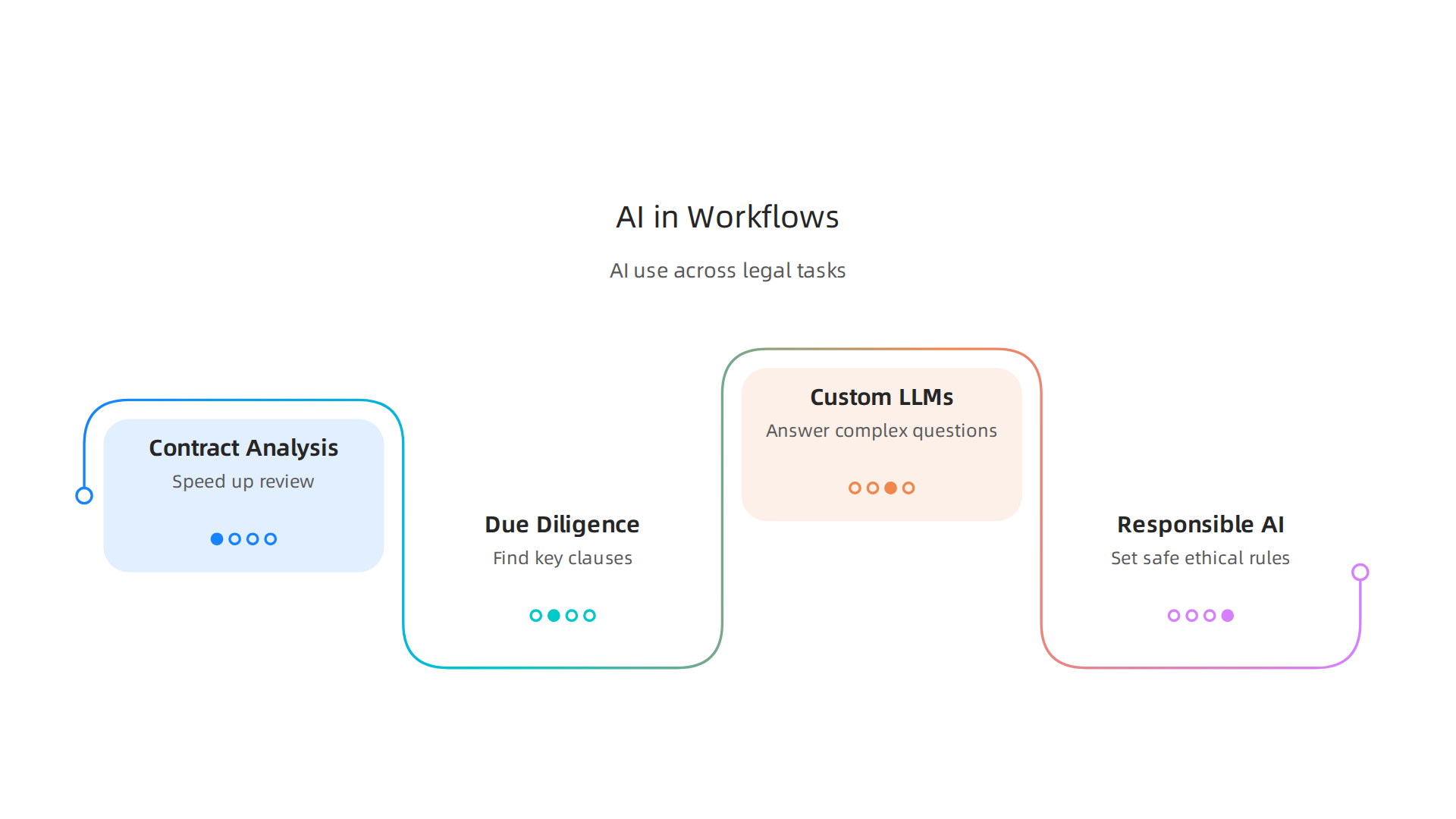
Instead of reading hundreds of pages by hand, associates can let AI tools find key clauses, spot risks, and flag missing terms in minutes. This matches a huge shift across the legal industry. A detailed look at how AI changes legal work shows that tools like Kira can pull contract provisions and organize them into tables and reports. That saves hours of manual review.
Pillsbury also builds custom large language models (LLMs) tailored to legal work. These models are trained on firm data and court records. They help lawyers answer complex questions faster. But the firm does not stop at just using the tech. It also focuses on responsible AI frameworks. The team helps clients set rules for safe and ethical AI use. Their Artificial Intelligence Practice page explains how they guide startups and global companies through the regulatory landscape.
What does this mean for billing? When AI handles routine tasks, lawyers spend less time per project. Some firms are shifting from hourly billing to flat fees or value-based pricing. Pillsbury uses AI to deliver better results in less time, which benefits both the firm and the client. If you want to see how other firms are using AI for contract work, check out this guide on AI contract analysis for legal teams. It covers tools that speed up due diligence and reduce errors.
Cybersecurity and Data Privacy Expertise
Beyond AI in legal workflows, another area where Pillsbury Law truly shines is cybersecurity and data privacy. The firm helps clients prevent and respond to threats like data breaches, ransomware attacks, and insider leaks. Their team guides businesses through complex regulatory landscapes, including the latest cybersecurity executive orders from 2026. You can see how they track these fast-moving rules on their Regulatory Playbook about cybersecurity and AI compliance. That kind of thought leadership keeps clients ahead of changing requirements.
Internally, Pillsbury takes data protection seriously too. They use strict governance practices to secure client information and firm systems. Anyone working at a law firm knows how tempting phishing emails can be. If you run a legal practice, you might find this guide on how law firms defend legal data against phishing emails useful. It covers real tactics that protect sensitive files.
When it comes to regulatory compliance, Pillsbury lawyers monitor rules from the EU, the US, and other regions. They help companies that operate across borders avoid fines and reputational damage. The firm blends legal skill with tech awareness, which is rare.
Because technology and privacy rules change so quickly, staying informed is key. To get clear daily updates on AI and data protection topics, check out The AI Newsletter Worth Reading. It keeps you sharp without the noise.
Global Reach: Pillsbury’s International Regulatory Influence
Beyond cybersecurity, Pillsbury Law also wields significant influence on the global stage. The firm operates offices in key markets around the world, including London, Hong Kong, Shanghai, and Riyadh.

Their lawyers have advised on legal matters in more than 75 countries. That kind of cross-border reach matters a lot when you are dealing with energy projects, tech investments, or financial regulations that cross national lines.
A big part of this global work is Pillsbury’s Energy Law practice. The team works on everything from fossil fuels and renewable power to nuclear and hydrogen energy. They regularly appear before the Federal Energy Regulatory Commission (FERC) and state utility commissions. They also advise on cross-border energy deals. More than half of their energy work involves clients or projects outside the United States. For companies building solar farms in Asia or moving natural gas across Europe, that kind of worldwide experience is hard to find elsewhere.
Pillsbury also shapes regulations in technology and finance. The firm tracks new executive orders on quantum computing and AI, monitors international trade sanctions, and helps clients understand how new rules will affect their business. Their international trade practice is ranked Band 1 by Chambers Asia-Pacific for 2026. That tells you how seriously regulators and clients take their guidance.
What sets Pillsbury apart is that they don’t just follow the rules. They help write them. Through public comments, policy papers, and direct advocacy with government agencies, Pillsbury lawyers push for rules that make sense for the industries they serve. If you want to see how other firms manage similar global challenges, read this practical breakdown of multi-jurisdictional law firm strategy.
Compared to regional firms like Jones Law Firm or Gunster Law Firm, Pillsbury’s international footprint gives it a clear edge. Bailey Law Firm may focus on local markets, but Pillsbury operates at a scale that lets clients move money, technology, and energy across continents with confidence.
The firm’s global work also earns it consistent top rankings from legal directories like Chambers and Best Law Firms. That external recognition shows their cross-border influence is real and lasting.
Now let’s turn to another side of Pillsbury’s practice: how they handle high-stakes litigation and dispute resolution for clients around the globe.
Operational Efficiency and the Future of Legal Service Delivery
Alongside its work in litigation and global regulation, Pillsbury Law is also changing how it delivers legal services day to day. Clients today want more than just good outcomes. They want faster service, predictable costs, and easy communication.
The firm has invested heavily in legal operations transformation. That means using data and technology to make every step of a case more efficient. In 2026, legal operations professionals focus on three big areas: redefining firm relationships through data transparency, using AI to handle routine tasks, and shifting team roles toward high value work.
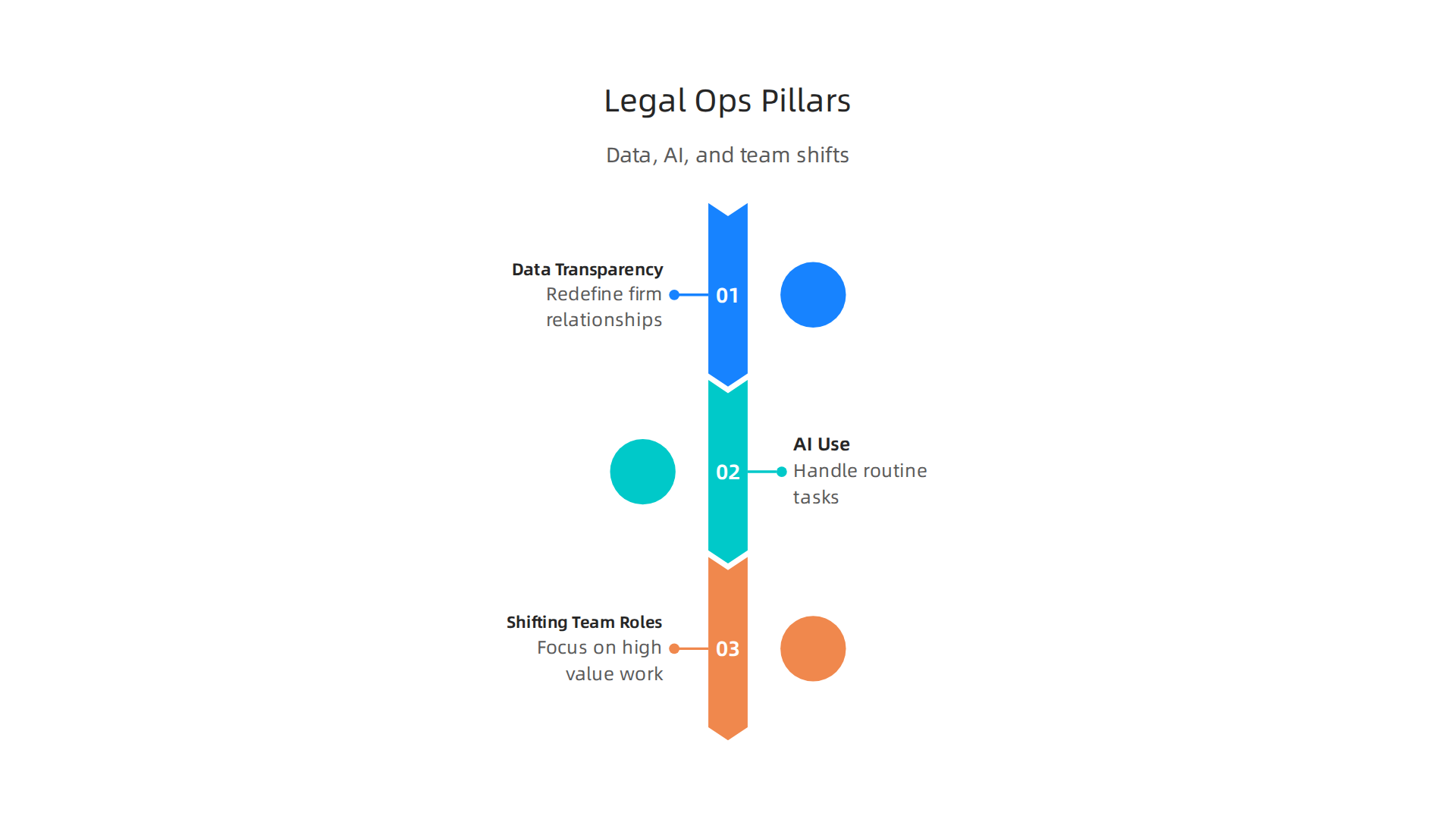
Pillsbury follows this playbook closely. The firm tracks key metrics like cycle times and staffing models to stay ahead. Industry benchmarks, like those in the 2026 Law Department Management Benchmarking Report, help firms such as Pillsbury compare their performance to peers.
One of the biggest changes is how Pillsbury charges for its work. Instead of billing by the hour for everything, the firm offers alternative fee arrangements. These can include fixed fees for specific projects or value based pricing tied to outcomes. This shift benefits clients by making costs predictable. It also pushes Pillsbury to work smarter and faster. Many regional competitors like Gunster Law Firm or Bailey Law Firm still rely on traditional hourly billing. Pillsbury’s flexible pricing gives it a clear edge for companies that need budget certainty.
Pillsbury also uses client portals and matter management platforms. These online tools let clients check case updates, share documents, and talk to their legal team anytime. No more waiting for email replies or playing phone tag. Everything stays in one place. That transparency builds trust and saves time for both sides.
For law firms looking to modernize their own operations, learning from leaders like Pillsbury is a smart move. You can read more about multi-jurisdictional law firm strategy and operations to see how other firms adapt to new demands.
Staying efficient also means staying informed about fast changing tools like AI. If you want to keep up with the latest AI trends in law, you should get The AI Newsletter Worth Reading. It delivers clear daily updates straight to your inbox.
Pillsbury Law is proving that operational efficiency is not just a buzzword. It is a real strategy that makes legal service better for everyone.
The Pillsbury Culture: Fostering Innovation and Talent
Behind every big legal win and smart operational change at Pillsbury Law is a culture that puts people first.

The firm does not just hire great lawyers. It builds an environment where talent grows, new ideas flourish, and everyone gets a fair chance to succeed.
Hiring Trends: Blending Legal and Tech Expertise
Pillsbury Law looks for lawyers who understand more than just the law. The firm wants people who get technology too. Chair and CEO David Dekker explained that the mission is to use the power of law, technology, and human intelligence together. That means hiring attorneys who can talk about AI, data, and digital tools as easily as they talk about case law. This mix of skills sets Pillsbury apart from firms like Jones Law Firm or Bailey Law Firm that still follow a more traditional hiring model. The approach is working. In 2025 the firm brought in record revenue of more than $939 million, with profits per equity partner rising nearly 20 percent to $2.89 million. You can see the full details in the report on Pillsbury’s Revenue, Profits Soar on Tech, Government Demand.
Diversity, Equity, and Inclusion (DEI) Initiatives
Pillsbury takes DEI seriously. The firm has been recognized as one of the top law firms for inclusion year after year. In its early diversity rankings, Pillsbury placed No. 24 for diversity within its partnership, with 11.5 percent of U.S. partners identifying as minorities, well above the national average. The firm continues to invest in these programs in 2026. Pillsbury also offers DEI Compliance, Counseling & Defense services to help other organizations build inclusive workplaces too.
Professional Development and Innovation Labs
Great talent needs room to grow. Pillsbury runs Pillsbury 360, a firmwide program focused on professional development, mentorship, and creating space for new ideas.

The firm also invests in innovation labs where teams test new technology and find better ways to serve clients. This kind of forward thinking culture helps Pillsbury attract top talent away from competitors like Gunster Law Firm.
For firms wanting to build a similar culture, learning from leaders is key. Check out this guide on why the Am Law 200 ranking matters for your law firm’s growth to see how top firms benchmark success.
Staying innovative also means staying current with fast moving tools like AI. If you want clear daily updates on AI trends that affect the legal world, you should get The AI Newsletter Worth Reading. It delivers practical insights straight to your inbox.
Pillsbury Law shows that culture is not just a nice to have. It is a competitive advantage that drives real results.
Client Success and Outcomes: Data-Driven Legal Strategy
You do not run a successful firm like Pillsbury Law by guessing. Pillsbury measures everything that matters for clients. The firm tracks key performance indicators like case resolution time, cost efficiency, and client satisfaction scores. These metrics help the team spot what works and improve what does not. In 2026, that kind of data driven approach is not optional. It is how you win.
One area where this strategy shines is artificial intelligence. Pillsbury built a dedicated practice to help clients handle AI law, from startups to government agencies. The firm’s Artificial Intelligence (AI) Law team includes lawyers with advanced degrees in computer science and engineering. They understand machine learning, neural networks, and natural language processing at a deep level. That technical knowledge lets them give practical advice that traditional firms like Jones Law Firm or Bailey Law Firm often cannot match.
Pillsbury also uses AI itself to deliver better results. The firm deploys an AI enabled analytics platform that uses machine learning to streamline document review and legal research. According to a recent industry report, every large law firm now uses AI tools, and Pillsbury leads the pack in applying them to complex litigation. You can read more about this trend in the article Law Firms Adopt AI Tools at Unheard-Of Pace as Enthusiasm Grows.
Beyond technology, Pillsbury rolls out new service models to meet changing client needs. The firm’s Technology Transactions practice helps companies turn intellectual property into revenue. They handle licensing, joint ventures, and complex tech deals with speed and precision. Every engagement starts with clear success metrics agreed on upfront.
For law firms looking to adopt similar data driven strategies, learning about the right tools is a smart first step. Check out this guide on AI contract analysis tools to see how automation can improve outcomes.
At Pillsbury, client success is not just about winning a case. It is about delivering measurable value every step of the way.
Summary
This article examines how Pillsbury Law transformed a long history into forward-looking growth by betting on technology, energy, and financial services. It reviews the firm’s 2025 performance—more than $939 million in revenue and roughly $2.89 million profits per equity partner—and explains the strategic choices behind those numbers, from investing in AI and custom LLMs to building an AI-enabled analytics platform. The piece covers practical changes in service delivery, including alternative fee arrangements, client portals, and legal operations metrics, and highlights Pillsbury’s cybersecurity, data-privacy practice, and global energy work. You’ll also learn about the firm’s talent strategy, DEI efforts, and how Pillsbury’s organic expansion differs from merger-driven growth. The article shows what other firms can copy to speed work, reduce costs, and deliver measurable client value in 2026.