
Deciphering International Law Types for Legal Tech Global Success

Why understanding international law types matters for legal tech leaders
In 2026, the world of legal technology is moving faster than ever. For leaders in this space, one of the biggest challenges is understanding the many different kinds of international law. These are the rules that guide how countries, people, and groups interact across borders. But here’s the thing: there isn’t just one type of international law. There are several, and they often overlap in ways that can make things very confusing for legal tech companies.
Imagine you are building a new tool for lawyers. If that tool needs to work for businesses in different countries, you have to think about many international law types. For example, some laws cover how countries work together, like treaties and common practices between governments. This is often called public international law, and it deals with things like state rights and duties. Other laws handle problems between private people or companies from different countries. This is known as private international law, or conflict of laws, which helps decide which country’s rules to use when there’s a disagreement, especially in areas like contracts or marriage
Types of International Law: How Are They Different and Why?.
This mix of rules creates a big puzzle for legal tech leaders.

Designing products that ensure compliance with all these different rules, no matter where an international court location might be, is a complex task. It’s not just about knowing one kind of law, but how they all fit together. Without a clear understanding of these international law types, it’s hard to build legal tech solutions that truly help attorneys and legal teams work effectively worldwide.
This article will help make sense of it all. We will give you a clear picture of the main types of international law, explain who makes and enforces these rules, and look at important legal bodies. We will also share practical steps you can take to make sure your legal tech solutions are ready for the global stage. Understanding these areas is key to mastering practical law for modern legal teams and staying ahead in our fast-changing legal world.
Want to keep up with the latest in legal tech and AI?
The AI Newsletter Worth Reading offers clear daily updates.
The previous section talked about how complex international law can be. Now, let’s break down the main international law types into clear definitions.
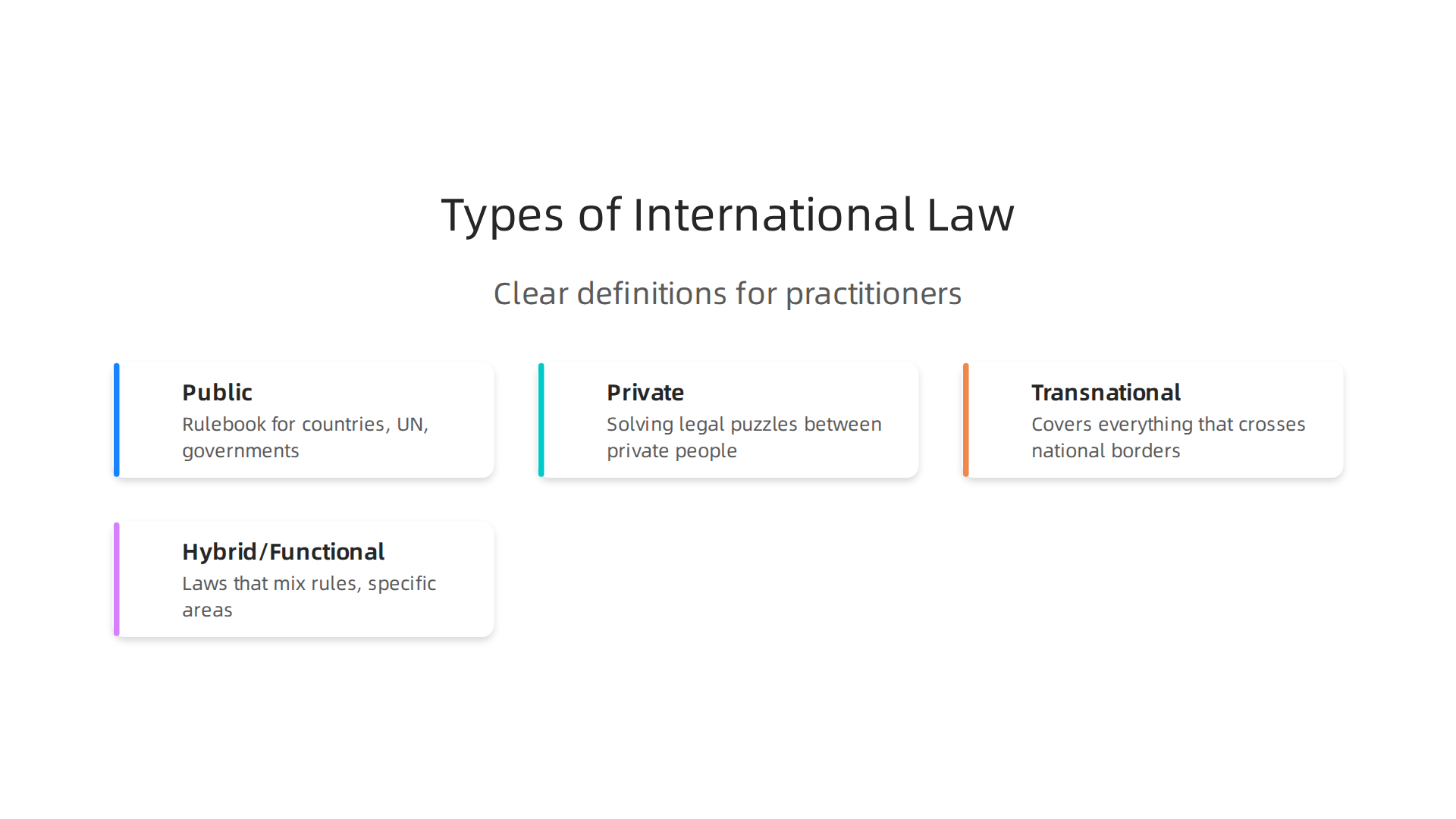
This will help legal tech leaders build better tools for attorneys and legal teams worldwide.
Public International Law
Think of Public International Law as the rulebook for countries. It guides how different nations and big groups like the United Nations work together. These rules cover things like agreements between governments (called treaties), how countries behave towards each other, and what their rights and duties are. For example, laws about peace, war, and the sea all fall under public international law. When disputes happen between countries, they might go to an international court location to resolve them. Understanding these big-picture rules is key for any legal tech company dealing with governments or international bodies.
Private International Law (Conflict of Laws)
Now, imagine a different kind of problem: two companies from different countries have a disagreement over a contract. Which country’s laws should they follow? This is where Private International Law, also called Conflict of Laws, comes in. It’s about solving legal puzzles between private people or businesses across borders. It helps decide which country’s rules apply in personal matters like marriage, divorce, or business deals. For legal tech, this means building tools that can adapt to different national laws depending on the situation. Knowing how to deal with these conflicts is crucial for attorneys working with global clients.
Transnational Law
Then there’s Transnational Law, a term that covers everything that crosses national borders. It includes both public and private international law, but also other rules that don’t neatly fit into just one box. For example, rules about global trade, how big companies operate in many countries, or even how crimes are handled when they involve more than one nation. It’s a wider view of how law works when it goes beyond just one country’s limits. This broad idea helps us see all the different international law types that legal tech needs to consider.
Hybrid and Functional Categories
Sometimes, laws don’t fit perfectly into just one of these main international law types. We call these "hybrid" or "functional" categories. For instance, laws about international trade are a good example. They often mix rules that countries agree on (public international law) with rules that affect private companies doing business across borders (private international law). The same goes for global rules in specific areas like banking, environmental protection, or technology. These are called regulatory regimes, and they set standards for how industries work worldwide.
For legal tech leaders, knowing about these different categories of international law is super important. It means your legal tech solutions must be flexible enough to handle these many layers of rules. This understanding helps in building tools that support attorneys, whether they are focused on big government treaties or smaller, cross-border business deals.

Learning to navigate these different areas is part of mastering practical law for modern legal teams and staying effective in a global legal world. When legal professionals refer to more than one attorney, the plural for attorney is "attorneys" or "attorneys at law," and understanding their diverse roles across these legal types is vital for collaboration. You can learn more about decoding attorneys at law in today’s landscape.
After learning about the different international law types, it’s important to know who makes and enforces these rules. Understanding the big global groups that handle international law is key for legal tech leaders. It helps them build tools that truly help attorneys and legal teams work across borders.
Key Global Institutions and Their Legal Roles (UN, WTO, ICC, regional bodies)
Let’s look at some of the main players on the world stage and how they deal with international law.
These institutions create, enforce, or guide the many international law types we just talked about.
The United Nations (UN) and the International Court of Justice (ICJ)
The United Nations is a very big organization that works for peace and cooperation among countries. A major part of its legal work happens through the International Court of Justice, or ICJ. This court, often called the "World Court," is the main place for settling legal arguments between countries. When countries have a problem, they can bring it to this international court location to find a peaceful solution.
The ICJ mostly deals with public international law. It helps decide what treaties mean and gives advice on legal questions to other UN bodies. For example, it can offer advisory opinions on what the law says about certain situations, even if there isn’t a direct dispute. Before the ICJ, there was a similar court called the Permanent Court of International Justice, which set the stage for how international disagreements are handled. For legal tech, this means creating tools that can easily access international court rulings and legal advice.
The World Trade Organization (WTO)
The World Trade Organization, or WTO, is all about making trade between countries smooth and fair. It creates rules that govern how countries buy and sell goods and services from each other. These rules fall into the category of transnational law, as they blend public and private international law.
A very important part of the WTO is its dispute settlement system. If one country thinks another country is breaking trade rules, it can bring a case to the WTO. The WTO’s dispute settlement body helps members resolve these trade disagreements peacefully. This system involves a special set of rules and procedures called the Dispute Settlement Understanding (DSU). Tools for legal teams need to understand these complex trade regulations and how these disputes are settled.
The International Criminal Court (ICC)
The International Criminal Court, or ICC, handles a different kind of international law. It investigates and, if needed, tries people for the most serious crimes against humanity, like genocide and war crimes. This court steps in when countries are unable or unwilling to do so themselves. The ICC mainly deals with individual responsibility for crimes that cross borders, which is a key part of public international law. It plays a unique role in making sure people are held accountable for very serious actions on a global scale. The ICC’s authority is defined by its founding agreements.
Regional Bodies and Mechanisms
Besides these large global institutions, many regional groups also have a big impact on international law. Think about organizations like the European Union or the African Union. These bodies create specific laws and rules for their member countries, often focusing on regional trade, human rights, or environmental protection.
No matter the institution, they all use certain ways to make and enforce laws:
- Treaty-making: Countries come together to agree on new rules, which are written down in treaties.
- Dispute Settlement: They offer ways to solve problems between countries or parties, like through courts or special panels.
- Advisory Opinions: Sometimes, they give legal advice on important matters.
For legal tech leaders, understanding these roles and mechanisms is vital. Your legal tech solutions must be able to handle this web of international rules and different legal processes. This helps modern attorneys tackle complex cases, ensuring they have the right information and tools.
For legal professionals who want to stay at the forefront of these global legal changes, especially with new tech coming out in 2026, staying informed is critical. Get clear daily AI updates from The AI Newsletter Worth Reading. Staying current with these trends helps attorneys and legal teams master tasks like master legal research databases in 2026 with AI and smart search techniques.
After looking at the big groups that handle international law, it’s also important to understand where these rules actually come from. International law isn’t made in just one way. Instead, it comes from different places, each with its own level of power. Knowing these sources helps legal tech leaders build better tools for attorneys and legal teams dealing with global issues.
Sources of International Law: Treaties, Custom, Soft Law, and Their Weight
There are a few main ways that international law is created and recognized.
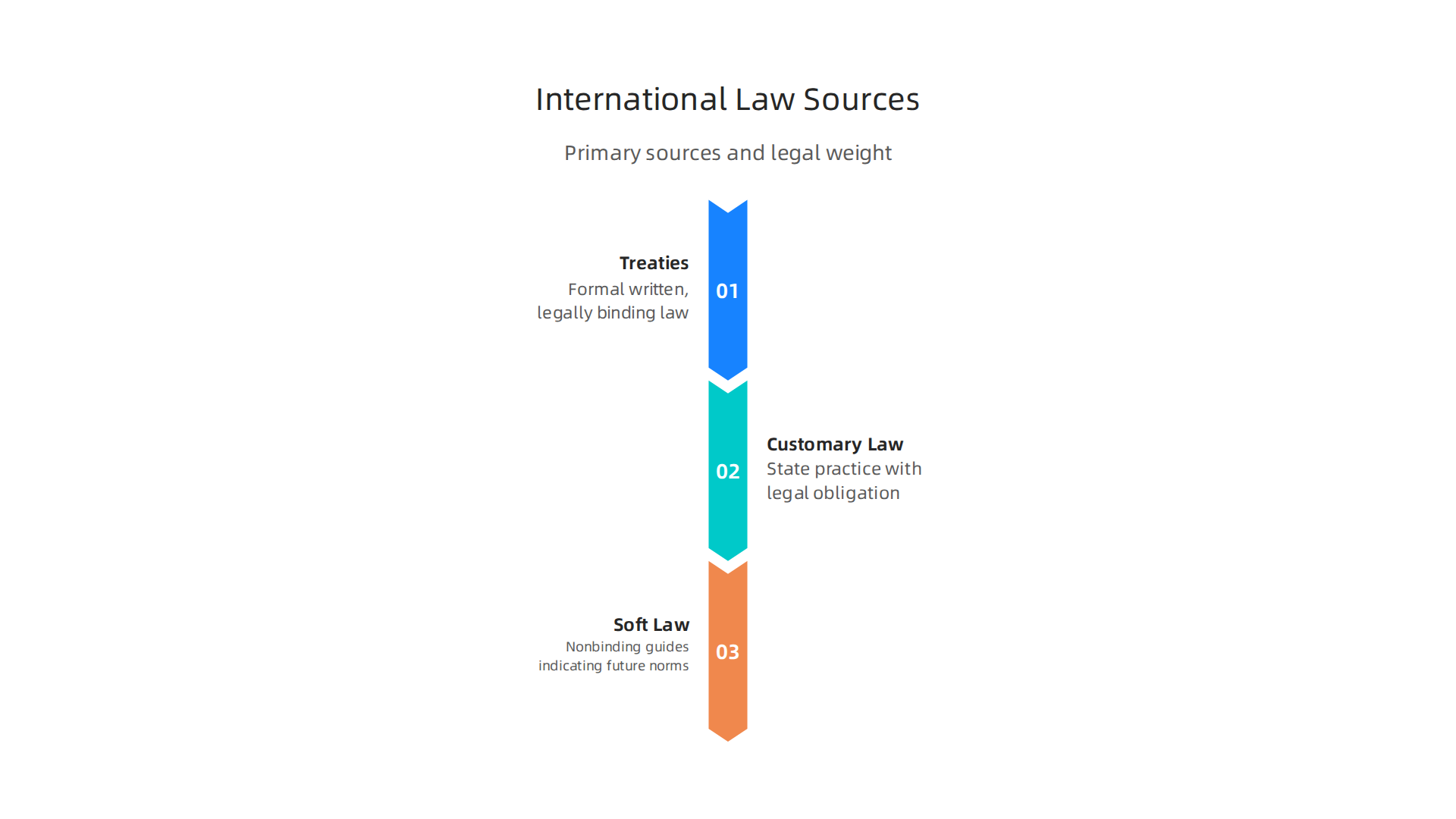
Some of these ways make very strong, "binding" rules that countries must follow. Others are more like guides or suggestions, often called "soft law." Both types of international law types are important for businesses and governments today.
Treaties: The Strongest Promises Between Countries
Think of treaties as formal written agreements between two or more countries. They are like contracts on a global scale. When countries sign and agree to a treaty, they are making a promise to follow its rules. This makes treaties a very strong source of international law. In fact, they are often called "hard law" because they are legally binding.
For example, a treaty might set rules for how countries trade goods, protect the environment, or handle human rights. If a country breaks a treaty, other countries can hold it accountable. For legal tech and businesses, this means understanding treaties is key. Companies must make sure their actions, contracts, and compliance programs follow the rules set out in relevant treaties. Knowing these rules helps prevent problems and ensures smooth international operations. You can find out more about how public international law relies on treaties in this detailed explanation of public international law.
Customary International Law: Rules from Common Practice
Sometimes, rules become international law not because they are written in a treaty, but because countries have always followed them. This is called customary international law. It’s like an unwritten rule that everyone accepts as law.
For a practice to become customary international law, two things need to happen:
- General Practice: Many countries must act in a certain way consistently over time. They do it regularly.
- Belief in Legal Obligation: Countries must follow this practice because they truly believe it’s a legal requirement, not just a good idea or a habit. This belief is sometimes called "opinio juris."
A good example is the idea that all countries have the right to fly over international waters. No single treaty created this rule, but it became law because it was generally accepted and followed by many nations. Customary law is also considered binding "hard law." For companies, this means staying aware of widely accepted international practices, even if they aren’t written in a treaty. Ignoring these can lead to unexpected legal challenges. The sources of public international law, including custom and treaty, are further discussed in this table of content on public international law.
Soft Law: Guides, Not Strict Rules
Then there’s "soft law." These are rules, guidelines, or ideas that are not legally binding in the same way treaties or customary laws are. They don’t force countries to do anything. But that doesn’t mean they’re not important.
Soft law can come from many places, like resolutions from international organizations or codes of conduct for businesses. While not directly enforceable, soft law is very important because it often:
- Shows Future Trends: It can be a first step towards creating new, binding treaties or customary laws.
- Guides Behavior: It gives countries and companies a good idea of what is considered best practice or ethical behavior on the world stage.
- Influences Policies: Businesses often use soft law guidelines to create their own internal policies and compliance programs.
For example, a company might follow international recommendations on how to protect customer data, even if those recommendations aren’t yet hard law in every country it operates in. By doing so, they prepare for future laws and build trust with customers. Understanding the difference between "hard" and "soft" law is key for legal professionals who need to navigate these complex global rules.
How These Sources Affect Businesses
For legal tech leaders, understanding these different international law types is critical. Your legal solutions need to help attorneys and legal teams manage these obligations:
- Treaties: Require detailed legal research tools to track current agreements, expiry dates, and specific clauses affecting business operations. Compliance software needs to be updated with treaty requirements.
- Customary Law: Demands tools that can analyze state practices and legal opinions globally to identify emerging norms and assess potential risks.
- Soft Law: Benefits from systems that can monitor international recommendations, ethical guidelines, and industry best practices. This helps businesses proactively adapt their policies and stay ahead of future regulations.
In 2026, legal technology plays a huge part in how firms and businesses deal with international law. Having smart tools to manage these different sources helps legal teams stay compliant and competitive. For legal professionals looking to understand the full scope of legal knowledge, a robust legal encyclopedia your guide to smarter research and firm success can be an invaluable resource. This kind of knowledge helps attorneys and legal departments make smart decisions in a world that is always changing.
Now that we’ve explored the different sources of international law, it’s key to understand how these global rules actually work inside individual countries. Think about it: a treaty signed by a country still needs a way to become real law that people and businesses in that country must follow. This is where the ideas of monism and dualism come in, explaining how international law connects with a country’s own legal system.

How International Law Interacts with Domestic Legal Systems (incorporation, supremacy, and conflict)
The way international law fits into a country’s own laws can be a bit tricky. Legal experts often talk about two main approaches countries take: monism and dualism. These ideas help us understand if international rules are automatically part of a country’s law or if they need extra steps to be included.
Monism: One Big Legal System
In countries that follow a monist approach, international law and the country’s own laws are seen as part of one single legal system. This means that once an international rule, like a treaty, is agreed upon by the country, it can become part of the country’s domestic law almost automatically. It doesn’t need a special new law to make it so.
A big part of monism is the idea that international law is often seen as being "higher" than domestic law. If there’s a conflict between an international rule and a local one, the international rule usually wins. This approach aims for a smooth and unified legal world where global and local rules work together easily. Experts explain that monism creates a single legal system where international law can directly apply and even be superior to a country’s own laws, creating a unified legal system where international law governs over domestic laws.
Dualism: Two Separate Legal Worlds
On the other hand, countries following a dualist approach see international law and domestic law as two completely separate legal systems. They exist side-by-side but don’t automatically mix. For an international rule to apply inside a dualist country, it must first be "transformed" or "incorporated" into the country’s domestic law through a specific act. This often means the country’s parliament has to pass a new law that takes the international rule and makes it a local one.
For example, if a dualist country signs a treaty about protecting the environment, its government then needs to pass a new national law that includes those environmental protections. Until that new law is made, the treaty might not directly affect people or businesses within the country. This approach gives countries more control over how and when international rules affect their citizens. The dualist view holds that international law and internal law are two separate legal orders, needing a formal step to connect them.
How Treaties Become Enforceable at Home
Treaties, which we discussed as a strong source of international law types, are a prime example of how monist and dualist approaches play out.
- In Monist Systems: When a monist country agrees to a treaty, it often becomes "self-executing." This means the treaty’s rules can be used directly in courts and by government agencies without needing any further national laws.
- In Dualist Systems: For a dualist country, a treaty usually needs "implementing legislation." This is a new law passed by the country’s lawmakers to make the treaty’s promises legally binding on its people and institutions. Without this, the treaty only binds the country on the international stage, not its citizens at home.
Legal professionals, also known as attorneys, in both systems need to understand these differences to know when and how international obligations apply to their clients.
Handling Conflicts: When Rules Clash
Even with these systems, sometimes international and domestic laws can clash. This is where conflict resolution mechanisms become vital.
- Within a Monist System: If a conflict happens, the international law is often given preference, especially if it’s a higher-ranking international rule.
- Within a Dualist System: If a domestic law conflicts with an international treaty that hasn’t been incorporated, the domestic law might still be followed by local courts. However, the country could then be held responsible on the international stage for breaking the treaty.
To help countries sort out these issues, there are international bodies. For trade disputes, for example, the World Trade Organization (WTO) has a system to settle disagreements between countries about trade rules. This helps maintain fairness and order in global commerce. The WTO’s Dispute Settlement Body (DSB) manages disputes and has different institutions like panels and an Appellate Body to hear cases, ensuring countries follow international trade agreements, as described in WTO Dispute Settlement information.
For legal tech leaders, designing tools that can map these international obligations to local compliance needs is a big challenge. Software must help attorneys track which international agreements are binding, how they’ve been incorporated, and what happens if conflicts arise. This helps businesses navigate the complex global legal landscape in 2026. If you’re looking to enhance your understanding of legal tech and its role in navigating complex legal issues, it’s useful to master legal research databases in 2026 with AI and smart search techniques.
Staying informed about these fast-moving areas of legal technology and global law is key for any attorney or legal professional.
Get clear daily AI updates from The Deep View Newsletter. The AI Newsletter Worth Reading
Staying informed about these fast-moving areas of legal technology and global law is key for any attorney or legal professional. This is especially true when we look at how different international law types shape the rules around data, privacy, and AI. These global rules directly impact how businesses operate and how legal teams, or plural for attorney, manage risk in 2026.
Compliance, Regulation, and Legal Tech: Data, Privacy, and AI Governance
The way international laws are adopted into a country’s own legal system, whether through monism or dualism, has a big effect on critical areas like data protection, privacy standards, and the new field of AI governance. Countries are trying to work together globally to set rules, but how these rules become law at home makes a huge difference for businesses and legal practices.
International Law and Cross-Border Data Rules
Today, moving data across different countries is a normal part of business. But this also means businesses must follow a complex web of international data transfer rules. These rules are often based on international agreements and shared standards (important international law types) that dictate how personal information should be handled when it leaves one country and enters another. For example, some regions are tightening their grip on how data moves across borders, while others try to make it easier. Understanding these global differences is vital, as noted in recent analyses of 2026 data law trends.
Global Privacy Standards
Many countries now have strong privacy laws. These laws often draw from international best practices and human rights principles that are common international law types. In 2026, the global data privacy landscape is still getting more complex. Governments worldwide are putting out new laws to protect people’s information. For instance, the Global Trends in Privacy and Data Protection 2026 report shows how countries are increasing their efforts to strengthen privacy oversight Global Trends in Privacy and Data Protection 2026. This means companies need to understand many different rules, not just one. Legal professionals must keep up with these 2026 Privacy Law Updates to help their clients avoid problems.
AI Governance Frameworks
Artificial Intelligence (AI) is changing quickly, and so are the rules around it. International discussions and frameworks are a key international law type influencing how AI is developed and used responsibly. Regulators worldwide are making new laws to ensure AI is safe and fair.
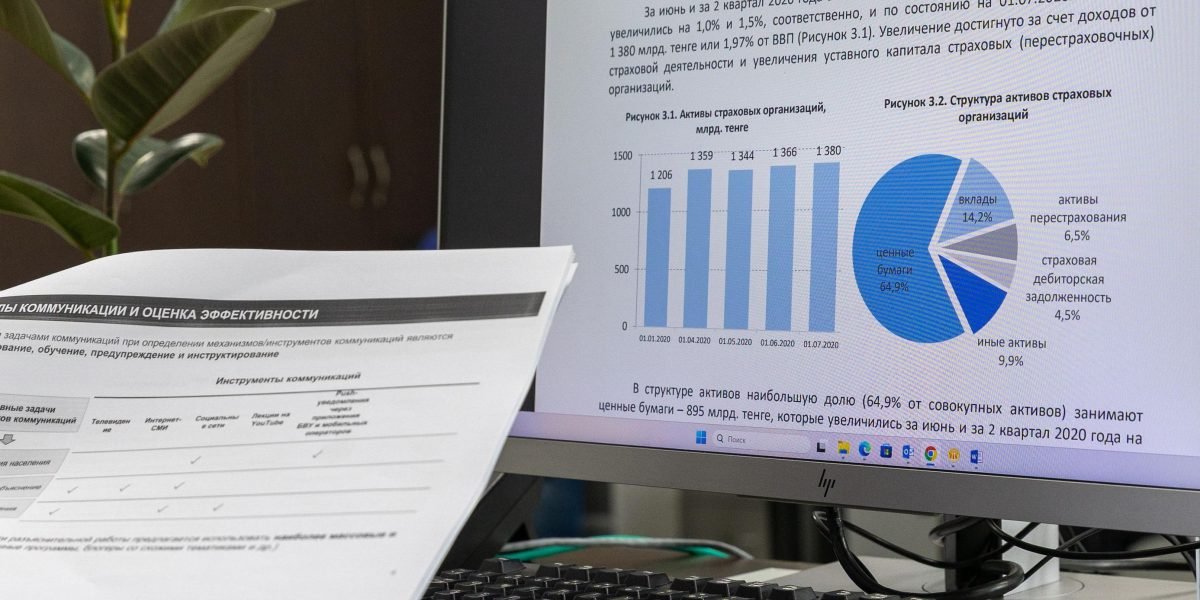
The pace of AI regulation has picked up a lot, with many new updates related to AI laws and rules being issued globally. This area is seeing huge growth in 2026, creating a need for careful Governing AI in 2026. There are even specific guides for Artificial Intelligence 2026 in many different countries.
Implications for Product Design, Vendor Contracts, and Legal Operations
For businesses and legal tech leaders, these global rules have clear effects:
- Product Design: Software products must be designed with global compliance in mind. This means building in features that allow for data to be handled differently based on where it comes from or where it’s going. It also means making sure AI systems follow ethical guidelines and are transparent.
- Vendor Contracts: When working with other companies (vendors), contracts must include strong clauses about data privacy, security, and AI use. These clauses help protect a company from risks if a vendor handles data or uses AI in a way that breaks international or local laws. Technology agreements are becoming much more detailed, covering things like subcontracting limits and encryption standards Technology Transactions Across Europe, the Middle East, and the United States.
- Legal Operations Workflows: Legal teams need tools and processes to track which international agreements affect their business and how those agreements are put into practice locally. Legal tech solutions are essential for this. They help attorneys manage vast amounts of data, automate compliance checks, and quickly respond to new regulations. Choosing the right legal tech solutions is more important than ever to stay compliant and efficient. To help with this, many legal teams are looking to choose the best new legal tech for law firms in 2026.
Understanding how international law types affect these areas is not just a legal challenge, but also a business one. Staying ahead means constantly adapting to new rules and using the best legal technology available to manage compliance across borders.
Choosing and putting new legal technology into action is a big step for any law firm or legal department. In 2026, with so many different international law types shaping how data and AI are used, it’s more important than ever to pick the right tools. Your legal tech needs to help you follow all the rules, no matter where your business operates.
How to Pick the Right Legal Tech Vendor
When you are looking for new legal tech, think about these points to make sure it works with international laws:
- Does it handle data from different countries well? Ask vendors about features for data residency. This means data stays in the country where it’s collected if needed. They should also know about different privacy rules, like those found in the Global Data Privacy Laws 2026: Cross-Jurisdiction Compliance Guide.
- Can they change their contracts? Some countries have very specific rules about technology agreements. Can the vendor adjust their terms to fit these local laws? This is key for things like technology sourcing, as highlighted in the International Technology Sourcing Guide 2026 by Bird & Bird.
- How good is their security? Make sure their security standards meet both worldwide rules and local country needs.
- Do they keep up with new laws? International law types change all the time. Ask how the vendor stays updated and how they help their software follow the latest rules. Looking at reports like the Data Privacy, AI Regulatory, and Compliance Update: 2026 can help you understand the landscape.
Key Contract Details to Check
When you sign a deal for legal tech, pay close attention to the fine print:
- Data Processing Agreements (DPAs): These are vital. They need to clearly state how your data will be handled and make sure it meets the various international law types for privacy.
- Audit Rights: Can your team check on the vendor to make sure they are following the rules? This is important for trust and compliance.
- Governing Law and Where Disputes Are Settled: Your contract should say which country’s laws will apply if there’s a problem, and where any legal disagreements would be resolved. This is about understanding how different types of international law impact your agreements.
Steps for Bringing New Legal Tech On Board
After picking a vendor, rolling out the tech needs careful planning:
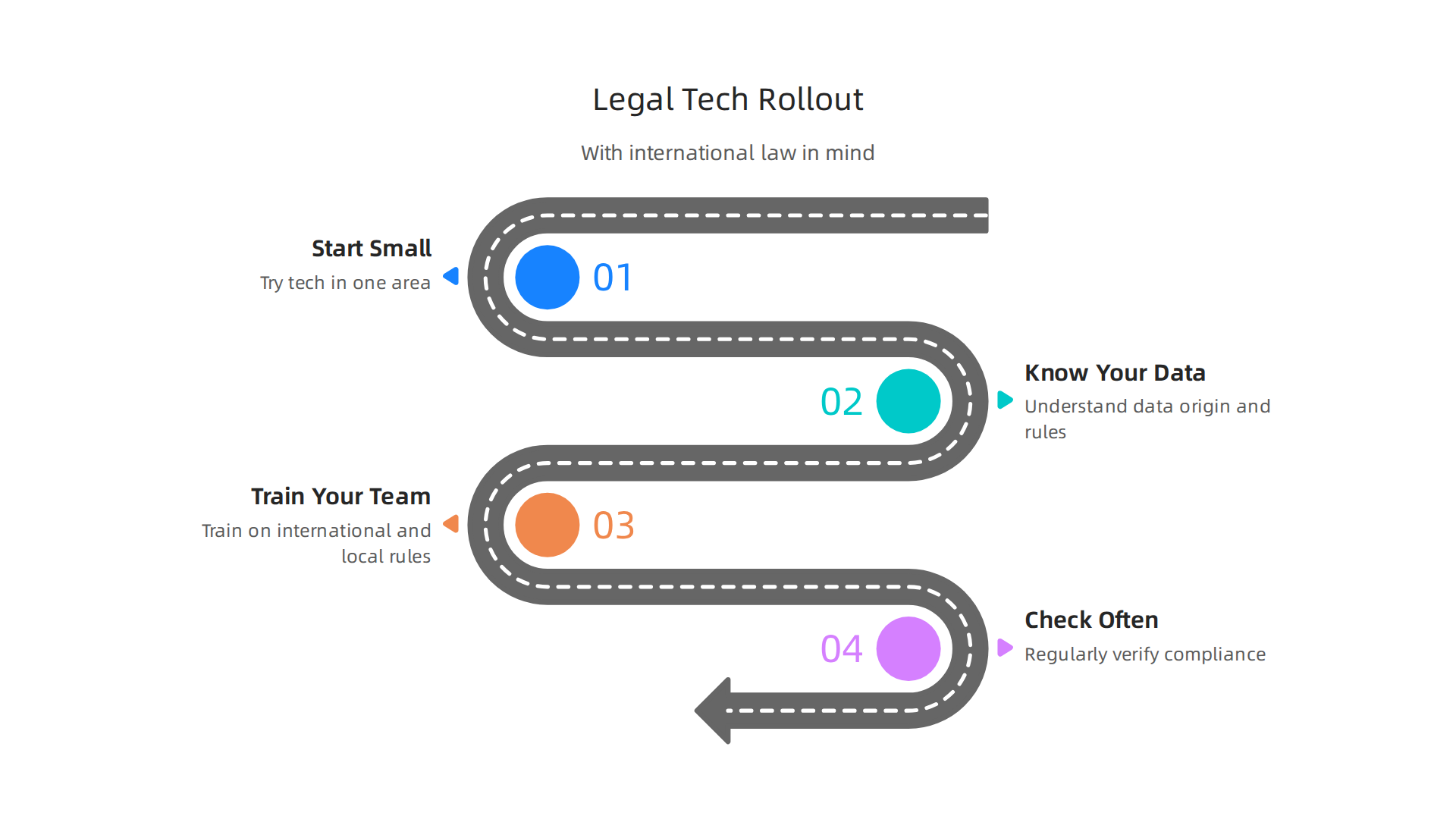
- Start Small: Try the new tech in one area or country first. This helps you learn and fix problems before rolling it out everywhere.
- Know Your Data: Understand where your data comes from, where it goes, and what rules apply to it. This is called data mapping and it’s very important for international compliance.
- Train Your Team: Make sure everyone who uses the new tech knows about the specific international and local rules they need to follow.
- Check Often: Keep an eye on the tech and how it’s used. Do regular checks to make sure everything is still following the rules. New laws, like those mentioned in the Global Privacy Watchlist, can come out fast, so staying on top of things is critical.
When to Go Local or Stay Global with Your Tech
Deciding if you need a tech solution for just one country or one that works everywhere is a big choice:
- Choose Local if: Your data is very sensitive or a country has very strict rules. Sometimes, a "local" solution is the only way to meet specific requirements from different international law types.
- Choose Global if: Your data is less sensitive, or if many countries have similar rules. A global solution can often save money and make things simpler. But you still need to be aware of the different types of international law that might apply, as discussed in Raz International Law Origins Scope and Impact for Modern Legal Practice.
Choosing and using legal tech wisely means understanding the world’s changing rules. Legal professionals and attorneys need to stay sharp and use the best tools to keep their operations compliant and efficient.
Want to keep up with the latest in technology for legal teams?
Get clear daily AI updates from The Deep View Newsletter.
Summary
This article explains why knowing the different types of international law is essential for legal tech leaders building products for cross-border use. It defines public, private (conflict of laws), transnational, and hybrid regulatory categories, and shows how each affects product design, compliance, and legal workflows. The piece outlines who makes and enforces these rules—from the UN and ICJ to the WTO, ICC and regional bodies—and clarifies the main legal sources: treaties, customary law, and soft law and their practical weight. It then covers how international norms enter domestic systems (monism vs dualism), what to watch for when rules conflict, and why those choices matter for data, privacy, and AI governance. Finally, the article gives actionable advice on choosing vendors, writing contracts (DPAs, audit rights, governing law), and phased rollout steps so legal teams can stay compliant and operational worldwide. After reading, legal tech leaders will better map global obligations to product features, procurement terms, and implementation plans.