
Criminal Lawyer Salary 2026 The Real Numbers and Benchmarks

Introduction
If you are thinking about becoming a criminal lawyer or already working in the field, one question matters more than most: how much money can you actually make? The answer is not simple. Criminal lawyer salary numbers shift based on where you live, how long you have practiced, and who you work for. In 2026, understanding these factors is critical for making smart career choices.

Across the legal profession, pay varies more than many people expect. The Bureau of Labor Statistics reports that the median annual wage for all lawyers was $151,160 in 2024. But that number only tells part of the story. The national mean wage has climbed to $182,760 according to updated 2026 data, which is a key number that outdated reports still get wrong. Different types of law lead to very different paychecks. A government attorney, for example, earns a median around $148,000, while lawyers at large firms earn significantly more.
Geography plays a huge role too. Criminal lawyer salary in a major city like New York or Los Angeles can be much higher than in a rural county. And if you are looking at international law jobs, salaries shift again based on local economies and demand. Even the common law status of a country influences how much lawyers earn, since legal systems shape the job market itself.
This article breaks down what criminal lawyers actually earn in 2026. We look at factors like experience level, practice setting, and location. We also compare criminal law to other practice areas so you can see where it fits. A related exploration of the profession can be found in our piece on the evolving role of employment lawyers in 2026, which touches on how different practice areas stack up.
To stay current on salary trends and legal industry shifts, subscribe to our free newsletter and get daily updates delivered straight to your inbox.
The Compensation Landscape for Legal Professionals in 2026
Before you lock in on a criminal lawyer salary number, it helps to zoom out. The legal profession has seen steady pay growth since the pandemic, and 2026 is no exception. Inflation forced many firms to raise wages just to keep talent. At the same time, stronger demand for legal services pushed compensation even higher.
The most trusted data comes from three main sources: the Bureau of Labor Statistics, the National Association for Law Placement (NALP), and specialized recruiters like Robert Half.
Let’s start with the big picture.
Across all types of law, the BLS reports a median annual wage of $151,160 for lawyers. But that median hides a wide range. The national mean wage now sits at $182,760, a number that some older articles still get wrong. Keep that figure in mind as you compare different practice settings.
Pay varies wildly depending on where you work. BigLaw firms with over 700 lawyers offer median starting salaries of $215,000 for first-year associates. In-house counsel roles average around $319,000. Government attorneys earn a median of $148,000. Solo and small firm lawyers see about $125,000.
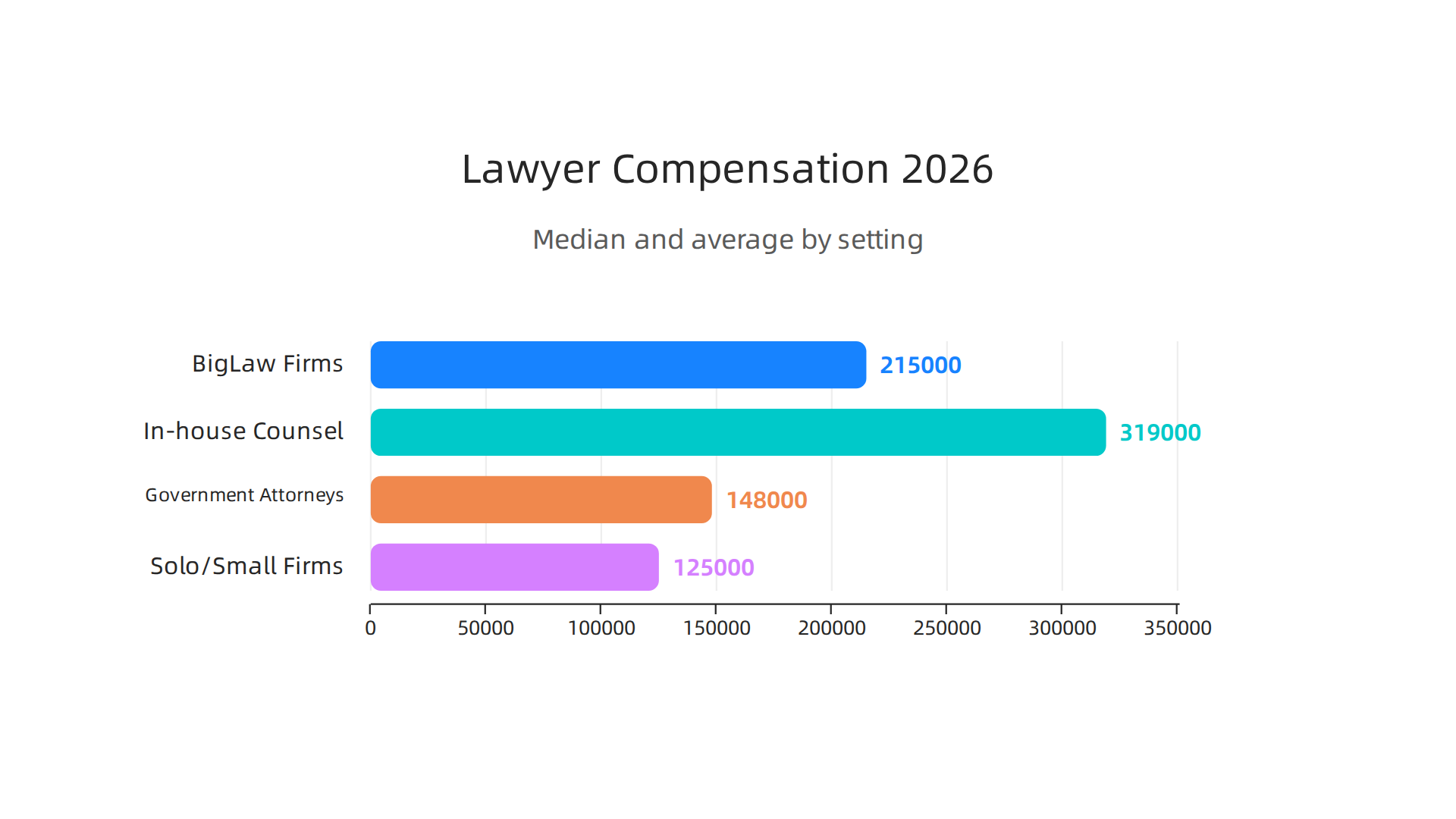
These numbers come from the latest BCG Attorney Search report and the Clio first-year salary guide.
Regional and practice area differences also matter. A first-year lawyer in Pittsburgh earns between $82,658 and $132,098, according to Robert Half. Compare that to New York or San Francisco, where starting pay often exceeds $200,000.
Understanding this landscape helps you place criminal lawyer salary expectations in context. Criminal law typically falls in the government and small firm categories, so pay tends to be below BigLaw but offers stability and purpose. For a closer look at how different practice areas compare, check out our article on the evolving role of employment lawyers in 2026.
Want to stay ahead of legal salary trends and industry shifts? Get free daily updates delivered to your inbox.
Criminal Lawyer Salary: National Benchmarks and Averages
Now let us zoom in on the field you care about. Criminal law pays differently than other areas of law. Before you commit to this path, you need to know the numbers. Here is the national picture for a criminal lawyer salary in 2026.
Across the entire legal profession, the Bureau of Labor Statistics reports a median annual wage of $151,160 for all lawyers. But criminal lawyers rarely work in BigLaw firms. Most work in government offices or solo practice. That changes the numbers a lot.
The BCG Attorney Search Report 2025-2026 breaks it down clearly. Government attorneys earn a median of $148,000 per year. Solo and small firm lawyers average $125,000 per year. If you want a realistic criminal lawyer salary range, expect something between $125,000 and $148,000 as a starting benchmark.
Compare that to other types of law. A first-year associate at a large firm with over 700 lawyers starts at $215,000, according to the Clio salary guide. In-house counsel roles average $319,000. Corporate lawyers earn more on paper. But criminal law offers something different. You get immediate trial experience. You get student loan forgiveness options in public service. And the work carries deep purpose.
Your exact pay depends on your practice setting. Here is how the numbers break down:
- Public Defender Offices: These roles follow government pay scales. Entry-level positions start lower, but experienced public defenders in big cities earn close to the $148,000 median.
- Private Criminal Defense Firms: Small firms with under 100 lawyers pay a median of $155,000 for first-year associates. Boutique criminal firms in major cities can pay more.
- Solo Practice: Solo lawyers keep their profits after overhead. Average earnings sit around $125,000. Top earners in busy markets exceed $250,000.
Location also matters. A first-year lawyer in Pittsburgh earns between $82,658 and $132,098, according to Robert Half data.

A criminal lawyer in New York, Los Angeles, or Chicago earns 30 to 50 percent more than that.
If you are considering international law jobs, remember that countries with common law status follow different pay structures. A barrister in the UK or Australia, for example, earns based on caseload and seniority rather than a standard law firm salary. The trade-offs between public and private work look similar no matter where you go.
This salary data helps you plan your career move. If you want to compare earning potential across different practice areas, take a close look at the evolving role of employment lawyers in 2026 as another option.
Want to stay on top of legal salary trends and industry shifts? Get free daily updates delivered straight to your inbox.
Experience and Career Progression Impact on Earnings
Your first year as a criminal lawyer does not define your whole career. With time, skill, and smart choices, your criminal lawyer salary can grow significantly.

Let us look at how experience and progression change your paycheck.
Entry-Level (0-3 Years)
Starting out, you will earn less. According to PayScale, the average criminal defense lawyer salary in 2026 is around $93,812. Entry-level public defenders or solo practitioners may start lower, especially in smaller markets. But remember, this is just the beginning. First-year lawyers at large law firms in top markets can earn $225,000, as reported by the University of Texas School of Law salary statistics. However, most criminal lawyers start in government or small firms, so your starting number will be closer to the national average.
Mid-Career (4-10 Years)
After a few years, your value jumps. You have trial experience. You know the local courts. Clients and firms will pay more for that. Indeed reports the national average salary for criminal lawyers is $97,777, but mid-career lawyers often exceed that. In a city like Houston, the average criminal lawyer makes $143,719 according to Comparably. That is 15 percent above the national average. Location and reputation matter a lot.
Senior and Partner Level (10+ Years)
Top earners in criminal law can surpass $250,000. Private defense partners at boutique firms or seasoned public defenders in leadership roles command high pay. Synectics notes that criminal law salaries range from $75,000 to $120,000 on average, but experienced lawyers often break that ceiling, especially with a strong record.
Specializations and Advanced Degrees
Adding certifications in areas like white-collar crime or DUI defense can boost your rate. An LL.M. in criminal law may open doors to higher-paying government roles. Every extra credential signals expertise.
If you are exploring different practice areas, check out the evolving role of employment lawyers in 2026 for another path that rewards experience.
Want to track salary trends and legal career insights? Get free updates delivered daily to help you plan your future.
Geographic Variation in Criminal Lawyer Salaries
Where you live shapes your paycheck as much as your experience. The same criminal lawyer salary in 2026 can look very different depending on whether you practice in a big city or a small town.

Cost of living matters more than you think. A high salary in New York City might not stretch as far as a lower one in rural Texas. According to PayScale, the average criminal defense lawyer earns about $93,812 nationally. But in places with skyrocketing rents and taxes, that number needs to be higher just to keep up.
High paying markets lead the way. Cities like New York, Los Angeles, San Francisco, and Washington, D.C. pay top dollar. Clio reports that median starting salaries in the best urban legal markets hit $225,000. That is partly because the cost of living there is high, and partly because the demand for experienced criminal lawyers is strong. In Houston, for instance, the average criminal lawyer makes $143,719, which is 15 percent above the national average, according to Comparably.
Lower paying states and rural areas tell a different story. Synectics puts the typical criminal law salary range at $75,000 to $120,000. In states with lower costs of living, like Mississippi or Arkansas, salaries often fall at the low end. Rural areas have fewer clients and less competition, which can lead to lower rates. Public defenders in these regions may earn even less, though their work is just as important.
Urban versus rural: the gap is real. Big city courts handle more cases, and private clients there are willing to pay premium fees. A lawyer in downtown Los Angeles can charge much more than one in a county with a small population. The key is to know what matters to you. Do you want the highest possible income? Aim for a top urban market. Do you value a lower cost of living and a slower pace? A smaller city or rural practice might still give you a comfortable life.
If you are exploring how location and practice area affect your career, you might also want to check out the evolving role of employment lawyers in 2026 for another path that rewards local market knowledge.
Want to stay on top of salary trends and legal career insights? Get free updates delivered daily to help you plan your next move.
Beyond Base Salary: Bonuses, Benefits, and Total Compensation
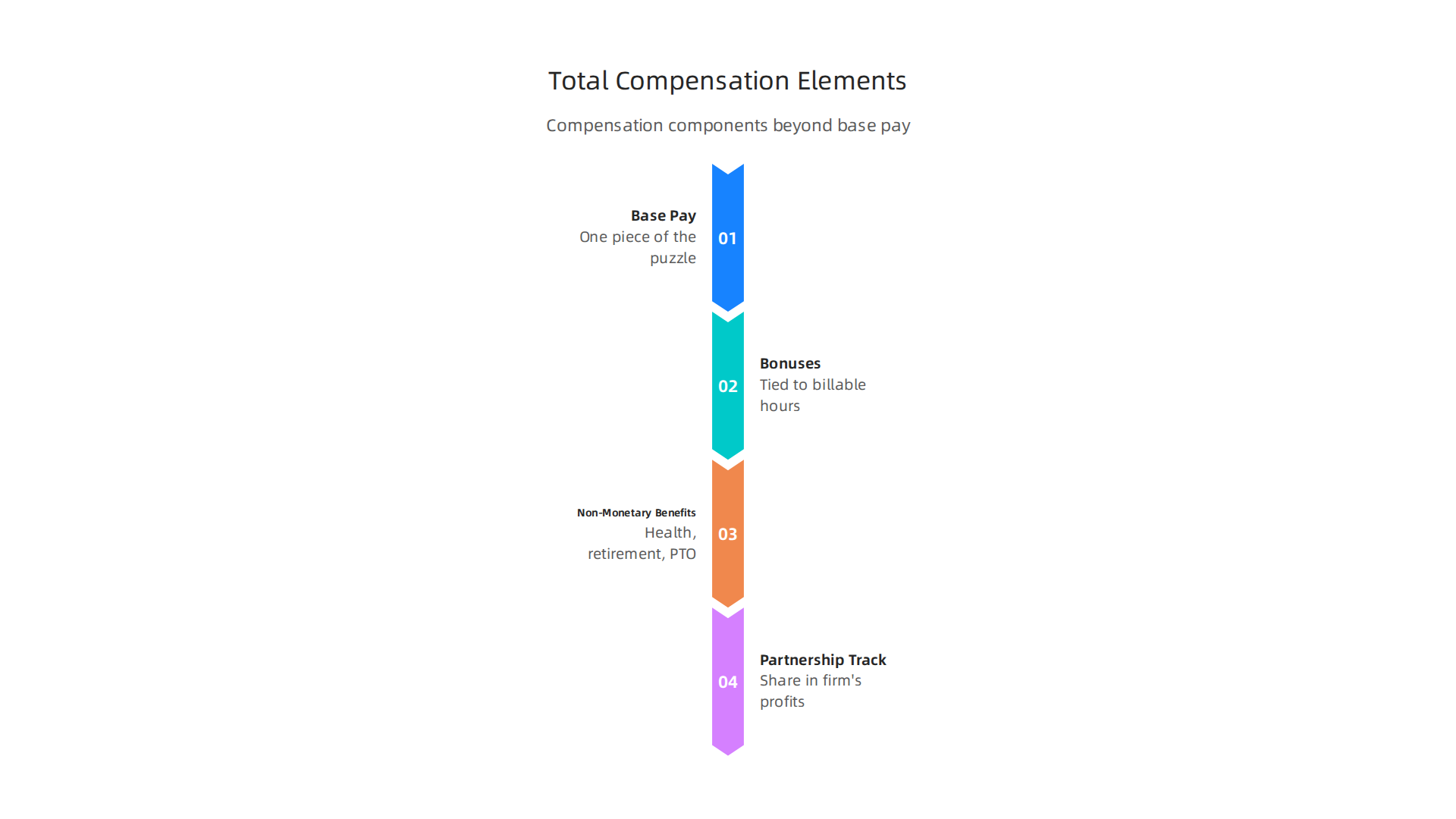
Your base pay is just one piece of the puzzle. When you look at the full criminal lawyer salary picture, bonuses and benefits can add tens of thousands of dollars to your total earnings each year.
Here is what you should know about the extras that really add up.
Bonuses tied to billable hours and origination fees. Many criminal defense firms reward lawyers for bringing in new clients and hitting hourly targets. These bonuses are often based on the number of hours you bill or the revenue you generate. According to the National Law Review, law firms are creating compensation plans that blend base salary with bonuses to attract and keep the best talent. In some firms, the difference between base salary and total compensation can reach $150,000 to $200,000 per year once bonuses are included, reports LarsonMaddox. For associates, annual bonuses typically start around $20,000 for first-year lawyers and can exceed $115,000 for senior partners, according to BCG Attorney Search. Modern law firms also experiment with profit sharing and collaborative bonus structures, as explored in this guide to law firm compensation models.
Non-monetary benefits matter just as much. Health insurance, retirement plans, paid time off, and work-life balance perks can make a huge difference in your quality of life. Some firms offer flexible schedules, remote work options, and generous parental leave. These benefits may not show up in your paycheck, but they have real value. Public defender offices and government legal roles, like those outlined in the California Bar 2026 salary ranges, often provide strong pension plans and stable benefits.
Partnership track and equity compensation. For senior attorneys, the biggest financial reward often comes from making partner. Equity partners share in the firm’s profits, which can multiply their income far beyond what any salary could provide. The path to partnership usually takes seven to ten years of strong performance, but the payoff can be life changing.
If you are thinking about how different practice areas compare, the evolving role of employment lawyers in 2026 is another good example of how compensation varies by field.
Want to keep learning about salary trends and career strategies? Get free updates delivered to your inbox so you never miss the latest insights.
Legal Roles Compared: Criminal Lawyer vs. Corporate Lawyer vs. Public Defender
You now know that bonuses and benefits can make a big difference in your total pay. But which legal path actually pays the most, and which one feels the most rewarding? The answer depends on whether you become a criminal lawyer, a corporate lawyer, or a public defender. Each role has a different salary, a different workload, and a different kind of satisfaction.
Salary differentials are huge. The average criminal lawyer salary in 2026 is around $93,812, according to PayScale. That number can jump to $125,000 or more in big cities like Houston, reports Comparably. But corporate lawyers at large firms often start at $225,000 right out of law school, as shown in Clio’s 2026 guide. Public defenders, on the other hand, earn less. The public sector drags the average down to between $75,000 and $120,000 for criminal law, per Synectics. So if money is your main goal, corporate law wins. But there are other factors.
Job satisfaction and work intensity vary a lot. Corporate lawyers often work very long hours, sometimes 60 to 80 hours per week, with high pressure to bill every minute. Criminal defense lawyers, especially in private practice, have more control over their schedules but deal with the emotional weight of clients in crisis. Public defenders face huge caseloads and limited resources, but many find deep meaning in protecting people’s rights. The Indeed salary analysis notes that private defense attorneys earned about $97,777 nationally in 2026, but the work can be unpredictable and stressful. Each role has trade-offs between pay and personal fulfillment.
Career mobility between sectors is possible. You are not locked into one path forever. Many criminal lawyers start as public defenders to gain courtroom experience, then move into private practice or even corporate compliance roles. Corporate lawyers sometimes shift into criminal law if they develop an interest in white-collar defense. And public defenders can later become judges or partners at boutique criminal firms. The key is building a strong reputation and skills that transfer across different types of law. For example, the skills you learn as a criminal lawyer like quick thinking, negotiation, and understanding court procedure are valuable in many legal fields, including employment law.
If you are still weighing your options, think about what matters most to you. Are you chasing the highest salary? Go corporate. Do you want meaningful work and courtroom drama? Criminal law might be your fit. And if you care about justice but want a steady government job, the public defender route offers stability and purpose.
Want to keep comparing legal careers and see how the industry is changing? Get free updates delivered straight to your inbox.
Future Trends: How AI and Technology are Reshaping Legal Compensation
The legal world you just read about is changing fast. By 2026, artificial intelligence and new technology are already rewriting the rules on who gets paid what and why. If you want to understand your future earning potential, you need to know how these trends impact the criminal lawyer salary and every other legal pay scale.
AI is taking over the boring stuff first. Think document review and discovery. These used to be the bread and butter tasks for junior associates and paralegals. Now, tools exist to process millions of documents in hours. A Thomson Reuters report found that lawyers expect to save about 190 work hours per year using AI. This shift means less demand for manual labor but more need for lawyers who can manage and check the AI work. It directly affects the criminal lawyer salary landscape, since routine case prep is now being automated.
Tech skills are becoming gold. The lawyers who get paid the most in 2026 are the ones who understand the tools. Skills in e-discovery, legal operations, and data security are now in high demand. Whether you work in international law jobs or focus on local criminal defense, being tech savvy matters. Even traditional roles like barristers are seeing their workflows go digital. If you are exploring different types of law, think about which areas offer the most room to use these new tools. And remember, whether you practice under a common law status system or a civil law one, the AI shift is universal. For example, the skills needed in an employment lawyer career in 2026 closely mirror the demand for tech integration across the board.
Here is the part that should grab your attention. The money is moving toward tech experts. According to Wansom AI, lawyers with AI skills now earn a massive 56% salary premium. That means an AI savvy lawyer averages $203,500, while a traditional practitioner earns around $129,900. LawCrossing reports that new roles like AI Legal Specialists and Legal Technology Managers can bring in $180,000 to over $350,000. The average criminal lawyer salary might sit around $93,000, but specializing in legal AI can lift that number significantly.
The future belongs to lawyers who embrace these tools rather than fear them. If you want to stay ahead of the curve and understand exactly how AI is changing compensation, you need reliable information. Subscribe Free to The Deep View Newsletter for clear, daily updates on AI and the law.
How to Negotiate Your Legal Salary: Data-Driven Strategies
Knowing how AI is changing pay scales is helpful. But the real question is: how do you actually get a higher salary in 2026? The answer is simple. You negotiate with hard data, not just gut feelings.

Here are three proven strategies to help you walk into any compensation conversation with confidence.
1. Use Salary Survey Data to Build a Strong Case
You cannot negotiate blindly. Before you even sit down, you need real numbers. Look at specific salary data for your role and location. For example, a criminal defense lawyer in Louisville, KY typically earns between $86,043 and $106,924 according to Salary.com. In North Carolina, the average is around $121,782 per Glassdoor. Use sources like the BCG Attorney Search compensation report to benchmark your worth. This data gives you a factual anchor instead of just asking for "more."
2. Time Your Negotiations Around Reviews or Deadlines
Timing matters a lot. The best moments to ask for a raise are right before a performance review or immediately after you receive a formal job offer. Law firms often set their bonus and salary schedules early in the year. The Law360 Pulse 2026 bonus tracker shows firms adding special bonuses between $6,000 and $25,000. If you wait until budgets are locked, you lose that leverage. Ask when the firm is actively planning compensation.
3. Leverage Multiple Offers and Market Trends
Having another offer is your strongest card. But even without one, you can use market trends to argue your value. For instance, if you have tech skills like legal data analysis, you can point to the growing demand for lawyers who understand AI. Firms are paying a premium for these abilities, especially in areas like international law jobs and specialized litigation. Understanding the different types of law and how compensation varies (for example, between a corporate associate and a barrister in a common law status jurisdiction) helps you position yourself correctly.
If you are considering a move into a tech-forward role, learning from evolving career paths can be smart. Check out this guide on the employment lawyer career in 2026 to see how tech integration is changing expectations.
The bottom line: do your homework, pick the right moment, and use market data to back your ask. Want to stay on top of the legal salary trends as they shift? Subscribe Free to The Deep View Newsletter for clear, daily updates on AI, the law, and what it means for your career.
Summary
This article explains what criminal lawyers actually earn in 2026 and why those numbers vary so widely. It reviews national benchmarks and averages, highlights how practice setting (public defender, private firm, or solo) and experience levels change pay, and shows the strong role geography and cost of living play in real take-home income. The piece also covers total compensation—bonuses, benefits, and partnership upside—compares criminal law pay with corporate and public-sector roles, and describes how AI and tech skills are shifting salaries upward. Finally, it gives practical negotiation strategies backed by salary data so readers can make informed career choices and ask for higher pay with confidence.